Showing posts with label Stories. Show all posts

Tuesday, May 20, 2025

A History of Children’s Stories: “The Haunted Wood” by Sam Leith


One of the earliest memories I have is my mother reading to me from a big, green book of tales for children. Stories Children Love by Watty Piper, a collection of nine tales, was first published in the 1920s and reprinted in 1933. I believe my book, which I still have, was a reprint from about 1950. 

The stories are the familiar ones, including “Little Red Riding Hood,” “Peter Pan,” “Cinderella,” “Three Bears,” and “Jack and the Beanstalk.” The illustrations are classic 1920s.


What I didn’t know is that these stories have a history. In fact, all children’s literature has a history. While a surprising amount of it is fairly modern, it is a history with deep roots; adults having been telling children stories for millennia. A now Sam Leith has undertaken telling that history in The Haunted Wood: A History of Childhood Reading.


To continue reading, please see my post today at Tweetspeak Poetry.


Wednesday, May 25, 2022

Family History as a Source for Stories


A single comment by my father nearly six decades ago led to a story idea.  

“Your great-grandfather was too young to enlist in the Civil War,” he said. “So, he signed up as a messenger boy when he looked old enough to get away with it. And then he had to walk home when the war was over.” My father must have heard that from his father; he was four when his grandfather died, with no memories of him at all.


A year ago, when I decided I wanted to know more, any family member who might have known something was long buried. 


The records in the family Bible provided few clues. One of millions published by the American Bible Society in the 1870s, it included family records inserted between the Old and New Testaments. The earliest recorded date was 1803, the year of the Louisiana Purchase; it noted the birth of my great-great-grandfather. But almost all the entries, stretching from 1803 to the 1890s, were in the same hand, if different inks – my great-grandfather’s handwriting (my great-grandmother had died in the 1880s).


To continue reading, please see my post toward at American Christian Fiction Writers.


Photograph: First Presbyterian Church, Kirkwood, Mo., March 2021.

Monday, October 18, 2021

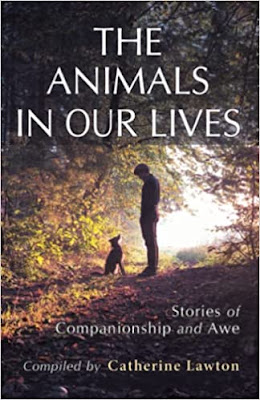
“The Animals in Our Lives,” Edited by Catherine Lawton


If we didn’t have a pet as a child or an adult, we can likely think of animals that left an impression, often a major one. The childhood dog I remember the best was Skipper, a collie-German shepherd mix who was one of the most loving dogs I’ve known. He arrived at Christmas when I was six, and he became a playmate, a friend, a companion, and many times a big tease. 

The Animals in Our Lives: Stories of Companionship and Awe is a collection of pet stories, written by various authors and assembled and edited by Catherine Lawton. It includes 43 stories of dogs, cats, farm animals, unusual pets, and wild animal encounters.


You’ll meet Shelly, the dog who helped Lawton work through empty-nest syndrome; Bogar, the dog who lived through the Holocaust; Grace the therapy dog; Bob the angel cat; the sheep who behaved like a pony; a peacock who served as a sign; the cows who served as the audience for a prayer meeting; singing crickets, Dostoevsky the iguana, and Bo Bo the Hedgehog (who brought cheer and hope to a boy during the Chinese Cultural Revolution), among many others. 


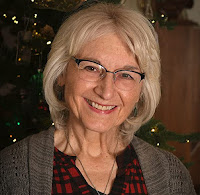
Catherine Lawton

Most of the accounts are stories, but poems are also included. “Heartwarming” is an overused word; these stories and poems are that, but they also serve to encourage, to cheer (and cheer up), and to strike a note of wonder at the ways animals of all kinds find their ways into our lives and our hearts. 


The founder of Cladach Publishing, Lawton is the author of several books – two poetry collections (Remembering Softly: A Life in Poems and Glimpsing Glory); the non-fiction book Journeys to Mother Love; Face to Face, a novel; and the children’s story Something is Coming to Our World. She received a B.A. degree in English from Pasadena College / Point Loma Nazarene University and has worked as a teacher, church musician, editor, publisher, and speaker. She lives in Colorado.


The Animals in Our Lives is a small gem of a book. It reminds us of the animals in our own lives. It certainly reminded me of the animals on my own life, like the spaniel who slept at my feet while I wrote two novels and the bald eagle who flew alongside me while I was biking along the Missouri River. The collection of stories and poems is a delightful reminder of how pets and wild animals can both bring joy into our lives.


Related:


Glimpsing Glory: Poems by Catherine Lawton.

Monday, March 9, 2020

Fiction and Faith: The Importance of Stories


(This is the text of my remarks at the Artists of Central Concert, Central Presbyterian Church, St. Louis, Mo., on Feb. 29, 2020.)

I’m one of those fortunate people who can tell you exactly when and where I became a Christian. It was Jan. 26, 1973, about 8:30 p.m. I was standing in a hallway of the basement of the main lecture building at Louisiana State University, when I prayed to receive Christ. 

Many Christians don’t have those specifics. My wife, for example, was raised in a Christian home, and she can’t remember when she wasn’t a believer. She remembers her baptism in a local river, not the least because she saw a snake swim by. 

Many writers of faith can tell you exactly when they felt called by God to write. Others can’t. I was a writer before I was a Christian. I wrote my first story, a mystery, when I was 10. I wrote James Bond satires at 14. At 15, I was rewriting fairy tales into contemporary settings. At 17, I was writing poetry – really bad poetry. In college, I wrote a one-act play for an exam in Chinese history. I majored in journalism, spending a lot of time writing for the campus newspaper. After college, I made my living by writing, especially corporate speechwriting. Writing has always been a part of my life and career.

To continue reading, please see my post today at Dancing Priest.

Photograph by Štefan Štefančík via Unsplash. Used with permission

Wednesday, January 30, 2019

“Coming Home” – Seven Novellas about Tiny Houses


For the last two years or so, a common publishing event has been a joint work by a group of authors writing on a common subject or theme. It might be Christmas or Valentine’s Day romances, for example, or a group of mystery stories. But I haven’t seen a theme like what I found in Coming Home – a collection of seven short works about tiny houses, those small home constructions often built for homeless people, single people, or people who want to de-clutter their lives.

The stories are primarily romances, and the role played by a tiny house varies by the author. 

In “Love is Sweeter in Sugar Hill” by Ane Mulligan, a hospital RN, who lives in a tiny house, finds herself constantly butting heads with the hospital’s administrator – and a backdrop of medical malpractice. “Kayla’s Challenge” by Linda Yezak begins with an almost-bride in Savannah, Georgia, running away from the altar (with the groom’s approval) and learning to become self-sufficient in the Texas Hill Country. In “If These Walls Could Talk” by Pamela Meyers, two people believe they own the title to an old Victorian home on a Wisconsin island. Romance ensues.

In “First Love” by Yvonne Anderson, an older woman is trying to put her life back together after a divorce and begins living with her dog in a tiny house near her childhood home. “Dash of Pepper” by Kimberli McKay involves a young woman who herself falling for exactly the wrong kind of guy. “Big Love” by Michael Ehret is about a young woman who runs a tiny home construction company that’s part of a family’s larger building company. She’s to be interviewed by a hotshot architectural magazine writer who plans to do a number on her and who lies about who he is at their first meeting. And “The Light Holding Her” by Chandra Smith is about a woman living in a tiny house meeting the missionary guy next door and being stalked by someone who keeps leaving yellow marbles. 

The stories of Coming Home are all entertaining and read quickly. I was surprised by the one I considered the best romance in the group – “Big Love,” the one written by the only man among the writers. I suppose the moral of the tiny house story here is that, yes, men can write romance stories, too.

Top photograph by Geran de Klerk via Unsplash. Used with permission.

Wednesday, December 19, 2018

5 Plays, a Story, and a Novella for Christmas


It’s that time of year for last-minute gift buying, wrapping presents, decorating trees, family celebrations, and reading stories about Christmas. Christmas isn’t only about an abundance of choices for gifts; it’s also the time of the year for an abundance of seasonal choices for reading. You can reach for old favorites like A Christmas Carol or any of the other Charles Dickens Christmas stories, or a shorter work like A Child’s Christmas in Wales by Dylan Thomas.

You can also look at genre books about Christmas – science fiction stories, horror, stories, murder mysteries (lots of murder mysteries), and even celebrate the season with your favorite zombie (yes, there are stories about zombies and Christmas).

To see how Christmas is being treated by contemporary writers, I did a kind of random selection and read a collection of plays, a novella, and a short story. I learned that if there if is one common characteristic in Christmas stories, it’s how wildly diverse they are. These selections are not meant to be representative; I don’t think it’s possible to find representative works of Christmas stories in all of their sub-genres.

Five Christmas Plays

Writer David Winters has written about faith and work (Taking God to WorkSabbatical of the Mind) and a mystery (Driver Confessional). He’s also written Five Christmas Plays, short theatrical works designed specifically for churches to use as part of their Christmas observances. 

“The Singing Trees” is about having an obsession for the perfect Christmas – the right decorations, the right food, the right table settings, the right everything – and what happens when it all blows up. “I’ll Be Late for Christmas” is about a family waiting for the father to return from his Army deployment, and he is way past his expected arrival. “Christmas Prayer of Forgiveness” is about a family broken by abandonment and divorce, and what happens when the father returns, seeking forgiveness. In “The Christmas Cabin,” a father brings home an unexpected guest – his daughter from a long-ago relationship. And “Grandma Louise’s Christmas Miracle” is about long-ago stories and the seeming impossibility of a contemporary miracle. 

Winters uses sentiment, humor (the waitresses in “I’ll Be Late for Christmas” are the kind of sassy servers you want to meet in small-town diners), empathy, understanding, and basic principles of faith to tell his stories. Each of the five plays is a telling of the Christmas story in a different way.

Pieces on Earth

Author Cathy Bryant has written some 13 books of fiction (like the Miller’s Creek series) and non-fiction (Christian devotionals). Pieces on Earth is a novella that tells the story of Liv, a young Navy wife living in Pensacola with her husband Jeff and daughter Chesney. Jeff’s overseas tours of duty are supposed to be over, and Liv is looking forward to a Christmas with her parents and family in snowy Colorado. Jeff is suddenly ordered to Afghanistan (he’s a Navy pilot) and Liv’s plans are completely upset. Liv discovers she’s pregnant and is so angry with her husband that she chooses not to tell him before he leaves.

She’s a believing, practicing Christian, but she’s also angry with God for allowing her plans to be upset. She stops going to church and starts spending time with her more materialistic secular friends. One faith connection she keeps is telling Bible stories to four-year-old Chesney, helping the child understand the overall story of the Bible. She starts to worry when Jeff’s regular calls home stop; then a friend’s husband is reported killed in action and she learns her own husband is missing in action. 

Pieces on Earth is a poignant story of the waning and waxing of faith, how circumstances can seem overwhelming, and how God is always faithful.

Mystery of the Beautiful Old Friend

Michelle Ann Hollstein is the author of the Aggie Underhill mystery series, a fantasy trilogy, a paranormal mystery series, a novel, and several non-fiction books. In the short story “Mystery of the Beautiful Old Friend,” Aggie Underhill, a slightly past middle-aged woman living in Palm Springs, California, is sitting at lunch with her friends Betty Wilcox and Roger Dunlap when she sees her close, personal friend Tom Wood sitting at a nearby table, with a beautiful young woman. Aggie has no room for jealousy; she’s in love with Tom but not ready for marriage, so she’s told him that they should date other people. But one this beautiful?

To make herself feel better and to perhaps compete with the young beauty, Aggie dyes her hair. It’s supposed to be reddish highlights; it turns into fire-engine red, or, as her friend Roger says, “Woody Woodpecker red.” She and Betty go to the mall for Christmas shopping when they spot the beautiful young woman. In the middle of their spying, one of Santa’s elves is found murdered (bodies always seem to turn up when Aggie Underhill is around). 

“Mystery of the Beautiful Old Friend” focuses on the more commercial aspects of the Christmas season. It’s also a funny murder mystery; what goes through Aggie’s mind when she realizes what’s happened to her hair causes more than a few laughs.

Top photograph by Freestocks.org via Unsplash. Used with permission.

Monday, July 23, 2018

“River Road” by Charles Martin


It’s a common question asked of authors, and especially authors of fiction: Where do you get your story ideas from? Charles Martin partially answered that question by publishing River Road, a collection of stories from his childhood, teen, and college years.

River Road is the neighborhood where he grew up in the 1970s and 1980s. It is not unlike the neighborhood where a lot of us grew up in the 1950s, 1960s, and later. His experiences are more than familiar; his childhood was much like my own and like millions of other boys growing up in America, and especially the American South.

Martin wrote a few of these stories in high school and most of them in college. What emerges from them now is one writer’s beginnings. If you’ve read Martin’s novels, you can find the man in the child by reading these stories.

He writes of playing with a friend in a sandbox and digging a hole intended to each China; how he was caught stealing and the experience of terror while expecting a neighbor to call his mother; his career objective to be a cowboy; how a bully (himself) got unforgettably bullied; the laugh-out-loud experience of a full bladder while your mother is trying on clothes; when a fishing expedition goes awry and a man who doesn’t know how to swim saves a boy who doesn’t know how to swim; the fine art of stealing tangerines from a neighbor’s tree; what chewing tobacco can do to a boy’s stomach; ordering books from the monthly reading club at school, not to actually read the books but to have the most number of books with sports heroes; fishing with his grandfather and how his grandfather cut his hair; when your father is your football game referee and he calls penalties fairly; the theft of his favorite bicycle; and more.

Charles Martin
These stories all describe the commonplace, not unusual experiences of boyhood, with its joys and sorrows, and triumphs and humiliations. They describe growing up and all the stories we live (or live down) to survive to adulthood.

Martin includes “An Open Letter to My Boys,” which should be required reading for all of us, and “Random Rules for Writers,” which includes such advice as “Don’t use eight words when two will do.”

If you read River Road, you will smile and laugh, occasionally cringe in recognition, and shed a tear in memory. In those things, it is much like a Charles Martin novel, an experience to be grateful for.

Related:


Top photograph: a view from River Road, Jacksonville, Florida.

Tuesday, January 23, 2018

Dancing King Stories: Heathrow Airport


In my novel Dancing King, the arrival of the Kent-Hughes family at London’s Heathrow Airport is one of the early scenes of the book.

Heathrow is the fifth busiest airport in the world. It averages about 1,300 flights a day departing or arriving, and more than 75 million passengers every year find their way to and from those planes.

Arrival at Heathrow usually means you arrive with jet lag. Flights are arriving from America, the middle East, Australia and New Zealand, and Asia. There are long corridors to walk from the plane, and the British had conveniently placed bathrooms along the way.

As you walk from your plane, it’s not unusual to see some passengers moving as fast as possible. Their goal is to arrive at UK Border Control before everyone else does.


To continue reading, please see my post today at Dancing Priest.

Wednesday, December 20, 2017

“This Side of the River” by Tom Darin Liskey


A boy is almost 12. He lives with his mother, who struggles, unsuccessfully, with alcoholism. She has a live-in boyfriend who seems, to the boy, to be rather worthless; the only thing he excels at is beating the boy’s mother. The boy keeps hoping that, one day, his mother and father will be reunited.

It’s telling that only the violent boyfriend has a name: Woodrow.

These are the main characters of four connected stories by Tom Darin Liskey and published until the title of This Side of the River.

In “Shelter,” the boy who’s called “the lush’s son” by his classmates is going trick-or-treating for Halloween. He and his mother have moved to a new town; she’s trying to evade the abusive boyfriend. What is a normal activity for most children becomes something of an ordeal for the boy, as he tags along with other families so that people will think he’s with them.

In “Wonderland,” the mother is back living with the abusive boyfriend. She convinces him to take the boy rabbit hunting, but it’s an outing doomed from the outset. The boyfriend had previously tried to raise rabbits, in some get-rich-quick scheme involving his understanding of Russian market dynamics. He’d ended up bringing them to the rendering plant, including the one the boy considered his personal pet. The rabbit hunt will not end well.

In “Motel,” the boy’s mother takes him to work with her when she can’t find a babysitter. In this case, work is cleaning rooms at a small motel. It’s Christmas-time, and in the car the boy and his mother sing carols together. They’re living on the razor’s edge, but come to know what “the kindness of strangers” actually means.

And “In Wilderness,” the boy is now living with his father in a nomadic kind of existence. His father cuts and clears storm-damaged trees, and more work is always someplace else. It’s something of hand-to-mouth existence, but storms always occur and the father manages to find enough work to keep them fed. Then the day comes when the father and the boy will have to make a journey that neither of them want.
Tom Darin Liskey

For almost 10 years, Liskey worked as a journalist in South America. His stories, articles, and photographs have been published in such magazines and journals as Crime Factory, Driftwood Press, Mount Island, Biostories, Hobo Camp Review, Roadside Fiction, Blue Hour Magazine, Midwestern Gothic, and others. He’s also the author of another work of fiction, The Bridesmaid (2016).

The writing in This Side of the River is spare and honed. Liskey sits the reader right there with the characters. The boy’s anger and despair becomes the reader’s. The mother’s weakness with both alcohol and the boyfriend become understandable as much as they’re detested. The people in these stories, however, keep moving forward, driven by a strange kind of hope. Hope is not always fulfilled, but there is always a promise of redemption.


Top photograph by Jessica Furtney via Unsplash. Used with permission.