Showing posts with label grief. Show all posts

Tuesday, June 23, 2026

Sara Barkat Takes Us into “Otherside”


Until the late 1970s, my reading of science fiction was limited to the stories and novels of Ray Bradbury, Stranger in a Strange Land by Robert Heinlein, and The Day of the Triffids by John Wyndham. I didn’t have any inherent bias against science fiction; it was more my reading interests were in other directions. 

For some reason, I picked up a paperback edition of Lord Valentine’s Castle by Robert Silverberg. Then I went to the Foundation trilogy by Isaac Asimov (published in the 1950s, it may explain American politics of the last decade). Then the novels of Jerry Pournelle and Larry Niven. And Arthur C. Clarke, whose Rendezvous with Rama and Childhood’s Endremain among my favorite books. But as much as I loved the writing of J.R.R. Tolkien and The Lord of the Rings, even then I knew how much it was changing science fiction. Fantasy was taking over. 


Years passed. Reading interests changed. And then the old memories stirred when I read The Shivering Ground by Sara Barkat. The wonderful graphic version she did of H.P. Lovecraft’s The Colour Out of Space, was another reminder, even though it’s usually called a horror story. And now she has a new novel, Otherside, which is about as close as you can get to mainstream science fiction as you can.


To continue reading, please see my post today at Tweetspeak Poetry.


Some Tuesday Readings


For the Road to Santiago – poem by David Whyte.


The Wordless Rose: Ruchard Wilbur’s ‘Advice to a Prophet’ – Alexander Fayne.


Veshicular – poem by Franco Amati at Garbage Notes.


Poetry in Prose – Where Love is Born – L.L. Barkat at Tweetspeak Poetry.


Lives upon Lives – poem by Baruch November at Evey Day Poems.


“Requiem,” poem by Robert Louis Stevenson – Joseph Bottum at Poems Ancient and Modern.

Tuesday, October 7, 2025

Poets and Poems: Donna Vorreyer and “Unrivered”


I’ve reached the age when you realize most of your life is behind you. Your priorities and interests have changed. You care more about art, for example, than you used to. Judged by how much you spend reading it, the most interesting thing in the newspaper is the obituary section.  

You realize that you’re a link in a chain; that’s why you are considerably more interested in family history and genealogy and FamilySearch.org is one of your most visited web sites. You also learn why your mother spent so much of her later years in doctors’ offices, and why your mother-in-law stays fascinated with watching the antics of birds.


In short, you think about things that weren’t even on your radar scope 20 and 30 years ago.


Poet Donna Vorreyer is thinking about those things, too, things like grief, aging, longing, the beauty of nature, why your bones are aching more, the importance of holding on, and why those small daily delights become more important and vital than your career. “I have nothing left to prove,” she writes. And she’s assembled her thoughts, meditations, and observations to form her latest collection, Unrivered: Poems. 


To continue reading, please see my post today at Tweetspeak Poetry.


Some Tuesday Readings


Delicate Machinery Suspended: Poems by Anne Overstreet – review by Maureen Doallas at Writing Without Paper.


“Melbourne Heatwave,” poem by Philip Hodgins – Lucas Smith at The Sprawl of Quality.


Today, or was it yesterday – poem by Sonja Benskin Mesher.


Saint of Avowal – Lisa Marie Basile at Every Day Poems.


“La Belle Dame sans Merci,” poem by John Keats – Sally Thomas at Poems Ancient and Modern.


Wednesday, April 23, 2025

Some Wednesday Readings


The Beauty Around Me – Brian Miller at Notes from an East Tennessee Farmer.


The Forgotten Battle of Menotomy – Michael Ruderman at American Heritage.


Freedom is still the Revolutionary War’s legacy – Michael Aulin at The Spectator.


John Adams and the Rubicon of Lexington / Concord – Chris Mackowski at Emerging Revolutionary War Era.


A Phone that Does Not Ring – David Bannon at Front Porch Republic.


250th Anniversary: Benedict Arnold’s War Begins, April 22, 1775 – Emerging Revolutionary War Era.


Agrippa Hull: A Revolutionary Story – Talya Leodari at The Journal of the American Revolution. 


Drama at the Old North Bridge - Rick Atkinson at American Heritage.


Painting: John Adams about 1775. 


Friday, November 29, 2024

Only for a time


After I Peter 1:3-9
 

It is only for a time,

only for a little while,

that we are grieved,

afflicted, and beset

by various trials, tests,

for a purpose: to show

our faith is genuine,

tested and refined

by trial, refined

to a purity finer

than pure gold, 

for a purpose: 

our faith results in praise,

our faith results in glory,

our faith results in honor,

at the precisely right time

of the revelation.


Photograph by Elyas Pasban via Unsplash. Used with permission.


Some Friday Readings


A Pastoral Prayer – Tim Challies.


The Desire – poem by Hester Pulter at Kingdom Poets (D.S. Martin).


2024: Ten Reasons I'm Thankful This Thanksgiving Day – Brian Miller at Notes from an East Tennessee Farmer.

Tuesday, October 29, 2024

Poets and Poems: Sarah Carey and “The Grief Committee Minutes”

A year passed before I came face to face with the grief over the death of my father. There wasn’t time for me to grieve; I was the executor of his estate, and his estate was a mess. A huge mess. He’d kept my mother unaware of just what a mess it was, and she was as bewildered as the rest of the family. When we finally emerged from the financial fog, grief hit me like a freight train. 


“There is no grief like the grief that does not speak,” Henry Wadsworth Longfellow once wrote. The man knew what he was talking about.


Poet and writer Sarah Carey knows about grief. Her new poetry collection, The Grief Committee Minutes, isn’t solely about grief, but much of it is. What I particularly like is how Carey identifies and explores the kinds of grief.


To continue reading, please see my post today at Tweetspeak Poetry.


Some Tuesday Readings


T.S. Eliot Put His World Back Together Again – Douglas Murray at The Free Press.


New Release! The Colour Out of Space Graphic Novel, Illustrated by Sara Barkat – Tweetspeak Poetry.


The Cure – poem by Gabrielle Myers at Every Day Poems.


How I Turned My Family History into a Novel – Joanne Howard at Writer’s Digest.


“Mr. Flood’s Party,” poem by Edward Arlington Robinson – Sally Thomas at Poems Ancient and Modern.

Tuesday, November 14, 2023

Poets and Poems: B.H. Fairchild and "An Ordinary Life"


I can’t imagine the grief of losing a child, and I hope I never experience it. In our minds, at least, and in our cultures, the death of a child violates the natural order of things. My grandmother never spoke much about it, nor my father, but I would hear occasional murmurs about Eloise, the daughter and sister who died at age 2 in 1915. My father would have been her little brother, so he never actually knew her. My grandmother mourned her child the rest of her life, but it was a quiet, intensely personal mourning. 

It was that kind of quiet mourning that I discovered when reading An Ordinary Life: Poems by B.H. Fairchild. He did experience the grief from loss of a child when his son Paul died at age 46 in 2017. It’s not the same as losing a young child or an infant, because now an almost full lifetime of experience and memory is packed into the death. And there’s a daughter-in-law and grandchildren to be considered.


To continue reading, please see my post today at Tweetspeak Poetry.


Some Tuesday Readings


The Temple of Mithras and Vince Street Roman Wall – A London Inheritance.


A Headstone Dedication for John S. Taplin – Darren Rawlings at Emerging Civil War.


Things Worth Remembering: The Singing Will Never Be Done – Douglas Murray at The Free Press.


Accused of Spying: Fannie Cowper of Suffolk, Virginia – Jeff Giambrone at Emerging Civil War.


Firefighter Artists of the Blitz – Spitalfields Life.

Friday, January 13, 2023

Poets and Poems: Nancy Murphy and “The Space Carved by the Sharpness of Your Absence”


A marriage fails. A mother dies. An only child goes off to college. A father’s health is failing. No one ever said life was easy, and we all seem to spend considerable time making sense of our lives and especially our relationships with loved ones and friends. 

It’s what poet Nancy Murphy does in The Space Carved by the Sharpness of Your Absence, her first poetry collection. She describes loss, separation, grief, and pain; the measure of those emotions can be seen in the title, “the sharpness of your absence.” You might think loss dulls with time, but Murphy reminds us that many things can suddenly make the loss piercingly real all over again.  


To continue reading, please see my post today at Tweetspeak Poetry.

Tuesday, November 29, 2022

Poets and Poems: Andrea Potos and "Her Joy Becomes"


You reach an age when you discover that, no matter how hard you’ve tried not to, you’ve become more like your parents than you thought possible. And you wonder how that happens. 

Poet Andrea Potos, in her new collection Her Joy Becomes, writes about her own mother – aging, becoming ill, not there any longer. The loss leaves a gap, until she catches herself doing the things her mother did, or is surprised by that familiar facial expression, or a memory surfaces. And she realizes that her mother hasn’t really left her after all. 


To continue reading, please see my post today at Tweetspeak Poetry.

Tuesday, January 25, 2022

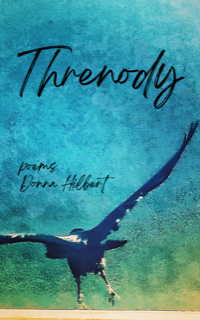
Poets and Poems: Donna Hilbert and "Threnody"


Poet Donna Hilbert has something to say about the idea of lament. And like the fine poet she is, she says it in poetry.


A lament is a poetic type inspired by deep, personal grief. The poetry of lament is as old as poetry itself, cording to the Encyclopedia Britannica, developing alongside the oral tradition of heroic poetry. And it’s found in most languages.


Examples of lament poetry have been found in ancient Sumeria, in Homer, in Roman literature, and in Anglo-Saxon England. Geoffrey Chaucer’s “The Man of Laws Tale” in The Canterbury Tales is a lament, as is John Milton’s “Samson Agonistes.” Wordsworth, Keats, and Shelley wrote lament poems, as did Sir Walter Scott and Thomas Hardy (“The Darkling Thrush”). With In Memoriam, Tennyson may have written a lament epic. Dylan Thomas and Pablo Neruda wrote poems of lament.

Hilbert, in Threnody: Poems, her new collection of 62 poems, continues that tradition of lament, demonstrating that the modern lament is as contemporary as its older and ancient predecessors.

To continue reading, please see my post today at Tweetspeak Poetry.

Tuesday, October 5, 2021

Poets and Poems: Sr. Sharon Hunter and “To Shatter Glass”


Sr. Sharon Hunter is making sense of her life, and she’s using poetry to do it.  

The 56 poems of her new collection, To Shatter Glass, are a journey into childhood and memory, the grief and pain of a broken marriage, and a coming to terms with one’s life and the people who have shaped it. This is the poetry of an interior pilgrimage, as real and palpable as any physical pilgrimage to a revered place. On this journey, Hunter is reaching for understanding and forgiveness, both for the people she knew and for herself. 


The poems are not easy to read; they were likely far more difficult to write. Hunter moves back and forth between memories of being raised by alcoholic parents, a marriage in which she often felt her husband’s abuse was justified, and the gradual steps toward resolution. These poems raise important questions about human brokenness, like whether we can ever be made whole in this life. 


To continue reading, please see my post today at Tweetspeak Poetry. 

Tuesday, September 21, 2021

Poets and Poems: Peter A and "Art of Insomnia"


In Art of Insomnia, the poet Peter A, and that’s the name he goes by, as in Peter A Writer, has created a chapbook of some 22 poems that are introspective and yet outward-focused. That’s a trick to pull off. Introspective poets tend to dwell on the self. Peter A casts himself in the context of others, both other people and other relationships. 

And the relationship that occupies the center in this collection is that of Peter A and his wife. 


The poems suggest that it is something far deeper than a broken relationship. Instead, they tell a story of the pain of physical separation, of loss, and perhaps even of death. 

To continue reading, please see my post today at Tweetspeak Poetry.

Tuesday, May 28, 2019

Poets and Poems: Shanna Powlus Wheeler and “Evensong for Shadows”


Poet and writer Max Porter tells us that grief is a thing with feathers. Shanna Powlus Wheeler would say it might have feathers, but grief is something that’s always with us, hidden but ever-present even in times of joy. Like joy, grief is part of life.

The title of Wheeler’s first full poetry collection, Evensong for Shadows, suggests the omnipresence of grief. Evensong is sung in the evening, as the day wanes. Shadows are a picture of what substance is, or was. Grief is life, or very much a part of life, a measure of the loss of love or happiness or relationship. The more intense the love, the greater the grief.

The opening poem, “After a Tour of Britain,” quietly introduces the theme. The poet is dreaming of “nameless ruined abbeys, / naves without roofs / like Holyrood in Edinburgh.” One thinks of Shakespeare’s “bare ruin’d choirs” in Sonnet 73, a lament of the passing of time and the approaching winter of old age.

To continue reading, please see my post today at Tweetspeak Poetry.

Sunday, February 4, 2018

Grief can be a good thing


After 2 Corinthians 7:9-10

Imagine my surprise to learn
that grief can be a good thing,
not the cause of grief, exactly,
it’s not a good thing,
but the grief that results,
that sorrow, that internal weeping
and sobbing without sound.
Grief is good when grief leads
to change, when it leads
to repentance, not a momentary,
glancing thought of feeling sorry
(“I apologize if I offended anyone”)
but repentance as living
a life because living a life
of repentance, that heart and mind
and soul of personal knowledge
and personal sorrow, leads
to the cross.


Photograph by Josh Adamski via Unsplash. Used with permission.

Tuesday, November 21, 2017

Poets and Poems: Simon Armitage Translates “Pearl”


By poetry standards, Simon Armitage is one of Britain’s most successful poets, with some 11 collections and numerous recognitions and awards. But his career has embraced far more than poetry. He’s written for opera, theatre, radio, television, and film. He’s published two novels and two travel books. He’s edited poetry anthologies. And he has translated Sir Gawain and the Green Knight from Middle to modern English, a work recognized by The New York Times and the Los Angeles Times as a book of the year.

You might think that translated from Middle to modern English shouldn’t be that difficult, until you try to read Chaucer’s Canterbury Tales in the original. What is curious about Sir Gawain and the Green Knight is a separate poem found in the manuscript with it, a poem simply called Pearl. It is the only known version of the poem in existence, and the manuscript is kept safely at the British Library in London.

No one know who the author of the poem might be. It’s possible that it’s also the author of Sir Gawain and the Green Knight, since it was found in the same manuscript and clearly written or transcribed by the same hand.


To continue reading, please see my post today at Tweetspeak Poetry.