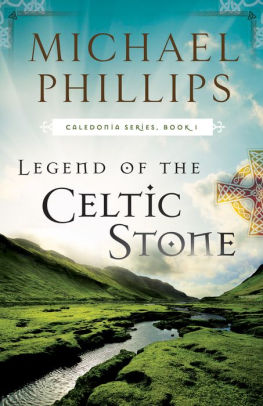
From the theft
and recovery of the Stone of Scone to the prospect of independence for Scotland,
author Michael Phillips continues his account of the fictional history of
Scotland and the contemporary story of Andrew Trentham, a member of Parliament
for Cumbria in northern England on whose shoulders will fall the decision for independence.
This is
the heart of Phillips’ An
Ancient Strife, in which he blends a contemporary story (and a little
romance) with critical periods of Scottish history. While the historical accounts
are based on fact and real events, Phillips tells them as fictional stories,
doing an excellent job of humanizing what happened, the people involved, and
the effects on Scotland and its people.
 Trentham is
exploring Scottish history for two reasons. First, he’s discovered that he has
Gordon ancestors, so that he’s part Scot and not the full-blooded Englishman he
thought he was. And second, he’s trying to understand Scotland, its people, and
its history, because of the critical role he will play in the British
Parliament’s vote on Scottish independence.
Trentham is
exploring Scottish history for two reasons. First, he’s discovered that he has
Gordon ancestors, so that he’s part Scot and not the full-blooded Englishman he
thought he was. And second, he’s trying to understand Scotland, its people, and
its history, because of the critical role he will play in the British
Parliament’s vote on Scottish independence.
The first
volume of this two-part “Caledonia” series, Legend
of the Celtic Stone, started the two-volume account (and was reviewed last
week). I was expecting something of a romance between Trentham and the American
journalist working for BBC but something changed between the two volumes. The
journalist turned out to be married but somewhat estranged from her husband,
and Trentham manages to fall in love with a rather fiery if diminutive Scot veterinarian.
I suspect that the author needed to keep the romance within the Scot family.
 |
| Michael Phillips |
Both books
are self-contained and can be read separately or alone, but they are obviously
the same story, with the same major characters and general narrative. In An Ancient Strife, Phillips tells
stories in depth about the Viking invasion, William Wallace and Robert the
Bruce, and the Battle of Bannockburn among others. And one of his major themes
is that Scotland has been betrayed by some of its own people as much as it has
by anyone else – brother battling brother, clan battling clan, region battling
region. That’s the “ancient strife” of the title.
Phillips is the author of 23 works of
non-fiction. He’s edited 27 works of the Scottish writer George
MacDonald, whose books had such
an impact on C.S. Lewis. He’s edited five works of Harold
Bell Wright and Ralph
Connor. He’s also co-authored 13 novels with his
wife Judith Pella, and written more than 40 original novels on his own.
If you want to learn more about Scotland’s
history and read a contemporary story at the same time, then An Ancient Strife will fit the bill
nicely.
Related:
Top photograph of Ben Nevis in
Scotland by George Hodan via Public
Domain Pictures. Used with permission.