Thursday, February 13, 2014

Love Poetry After Death


This post was originally published at The Master’s Artist.

Thomas Hardy is best known for his novels – The Return of the Native was at one time required reading in many high school or college English classes. His fiction has often been described as rather dark and brooding, and sometimes as depressing, but it was clearly part of the bridge that connected the Victorians to the Moderns.

Hardy also wrote poetry, and a considerable amount of it. Some of his best known poems during his lifetime were about his wife Emma. Now, lots of poets write poems for their wives, girlfriends or lovers. What distinguishes these love poems of Hardy’s is that they were written after Emma died in 1912 – and the two were barely on speaking terms at the time of her death. She died shortly after her 72nd birthday, which Hardy had ignored. He had not written love poetry to her before her death. He was already in love with another woman and would eventually marry her. And yet Emma’s death evoked a remarkable an outpouring of love.

“No one could have predicted the effect Emma’s death had on Hardy,” writes Claire Tomalin in the introduction to Unexpected Elegies, Poem of 1912-13 and Other Poems About Emma. “He immediately began to mourn like a lover. He had her body brought down and placed in a coffin at the foot of his bed, where it remained for three days and three nights until the funeral. And he began almost at once to write, revisiting the early love between them in his mind with an intensity that expressed itself in a series of poems.”

It was almost as if he fell in love with her after she died.

They had met in Wessex, Hardy’s “home turf” and the setting for so many of his novels. She came from a better class than he did, and both families opposed their marriage. They married anyway. Hardy published a romance novel in 1873, called A Pair of Blue Eyes, that is little known today but is partially based on their meeting and love affair. (I posted a review of it in 2012.)

Over the years, Emma helped him enormously in his writing work, but they grew apart. For the last decade of her life, they lived together under the same roof but rarely spoke.

And then she died, and Hardy seemed to fall in love with her again, or perhaps fell in love with the idea of her again. And the result was some 41 poems published form 1912 to 1920 (Hardy died in 1924).

The poems are rather simple and beautiful, the simplicity arising from profound emotion that speaks for itself. These are not lines dashed off in a fit of mourning but worked and refined and hammered into something very fine indeed. As I read Unexpected Elegies, I felt a sense of regret that at least one of these might have been read to her while she still lived. But then, they wouldn’t have been the poems they were, and are.

Here are two from the collection.

She Opened the Door

She opened the door of the West to me,
       With its loud sea-lashings,
       And cliff-side clashings
Of waters rife with revelry.

She opened the door of Romance to me,
       The door from a cell
       I had know too well,
Too long, till then, and was fain to flee.

She opened the door of a Love to me,
       That passed the wry
       World-welters by
As far as the arching blue the lea.

She opens the door of the Past to me,
       Its magic lights,
       Its heavenly heights,
When forward little is to see!

The Walk

You did not walk with me
Of late to the hill-top tree
       By the gated ways,
       As in earlier days;
       You were weak and lame,
       So you never came,
And I went alone, and I did not mind,
Not thinking of you as left behind.

I walked up there to-day
Just in the former way;
       Surveyed around
       The familiar ground
       By myself again:
       What difference, then?
Only that underlying sense
Of the look of a room on returning thence.


Photograph by Nadeeshx Jayawardana via Public Domain Pictures. Used with permission.

Wednesday, February 12, 2014

Reaching for Quietness


In The Fire of Delayed Answers, author Bob Sorge, discusses two camps (or two dominating ideas) of Christian faith, at least as practiced in the United States. The camp of quietness emphasizes the sovereignty of God; the camp of confidence emphasizes “the availability of God’s promises and power to those who believe.” And there you have to two major wings of evangelical Christianity in America.

We didn’t know it at the time, or refer to it this way at the time, but the terms fit. And they’ve fit for a long time. When we moved to St. Louis in the late 1970s, we had a difficult time finding a church like we had in Houston. In Houston, we attended a church that Sorge would characterize as firmly in the camp of confidence. We couldn’t find a similar church in St. Louis, and we ended up at a church just as firmly in the camp of quietness.

Some years later, we did find a new church (confidence camp) and another that was closer to where we had moved (again, confidence camp). When that church began to blow up, we eventually found our way to where we are now, a Presbyterian church that is heart and soul in the camp of quietness (Presbyterian is another name for “sovereignty,” I think).

The fact is, you need both camps. And the fact is, you rarely find both in the same church. But you can individually keep the two in balance, until, as Sorge puts it, the Assyrians invade and “all hell breaks loose.” He says it’s amazing how quickly “our quietness and confidence can disappear. It can be an enormous challenge to rebuild both quietness and confidence while the crisis continues to rage about us.”

Did someone say crisis? What crisis?

What crisis, indeed.

A very close relative has just been moved to hospice care.

I haven’t had a boss at work in over four months, the organization is being reorganized around us, and I’m not likely to have a boss for at least another four months.

In the past six months, our church has lost almost all of its pastors and some key staff people. The elders are working very hard to lead, which I think will be a very good thing for the long run. In the short term, things seem bewildering at times (and I’m a deacon).

Two of the organizations I write for online are experiencing change, and both are still sorting things out.

It does feel at time the Assyrians have arrived. I don’t feel quiet, and I don’t feel particularly confident.

But I know which camp I lean towards in a time like this one, and that’s the camp of quietness, the cleft in the rock away from the wind and fire.

As Sorge says, hear of the heart of your Father:

“Find a place of quietness in Me by settling your soul and stilling your spirit, and relinquish everything into My hands; and let your heart rise up in confidence in Me, by pressing into My face, devouring My word, claiming My promises, and making the good confession.”


Led by Jason Stasyszen and Sarah Salter, we’ve been reading The Fire of Delayed Answers. Today concludes the discussion on chapter 10, “The Dance of the Two Camps.” To see more posts on this chapter, please visit Sarah at Living Between the Lines.

Photograph by Petr Kratochvil via Public Domain Pictures. Used with permission.

Tuesday, February 11, 2014

Poetry at Work: The Poetry of Regime Change


It happens to virtually every organization: a crisis, an executive retirement, an executive leaving, some outside influence or event. The organization, meaning the people who are the organization, finds itself in the midst of an organizational convulsion.

I call it regime change. And there’s poetry at work here, too.

It’s different from classic reorganizations; those are usually, or typically, undertaken by existing management. Regime change usually comes from outside the day-to-day organization – another part of the company takes over, a new CEO arrives, the Board of Directors decides a change is needed, a financial crisis hits, a reputational crisis hits, and many other reasons.

To continue reading, please see my post today at Tweetspeak Poetry.


Photograph by Petr Kratochvil via Public Domain Pictures. Used with permission.

Monday, February 10, 2014

A Desire to Write


I don’t exactly when I decided that writing would be a significant part of my life. But it was later than one might think. A lot later.

It wasn’t when I was a child, even though, when I was 10, my father brought home a blank-sheeted book he had bound at his printing business – for me to write a story. But it was largely because I was a voracious reader, and he thought I could write my own story. I did, or at least part of a story, a mystery, about a kids who discover that a grandfather clock hides a tunnel. (That’s all I remember about it.)

It wasn’t in high school, even though my favorite subject was English, and even though I has discovered Twain, Dickens, Shakespeare, Cervantes, Frost, T.S. Eliot, and so many other writers and poets.

When I started college, I was in a pre-med curriculum, and that lasted all of two semesters. By the end of my freshman year, I had already taken two semesters of life sciences and two semesters of chemistry. And I had another 13 hours of chemistry to go. Since Glynn + chemistry = total misery, it was time to rethink what I wanted to study. I ended up in journalism because I knew I could write, and because I wasn’t going to lose any course credits.

What I didn’t know how to do was type, and typing was a requirement to enter the Journalism School. So the summer between my freshman and sophomore years, I taught myself to type. Imperfectly. But adequately enough to get into journalism.

But as odd as this might sound, I didn’t think of journalism as writing. And I spent less than a year working for a newspaper before going to work in corporate communications.

It was in 1975 and 1976 that the idea of writing began to enter my head, writing apart from what I did at work. And it happened, I think, because I was unceremoniously pushed into speechwriting. I liked it; in fact, it is still what I consider the best part of all corporate communications work – the best and the most difficult. Speechwriting requires you to write stories to be told aloud, stories for people to hear as opposed to stories for people to read. And that requires work in understanding storytelling, rhetoric, language, and humor (among a lot of other things). It’s no surprise that most communications people don’t like speechwriting.

But I did. Speechwriting also led me back to poetry. From 1976 to 2006, I had many kinds of jobs and responsibilities, and speechwriting was always part of every one of them.

An interesting thing about speechwriting is that speechwriters do stand in the shadows. Someone else will get credit for their best work (and blame for their worst). In a very real and sometimes profound way, I was striving to do my best work for someone else.

In A Million Little Ways: Uncover the Art You Made to Live, author Emily Freeman says something as simple as it’s profound: “I don’t believe there is one great thing I was made to do in this world. I believe there is one great God I was made to glorify. And there will be many ways, even a million little ways, I will declare his glory with my life.”

Freeman goes on to discuss why desires are put in our hearts, desires like a desire for writing. It’s not so that we can excel and become famous authors, receive honorary degrees and awards, and speak and be lionized at writing conferences.

I don’t believe I am “called” to write. I do believe that my heart has the desire to write, but not because I have wonderful stories to tell.

No, like speechwriting, my desire to write is defined by doing my best work, all my work, for someone else.


Over at TheHigh Calling, we’re discussing A Million Little Ways. Today’s discussion will be live at 2 p.m. Central time. Joinus, and find out what people have to say about desire.


Photograph by George Hodan via Public Domain Pictures. Used with permission.

Sunday, February 9, 2014

The sunflower


She left a flower
on the kitchen counter,
a single flower,
a single sunflower
placed on the marble surface,
yellow against gray, the edges
of the petals already darkening
as life ebbed slowly, leaving
a yellow stain behind.


Photograph by Rostislav Kralik via Public Domain Pictures. Used with permission.

Saturday, February 8, 2014

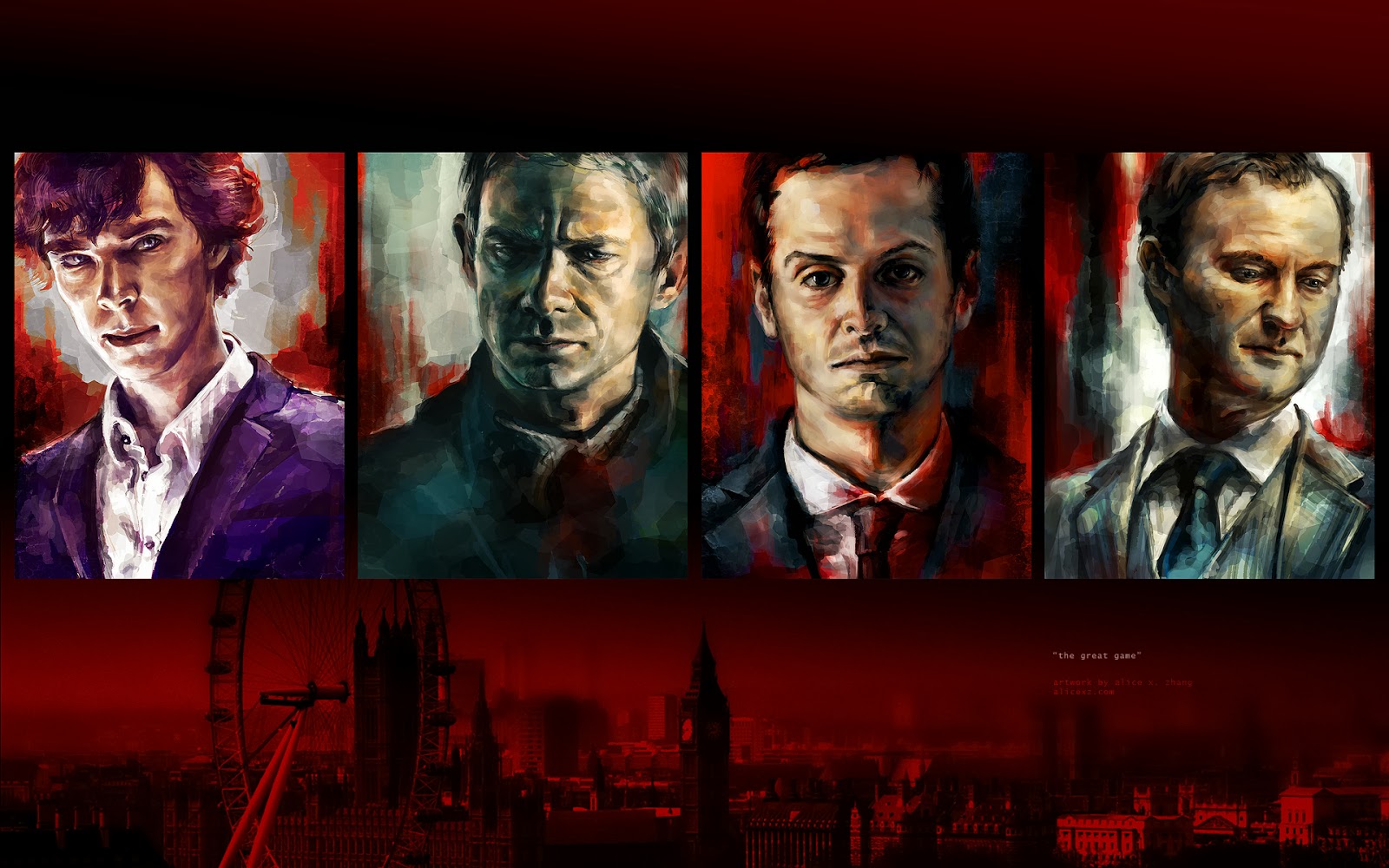
I'm Sherlocked


Last Sunday night, some people watched the Super Bowl. Well, perhaps a few more than some. I didn’t. My wife and I watched Downton Abbey (and were glad to see Maggie Smith with some acidly wonderful lines again), and then we watched  Sherlock Holmes.

Sherlock Holmes. If you haven’t seen this version of Arthur Conan Doyle’s famous detective, then you have missed what is likely the best (and I can say that because I’ve seen them all).

This Sherlock Holmes is the PBS series starring Benedict Cumberbatch and Martin Freeman (Bilbo in The Hobbit). Sunday night was the third (and last) episode of season three. (Only three episodes in a season! What can the British be thinking? Only three?)  I didn’t think the episode could equal the one from the week before – John Watson’s wedding, but it did (it even included a tongue-in-cheek reference to The Hobbit). It’s been a long time since I’ve been this blown away by a television program.

Episode 2 – the wedding – included what has to be one of the most extraordinary wedding toast by a best man (Sherlock) ever. It’s a long segment of the episode; in fact, the episode is largely built around the wedding toast.

As long as it’s available on YouTube, here are two parts of that wedding toast.


Friday, February 7, 2014

Dashiell Hammett’s “The Hunter and Other Stories”


I first met Dashiell Hammett (1894-1961) at the movies, specifically, the movies that were later run on television. I don’t know how old I was when I first watched William Powell and Myrna Loy in The Thin Man, but I do know I loved the movie. And then I saw Humphrey Bogart as Sam Spade in The Maltese Falcon.

I probably saw Hammett’s name in the movies’ credits (“based on the novel by”), but it likely didn’t mean anything. My understanding of who Dashiell Hammett was and his writing had to wad until the mid-1970s, when a number of his books were republished. I read The Maltese Falcon, The Thin Man, The Dain Curse, The Glass Key, and Red Harvest (the Library of America has assembled all of them in one volume). I learned that all of his novels except The thin Man had been first published in serial form in various magazines of the hardboiled mystery and suspense genre that were common well into the 1950s (about the only survivors of the genre are Ellery Queen’s Mystery Magazine and Alfred Hitchcock’s Mystery Magazine). I learned that he wrote numerous stories and several screenplays.

And I learned about the man and his life – his work as a Pinkerton detective, his battle with tuberculosis, how he started writing, his family his relationship with writer Lillian Hellman (part of the story in the movie Julia; Jason Robards played a credible Hammett); and how he was caught up in the communist scare of the late 1940s and early 1950s. He refused to testify before the House Un-American Activities Committee, was sent to prison for that refusal, and was blacklisted by both publishers and movie studios.

I still enjoy reading his stories and novels His prose is lean, spare and power-packed. He was the best of the hardboiled detective school writers, and even today he’s recognized for being among the finest of American writers.

I have another reason for enjoying his writing. My father was a fan. He read Hammett in the 1930s and 1940s, in all those mystery magazines. In fact, my father was the “target demographic” of many of those magazines, although the term wasn’t used back then. Reading Hammett is a connection to my father, and a connection to a very different time in American history and culture.

Hammett’s stories have been collected and published over the years, and now comes The Hunter and Other Stories, published by The Mysterious Press and edited with very helpful commentary by Richard Layman and Julie Rivett. It includes 18 stories and three “screen stories,” or plot summaries for movies. Most of the stories, including the title story, have never been previously published.

Not all of the stories are crime or detective stories; Hammett often reached beyond the mystery and suspense magazines to reach a broader audience. But they are all recognizably Hammeett, with their tough, lean prose, action-filled scenes and often surprising twists and turns.

In “The Hunter,” a detective investigates a fraudulent check, and it’s all in a day’s work. “The Diamond Wager” concerns a bet – whether a valuable necklace could be stolen from a jewelry store in Paris. “Magic” has a magician delivering what will cause himself personal pain. “Faith” is about the tragedy that dogs a man’s life, and what he does to avoid something worse. “The Cure” is also about a bet – that one man’s fear of swimming can be cured by another man (and the consequences are completely unexpected).

The three screen stories – “The Kiss-Off,” “Devil’s Playground,” and “On the Make” – are recognizably noir.”The Kiss-Off” eventually became the 1931 movie City Streets, starring Gary Cooper and Sylvia Sydney. “On the Make” was filmed and released as “Mr. Dynamite” in 1935. “The Devil’s Playground” was created, the editors say in their commentary, as part of the deep interest in all-things-China in the 1920s and 1930s (remember Charlie Chan?) but was never filmed.

It’s a fascinating volume. The stories are generally all period – they wouldn’t quite fit, or fit very well, with contemporary sensibilities. But they are stories by Dashiell Hammett, they bear his trademark and imprint. And that means they are and will continue to be entertaining.

My father would have enjoyed them.