Showing posts with label Bible study methods. Show all posts

Wednesday, February 2, 2022

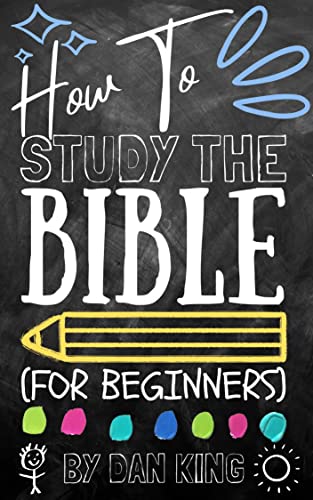
"How to Study the Bible (for Beginners)" by Dan King


More than 40 years ago, as a new Christian, I took a series of courses offered by my church through the extension service of a Bible college. It was one of the most valuable things I could have done. My courses included Old Testament Survey, New Testament Survey, and Bible Study Methods. Our final exam in Bible Study Methods was to discuss one verse in the Gospel of John: John 11:35. It happens to be the shortest verse in the entire Bible: “Jesus wept.”  

What I learned in those courses have lasted a lifetime. 


When Dan King began a new position with his church, the first thing he focused on was how close his students were to the Word of God. That led to a series of lessons on Bible study. And that led to a primer, How to Study the Bible (for Beginners). King has three goals in his teaching and with this book: build a stronger understanding of the Bible, learn how to read the Bible intelligently, and “fall in love with the Book.”

 

Dan King

The book starts at ground zero – the basic questions in his church’s catechism. What is the Old Testament? What is the New Testament? Why do we call the Bible the Word of God? He moves into evidences for the Bible being inspired. An overview of the Old and New Testaments follows. He reviews the three types of Bible translations (literal, dynamic, and free), explains how to do a Bible word study, considers rules for interpretation, and then outlines what a basic Bible study is like. He also provides a number of resources.


King is the author of The Unlikely Missionary: From Pew-Warmer to Poverty-Fighter. He’s also the co-author of Activist Faith: From Him and For Him and a contributor to Finding Church: Stories of Learning, Switching, and ReformingMaking Space: Welcoming God’s Presence, and Soul Bare: Stories of Redemption. He serves as the director of Family Ministries at St. Edward’s Episcopal Church in Mount Dora, Florida, and founded and operates Fistbump Media, a digital marketing agency. He lives with his family in Florida.


How to Study the Bible (for Beginners) is aimed at young people and people new to faith. But it has value and application for all Christians, no matter where they are in their faith. It’s a guide, it’s a reference manual, and it’s a reminder of just how much value there is in studying the Bible.

Wednesday, October 25, 2017

“How to Study the Bible” by Dwight Moody


Dwight Moody (1837-1899) was an evangelist, publisher, educator, writer, church founder, and a number of other things. He founded the Moody Bible Institute in Chicago, Moody Press, and the Northfield and Mount Hermon schools in Massachusetts. He became an evangelist when he visited Britain in 1872, and his meetings were often attended by thousands of people. One notable event at the Royal Botanic Gardens drew a crowd of between 15,000 and 30,000 people.

Moody wrote about prayer, the 10 commandments and other Bible topics. His sermons were collected and published. And he wrote a book entitled How to Study the Bible, recently updated and republished by Aneko Press.

It says some for the man’s simple and basic approach to Bible study that what he recommends is as current today as it was more than a century ago.

He begins the book with several chapters that essentially answer the question “Why?” – why study the Bible at all? His answers are straightforward: there is no true life without the Bible; the word of Word – all of it – is true; the Old Testament is important and shouldn’t be neglected in favor of only the New Testament; God’s word is accurate and endures.

Moody suggests a wide array of ways to study the Bible, starting with the “scopes” approach – the telescope approach for understanding big themes and the big picture and the microscope approach for studying words, characters, places, and events. He discusses ways to remember what’s read and studied; studying types, characters, and names; and doing individual word studies. And he also recommends never buying a Bible you’re not willing to mark up and make notes in, and even had suggestions for underlining and marking.
Dwight Moody

And then he explains how all of this study is useless unless it’s applied and used to further God’s kingdom. He completes his book with a summary of suggestions, 15 short statements that cover the book’s theme and reach. (He even includes his recommendations for how many services a church should conduct each Sunday – two on Sunday morning (one for worship and one for teaching) and one on Sunday night for preaching the gospel.

“The more you love the Scriptures,” Moody writes, “the stronger your faith will be. There is little backsliding when people love the Scriptures.”

How to Study the Bible is a book chock full of good advice and helpful suggestions.


Top photograph by Ben White via Unsplash. Used with permission.