Showing posts with label Bible. Show all posts

Monday, June 29, 2026

“Unveiled: Women Erased from the Bible” by Shelly Eshkoli


If I were asked to name women in the Bible, my answer would come out rather perfunctory. Other than Eve, my answer would gravitate to the New Testament. Mary. Mary Magdalene. Martha. The woman at the well. Priscilla, friend of Paul. The woman who touched Jesus’s robe. All people from the New Testament. 

I have to think harder about the Old Testament. Then they surface. Sarah. Pharoah’s daughter. Rachel and Leah. Rebecca. There are more. They all have stories, some short and some longer. But there are also women who appear and then almost vanish.


Writer Shelly Eshkoli aims to correct that with Unveiled: Women Erased from the Bible. She features 10 women from the Old Testament, some named and some nameless, who appear in the accounts and then almost vanish, or as Eshkoli might say, almost erased.


Shelly Eshkoli

The 10 women are Zipporah, the wife of Moses; the daughter of Jephthah in the Book of Judges; Hagar, the maidservant of Sarah; Lot’s wife; Jael, the woman known for a mallet and nail; Tamar, the daughter-in-law of Judah; Athaliah, the murderous daughter of Jezebel; Esther, the queen of Persia who saved the people of Israel; the Queen of Sheba; and the witch of Endor, consulted by Saul and supposedly summoning the ghost of the prophet Samuel.


Eshkoli begins each account with a fictional “scroll,” allowing each woman to tell her story in her own words. Then a solid, well-researched account follows. Eshkoli sifts through history, archaeology. Linguistics, and other sources to draw a picture of each woman and the times in which she lived. What emerges is a nuanced, thoughtful discussion which brings depth to the story of each woman.


The author is a well-known and highly regard tour guide and group leader in Jerusalem and the Biblical lands of Israel. She holds an M.A. degree in Biblical Studies and is also a lecturer and teacher, bringing in-depth knowledge of the life and culture of the ancient Near East to her work.


Unveiled is an engaging look at 10 women of the Bible we know little about. Eshkoli brings them alive on the page, and we can see the vital role they played in the Bible story.


Some Monday Readings


America at 250: Teaching with Honesty and Gratitude – Janie Cheaney at Redeemed Reader.


The Sad Death of Tabloid English – Christopher Gage at Oxford Sour.


The Siege of Basing House – A London Inheritance.


Spring Blossoms and Untimely Reflections – K.S. Bernstein at Apple Blossoms in a Mournful Wood on Prince Andrei and War and Peace.

Monday, June 1, 2026

“The City of Ephesus” by Sandra Glahn


Today, the city of Ephesus may be mostly ruins investigated by archaeologists and tourists. But at one time, it was the chief city of what we call Asia Minor. Rome made it the capital of the province of Asia, and it was an important center of religious worship of the goddess Diana or Artemis.  

Ephesus was also a significant setting for the Apostle Paul’s missionary journeys. In the Book of Acts, it’s known for a riot caused by silversmiths angered by Paul’s healing of a possessed slave girl, for Paul’s letter to the church there, and his farewell discussion with the Ephesian elders, the one in which he warned about the wolves devouring the lambs. Timothy ministered there.


Dr. Sandra Glahn, who’s written more than 20 books and aims to make research accessible, has written The City of Ephesus: A Short History, a concise, well-written account of the story of Ephesus, focusing on the period from 100 B.C. to 100 A.D. 


Glahn details the importance of the temple of Artemis. The goddess was believed to protect the city, women in childbirth, and even a protector of wealth, serving as something like a depository. People came, she writes, from Europe, Asia, and Egypt to pay homage. When Paul cast the demon from the slave girl, it didn’t take much for the girl’s owner, resenting the loss of income, to transfer his anxiety to the silversmiths who profited from the Artemis cult.


She details the social, political, and religious contexts for the city during the 200 years between 100 B.C. and 100 A.D. And then she briefly describes what happened to Ephesus after the time of Paul. 

Sandra Glahn


Glahn has published a number of Bible studies on the books of Jonah, Ruth, Judges, Esther, Song of Solomon, Malachi, Luke, Ephesians, Colossians, and Philippians; the letters to the seven churches in Revelation and the Sermon on the Mount; several books on women’s issues; and even novels. She had a column on Substack and her own blog. Her podcast on Youtube is called The Chick Report with Dr. Sandra Glahn. She also conducts student tours or workshops in Italy, the United Kingdom, Mexico, and Calvin College’s Festival of Faith and Writing.


The City of Ephesus isn’t an exhaustive study of the city and the times in which it flourished. But succeeds, and succeeds well, in its aim to provide a detailed overview. 


Some Monday Readings


Murders for June – Jeremy Black at The Critic Magazine.


Willa Cather’s The Professor’s House: A Redemptive, Modern Novel – Daniel Sundahl at The Imaginative Conservative.


The 120th Anniversary of Vauxhall Bridge – A London Inheritance.


The Stamp Act and the American Revolution – Kyler Burd at Journal of the American Revolution.

Wednesday, February 5, 2025

How My Novel Originated in the Family Bible


When I was young child, I asked my father what the package was that sat on a shelf in his closet. It was wrapped in brown grocery bag paper and tied with twine. “That,” he said, “is the family Bible, and one day it will be yours.” 

That day came during a visit home to New Orleans about 25 years later. Apologizing for the sorry state it was in, my father thought I might find someone in St. Louis to restore it. Instead, I did the time-honored thing and put in on a closet shelf. I did find a conservation box to store it in, and I did handwrite a copy of the four pages of family records. But it sat on the shelf, just as it had sat before.


But as I studied the family records, I noticed that the entries for births, deaths, and marriages were all in the same hand, presumably that of my great-grandfather Samuel. He’d even signed his name on an inside cover page. Samuel was something of a family legend, a legend which my later research showed was almost entirely untrue. But he’d certainly written all of the entries.


To continue reading, please see my post today at the ACFW Blog.


Some Wednesday Readings


What Socrates Teaches Us About Love, Politics, and Death – Agnes Callard at The Free Press.


5 a.m. – Brian Miller at Notes from an East Tennessee Farmer.


The Terrorist Who Murdered My Cousin Now Walks Free – Gideon Black at The Free Press.


Matter Matters – Paul Kingsnorth at The Abbey of Misrule.


Blood, squalor, and a taste of things to come: 4 literary adventurers on Japan’s invasion of China – Jeffrey Meyers at The Critic Magazine.


AI Can Replace Work, But Not Worth – Cameron Fathauer at Digital Liberties.


Hugh A. Garland Jr. and the Old South – Joseph Ricci at Emerging Civil War. 


Our National Precipice – poem by Kenneth Horne at Society of Classical Poets.


Virgil and the Christian Imagination – Paul Krause at The Imaginative Conservative.


The Lord’s Corner – poem by Tyree Daye at South Writ Large.

Wednesday, September 7, 2022

Restoring the Family Bible


More than 40 years ago, my father gave me the Young Family Bible. It had been given to him by his father, who’d received it from his father. The value of the book, as experts like to say, was “intrinsic,” In other words, it was zero, except for what a family member would believe. 

The book as received from my father was wrapped in brown grocery-bag paper and tied with twine. It has sat on a closet shelf in my parents’ house for a long time, probably since they moved there in 1955. I have very vague memories of it from childhood. 


When my father gave it to me, I did the time-honored thing: I put it on a closet shelf. Eventually, I removed the wrapping and twine and wrapped it in acid-free paper and a box. Its value to me and the rest of the family was what it contained – four pages, inserted between the Old and New Testaments, of family births, marriages, and deaths. The earliest date was that of my great-great grandfather’s birth in 1802; the last date was in 1890. All of the events were written in the same hand – my great-grandfather’s Samuel Franklin Young. He also wrote his signature on an inside cover. 


To continue reading, please see my post today at Dancing Priest.

Wednesday, June 15, 2022

The Mystery Man in the Family Bible


It’s a two-line reference in the family Bible, first owned by my great-grandfather. The family records section in Bibles in the 19
th century was generally inserted between the Old and New Testaments, and that’s where our family recordings were. All of the entries were in the same hand, the early ones in the same ink, suggesting they were written down at the same time. A friend estimated the Bible to have been published in the 1870s. 

My great-grandfather Samuel Young was born in in 1845, 1846, or 1848 – the handwriting is not clear. Other records, like those found in online genealogy sites, have 1845 and 1846. The handwriting is clear for the birth date of his wife and my great-grandmother, Octavia Montgomery. That date is 1844. The same handwriting continues after her death in 1887, which tells me it was my great-grandfather making all the entries (and his death in 1920 is not recorded).


To continue reading, please see my post today at Dancing Priest.


Wednesday, January 2, 2019

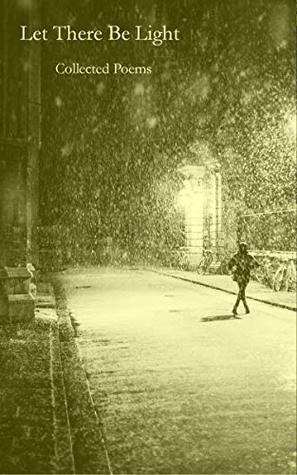
“Let There Be Light: Collected Poems” by Joseph Spring


Joseph Spring, a poet who lives in Johannesburg, South Africa, has been gaining recognition for his classical poetry. Twenty of his poems have been published as Let There Be Light: Collected Poems and are a joy to read.

Joseph Spring
The volume’s subtitle provides an immediate introduction as to what to expect: “Collected poems about the world and the God who made it.” Spring’s perspective is distinctively Christian, but the beauty and simplicity with which he writes should make the poems of universal appeal.

The title poem is taken from the first chapter of the Book of Genesis in the Old Testament, and it is the Bible that provides the wellspring for many if not all of the poems. “Hebrew Dragnet” is about the fisherman’s net. “Let It Fall and Be Understood” relates to the parable of the seeds. “Census in Bethlehem” is the Christmas story. Other poems consider the use of hymnals, other gods mentioned in the Bible, and the natural world as witness to creation.

Let There Be Light is a collection to savor and enjoy, and to reread to find even more depths of meaning.

Tuesday, May 22, 2018

Can Poetry Help You Understand the Bible?


In 2010, I attended a writer’s retreat at Laity Lodge in the Hill Country of Texas. I was part of the poetry seminar, led by poet and professor Scott Cairns. Our overnight assignment was to write a poem about a Bible passage we found troublesome.

I chose Joshua 5-12.

One of the main themes in that section is herem, a Hebrew word meaning destruction of essentially everything. In that section, before a number of battles, God tells Joshua and the Israelites to commit herem when they defeat the foe. That means killing every living thing – men, women, children, domestic animals and livestock. 

The command is given several times, and the Israelites obey (one tries to hold on to some treasure and gets death for him and his family as a result). At Jericho, only the prostitute Rahab and her family are spared, because she had protected the spies. Every other living thing in the city is put to the sword.

The passage is clear. God told the Israelites to do it. 

To continue reading, please see my post today at Christian Poets & Writers.

Photograph by Watari by Unsplash. Used with permission.

Wednesday, April 4, 2018

"God's Secretaries" by Adam Nicolson


King James I ascended the English throne in 1603, following the death of Elizabeth I. The religious issues that had started with Henry VIII and the English Reformation had never really stopped – a swing to the radical Protestant under Henry’s son, Edward; a swing back to the Catholic under Queen Mary; and swing back toward the center under Elizabeth. But the issues were far from settled.

The background of James himself exemplified these conflicts. He was the son of the Catholic Mary Queen of Scots; he was raised by ardent Presbyterians in Scotland where, for self-protection, he learned to lie and dissemble. And then he becomes king of England (and Scotland) and the head of the Church of England. One of the first things he did as king was to convene a conference at Hampton Court Palace of the various Protestant religious groups and factions, seeking some kind of common ground as long as that common ground accepted him as head of the church.

It was a time of excitement about regime change, expectations of things getting better, and anticipation of the good things the reign of James would bring. It couldn’t last, but of all the things James did, one had by far the greatest and most long-lasting impact – the assembling of six companies of theologians to create a new version of the Bible. It became what we know as the King James Version; it’s impact on religion and the English language can’t be overestimated.

In God’s Secretaries: The Making of the King James Bible, British writer Adam Nicolson tells the full story of how that version of the Bible came to be. Originally published in in 2003, reissued in 2009, republished yet again in 2011 for the 400th anniversary of the KJV, and republished in 2016, God’s Secretaries provides the history and context of the times, and how the KJV emerged from it. It was not a sure thing.

Religious conflicts were ongoing. If anything disabused James of his notion of him leading a new era, it was the Gunpowder Plot of 1605, in which a small group of Catholic extremists planned to blow up Parliament, the King and Queen, and government officials.

The conflicts weren’t only between Protestants and the remaining Catholics in England. They could be just as intense between Anglican officials and groups called “Puritans,” people who had a more radical Protestant view. They could be persecuted as much as the Catholics at times; one group, known as the Pilgrims, would eventually leave England for Holland, and a few years later sail in the Mayflower for America. But some of the KJV translators, and particularly the group based in Cambridge University, had definite Puritan sympathies.

Few documents from the translation program actually survive. A few discoveries in the 1950s (by American scholars, no less) of documents mostly in Oxford have shed light on translators themselves and how they went about the process of translation.

The translators had no qualms about borrowing from five previous translations approved for the work. One of those translations was by William Tyndale (1494-1536), and the KJV translators borrowed liberally from it (so did William Shakespeare).

Adam Nicolson
Nicolson is the author of a number of popular history and nature books. His history works include Seamanship: A Voyage Along the Wild Coats of the British Isles (2004);

“The language of the King James Bible,” Nicolson writes, “is the language …of patriarchy, of an instructed order, of richness as a form of beauty, of authority as a form of good.” He notes that this kind of language has largely died.

God’s Secretaries is a wonderful story of the KJV, one that places the translation in its time and context, and one that judges the main actors in its creation and its translators in their own era and not ours.


Top illustration: the title page of the first edition of the King James Bible in 1611.

Wednesday, October 25, 2017

“How to Study the Bible” by Dwight Moody


Dwight Moody (1837-1899) was an evangelist, publisher, educator, writer, church founder, and a number of other things. He founded the Moody Bible Institute in Chicago, Moody Press, and the Northfield and Mount Hermon schools in Massachusetts. He became an evangelist when he visited Britain in 1872, and his meetings were often attended by thousands of people. One notable event at the Royal Botanic Gardens drew a crowd of between 15,000 and 30,000 people.

Moody wrote about prayer, the 10 commandments and other Bible topics. His sermons were collected and published. And he wrote a book entitled How to Study the Bible, recently updated and republished by Aneko Press.

It says some for the man’s simple and basic approach to Bible study that what he recommends is as current today as it was more than a century ago.

He begins the book with several chapters that essentially answer the question “Why?” – why study the Bible at all? His answers are straightforward: there is no true life without the Bible; the word of Word – all of it – is true; the Old Testament is important and shouldn’t be neglected in favor of only the New Testament; God’s word is accurate and endures.

Moody suggests a wide array of ways to study the Bible, starting with the “scopes” approach – the telescope approach for understanding big themes and the big picture and the microscope approach for studying words, characters, places, and events. He discusses ways to remember what’s read and studied; studying types, characters, and names; and doing individual word studies. And he also recommends never buying a Bible you’re not willing to mark up and make notes in, and even had suggestions for underlining and marking.
Dwight Moody

And then he explains how all of this study is useless unless it’s applied and used to further God’s kingdom. He completes his book with a summary of suggestions, 15 short statements that cover the book’s theme and reach. (He even includes his recommendations for how many services a church should conduct each Sunday – two on Sunday morning (one for worship and one for teaching) and one on Sunday night for preaching the gospel.

“The more you love the Scriptures,” Moody writes, “the stronger your faith will be. There is little backsliding when people love the Scriptures.”

How to Study the Bible is a book chock full of good advice and helpful suggestions.


Top photograph by Ben White via Unsplash. Used with permission.