Showing posts with label J.R.R. Tolkien. Show all posts

Monday, July 27, 2026

Some Monday Readings - July 27, 2026


Make do – poem by Sonja Benskin Mesher. 

One Tool to Rule Them All – Brad Littlejohn at Mere Orthodoxy.


Two Ways of Looking at a Sparrow – Alexander Fayne.


Britain: Tome policing – Bijan Omrani at The Critic Magazine.


The Year I Taught in Prison – Michael Connolly at The Imaginative Conservative.


The Creatives Behind the Festival of Britain: Jacquetta Hawkes – A London Inheritance.


Don’t have blocks of time to write? Pockets work great! – Ann Kroeker, Writing Coach.


Sounds of the Forest – Timber Festival.


I Read All These Books and Boy Are My Lips Tired – Greg Sullivan at Sippican Cottage.


Christianity and the Three Cultures – Michael De Sapio at The Imaginative Conservative.


Photograph: Jacquetta Hawkes (1910-1996) and J.B. Priestly (1894-1984) in 1960.

Wednesday, March 25, 2026

Some Wednesday Readings


Leaving Home to Save It – Michael Toscano at Mere Orthodoxy. 

What Happens When You Pay Ex-Gang Members to Stop Crime? Ask Chicago – Olivia Rheingold at The Free Press.


Eavesdropping on Tolkien – Joseph Pearce at The Imaginative Conservative.


The model writer – Gary Saul Morson at The New Criterion reviews Pushkin: A Writer’s Biography by Yuri Lotman.


Tolkien, Technology, Ideology, and Love: A Lecture at Hope College – Bradley Birzer.


Cuba’s Useless Idiots – James Kirchick at The Free Press.


On Tolkien Reading Day - Kelly Heller at Story Warren.


Photograph: Alexander Pushkin (1799-1837).

Thursday, March 19, 2026

J.R.R. Tolkien, Motorcars, and “The Bovadium Fragments”


We’ve visited Oxford during most of our trips to England. We rake the tube to Paddington Station and then a train to Oxford. The trip takes about an hour. We’d visit various colleges, the Sheldonian, Blackwell’s Bookstore, the covered market, the Ashmolean Museum, and the Bodleian Library. It’s an easy day trip from London.  

Christ College (which, if you’ve seen the Harry Potter movies, includes the dining hall) faces a meadow. It’s almost a shock to see a large tract of undeveloped land right by the bustle of traffic and tour groups. It’s quiet, peaceful, and rather beautiful. 


What I didn’t know until I read The Bovadium Fragments by J.R.R. Tolkien, was that for more than two decades, Oxford authorities almost ran a road through the middle of it.


To continue reading, please see my post today at Tweetspeak Poetry.


Some Thursday Readings 


Greek Fire – poem by Andrew Roycroft.


The Loneliness of Russia’s First Poet: Pushkin – Ilya Ganpantsura at Front Porch Republic.


“From a Window,” poem by Charlotte Mew – Sally Thomas at Poems Ancient and Modern.


How a Poem Often Happens – Megan Willome.

Monday, March 9, 2026

Some Monday Readings - March 9, 2026


AI Doesn’t Reduce Work – It Intensifies It – Aruna Ranganathan and Xingqi Maggie Ye at Harvard Business Review

Grief Goes Hand in Hand with Gratitude: A Book Review of Marce Catlett by Wendell Berry  – Matt Wheeler at The Rabbit Room.


The Passage in The Lord of the Rings Tolkien Couldn’t Read Without Weeping – Trevin Wax at The Gospel Coalition.


Speaking Through the Ages: John Aubrey at four hundred – Peter Davidson at Literary Review.


Don’t Know Jack About the Other C.S. Lewis? – Joel Miller at Miller’s Book Review.


The Nature of Nostos – K.S. Bernstein at Apple Blossoms in a Mournful Wood.


Murders for March – Jeremy Black at The Critic Magazine.


“A Spiral Spiritual Climb into God” and Other Poems – Katie Andraskie at Katie’s Ground.


Willing If Asked – Terry Whalin at The Writing Life.


Illustration: John Aubrey (1626-1697)

Monday, March 2, 2026

Some Monday Readings


A Splendid Poem: Richard Garland’s Epic Flight – James Marten at Emerging Civil War. 

Mythologizing the Mythmakers: Tolkien’s “The Notion Club Papers” – Bradley Birzer at The Imaginative Conservative.


Burnham and Grant: American Jeremiahs – Geoff Russ at Modern Age Journal.


The Killer and the Harlot: Dostoevsky’s Crime and Punishment – Joel Miller at Miller’s Book Review.


It’s Never Too Much. It’s Only Not Enough – Greg Sullivan at Sippican Cottage on a childhood friend.


The idea of a college – David Butterfield at New Criterion.


Reform can’t make Britain Christian again – Jimmy Nicholls at The Critic Magazine.

Wednesday, March 19, 2025

Some Wednesday Readings


How to get started reading English literature: An Introductory syllabus – Henry Oliver at The Common Reader. 

A life shaped by my father’s bedtime stories – Kate Weinberg at The Spectator.


Clouds – artwork by Sonja Benskin Mesher.


Booknotes: Hundreds of Little Wars, edited by G. David Schieffler and Matthew M. Stith – Civil War Books and Authors.


Tolkien, Philosopher of War – Graham McAleer at Front Porch Republic.


In Old Bow – Spitalfields Life.


Death, Grief, and Frodo’s Incurable Wound – Zak Mellgren at The Subzak.


Do Your Own Research: How to File Freedom of Information Requests – Greg Collard at Racket News.


“Futility,” poem by Wilfred Owen – Sally Thomas at Poems Ancient and Modern.


Photograph: Wilfred Owen in World War I.

Thursday, January 23, 2025

The Collected Poems of J.R. R.Tolkien


The first time I read The Hobbit and The Lord of the Rings by J.R.R. Tolkien (about 1970), I committed the expected faux pas – I skipped most of the poems and songs. I was so engaged in the story itself that I wasn’t about to slow done for a poem

When I read the books again about a decade later, I’d learned. This time, I read the poems. And the next two times, I read the poems as well, sometimes twice. I’d been educated.


The poems are more than worthwhile reading. They’re an integral part of the story, reflecting, enriching, and helping to explain the world of Middle-earth.


I saw the first notice last August, about two weeks before we were leaving for London. Tolkien’s poems had been collected. It was a three-volume set, soon-to-be published in Britain (Sept. 12) and a little later (Sept. 17) to the United States. The Collected Poems of J.R.R. Tolkien. I stared in wonder.

To continue reading, please see my post today at Tweetspeak Poetry.

Some Thursday Readings


You Should Be Writing Instead of (or at Least Before) Podcasting – Samuel D. James at Digital Liturgies.


Infinity Split – poem by Jerry Barrett at Gerald the Writer.


James Fenimore Cooper is a more honest writer than Mark Twain – Naomi Kanakia at Woman of Letters.


“January 22nd, Missolonghi,” poem by Lord Byron – Joseph Bottum at Poems Ancient and Modern.


The Overlooked First Battle of the Retreat from Petersburg – Aaron Stoyack at Emerging Civil War.

Monday, January 20, 2025

“A Rumour of Adventure” by Kees Paling


It’s May 1938. Four friends embark upon a spring walk, something various members of their group usually do. This time, since the tradition is England, they choose Somerset. This walk is different from its predecessors; the threat of Germany is hanging over Czechoslovakia, and at least two members of the group still have strong memories of the horrors of the Great War.  

The four are members of the Inklings, a group of Oxford dons and various friends who usually meet twice a week at The Eagle and Child pub in in one of the member’s rooms in Magdalen College. The four are C.S. Lewis, J.R.R. Tolkien, Owen Barfield, and Charles Williams. A Rumour of Adventure by Kees Paling is the fictional account of such a walk, which never occurred in that year with those participants (Williams wouldn’t become associated with the Inklings until more than a year later). But this is fiction, a novella or short novel, in fact, so it’s okay to invent.


It's a charming and engaging story, true to the teachings, beliefs, and personalities of the four. Paling has done a considerable amount of reading and study to get this as right as he does. And that includes works they wrote and biographies and accounts about them.


Kees Paling

Of course, the four don’t just walk; they stop at pubs and drink a lot of beer (and hey drink a lot of beer, except for Williams, who drinks a lot of tea). And they talk. Oh, how they talk. 

Their conversations about literature, writing, the growing threat in Europe, imagination, the faerie folk, and more is the heart of the story, and this is what makes the account so true to the real people. And while Tolkien in particular likes his adventures in oral and written stories only, the four will experience an adventure or two along the way. While it’s tempting to compare, the adventures bear almost no similarity to that of the four hobbits in The Lord of the Rings. Note that I said “almost.”


Paling has published several books in Dutch on subject ranging from the fall of Prussia and culture on the eve of the new millennium to learning problems in children. He’s contributed to several books on communication and published a rather vast number of newspaper articles. He received a degree in sociology from Utrecht University, served as a lieutenant and counsellor at the Dutch Royal Military Academy, and worked at the Dutch Ministry of Culture and Netherlands Institute for Social Research. He serves as a communication consultant for the Dutch government.


A Rumour of Adventure is a delightful story of four men who were good friends and companions in writing (it was Lewis who so strongly encouraged Tolkien to writ The Hobbit and the work that Tolkien called “The New Hobbit”). As the story makes clear, they were also teachers, great conversationalists, and beer drinkers (lots of beer). 


Some Monday Readings


Does America Still Do Federalism? – Tony Woodlief at Law & Liberty.


Cui Bono? – Alan Jacob at The Homebound Symphony.


Notes on the Great Vibe Shift – Ian Leslie at The Ruffian.


Is Atlas Shrugged the New Vibe? – Henry Oliver at The Common Reader.


Shrouded Veterans: The Untold Struggles of an Iowa Colonel’s Widow – Frank Jastrzembski at Emerging Civil War.

Tuesday, December 17, 2024

Holiday Gifts for the Poet in Your Life (or the Poet in You)


I’m usually reluctant to buy books as gifts for friends and family members. I’ve always thought of books as something personal, chosen after deep consideration at the bookstore or spontaneously when I see something on Amazon. (It also works the other way – spontaneously at the bookstore or after deep consideration at Amazon.) Exceptions exist: our oldest son loves reading Calvin & Hobbes collections; as a child, he saw the cartoon strip as a how-to manual. And a grandson did specifically ask his parents for some Harry Potter books. I’m always ready to indulge a request for books in this age of screens. 

If you have a poet in your life, or if you have a poet in your own heart, I have a few suggestions for holiday gifts. My perspective is personal – I would be thrilled to have received any of these as a gift. I’ll be writing about some of them here early next year. 


My suggestions also reflect my Anglophilia. 


To continue reading, please see my post today at Tweetspeak Poetry.


Some Tuesday Readings


Letters from Father Christmas: A Review for the Advent Season – Sarah Dixon Young at Story Warren. 


Rembrandt in Vienna: Notes on the Exhibition – Rod Dreher at Rod Dreher’s Diary.


To See It – poem by Laura Foley at Every Day Poems. 


50 States of Generosity: Idaho – Sandra Heska King at Tweetspeak Poetry.


Monday, November 11, 2024

"The Mythmakers” by John Hendrix


It was a Facebook post that did it. A fellow book lover recommended The Mythmakers: The Remarkable Fellowship of C.S. Lewis and J.R.R. Tolkien by John Hendrix. I highly value her judgment and opinion, and I flipped over to Amazon, pulled up the book, glanced at the price, and ordered it. I went for the hardcover, because my friend’s description sounded like it would be a keeper. 

I didn’t read the details.


When the book arrived, I opened it up to discover it was a graphic work. It’s officially a graphic novel, but there’s enough actual statements by both Lewis and Tolkien (and fictional comments informed by what they said) to make The Mythmakers a blend of fiction, non-fiction, and graphic design.


I was not a fan of graphic novels. There’s nothing wrong with them, but I have never been seriously interested in them.


Until now.


The Mythmakers is a “knocked-it-out-of-the-ballpark” kind of work.


Almost reluctantly, I began to read, my lack of interest almost noticeable. Until it disappeared. And then I devoured it. 


Hendrix tells the story of how Lewis and Tolkien had World War I experience in common, how they met at Oxford, how they became friends, and how their friendship, or “fellowship,” as Hendrix describes it, transformed fantasy literature forever. With Lewis’s encouragement, Tolkien would likely have never published The Hobbit and The Lord of the Rings. Because of pointed criticism by Tolkien, Lewis almost didn’t publish The Lion, the Witch, and the Wardrobe. Their friendship grew and remained solid, until the years of World War II. And then, to the sorrow of both men, it grew strained. But they continued to support one another’s work.


The Mythmakers uses a journey of two fictional characters, a lion (shades of Aslan) and a wizard (shades of Gandalf), through the story of the friendship. And it works. It works beautifully. I laughed, I grinned, I nodded my head, and at one point I even choked up and wiped away tears. The book is that good. Yes, I knew the story of their friendship, but I hadn’t seen it visually portrayed in illustration like it is here.


And while The Mythmakers doesn’t make a major case out of it, it does agree with my own assessment after reading so much about both men: Lewis was the truer friend.


John Hendrix, the illustrated man

Hendrix has written and illustrated numerous books, including The Faithful Spy: Dietrich Bonhoeffer and the Plot to Kill Hitler, Drawing Magic: Discovering Yourself in a Sketchbook, Miracle Man: The Story of Jesus, and others. He’s also created a comics collection entitled The Holy Ghost: A Spirited Comic and produced illustrations for numerous comic books and publications. He was named Distinguished Educator in the Arts for 2024 by the Society of Illustrators and currently serves as the Kenneth E. Hudson Professor of Art and the founding Chair of the MFA in Illustration and Visual Culture program at the Sam Fox School of Design and Visual Arts at Washington University in St. Louis. He lives with his family in suburban St. Louis (in a suburb so close to mine that we could be neighbors). 


The Mythmakers may be aimed at middle grade readers, but it offers a great deal to readers of all ages. And it helped me, or shoved me, away from my apathy about graphic novels.


Some Monday Readings


Best – artwork by Sonja Benskin Mesher.


An Astronomer Was Able to Pinpoint the Mystery Location Depicted in a Van Gogh Masterpiece – Jackie Appel at Popular Mechanics.


All the Saints, and All the Ones They Leave Behind – Logan Hoffman at Plough Quarterly on Laurus by Eugene Vodolazkin.


10 Composers to Listen to While Studying – Andrew Benson Brown at The Epoch Times.


The Pubs of Old London – Spitalfields Life.

Wednesday, October 23, 2024

Some Wednesday Readings


Thou shalt not pray? – Lois McLatchie at The Critic Magazine. 

What Salman Rushdie Doesn’t Want to Talk About – Douglas Murray at The Free Press.


Writing in Spare Moments of Life – Terry Whalin at The Writing Life.


Confederate Guerillas: Effective Commands or Detrimental Service? Part 1 and Part 2– Daniel Welch at Emerging Civil War. 


Morphing: Lessons from Year of the Monarch – Dheepa Maturi at Tweetspeak Poetry.


Bookish Diversions: Lewis and Tollkien, Pen Pals – Joel Miller at Miller’s Book Review.


3 Goals for Writing Great Historical Fiction – Ryan Coleman at Writer’s Digest.


“I, Being a Woman and Born Distressed,” poem by Edna St. Vincent Millay – Sally Thomas at Poems Ancient and Modern.


Generations by Jean Twenge – book review by Samuel D. James at Digital Liturgies.


Photograph: Mosby's Rangers during the Civil War, with John Mosby in the center wearing a feathered hat.

Wednesday, June 12, 2024

Some Wednesday Readings


Studying the Midwest Just Became Cool – Caitlin Evans at Midstory. 

Stratford Caldecott & the Secret Fire: Understanding Tolkien’s Works – Robert Lazu Kmita at The Imaginative Conservative. 


“To Celia,” by Ben Jonson – Sally Thomas at Poems Ancient and Modern.


In Europe, Chaos is the New Normal – Yascha Mounk at Persuasion.


Scenes from a Stolen Childhood: A Review of Kinderszenen – Nadya Williams at Front Porch Republic.


Leisure, Work, and the Writer’s Life – Michael De Sapio at The Imaginative Conservative.


At Fulham Palace – Spitalfields Life. 


Illustration: Ben Jonson (1572-1637), engraving by Edward Scriven (1775-1841)

Tuesday, February 13, 2024

John Rateliff Delves into the History of "The Hobbit"


I’m no Middle Earth scholar, but everything I know about J.R.R. Tolkien tells me The Hobbit was written carefully, over a long period of time, and regularly revised. 

Tolkien scholar John Rateliff documents precisely how that happened. 


First, something of a confession. I bought Rateliff’s The History of the Hobbit last year, ordering it online. I was so excited I didn’t pay attention to the number of pages. 


Including the index, it’s 938 pages. That doesn’t include the 41-page introduction.


To read a nearly 1,000-page volume requires determination and time. I had the former but not the latter. For several months, the book rested on my desk, almost staring at me in a kind of silent reproach. The only path forward in tackling it was the one I eventually followed. 


I read it gradually and in spurts, until I could finally read it straight through.

To continue reading, please see my post today at Tweetspeak Poetry.

Some Tuesday Readings


Winter Grief – revised poem by David Whyte.


The Word in the Wilderness, a Journey through Lent – Malcolm Guite.


“A Light Snow-Fall After Frost” by Thomas Hardy – Sally Thomas at Poems Ancient and Modern.


“Requiem” by Robert Louis Stevenson – Joseph Bottum at Poems Ancient and Modern. 

Overlap – poem by Rachel Donahue at Rabbit Room Poetry. 

Tuesday, October 10, 2023

Watching "The Two Towers" at Royal Albert Hall


I have to confess. I am a Ringhead.  

I first read J.R.R. Tolkien’s The Hobbit and The Lord of the Rings trilogy in high school, using what came to be known as the “pirated Ace editions.” I read the authorized versions about six years later. About 2000, when I learned that director Peter Jackson was making film versions, I read the books again. And then, four years ago, I read the books yet again. 


These wonderful stories never get old. They never seem dated. Each time I’ve read them, I’ve discovered something new. And I continued to be awed by the imagination that created them. 

I’m not alone. Facebook groups about the author and his works draws tens f thousands. Tolkien and his works are some of a book-publishing industry. Sitting on my desk right now, in all of its 938-page glory, is the recently published The History of the Hobbit by Tolkien scholar John Rateliff. I’ve deliberately put off reading it to delay the reading pleasure I know is coming.  

To continue reading, please see my post today at Tweetspeak Poetry.

Some Tuesday Readings


Drop-in by Hélène Demetriades – Nigel Kent, Poet and Reviewer.

Poetry at Home – Jane Clark Scharl at Plough

Two Poems in the Style of Robert Frost – Dusty Grein at Society of Classical Poets. 

Tuesday, September 12, 2023

“The Battle of Maldon” by J.R.R Tolkien, Edited by Peter Grybauskas


In 991, Vikings attacked Anglo-Saxons in eastern Essex, not far from the current city of Chelmsford northeast of London. A large stream connected by a bridge separated the two forces. The Anglo-Saxons could have likely held off the Vikings for a considerable period. But the Vikings asked permission to cross the bridge to fight, and it was granted by the Anglo-Saxon leader Beorhtnoth. It’s not known why, except perhaps that Beorhtnoth thought he might find glory in battle. 

And that he did, except it wasn’t what he expected. The hand-to-hand combat was vicious and intense. When the Battle of Maldon ended, Beorhtnoth was dead, along with several members of his family, and the Vikings were victorious.


What detail we have of the battle is contained in the fragment of an epic poem probably written shortly after the battle. It’s one of the oldest British historical manuscripts, older than even Beowulf. And J.R.R. Tolkien spent considerable time, particularly in the earlier part of his academic career, studying and translating the poem and researching the period.  He also wrote a verse play himself, a fictional attempt to file in some of the missing texts.


To continue reading, please see my post today at Tweetspeak Poetry.


Some Tuesday Readings


Blackberry Memories – poem by Janice Canerdy at Society of Classical Poets.


A Hobbit’s Journey Home: Dreaming of the Shire – Joseph Pearce at The Imaginative Conservative. 


A list of things lost – poem by Kathleen at The Course of Our Seasons.

Monday, January 31, 2022

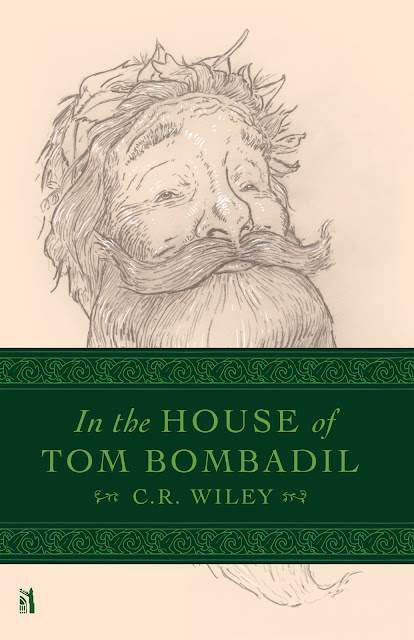
"In the House of Tom Bombadil" by C.R. Wiley


Tom Bombadil is one of the most curious of characters in The Lord of the Rings by J.R.R. Tolkien. His scene with the four hobbits, early in the trilogy when they are first leaving the shire, almost seems displaced. In the movie version, director Peter Jackson eliminated it altogether. And the singing Tom, along with his wife Goldenberry, have prompted debate among critics and fans alike, many believing that Tolkien should have cut him from The Fellowship of the Ring


Not so fast, says C.R. Wiley. In what is perhaps the most insightful (and relatively short at 112 pages), Wiley argues that Tom Bombadil has a purpose and a meaning, but like all good mysteries, “the truth” the Tolkien’s character will always remain a mystery. Wiley’s In the House of Tom Bombadil is an absolute gem of a discussion.


Frodo, Sam, Merry, and Pippin meet Tom Bombadil in a scene fraught with danger. They have just left the shire and entered the Old Forest. They discover that the trees, and one in particular, aren’t taking kindly to the intrusion, swallowing one hobbit, and almost swallowing a second, when the larger-than-life Tom Bombadil arrives on the scene. The tree is rebuked and promptly coughs up the two hobbits it was capturing. Tom is a master of the Old Forest, and he clearly exercises dominion. But what is he about?

 

C.R. Wiley

Wiley suggests that, to understand Tom, you need to understand the idea expressed in the biblical Book of Genesis about man being given dominion over nature. And you need to understand it in the way it was intended, essentially the idea of stewardship, and not as it’s often misinterpreted (domination, pillage, and destruction). To explain Tom’s wife Goldenberry, Wiley turns to fairy stories about the spirits of water. Using Tolkien’s other writings about both Tom and fairies, Wiley makes a solid and compelling case in a highly readable style. 


A pastor and former college professor, Wiley has also published The Household and the War for the Cosmos (Canon Press), and the first book in his young adult fantasy series, The Purloined Boy (2017). His short fiction has been published in The Mythic Circle and elsewhere. His articles have been published by Touchstone Magazine, Modern Reformation, Sacred Architecture, The Imaginative Conservative, Front Porch Republic, National Review Online, and First Things, among others. Wiley is a board member of the Academy of Philosophy and Letters, as well as New Saint Andrews College. He lives with his family in the state of Washington. 

In the House of Tom Bombadil is an excellent addition to the canon of literary criticism about Tolkien and his works, and it gives the often overlooked character his due. And who knew literary criticism could also be fun?  

Tuesday, January 4, 2022

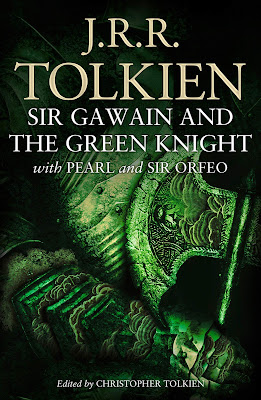
The Enduring Appeal of “Sir Gawain and the Green Knight”


Sir Gawain and the Green Knight 
– at one time a staple of college reading for English Lit majors – has a curious history. The author was roughly contemporary with Geoffrey Chaucer (1340s-1400). The poem ranks as one of the two great poems of the period, with Chaucer’s Troilus and Crisedye being the other.  

The author’s identity, however, remains unknown. He used an English dialect representative of the Midlands area of England (Chaucer’s English was London through and through). Some scholars have suggested it some of its scenes would situate the poem in Staffordshire in west-central England. It exists in a single manuscript, together with Pearl and two Bible stories entitled Purity and Patience. The poems are written in the same hand and the same English dialect. 


The manuscript was unknown until it surfaced in the library of Henry Savile (1569-1617), who lived in Bank in Yorkshire. The manuscript is now with the British Library in London.


To continue reading, please see my post today at Tweetspeak Poetry.

Tuesday, June 15, 2021

Was Tolkien Only Influenced by the Middle Ages? Holly Ordway Says No.


Holly Ordway takes issue with some of the received wisdom about J.R.R. Tolkien. Specifically, she rejects the notion that Tolkien saw nothing of merit of anything written after the Middle Ages, that his Middle-earth saga was influenced only by literature and history prior to Chaucer. In Tolkien’s Modern Reading: Middle-Earth Beyond the Middle Ages, Ordway respectfully disagrees, and makes her case. And a compelling case it is.  

The Cardinal Francis George Fellow of Faith and Culture for the Word on Fire Institute and a visiting professor of apologetics at Houston Baptist University, Ordway received a Ph.D. in English from the University of Massachusetts Amherst and is a subject editor for the Journal of Inklings Studies. She’s published two previous books, Apologetics and the Christian Imagination: An Integrated Approach to Defending the Faith (2017) and Not God’s Type: An Atheist Academic Lays Down Her Arms (2014). She’s written numerous articles and chapters of anthologies on Tolkien, C.S. Lewis, literature, philosophy, the Inklings, and related subjects. 


In studying Tolkien and his writings, Ordway discovered that the author of The Hobbit and The Lord of the Rings read deeply and widely, and not only about the Middle Ages.


To continue reading, please see my post today at Tweetspeak Poetry.

Tuesday, January 5, 2021

How J.R.R. Tolkien Met an Obligation – with Poetry


At King Edward’s School in Birmingham, J.R.R. Tolkien because close friends with several other boys. He and three others formed what they called the TCBS, or Tea Club, Barrovian Society. The four would regularly meet at Barrow’s Department Store for tea and discussion, mostly about poetry and literature.  

The TCBS continued meeting, if irregularly, once the four went to university. Even after World War I began, they wrote letters and exchanged poems. Of the four, only two, Tolkien and Christopher Wiseman, survived. One who did not was Geoffrey Bache Smith. Smith managed to survive the horrific and months long Battle of the Somme (July to October, 1916) only to die in December from a shrapnel wound. 


To continue reading, please see my post today at Tweetspeak Poetry.

Tuesday, February 4, 2020

Buried in the Basement: “Tolkien’s Lost Chaucer” by John Bowers


In his lifetime, a well-known writer produces poetry and other works. When he dies, what has been left unpublished is far more than what has been. His son becomes his literary executor. Not only does he make sure the unknown works are published, he also heightens his father’s literary standing in the process.

Geoffrey Chaucer
If you said this is J.R.R. Tolkien and his son Christopher, you would be right. If you said Geoffrey Chaucer and his son Thomas, you would also be right. We know far more about J.R.R. Tolkien’s literary achievements because of his son Christopher. And we have Chaucer’s Canterbury Tales because of his son Thomas.

This is almost an aside in Tolkien’s Lost Chaucer by John Bowers. But it is one of many nuggets of information included in the book that we didn’t know about the authors of The Lord of the Rings and The Canterbury Tales – that the literary life author of the 20th century echoed the literary life of the author of the 14th.

To continue reading, please see my post today at Tweetspeak Poetry.