Showing posts with label literary criticism. Show all posts

Wednesday, December 4, 2024

Books I’m Not Recommending for Christmas


It’s Christmas season, which means it’s time for my annual list of books I’m not recommending for Christmas. Chalk the title up to my sensitivity about giving and receiving books. It likely goes back to some childhood trauma when I received a book I was totally uninterested in. I would have been polite and said thank you, I was raised in the South, after all, but I would have been traumatized nonetheless. 

An alternative title might be “The Best Books I’ve Read This Year.” I read a lot of books, and I read a lot of good books, so I have to say up front I’m omitting some to keep the list (relatively) short. Some are books published this year; a few were published decades ago.


It was a good year for poetry. It was the year I discovered good graphic novels. I found some new authors and revisited some old ones. Note: Links are to my reviews.


Poetry


Spending the Winter: Poems
 by Joseph Bottum.


The Shield of Achilles by W.H. Auden.


Herman Melville: Battle Pieces & Aspects of the War.


Last Things, First Things, and Other Lost Causes: Poems by Joshua Hren.


The Grief Committee Minutes: Poems by Sarah Carey.


The Unfolding: Poems by Rosemerry Wahtola Trommer.


Empty Me Full: Poems by Catherine Abbey Hodges.


Under the Pearl Moon: Poems by Rick Maxson.


House of 49 Doors: Poems by Laurie Klein.


Graphic Novels


The Colour Out of Space by H.P. Lovecraft and Sara Barkat.


The Mythmakers: The Remarkable Fellowship of C.S. Lewis & J.R.R. Tolkien by John Hendrix.


Mysteries


Sting of the Honey Bee
 by Roger Longrigg.


The Dark Wives by Ann Cleeves.


The Grey Wolf by Louise Penny.


A Saxon Shadow and A Stolen Shadow by H L Marsay.


In That Sleep of Death by Jonathan Dunsky.


In the Key of Death by Scott Hunter.


Death, Adjourned by Simon Michael.


Faith


The Storied Life by Jared Wilson.


In This Way We Came to Rome: With Paul on the Appian Way by Gene Thompson and Mark Wilson.


Art


Thunderclap: A memoir of art and life & sudden death by Laura Cummings.


Fiction


Hold Fast
 by Spencer K.M. Brown.


Works of Mercy and The Blackbird & Other Stories by Sally Thomas.


Clear by Carys Davies.


A World Lost and A Place on Earth by Wendell Berry.


Children’s Literature


The Sin Eater by Gary Schmidt.


Across Five Aprils by Irene Hunt.


History


The Gettysburg Reunion of 1913 by John Hopkins.


The Aleppo Codex by Matti Friedman.


Literary Criticism


Dickensland: The Curious History of Dickens’s London
 by Lee Jackson.


The History of the Hobbit by John Rateliff.


C.S. Lewis’s Oxford by Simon Horobin.


Top photograph by Olena Bohovyk via Unsplash. Used with permission.

Monday, December 11, 2023

Books I’m Not Recommending for Christmas


Once again, I’m not recommending books for Christmas. This goes back a long, long time, when I learned that, if people know you’re a reader, they will shower you with books as gifts for birthdays and Christmas. Unfortunately, it was usually books the giver liked, without thinking too much about the recipient.  

That’s not to say I don’t really like books. Or that certain books have made me wildly enthusiastic. I discovered that this blog (and my page at Dancing Priest) is a good way to describe books I like. If I read a book and don’t like it, I don’t review it.


What follows is a list of the books I truly enjoyed this year.


Classics


I surprised myself when I tallied up the classic books I read this year. Some of them surprised me; they weren’t what I remembered them to be. But it’s hard to go wrong with The Strange Case of Dr. Jekyll and Mr. Hyde by Robert Louis Stevenson; Hospital Sketches by Louisa May Alcott; The Sun Also Rises by Ernest Hemingway; The Picture of Dorian Gray by Oscar Wilde; Winesburg, Ohio by Sherwood Anderson; John Brown’s Body by Stephen Vincent Benet; Andy Catlett: Early Travels by Wendell Berry; and The Wonderful Visit by H.G. Wells.


Fiction


Just when you think contemporary literary fiction is going down the drain, you read books like Small Things Like Theseby Claire Keegan and Eugene Vodolazkin’s Solovyuv and Larionov and A History of the Island. And Robert Hudson’s The Beautiful Madness of Martin Bonham is simply stunning.


History


I’m still reading a lot (A LOT) about the Civil War. If We Are Striking for PennsylvaniaVolume 1 and Volume 2 focus on the runup to the Battle of Gettysburg. Man of Fire by Derek Maxfield succinctly explains the personality of William Tecumseh Sherman. And Of Age: Boy Soldiers and Military Power in the Civil War Era by Frances Clark and Rebecca Jo Plant tell a fascinating story: how 10 percent of both the Union and Confederate armies were comprised of boys under the age of 15.


For non-Civil War history, my favorite was England in the Age of Dickens 1812-1870 by Jeremy Black. 


Poetry


I read some really fine poetry this year. When you start a year with The Family Book of Martyrs by Benjamin Myers and finish it with Under the Pearl Moon by Rick Maxson, you know it was a good year. In between were Meet Me at the Lighthouse by Dana Gioia; Stairwell by James Sale; Skyscrape by John Sibley Williams; and Mining the Bright Birds by Jody Collins.


Mysteries


When people wonder why I read mysteries (a lot of mysteries), I tell them that T.S. Eliot was a famous mystery reader, too. My favorites this year tended to cluster around authors: the Hillary Green series by Faith Martin; the Arnold Landon series by Roy Lewis; the Inishowen mysteries by Andrea Carter; the York mysteries of H.L. Marsay; the Louise Blackwell mysteries by Matt Brolly; the Munro & West mysteries by Pete Brassett; and the Lord Edgington mysteries by Benedict Brown.


Literary Criticism


Two titles were special standouts for me this year: Mythic Realms by Bradley Birzer and Belligerent Muse: Five Northern Writers and How They Shaped Our Understanding of the Civil War by Stephen Cushman. 


News Media


Newspaperwoman of the Ozarks: The Life and Times of Lucile Morris Upton by Susan Croce Kelly describes a journalism I recognize, even if it was the first half of the 20th century (back when reporters used to report news). 


Faith


Luke Davis had two books aimed at younger (teen) readers – Reform: The Church at the Birth of Protestantism and Renewal: The Church That Expands Outward. Ben Palpant’s Letters from the MountainLetters to Doctors by Earle Carpenter, and Monastery Mornings by Michael Patrick O’Brien. Of special note is The Goodness of the Lord in the Land of the Living by Leslie Busatrd.


Memoir


High marks to Brian Miller for his Kayaking with Lambs. It's about farming, and a lot more.


Top photograph by Valentin Antonini via Unsplash. Used with permission.


Some Monday Readings


A Great Historian’s Inner History – Jeff Reimer at The Bulwark on Journeys of the Mind by Peter Brown.


Remembering with Christmas Cards – Brian Miller at A South Roane Agrarian.


The Legacy of Aleksandr Solzhenitsyn – Joseph Pearce at The Imaginative Conservative. 


Every Day Poems: Community Mandalas + New Poetry Club Invitation -- Tweetspeak Poetry.

Tuesday, March 14, 2023

An Updated Look at Keats's Odes


You never quite know what you’re going to get yourself into these days with literary criticism.  

I should say up front that I belong to an old school of literature. I was not an English major, but I sat with them through two semesters of English Lit in college, while 99.999 percent of the other students took the general, mainly American, required literature courses. My two-volume Norton Anthology of English Literature, now more than half a century old, sits on a bookshelf, complete with my underlines and marginal scribblings still there. I still use it my Norton as a reference, and I may ask to have it buried with me when the time comes. I even have my textbook from high school senior English, and I still use it as a reference.


My mid-term exam in second semester English lit was three pages of lines and phrases from the poetry of John Keats, William Wordsworth, Samuel Taylor Coleridge, Percy Shelly and George Lord Byron – and I had to identify the author of each line or fragment. Some of the English majors flunked the exam. No one got an A. I was downright thrilled to get a B-. 


To continue reading, please see my post today at Tweetspeak Poetry.

Monday, January 9, 2023

“English Literature in the 16th Century” by C.S. Lewis


We know C.S. Lewis as a popular theologian, a writer of children’s stories like The Chronicles of Narnia and science fiction stories, the man who gave us Mere Christianity, A Grief Observed, and The Screwtape Letters. We know him as one of the Inklings, a small group of Oxford dons (and a few others) who met regularly at The Eagle and Child (or Bird and Baby) Pub and C.S. Lewis’s rooms in Oxford to discuss their works in progress, life, religion, and everything else. 

What we often forget is that, before he was a Christian and even after, before his wartime broadcast for the BBC, and before Narnia, Lewis was a scholar. He was a Fellow and Tutor of English Literature at Oxford, and he was chair of Medieval and Renaissance Literature at Cambridge University.


In 1944, he gave a series of lectures at Cambridge under the general title of “English Literature in the 16th Century.” He eventually edited the lectures and published them in 1954 as English Literature in the 16th Century (Excluding Drama). Almost 70 years later, HarperCollins has republished the volume under its 1954 title. It’s a broad choice of subject, made somewhat easier by the “exclusion of drama,” which means the lectures did not include any discussion of Elizabethan drama, including Shakespeare’s early plays.


Still, the subject is large. And Lewis’s grasp of the subject is large, if not astounding. He covers poetry, theology (and it’s a period of a lot of theology), political writing, philosophy, and fiction. And while academic readers may chafe somewhat, the text is highly readable and accessible by general readers – likely a reflection of how the book started life as a lecture series. At times, it seems almost conversational.


C.S. Lewis

The broad strokes of understanding are simply described. Literature in the 16th century was marked by a battle between the Scholastics and the Humanists, which the Humanists eventually won (I don’t think Lewis viewed that as a positive development). The was marked by the theological battles between, first, the Catholic establishment and the English translators like John Wycliffe, and then the religious wars between the Protestants and the Catholics. Sir Thomas Moe and John Wycliffe were martyred a year apart and for different reasons. Lewis also devotes considerable attention to one of the most important works of the 16th century – The Book of Common Prayer.


Lewis notes that, for Scotland, the century began as an almost golden age in literature, while for England it was what he calls the “Drab Period.” No one, he notes, would have expected the Drab Period to eventually give way to the amazing English literature of the last half of the century. But it did, and he says he can’t offer a reason for why it happened.


In detail, he covers the greatest writers of the century – Edmund Spenser, Tyndale John Knox, More, Christopher Marlowe, John Donne, Shakespeare (his sonnets).and many others. His descriptions and understanding make it clear that he’s not only read these authors, he’s read about these authors. The breadth and depth of Lewis’s scholarship is astonishing.


English Literature in the Sixteenth Century is not only an in-depth introduction to the great and not-so-great works of the period; it’s also a display of Lewis’s scholarly knowledge and understanding. And it was this incisive mind that also gave us his well-known works on Christianity, which Lewis himself might see as of a piece.

Monday, January 31, 2022

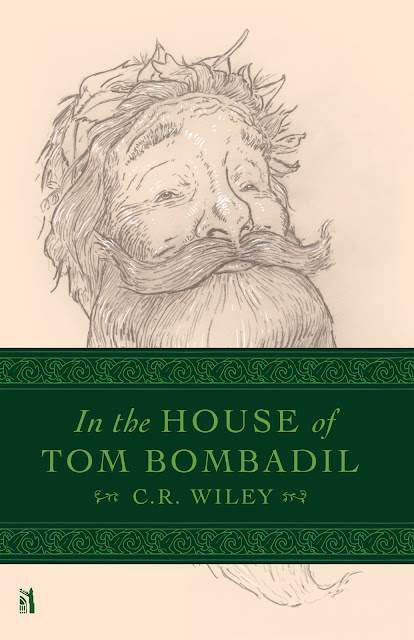
"In the House of Tom Bombadil" by C.R. Wiley


Tom Bombadil is one of the most curious of characters in The Lord of the Rings by J.R.R. Tolkien. His scene with the four hobbits, early in the trilogy when they are first leaving the shire, almost seems displaced. In the movie version, director Peter Jackson eliminated it altogether. And the singing Tom, along with his wife Goldenberry, have prompted debate among critics and fans alike, many believing that Tolkien should have cut him from The Fellowship of the Ring


Not so fast, says C.R. Wiley. In what is perhaps the most insightful (and relatively short at 112 pages), Wiley argues that Tom Bombadil has a purpose and a meaning, but like all good mysteries, “the truth” the Tolkien’s character will always remain a mystery. Wiley’s In the House of Tom Bombadil is an absolute gem of a discussion.


Frodo, Sam, Merry, and Pippin meet Tom Bombadil in a scene fraught with danger. They have just left the shire and entered the Old Forest. They discover that the trees, and one in particular, aren’t taking kindly to the intrusion, swallowing one hobbit, and almost swallowing a second, when the larger-than-life Tom Bombadil arrives on the scene. The tree is rebuked and promptly coughs up the two hobbits it was capturing. Tom is a master of the Old Forest, and he clearly exercises dominion. But what is he about?


C.R. Wiley

Wiley suggests that, to understand Tom, you need to understand the idea expressed in the biblical Book of Genesis about man being given dominion over nature. And you need to understand it in the way it was intended, essentially the idea of stewardship, and not as it’s often misinterpreted (domination, pillage, and destruction). To explain Tom’s wife Goldenberry, Wiley turns to fairy stories about the spirits of water. Using Tolkien’s other writings about both Tom and fairies, Wiley makes a solid and compelling case in a highly readable style. 


A pastor and former college professor, Wiley has also published The Household and the War for the Cosmos (Canon Press), and the first book in his young adult fantasy series, The Purloined Boy (2017). His short fiction has been published in The Mythic Circle and elsewhere. His articles have been published by Touchstone Magazine, Modern Reformation, Sacred Architecture, The Imaginative Conservative, Front Porch Republic, National Review Online, and First Things, among others. Wiley is a board member of the Academy of Philosophy and Letters, as well as New Saint Andrews College. He lives with his family in the state of Washington. 

In the House of Tom Bombadil is an excellent addition to the canon of literary criticism about Tolkien and his works, and it gives the often overlooked character his due. And who knew literary criticism could also be fun?  

Monday, December 6, 2021

Books I’m Not Recommending for Christmas


My list of “Books I’m Not Recommending for Christmas” continues for 2021. In early December, I take stock of what I’ve read over the year. This isn’t a “best books of the year” activity as much as looking back and reflecting upon the novels, short stories, poetry, and non-fiction I’ve read that have made a particular impact. The “not recommending” description comes from my idiosyncratic view that no one should select books for another person, unless that person has requested it. 

Mt selections were tough in three categories, because they were what I read the most – fiction, poetry, and mysteries. I’ve divided fiction into two groups this year – those written in English and those translated into English. (Note: not all of these books were published in 2021, and all links are to my reviews.)


Children’s Stories


I read children’s stress because I’m always on the lookout for stories for the three grandsons. Two that I read were especially well done. Sara Barkat’s The Midnight Ball is a story about an invitation, telling time, and the oddest collection of partygoers you can imagine. Seth Lewis’s The Notorious Adventures of Nutt the Nefarious has just the right balance of fun (for kids) and satire (for adults). 


Mystery


I’ve been reading mystery stories since I was 9. I’ve probably read more mysteries than any other genre. And I take (some) solace in the fact that T.S. Eliot loved mysteries, too. 


This year, I discovered the William Benson legal thrillers by John Fairfax, aka Willian Brodrick. I had already been a fan of Brodrick’s Father Anselm mysteries, and then found this later series (and they’re not easy to find in print; I find used copies via Amazon and Alibris). Summary Justice is the first of the three published so far. I also enjoyed the Ryder and Loveday mysteries of Faith Martin, set in Oxford and of which A Fatal Obsession is the first (of seven so far). Damien Boyd published a new Nick Dixon mystery, Down Among the Dead, and I thoroughly enjoyed the first of Tim Sullivan’s mysteries, The Cyclist


These mysteries all have one major thing in common. They’re written by British authors.


Faith


Hands down, the book in this category I enjoyed the most this year was Seeing Jesus by Robert Hudson. Hudson takes a historical look at great visions of Jesus claimed throughout the centuries and the impact the people had on the culture, society, and their eras. 


Literary Criticism


My taste in literary criticism leans to (surprise) C.S. Lewis and J.R.R. Tolkien, and this year produced a bumper crop of fine works. On C.S. Lewis, there was C.S. Lewis: Pre-Evangelism for a Post-Christian World by Brian Williams and After Humanity,  Michael Ward’s guide to The Abolition of Man. Holley Ordway published Tolkien’s Modern Reading, tracing his influences to more than what the conventional wisdom holds. 


On the non-Lewis / non-Tolkien side, I really liked Jason Stacy’s Spoon River America and John Mullan’s The Artful Dickens. I also enjoyed the second volume of Aleksandr Solzhenitsyn’s literary memoir, Between Two Millstones


Non-fiction


My non-fiction reading tends to lean to the iconoclastic and anti-prevailing cultural. Jeffrey Bilbro takes a historical and theological journey into news media with Reading the Times. Rod Dreher looks at the lessons of the Soviet era and applies them to America in Live Not by Lies. In An Effort to Understand, David Murray seeks to find a way across the political divide. The Revolt of the Public by Martin Gurri focuses on the role of information today, and how it has seriously undercut the trust in and credibility of our traditional elites.


Poetry


Because of my work for Tweetspeak Poetry, and also because I enjoy it, I read a lot of poetry. And some really fine poetry was published this year. Just a few of the highlights: The Strangeness of the Good by James Matthew Wilson; My Father’s Face by Chandra Gurung; Love in the Time of Coronavirus by Angela Alaimo O’Donnell; Four Texas Quartets by Mark Johnson Cole (a nod to T.S. Eliot); Learning to Pray by Yahia Lababidi; The Courage It Takes by Kelly Chripczuk; and The Green Man by David Russell Mosley.


Fiction: In Translation


The Aviator by Eugene Vodolazhin was first published in English in 2018. It’s a fascinating tale of a man who awakens in a hospital bed who gradually learns he’s the sole survivor of freezing experiments conducted during the Soviet regime of Stalin. He’s as “old as the century,” and his story becomes Russia’s sory in the 20th century. This may get my nod as my favorite book in my 2021 reading.


Gerta by Katerina Tuckova is the story of a girl of German ethnicity living in Brno, Czechoslovakia, before, during and after World War II. It’s a story that often doesn’t get told: what happened to ethnic Germans living in the “wrong countries” after the war. At the End of the Matinee by Keeichiro Hirano, author of A Man (which I loved), tells the story of a classical guitarist and the reporter who falls in love with him. It’s a story of identity, honor, love, and duty. 


Fiction


This was the year Anthony Doerr published a novel after the wildly successful All the Light We Cannot See (2015). This one is entitled Cloud Cuckoo Land, and it is a very different book (and one his wife stopped him from throwing away at one point). It stretches across centuries – the time of the fall of Constantinople, contemporary Idaho, and sometime in the distant future. The book hasn’t had the sensational reception of his previous work, but it a rewarding story, with all the narrative threads brought together at the end.


Other novels I enjoyed include Iron Island by Gareth Griffin, a continuation of his early British history novels; Mildred’s Garden by Laura Boggess; The Sea by John Banville; The Frequency of Us by Keith Stuart; The Weight of Memory by Shawn Smucker; and Mr. Nicholas by Christopher de Vinck. Short story collections I liked include In the Wine Press by Joshua Hren; Scattered Lights by Steve Wiegenstein; and The Pieta in Ordinary Time by William Cook.


Top photograph by Gaelle Marcel via Unsplash. Used with permission.

Monday, November 22, 2021

"The Artful Dickens" by John Mullan


When you enjoy reading Charles Dickens as much as I do, you find yourself also reading biographies of the author as well as works of literary criticism. The literature about Dickens is vast. Just when you think there couldn’t be anything original left to be said, along comes a work to change your mind. 

The Artful Dickens: The Tricks and Ploys of the Great Novelist by John Mullan is exactly that kind of mind-changing work. Mullan looks at how Dickens wrote – the narrative devices employed to create works that were entertaining, often original, and typically precedent-setting, anticipating the work of numerous authors in the modern and contemporary periods.


As Mullan notes, Dickens was the first author to use smell as a narrative device, and not just the reeking smells of London and the Thames but individuals’ smells as well. Dickens often changed tenses from past to present, adding both immediacy and urgency (and often inviting the criticism of his contemporary writers and critics). His contemporaries (and some of ours) deplored how he used cliches, even if the word itself didn’t come into common use until after his death. And he did use cliches, but not in ignorance; he used them deliberately both to make fun of them as well as point to a truth in his characters (and in life). 


John Mullan

Other devices Dickens commonly used include fantasizing, haunting and ghosts, laughing, naming (his characters’ names are deservedly famous), coincidences, speaking, drowning, and breaking the rules. Regarding speaking, Dickens would practice (out loud) for many of his characters; their voices became both distinctive parts of the characters and parts of the stories and novels. As Mullan explains, T.S. Eliot was so impressed with the voices of Our Mutual Friend that he considered the title “He do the Police in different voices” for the title of the poem that was eventually published as The Waste Land.


Mullan, the Lord Northcliffe Professor of Modern English Literature at University College London, has published extensively about eighteenth- and nineteenth-century literature. His books include What Matters in Jane Austen? Twenty Crucial Puzzles SolvedSentiment and Socialability: The Language of Feeling in the Eighteenth CenturyEighteenth-Century Popular Culture: A SelectionHow Novels Work, and Anonymity: A Secret History of English Literature. He is also a broadcaster and writers on contemporary fiction for The Guardian. He lives in London.


The Artful Dickens (the title a play on the Artful Dodger of Oliver Twist) is less about tricks and ploys of the subtitle and more about the techniques and devices Dickens used. It adds to our understanding of the author and his works. And with an accessible style itself, the book is a pleasure to read.

Tuesday, September 7, 2021

“Spoon River America:” Jason Stacy on the Myth of the Small Town


Reading a book of literary and cultural criticism about a favorite poetry collection led me to understand something about the community I live in. 

Spoon River Anthology by Edgar Lee Masters (1868 - 1950) was published in 1915; it has the distinction of being one of the few poetry collections that has never been out of print. It’s 212 characters tell their stories of their lives in the fictitious town of Spoon River in 244 poems. Many of the pomes were first published by Reedy’s Mirror, a weekly literary journal published in St. Louis under editor William Marion Reedy. 


What was unusual about the collection was how Masters developed and depicted the people of an American Midwest small town. Saints co-existed with sinners; sometimes, saints were sinners and vice versa. The poems read like tombstone epitaphs, as if summing up the life of each Spoon River resident. 


The collection was enormously influential, not only in literary and popular culture but in creating a myth of the small town. In Spoon Rover America: Edgar Lee Masters and the Myth of the American Small TownJason Stacy persuasively argues that the fictional town of Spoon River supplanted the idea of the New England village in the American mind, that it framed how we understand small town life and how we Americans understand ourselves.


To continue reading, please see my post today at Tweetspeak Poetry.

Tuesday, December 1, 2020

Books I'm Not Recommending for Christmas


Each December, I publish my list of books I’m not recommending for Christmas. I could also call the list “the best books I read this year,” but I try not to press too hard on people as to what my ideas of what they should read. People can usually figure that out for themselves. Perhaps the real point of this is to look back at the year, and review the books that impressed me, challenged me, cheered me, and perhaps even changed me a little. 

Looking at this list, and comparing it to previous lists, I can see that I’m increasingly moving away from what’s popular or celebrated in the culture. You won’t find many bestsellers or national prizewinners here. You also won’t find much that is transiently popular – books that skyrocket to fame because they happened to be available when something notable happened – but soon disappear into the pile you keep in the basement because they’re no longer news.


Here it is, the 2020 edition of the books I’m not recommending for Christmas. I haven’t selected any as “No. 1” in their category; instead, I’ve grouped the handful of the best titles in each category in no particular order. Each are linked to my review either here at Faith, Fiction, Friends, at Dancing Priest, or at Tweetspeak Poetry.


Literary Criticism and Biography


You can find some really fine analyses and biographies of writers and poets. These are some of the best I read this year. I really, really liked Cross of Snow.


The Music of Time: Poetry in the Twentieth Century by John Burnside.


The Making of Poetry: Coleridge, Wordsworth, and Their Year of Marvels by Adam Nicolson.


Cross of Snow: A Life of Henry Wadsworth Longfellow by Nicholas Basbanes.


The Poet and the Fly: Art, Nature, God, Mortality, and Other Elusive Mysteries by Robert Hudson.


The Soul is a Stranger in This World: Essays on Poets and Poetry by Micah Mattix.


Tolkien’s Lost Chaucer by John Bowers


Poetry


I’ve loved poetry since elementary school, when we were required to memorize and recite poems (usually something like “The Midnight Ride of Paul Revere” by Longfellow. I found T.S. Eliot’s “Four Quartets” in high school. It made such a profound impact that I can even remember the bookshop where I bought it. And then poetry stuck throughout my career as (among other things) a speechwriter. 


Saudade: Poems by Nigel Kent.


Left Waiting: Poems by River Dixon.


HellWard: The English Elegies Vol. 1 by James Sale.


The Best Poems of Jane Kenyon, edited by Donald Hall.


Federico Garcia Lorca Blues: Poems by Justin Hamm.


Things My Mother Left Behind: Poems by Susan Richardson.


Railsplitter: Poems by Maurice Manning.


Andalusian Hours: Poemsfrom the Porch of Flannery O’Connor by Angela Alaimo O’Donnell.


When Your Phone Dies: A Hurricane in My Head by Matt Abbott.


Non-fiction and Memoir


On the Shoulders of Hobbits: The Road to Virtue with Tolkien and Lewis by Louis Markos.


Wilber Wilberforce: A Hero for Humanity by Kevin Belmonte.


Land of Hope: An Invitation to the Great American Story by Wilfred McClay.


Between Two Millstones, Vol. 1 by Aleksandr Solzhenitsyn.


Borges and Me by Jay Parini.


The Art of the Commonplace: The Agrarian Essays of Wendell Berry, edited by Norman Wirzba.


What We’re Teaching Our Sons by Owen Booth.


Tough Issues, True Hope by Luke Davis.


General Fiction


I likely read more general fiction than anything else, most likely because I write it. Writing it gives you an appreciation for what fiction writers can do, where they fall short, and where they soar.


Ordinary Grace by William Kent Krueger.


The Old American Artist by Felipe Adan Lerma.


Stay by Catherine Ryan Hyde.


A Man by Keiichiro Hirano.


Waiting for Neruda’s Memoirs by Laura Boggess


Beautiful Sky Beautiful Sky by Stephen Parolini.


Mystery


I love mysteries; I loved reading them since I was a kid. This year, I read (or reread) all of the Philo Vance mysteries by S.S. Van Dine, which were wildly popular in the 1920s and gradually declined in popularity in the 1930s. The great Scribner’s editor Maxwell Perkins said Van Dine was the only author he never had to edit (unlike F. Scott Fitzgerald, Ernest Hemingway, and Thomas Wolfe). Rather than list individual titles, I’ve listed authors of whom I’ve several works this year. Everything they write is good. The links will take you to the most recent review which will include a list of all of their works I’ve read and written about.


Roy Lewis – The Eric Ward Mysteries.


William Brodrick – The Father Anselm Mysteries.


Simon Michael – the Charles Holborn Legal Thrillers.


Jonathan Dunsky – the Adam Lapid Mysteries.


Fire in the Barley by Roger Longrigg.


Romance


Most romance novels are generally written according to a formula: Woman (or man) returns to hometown and rekindles romance with first love. Here are four that break away from that formula.


That Hollister Man by Margaret Desmond.


Peace in the Valley by Ruth Logan Herne.


His Father’s Son by Autumn Macarthur.


Hoping for Hawthorne by Tara Grace Miller.


Classics


Classic books don’t have to be by big-name authors. What defines a classic is that its influence (and popularity) lasts, or that it broke ground when it was published and still hasn’t been equaled. Here are a few I read this year.


The House of Seven Gables by Nathaniel Hawthorne.


Shakespeare of London by Marchette Chute.


The Crime Novels of Ruben Fonseca.


The Tell-Tale Heart: The Life and Works of Edgar Allen Poe by Julian Symon.


Heart of Darkness by Joseph Conrad.


Top photo by Jarred Craig via Unsplash. Used with permission.