Showing posts with label The Lord of the Rings. Show all posts

Tuesday, February 13, 2024

John Rateliff Delves into the History of "The Hobbit"


I’m no Middle Earth scholar, but everything I know about J.R.R. Tolkien tells me The Hobbit was written carefully, over a long period of time, and regularly revised. 

Tolkien scholar John Rateliff documents precisely how that happened. 


First, something of a confession. I bought Rateliff’s The History of the Hobbit last year, ordering it online. I was so excited I didn’t pay attention to the number of pages. 


Including the index, it’s 938 pages. That doesn’t include the 41-page introduction.


To read a nearly 1,000-page volume requires determination and time. I had the former but not the latter. For several months, the book rested on my desk, almost staring at me in a kind of silent reproach. The only path forward in tackling it was the one I eventually followed. 


I read it gradually and in spurts, until I could finally read it straight through.

To continue reading, please see my post today at Tweetspeak Poetry.

Some Tuesday Readings


Winter Grief – revised poem by David Whyte.


The Word in the Wilderness, a Journey through Lent – Malcolm Guite.


“A Light Snow-Fall After Frost” by Thomas Hardy – Sally Thomas at Poems Ancient and Modern.


“Requiem” by Robert Louis Stevenson – Joseph Bottum at Poems Ancient and Modern. 

Overlap – poem by Rachel Donahue at Rabbit Room Poetry. 

Tuesday, October 10, 2023

Watching "The Two Towers" at Royal Albert Hall


I have to confess. I am a Ringhead.  

I first read J.R.R. Tolkien’s The Hobbit and The Lord of the Rings trilogy in high school, using what came to be known as the “pirated Ace editions.” I read the authorized versions about six years later. About 2000, when I learned that director Peter Jackson was making film versions, I read the books again. And then, four years ago, I read the books yet again. 


These wonderful stories never get old. They never seem dated. Each time I’ve read them, I’ve discovered something new. And I continued to be awed by the imagination that created them. 

I’m not alone. Facebook groups about the author and his works draws tens f thousands. Tolkien and his works are some of a book-publishing industry. Sitting on my desk right now, in all of its 938-page glory, is the recently published The History of the Hobbit by Tolkien scholar John Rateliff. I’ve deliberately put off reading it to delay the reading pleasure I know is coming.  

To continue reading, please see my post today at Tweetspeak Poetry.

Some Tuesday Readings


Drop-in by Hélène Demetriades – Nigel Kent, Poet and Reviewer.

Poetry at Home – Jane Clark Scharl at Plough

Two Poems in the Style of Robert Frost – Dusty Grein at Society of Classical Poets. 

Monday, January 31, 2022

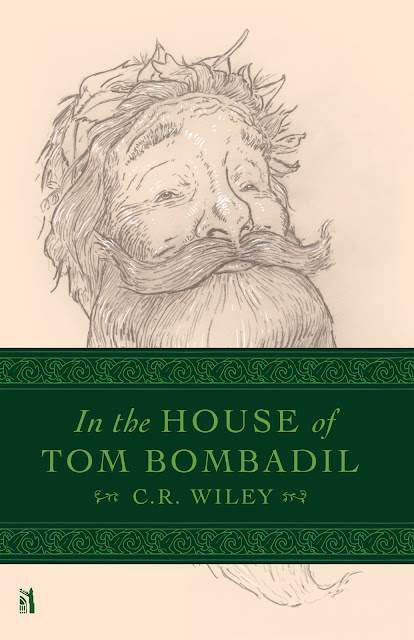
"In the House of Tom Bombadil" by C.R. Wiley


Tom Bombadil is one of the most curious of characters in The Lord of the Rings by J.R.R. Tolkien. His scene with the four hobbits, early in the trilogy when they are first leaving the shire, almost seems displaced. In the movie version, director Peter Jackson eliminated it altogether. And the singing Tom, along with his wife Goldenberry, have prompted debate among critics and fans alike, many believing that Tolkien should have cut him from The Fellowship of the Ring


Not so fast, says C.R. Wiley. In what is perhaps the most insightful (and relatively short at 112 pages), Wiley argues that Tom Bombadil has a purpose and a meaning, but like all good mysteries, “the truth” the Tolkien’s character will always remain a mystery. Wiley’s In the House of Tom Bombadil is an absolute gem of a discussion.


Frodo, Sam, Merry, and Pippin meet Tom Bombadil in a scene fraught with danger. They have just left the shire and entered the Old Forest. They discover that the trees, and one in particular, aren’t taking kindly to the intrusion, swallowing one hobbit, and almost swallowing a second, when the larger-than-life Tom Bombadil arrives on the scene. The tree is rebuked and promptly coughs up the two hobbits it was capturing. Tom is a master of the Old Forest, and he clearly exercises dominion. But what is he about?


C.R. Wiley

Wiley suggests that, to understand Tom, you need to understand the idea expressed in the biblical Book of Genesis about man being given dominion over nature. And you need to understand it in the way it was intended, essentially the idea of stewardship, and not as it’s often misinterpreted (domination, pillage, and destruction). To explain Tom’s wife Goldenberry, Wiley turns to fairy stories about the spirits of water. Using Tolkien’s other writings about both Tom and fairies, Wiley makes a solid and compelling case in a highly readable style. 


A pastor and former college professor, Wiley has also published The Household and the War for the Cosmos (Canon Press), and the first book in his young adult fantasy series, The Purloined Boy (2017). His short fiction has been published in The Mythic Circle and elsewhere. His articles have been published by Touchstone Magazine, Modern Reformation, Sacred Architecture, The Imaginative Conservative, Front Porch Republic, National Review Online, and First Things, among others. Wiley is a board member of the Academy of Philosophy and Letters, as well as New Saint Andrews College. He lives with his family in the state of Washington. 

In the House of Tom Bombadil is an excellent addition to the canon of literary criticism about Tolkien and his works, and it gives the often overlooked character his due. And who knew literary criticism could also be fun?  

Wednesday, January 29, 2020

"On the Shoulders of Hobbits" by Louis Markos


I first read J.R.R. Tolkien’s The Hobbit and The Lord of the Rings in the late 1960s, using what I didn’t know were pirated editions published by Ballantine. I reread authorized editions in the mid-1970s, and again in the early 2000s when the Peter Jackson movies were released. My youngest and I saw the movies three times each at the movie theater. We also watched the DVD of each movie. And the extended DVD set. 


I read The Chronicles of Narnia by C.S. Lewis in the mid-to-late 1980s, when our oldest was six or seven years old and loved being read to. The hands-down favorite character for all of us was Reepicheep the Mouse, a humble character called to great things much like Tolkien’s Bilbo and Frodo Baggins. 

Over the years, I’ve bought a lot of books by and about Lewis and Tolkien. On one of our trips to England, I spent two hours in Blackwell’s Bookshop on Broad Street in Oxford; I stared in wonder at the whole section devoted to the two authors and the Inklings. If there is heaven on earth, it is called Blackwell’s in Oxford.

Facebook has taught me that I am not alone in my admiration for Lewis and Tolkien. We are legion.

When a scholar like Louis Markos publishes a book about both authors, it’s an event for Lewis and Tolkien fans like myself. And rather than rehash what we already know, On the Shoulders of Hobbits takes a fascinatingly different approach – it considers The Lord of the Rings and The Chronicles of Narnia as guideposts to the classical virtues, like courage, friendship, temperance, discernment, justice, faith, hope, and love.

Louis Markos
Markos begins with the road, or the journey, featured in both of the works. He considers the call of the road, the response to it, its dangers, and what happens at the end. The road isn’t necessarily a physical one; it can be any kind of extended task that’s fraught with difficulties and where the outcome is by no means certain. He moves then to discuss the classical and the theological virtues, and the roles they play in both stories. And then he examines the idea and problem of evil, and how it is portrayed, confronted, and battled. 

Markos is a professor in English and Scholar in Residence at Houston Baptist University. He speaks widely on C.S. Lewis, J.R.R. Tolkien, and the Christian worldview. His books include Atheism on TrialApologetics for the 21stCenturyFrom Achilles to ChristWorldview Guides to The Iliad, The Odyssey, and The AeneidC.S. Lewis: An Apologist for EducationLewis Agonistes, Literature: A Student’s Guide, and Heaven and Hell: Vision of the Afterlife in the Western Poetic Tradition. He lives with his family in Houston. 

On the Shoulders of Hobbits also serves a good reminder that great stories about virtues, the call of the road, and fighting evil aren’t only for the young. That’s what the book is ultimately about – what good stories like these can teach us, no matter what our age or experience or station in life. 

After all, Frodo Baggins was 50 when he leaves the Shire with the ring to travel to Rivendell.

Tuesday, January 21, 2020

Editor of the Legendarium: Christopher Tolkien (1924-2020)


Imagine being a child, listening with your siblings to bedtime stories about Bilbo Baggins, or being enchanted at Christmas-time as your father read the latest installment in the Father Christmas letters, featuring the antics of Polar Bear. Then imagine being that child at five years old and grasping enough to point out inconsistencies in your father’s stories. Or being a young man in your 20s, and joining the likes of J.R.R. Tolkien, C.S. Lewis, Owen Barfield, and others for a weekly pint at the pub – participating in one of the most famous literary discussion groups of the 20th century,

Perhaps it’s no wonder that J.R.R. Tolkien (1892-1973) eventually chose his youngest son Christopher Tolkien (1924-2020) as his literary executor. An academic and writer in his own right, Christopher would preserve and extend his father’s legacy for nearly 50 years after the author of The Hobbit and The Lord of the Rings died. It is because of Christopher’s dedication to this task that we have The SilmarillionThe Fall of ArthurThe Fall of GondolinBeren and LuthienThe Children of HurinThe Lay of Aotrou and Itroun, and many other stories and tales. 

To continue reading, please see my post today at Tweetspeak Poetry.

Wednesday, December 27, 2017

“Tolkien and C.S. Lewis: The Gift of Friendship” by Colin Duriez


It is perhaps the most famous friendship of the 20th century. The impact it had on both literature and popular Christianity was enormous, and its influence continues today, reflected in the movies, books, biographies, and derivative writings published decades after their deaths.

J.R.R. Tolkien (1982-1973) and C.S. Lewis (1898-1963).

Without their friendship, there likely would have been no Hobbit, no Lord of the Rings, no Narnia, no Screwtape Letters. While it waxed and waned, the friendship between the two Oxford teachers, the two writers, the two members of the Inklings, and the two avid students of the Norse legends and myths left an immeasurable blessing and legacy.

The story of that friendship is examined and detailed in Tolkien and C.S. Lewis: The Gift of Friendship by Colin Duriez, first published in 2003.

Tolkien and Lewis met at Oxford. They had much in common: both had fought in World War I, both were intrigued by medieval language and Norse mythology, both had lost their mothers at a young age. But there were significant differences as well. Tolkien was married and raising a family, while Lewis was a bachelor (although living in a rather unconventional arrangement with his brother Warren, and Mrs. Moore and her daughter, the mother and sister of a friend killed in the war). And Tolkien was a devout Catholic, while Lewis was in his late atheist phase, moving toward a kind of agnosticism.

Good friends they became. And the friendship was solidified during a stroll on Addison’s Walk in Oxford, in the early morning hours of a Sunday morning in 1931, when Tolkien, with the help of a mutual friend, Hugo Dyson, convinced Lewis that Jesus Christ was a “true myth.”

Addison's Walk in Oxford
Duriez pays special attention to the impact each had on the other’s writing. At the time, there was no literary genre of “fantasy for adults.” Fantasy, like fairy tales, was considered to be in the province of childhood. Tolkien was self-conscious about what would become The Hobbit, and it was Lewis who almost singlehandedly kept encouraging him to continue that story (published in 1937) and then the “second Hobbit,” which became The Lord of the Rings and was published in the 1950s.

Similarly, Tolkien encouraged Lewis. Their friendship expanded to include others in what became known as the Inklings, which met in Lewis’s rooms at Magdalen College and the Eagle and Child pub. Out of those meetings, readings, discussions, and occasional debates would come The Chronicles of Narnia.

The friendship between the two men, Duriez notes, would warm and cool, especially after Lewis accepted a position at Cambridge (with Tolkien’s help and support) and Lewis’s marriage to Joy Davidman. Tolkien was also not comfortable with how Lewis “popularized” Christianity. But it endured.

Colin Duriez
Duriez is a writer and lecturer who has written extensively about Tolkien, Lewis, and the Inklings. His works include The C.S. Lewis Handbook (1990), The C.S. Lewis Encyclopedia (2000), The Inklings Handbook (2001; co-authored), Tolkien and The Lord of the Rings: A Guide to Middle Earth (2001), The J.R.R. Tolkien Handbook (2002), A Field Guide to Narnia (2004), The C.S. Lewis Chronicles (2005), J.R.R. Tolkien: The Making of a Legend (2012), and The Oxford Inklings (2015). He is also the author of A.D. 33: The Year That Changed the World (2007), Field Guide to Harry Potter (2007), The Poetic Bible (2001), and Francis Schaeffer: An Authentic Life (2008).

Tolkien and C.S. Lewis tells the story of a friendship that became a remarkable friendship, and helped change the world.

Related:

The Desiring God web site has a number of lectures by and interviews with Colin Duriez, covering the Origins of The Hobbit, the Lord of the Rings movies, C.S. Lewis, the friendship between Lewis and Tolkien, and related subjects.


J.R.R. Tolkien Convinces C.S. Lewis That Christ is the True Myth – Justin Taylor at The Gospel Coalition.

Monday, June 27, 2016

“A Hobbit, a Wardrobe, and a Great War”


It was a terrible war, this “war to end all wars,” and it pitted men against the most technologically advanced war machines created up to that time.

The men lost.

The death toll was horrific: more than nine million combatants and seven million civilians died. Four empires collapsed – Germany, Austria-Hungary, Russia, and the Ottoman Empire. Large swaths of Europe, especially in Belgium and northeast France, were laid waste. Even the victorious nations like Britain faced debt, struggling economies, and the task of rebuilding.

The physical destruction wasn’t the only tragedy of the war. The psychological impact was just as bad. The 19th century believe in progress – that things were getting better and better, science was solving all of man’s problems, and ignorance could be eradicated by education – was dealt a near-mortal blow. The general disillusionment that followed the war was devastating and long-lasting.

Two young men from Britain served in the war, and saw the horrors of the conflict and experienced the conditions of trench warfare – walking in water during the rain, the rats and the lice, the bodies that could pile up during periods of conflict, the constant smell of mud and unwashed humanity. The two did not emerged unscathed – one caught trench fever (caused by lice) and saw some of his closest friends die; the other was wounded and would carry a piece of shrapnel near his heart for the rest of his life.

J.R.R. Tolkien in World War I
But they did emerge with their beliefs intact, and especially their people in the essential nobility and heroism of the human being. The war would heavily influence their choice of careers and the books they produced, and those books have had an enormous influence on tens of millions of people. And their friendship at Oxford University is arguably the most important friendship of the 20th century.

The two were J.R.R. Tolkien and C.S. Lewis. Joseph Loconte, professor of history at The King’s College in New York City, tells the story of how the Great War affected them and shaped their writings in A Hobbit, a Wardrobe, and a Great War.

He makes a powerful case. By sifting through letters, accounts of battles, and The Hobbit, The Lord of the Rings trilogy, and The Chronicles of Narnia, Loconte meticulously identifies both specific and general influences.

C.S. Lewis in 1917
But he also does considerably more. Loconte neatly provides the social, historical, and cultural context for the period leading up to the war. And then he explains how the war shredded so many belief systems (progressive Christianity and the idea of progress among them) and what happened to the literary and cultural environment afterward. The particular surprise was that Tolkien and Lewis pursued subjects and themes believed old-fashioned and passé – good versus evil, the heroic, the potential evils of technology, and even ideas of chivalry.

Pivotal to the eventual success of both men was a conversation in 1931, one that started as a dinner invitation from Lewis to Tolkien and another friend, Hugo Dyson, and ended in the wee hours of the next morning with the once atheist Lewis believing in God. Lewis and Tolkien had become friends at Oxford in the late 1920s because of a shared love for the Old Norse tales and a shared experience in the Great War.

Joseph Loconte (photo by The King's College)
One experience they could discuss and argue; the other was left largely unspoken, because it was understood and didn’t need to be talked about. Instead, it ended up in their stories as specific scenes and general themes.

Loconte is the author of The Searchers: A Quest for Faith in the Valley of Doubt (2012) and God, Locke, and Liberty: The Struggle for Religious Freedom in the West (2014). This current work has something of a personal aspect for him, in that his grandfather fought for the United States in the Great War.

He tells a good story himself, and in A Hobbit, a Wardrobe, and a Great War, he has added immeasurably to our understanding of two of the 20th century’s most beloved authors and what influenced the stories they wrote.

Related:

At Tweetspeak Poetry, I’ve written a number of posts about the poets and the poetry of World War I:


Top photograph: Trenches of the 11th Cheshire Regiment at Ovillers-la-Boisselle, on the Somme, July 1916. One sentry keeps watch while the others sleep. Photo by Ernest Brooks via Wikipedia.