Showing posts with label dream. Show all posts

Sunday, December 11, 2022

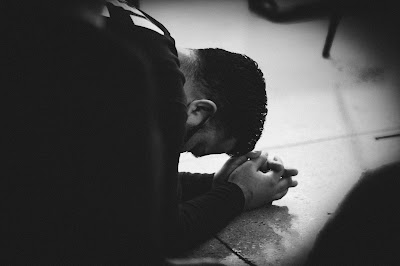
The time had come


After Daniel 9:1-19

The time had come;

the old man read

the book, the prophecy

set down years before,

before his birth,

the words thundered

at the people and

ignored until the end

brought destruction,

desolation, and exile.

He read the words and

moved, or was moved,

to prayer, to fall

on his face, to don

sackcloth, to rub

ashes on his face,

to fast. Then he

spoke his prayer

of confession,

his prayer of

contrition, not

spoken from any

high ground or

moral superiority,

but only in recognition

of perfect mercy.


Photograph by Jon Tyson via Unsplash. Used with permission.

Friday, December 9, 2022

The long haul


After Daniel 8:18-27
 

The story, the vision,

explains the long haul,

what is to come

over time, long time,

decades, centuries,

perhaps millennia to pass

before fulfillment. He

learns that all will come, 

not in his own time, but

in the One’s time, that

the One manages over time,

through time, and that

it will be in the One’s time,

the One’s timing, and he, and

we, are to prepare and act and 

live as if each day is the last,

and he, and we, we do this 

for the long haul.


Photograph by Greg Rosenke via Unsplash. Used with permission.

Sunday, December 4, 2022

Sickness


After Daniel 8:18-27
 

He sees the vision,

he hears the explanation,

couched in almost

vague, disguised words,

but he understands 

the meaning. His mind

accepts what he hears

but his heart fails, 

his spirit overcome,

both by the revelation’s

substance and the revelation’s

form. His strength fails;

he sickens. After he

recovers, he does the only 

thing he knows to do;

he doesn’t sit and wait

for fulfillment, to wait

for the end, but to do

what he has been called

to do: go about his work,

go about his daily life.


Photograph by Yaroslav Devia via Unsplash. Used with permission.

Friday, December 2, 2022

Confusion


After Daniel 8:18-27
 

Asleep, then wakened,

he hears the voice explain

the dream, the vision.

The voice diagrams

the path of history, what

is to come, not in the moment

but in the decades and

centuries ahead: the rise

and fall of kings and

empires explained

without reassurance. 

The voice speaks of rams 

and goats, of horns

large and small, horns

broken, crowns and

kingdoms rising and

falling, nothing enduring

until the end.


Photograph by Emily Morter via Unsplash. Used with permission.

Sunday, November 27, 2022

Daniel's dream


After Daniel 7:9-14
 

The vision of the one

in white, the beasts,

the son of man, the vision

arriving in a dream,

a dream or nightmare

ending well but still

terrifying., a singular

vision used to explain

what was to come, 

what is still to come,

a revelation renewed

six hundred years

later, an arc of prophecy,

an alpha and omega

bridging then and now.

And all in a dream.


Photograph by Daniel Olah via Unsplash. Used with permission.

Friday, November 25, 2022

And the vision


After Daniel 7:9-14
 

It begins as a dream,

a vision, a declaration

of what is to come,

in the three parts.


First, the throne, where

one in white and fire

takes his seat,

surrounded by servants

by the thousands.


Second, the beast killed,

destroyed, to be burned

by fire. The rest are 

rendered powerless but

not destroyed.


Third, a son of man

is presented to the one

in white; he is given

dominion that cannot

be destroyed.


Photograph by Drew Beamer via Unsplash Used with permission.

Sunday, October 30, 2022

The lesson of the dream


After Daniel 2
 

Troubled by his dream,

a king asks the help

pf the best and brightest,

who fail.


Facing certain death,

one man, only one,

asks for prayer, and

prays himself.


A king turns to counselors

and magicians, who read

the tea leaves and extend 

a wet finer into the wind.

A wise man turns to God.


Photograph by Leonardo Yip via Unsplash. Used with permission.

Friday, October 28, 2022

To describe a dream


After Daniel 2
 

Asked (or ordered)

to describe the dream

of another, they ask

the obvious: tell us

what it was.


Asked to describe

the dream of another, 

only one didn’t ask

the obvious. Instead,

he prayed, knowing

any guess would be

wrong, knowing tricks

or stratagems would be

useless.


Instead, he prayed.

He asked for what 

he could not do

within himself. And

he was given the vision

of the dream.


Photograph by Josh Hild via Unsplash. Used with permission.

Sunday, October 23, 2022

The king's dream


After Daniel 2
 

The king, more than 

troubled by a dream;

the king, frightened.

scared, terrified

by a dream. Wise men

summoned, not only

to interpret and explain,

but to describe the dream

(the king knew his servants,

his magicians, his sorcerers, 

his enchanters). Wise men 

fail, and wise men die.


One man, renamed

Belteshazzar, prayed.

The dream revealed,

the man praised

the revealer.


Photograph by Armand Khoury via Unsplash. Used with permission.

Friday, January 6, 2017

Sits on a rock


After Galatians 5:16-26

Sits on a rock
looks out across the valley
   below
sees the beauty
notices the fog approaching
   or is it a low-level cloud
feels the mist, the rain,
   the light
wraps arms around shoulders
closes eyes
dreams.


Photograph by Ken Kistler via Public Domain Pictures. Used with permission.

Friday, December 23, 2016

The second gift of Christmas


After Matthew 1:18-25

A wife to be, then.
A child to be, then.
A man whose marriage, then,
was not to be.

He did not beat his breasts
he did not tear his clothes
he did not shout his victimhood

he moved quietly
because of regard
because of feeling
for her
his self was crushed
but he was a righteous man
a fair man, a just man

until the dream
the second dream
and he knew
what he thought a curse
had become a gift
the second gift

a gift to care for
a gift to grow
a gift to protect
a gift to name


Painting: The Dream of St. Joseph, oil on canvas (1642-43) by Philippe de Champaigne; National Gallery, London.

Wednesday, June 10, 2015

Anne Hathaway's Dream


I dreamed, Will.

I dreamed of London and its crowds,
its noise and even its city stink

I dreamed of hearing the Danish prince
and the Scot usurper and St. Crispin’s Day
and the king’s daughters,

and seeing them, Will, in garish torchlight.

I dreamed I saw the Queen, Will,
nodding to the crowd as she walked
by the white hall palace, and I chanced
a smile, Will, and she returned it.

I dreamed I saw the river, Will, and rode
a barge close by the Globe.

And nobles in the finery and common folk
in plain dress, both clean and dirty, and I dodged
the bedpan emptied from above,
and I watched the crowd watch a hanging
or two. Or three. They brought refreshments
with them.

And the food, Will, the food in the taverns,
and the drinking with Marlowe and the Earl,
and the laughter and the arguments and seeing
them all, even you, scratch quills on parchment.

I don’t want to die too soon, Will.
I want to dream again.
I want to dream, Will.

Tweetspeak Poetry has a prompt about William Shakespeare and dreams. Take a look and write your own dream poem.

Painting of Anne Hathaway Shakespeare by Roger Brian Dunn (2010) based on a drawing by Nathaniel Curzon (1708).

Monday, May 18, 2015

The Great Von Harnack, Prophecy and Daniel


I was reading Against the Flow: The Inspiration of Daniel in an Age of Relativism by John Lennox this week, and a reference to the so-called “higher critics” and what they believed about the date Daniel was written sent me back 30 years to a classroom at Washington University in St. Louis.

In the 1980s, when I was in my masters degree program, I took a seminar called “History of the Early Christian Church.” It was taught by a partially retired professor (he had “emeritus” in his title) who had something of a reputation for unfeeling toughness. He seemed courteous enough, at least during the first few meetings for the 10 of us in the seminar.

The crunch came when we had to read and defend our first papers. One young woman was selected to go first, and her paper reflected the fact that she had hurriedly put something together the night before. The professor’s withering, relentless criticism reduced her to tears. She fled the classroom. Without missing a beat, he turned to the next student to present and defend, who happened to be me.

There was nothing else to do but to do it.

Adolf von Harnack
I even remember the subject of my paper – the origin of the office of “bishop” (episkopos in Greek). I had done a huge amount of research, surviving several sneezing attacks in the old Classics section of the university library. In my paper, I argued that while it had appeared early in the church, the office of bishop didn’t exist in apostolic times, or at least for the first 125 to 150 years of the church.

The professor believed otherwise. He peppered my reading with questions. I answered. More questions, and more answers. At one point, I thought my ship was clearly sinking, when he quoted the church historian and theologian Adolf von Harnack (1851-1930), one of the leading lights of the so-called German “higher criticism” of the Bible in the 19th and early 20th centuries. My professor invoked von Harnack on a regular basis; he always, always referred to him as “the great von Harnack.”

This went on for the rest of the two hours of the seminar meeting. In spite of several references to the great von Harnack, I kept punching back. My fellow students were clearly relieved that they had won a few days reprieve before they had to present; they were also somewhat aghast that I had dared to suggest, even indirectly, that the great von Harnack might not be entirely correct.

What was even more surprising was the professor’s overall reaction. He was clearly more than pleased with my paper. He stopped me after class and asked where I done my research, how long had I worked on it, and how had I come to be so interested in the subject of episkopos.

Two weeks later, when he returned all of our papers with his grades, he wrote on mine that he still believed von Harnack was correct. But he gave my paper an A+.

I’m not sure what von Harnack thought of the Book of Daniel; his focus was the New Testament and the early church period. But the higher critics in general rejected the traditional dating for the book, and maintained it had to have been written during the early period of Rome’s occupation of Palestine and not during the period of the Babylonian and Medo-Persian empires. Their reasoning was based on the assumption that Daniel recounted and interpreted Nebuchadnezzar’s dream by predicting a succession of empires, and there was no way he could have been that accurate in his predictions. Clearly the book had to have been written after the fact.

The higher critics rejected supernatural intervention, miracles, and prophecy in general; von Harnack, for example, entirely rejected the miracles of Jesus. If it couldn’t be explained by natural, historical methods, then it simply couldn’t happen the way the Bible recorded it.

As John Lennox explains in Against the Flow, the discovery of the Dead Sea Scrolls knocked a hole in the higher critics’ date for the writing of Daniel. The book was found among the scrolls, accepted and venerated as Holy Scripture. Had it been written only 50 years before the Qumran community existed, it would not have been accorded this recognition. Clearly, it had been around for a lot longer.

We’re still living within the context of Daniel’s interpretation of Nebuchadnezzar’s dream (you can read the entire account of the dream and its interpretation in Daniel 2). And if you ever wondered where the expression “feet of clay” comes from, this is where you’ll find it.


I’ve been discussing Against the Flow for the past several weeks. Today’s based is taken from Chapter 9, “Dreams and Revelations,” and Chapter 10, “A Succession of Empires.”


Painting: Daniel Interpreting Nebuchadnezzar’s Dream by Mattia Preti (undated; Preti lived from 1613 to 1699); private collection.