Showing posts with label Chris Mackowski. Show all posts

Wednesday, June 10, 2026

“The Atlas of Independence” by Chris Mackowski


If I had a mental image of John Adams, it was of a rather dour individual who bridged the presidencies of George Washington and Thomas Jefferson, whom my history teachers in high school and college seemed to find much more interesting. 

Then came the 2008 miniseries John Adams, with Paul Giamatti in the title role and Laura Linney as his wife Abigail. I almost skipped it, but we decided to watch it. And I began to understand that my teachers and I had all missed the boat on this major figure of the American Revolution.  I sought out some biographies and histories, and I discovered my understanding of the second U.S. president was seriously misguided.


It was with that improving understanding that I began reading Atlas of Independence: John Adams and the American Revolution by Chris Mackowski

To continue reading, please see my post today at Dancing Priest.

Some Wednesday Readings


Bob Dylan: ‘I’m a Religious Person’ Who Reads Scripture Daily – Stephanie Martin at Church Leaders.


Britain’s Great Self-Loathing Crusade – Matt Taibbi at Racket News.


Ghosts in the Field – Brian Miller at Notes from an East Tennessee Farmer.

Wednesday, September 17, 2025

“The Summer of ’63: Gettysburg” by Chris Mackowski and Dan Welch


My historical novel Brookhaven is set during the Civil War’s final two years and immediately after, and then in 1915, 50 years later. The moment that sets the story into motion happens in late April of 1863 – Grierson’s Raid, in which a troop of some 1700 Union cavalry made their way through Mississippi from the Tennessee border to (eventually) Baton Rouge, Louisiana. The soldiers came to Brookhaven, most notably burning the train station and tearing up railroad track.  

The raid had a specific point: divert attention from Gen. Grant’s army preparing to cross the river from Louisiana and end the siege of Vicksburg, the last Confederate position on the river. The fall of Vicksburg would been the Union controlled the entire length of the river and would split the Confederacy in two. 


The Vicksburg campaign was covered in a collection of articles edited by Chris Mackowski and Dan Welch, part of a series called “Summer of ’63.” Their Vicksburg & Tullahoma covered the events and milestones of that campaign, including a raid on Mississippi’s capital of Jackson, which eventually led to a Union victory.


Now Mackowski and Welch have done it again, this time turning to another major Union victory in 1863 – the Battle of Gettysburg.


To continue reading, please see my post today at Dancing Priest.


Some Wednesday Readings


Bud on the Tracks – Andrew Roycroft at New Grub Street.


America 250 and the Civil War – David Hamon at Emerging Civil War.

Mercy Scollay’s Quest for Custody of Joseph Warren’s Children – Janet Uhlar at Journal of the American Revolution.

Blood Eagle – Myth or Fact? – Annie Whitehead at Casting Light upon the Shadow.

Francisco de Saavedra de Sagronis: A Spainard’s Pivotal Role in the Yorktown Triumph – Richard Werther at Journal of the American Revolution.

Our First Revolution – Michael Barone at Coolidge Review.

Wednesday, May 24, 2023

“The Summer of ’63: Vicksburg & Tullahoma,” edited by Chris Mackowski & Dan Welch


There are few more momentous years in American history than 1863. The Emancipation Proclamation. The Battle of Gettysburg, ending Robert E Lee’s invasion of the North. The Fall of Vicksburg, which effectively cut the Confederacy in half. More than 30,000 books have been written on the Battle of Gettysburg alone. 

And there are few more actively maintained and managed Civil War web sites than Emerging Civil War. With 28 contributors and seven editors (all of whom also contribute), the site is updated daily and often several times a day. 


Chris Mackowski serves as editor-in-chief, and Dan Welch is one of the site’s contributors. Together, they have edited some 40 articles about the Civil War summer of 1863, focusing ontwo major campaigns – Vicksburg in Mississippi and Tullahoma in Tennessee. Usually works about that momentous summer address the Battle of Gettysburg; The Summer of ’63: Vicksburg & Tullahoma are about the other two campaigns whose outcomes had as much to do with the defeat of the Confederacy as did Gettysburg. In fact, one might argue that Vicksburg had at least as great an impact on the war as Gettysburg did, and perhaps more.


To continue reading, please see my post today at Dancing Priest.

Wednesday, April 12, 2023

“A Season of Slaughter” by Chris Mackowski & Kristopher White


From May 5 to May 7, 1864, the Army of Northern Virginia, commanded by Robert E. Lee, battled with the Army of the Potomac, commanded by Ulysses S. Grant. In what was known as the Battle of the Wilderness. The terrain was horrific for a battle – hundreds of acres of dense scrub, trees, and thick woods. Dry conditions, not to mention shelling by artillery, were conducive for fires. It was also notable for being the first engagement between the two commanding generals. 

With only a day passing, the two armies moved from the Wilderness area to the region around Spotsylvania Court House and soon found themselves engaged again. Except this time, it was more of a push-me / pull-you series of engagements, with the Confederate lines generally holding (with one major exception) and with continuous punching of those lines by Union forces. Instead of three days, the action went on for two weeks, from May 8 to May 21.


To continue reading, please see my post day at Dancing Priest.

Wednesday, March 29, 2023

"Grant vs. Lee," edited by Chris Mackowski and Dan Welch


Emerging Civil War (ECW) is one of my favorite blogs to follow for stories, news, and articles about the Civil War. It has quite a roster of editors and writers, all of whom have backgrounds (and often jobs) in history, national parks, and publishing. They publish a weekly newsletter, sponsor an annual conference, and have a series of books published with the publishing firm Savas Beatie

What I particularly enjoy is how their posts and publications are in understandable (i.e., non-academic) English. They’re writing to be read and understood by people like me, the general public. (In case you’re interested, they also produce and manage a sister site on the American Revolution, Emerging Revolutionary War Era.)


Last year, ECW published several works to celebrate their tenth anniversary. One of those is Grant vs. Lee: Favorite Stories and Fresh Perspectives from the Historians at Emerging Civil War. Edited by ECW Editor-in-Chief Chris Mackowski and contributor Dan Welch, it’s a collection of 46 articles by 22 authors posted on the site from the preceding 10 years. 


To continue reading, please see my post today at Dancing Priest.

Monday, October 17, 2022

"The Battle of Jackson, Mississippi" by Chris Mackowski


As many times as I’ve driven through or visited Jackson, Mississippi, I never knew that two Civil War battles were fought within days of each other right here at Mississippi’s capital city. The first, the Battle of Jackson, happened May 14, 1863. The second, at nearby Champion Hill. happened two days later. Champion Hill was the pivotal action in guaranteeing the eventual fall of Vicksburg, giving the Union control of the Mississippi River and dividing the Confederacy in half. 

Chris Mackowski, in The Battle of Jackson, Mississippi, tells the story of that battle, one that ended in the city’s capture and eventual large-scale destruction. It was something of a pincers battle, with Ulysses Grant directing General James McPherson to lead his troops from the northwest and General William Sherman to lead his troops from the southwest. After the diversionary tactic of Major Benjamin Grierson’s raid through Mississippi from mid-April to early May of 1863, Grant successfully moved his army across the Mississippi River at three places as part one of the capture of Vicksburg.


To continue reading, please see my post today at Dancing Priest.

Monday, June 27, 2022

“Hell Itself: The Battle of the Wilderness, May 5-7, 1864” by Chris Mackowski


Once Ulysses S. Grant became commander of all the Union’s armies, he undertook two efforts that ultimately helped defeat the Confederacy. First, he coordinated the campaigns of all of the Northern armies, and not only those forces under his immediate command. Second, he made a concerted effort to capture the Confederate capital of Richmond.  

In 1864, the campaign against Richmond was renewed in earnest. Grant was attempting to avoid a frontal assault and instead sweep around and back. To do that, he had to move his Army of the Potomac through 70 square miles of densely wooded terrain known as the Wilderness. The area was inhabited, if sparsely. Moving an army through it, with its artillery and supply wagons, would be difficult, but Grant was determined.


So was Robert E. Lee. He understood what Grant was attempting, and he was just as determined to stop him. Two steel wills clashed – and the Wilderness exploded. Literally.


In Hell Itself: The Battle of the Wilderness, May 5-7, 1864Chris Mackowski does two things. He tells the story of the main points of the battle, and he provides detailed directions for a tour of the battlefield by automobile. (“Battlefield” is a limiting term here; there was no one field or area of open terrain where everything happened.) The book is part of the Emerging Civil War Series


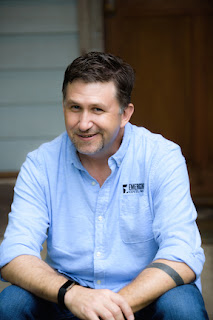
Chris Markowski

In addition to writing some of the volumes, Mackowski serves as editor for the entire effort. A professor at St. Bonaventure University, he has B.A., M.A., M.F.A., and Ph.D. degrees in communication, English, and creative writing. The author of some nine books, he’s written extensively on the Civil War for a number of publications. He also worked for the National Park Service and gave tours of the Civil War battlefields at Fredericksburg, Chancellorsville, Wilderness, and Spotsylvania. 


The Wilderness was a horrific battle, deserving of the name given by one its participants, “Hell Itself.” The terrain and denseness of the forest often meant hand-to-hand combat. Artillery fire often resulted in the woods catching fire, and soldiers on both sides were burned to death. 


Hell Itself brings the battle to life, making the reader feel almost a first-hand observer. You wonder, as did many who fought there, how anyone made it out of those woods alive.


Related:


Attack at Daylight and Whip Them: The Battle of Shiloh, April 6-7, 1862 by Gregory Mertz.


The Last Road North: A Guide to the Gettysburg Campaign, 1863 by Robert Orrison and Dan Welch.