Showing posts with label F. Scott Fitzgerald. Show all posts

Monday, May 16, 2022

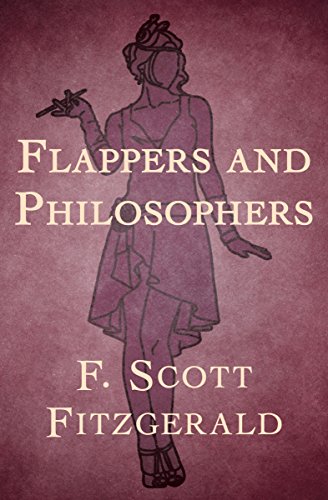
“Flappers and Philosophers” by F. Scott Fitzgerald


Published in 1920, Flappers and Philosophers was F. Scott Fitzgerald’s first collection of short stories. First appearing separately in such magazines at The Saturday Evening Post and Esquire, these eight stories were collected and published the same year has his first novel, This Side of Paradise. It was the novel that turned Fitzgerald into an overnight literary sensation – and at age 24. But it was the short stories that he continued to write for the rest of his life that supported him financially.  

The stories are generally about people in the upper middle and upper classes. They’re set in the first two decades of the 20th century and are something of period pieces – the slang, the music references, and social manners mark them with their time. Two of the stories, “The Offshore Pirate” and “The Ice Palace,” also contain references that today, 100 years after their publication, could only be called racist.


“The Offshore Pirate” is about a young woman who is bored with life and chooses only the worst men, whose uncle and guardian is at his wits end to marry her off (and make someone else responsible for her). She’s agreeably kidnapped on her uncle’s yacht by a young irate who, with his band of musicians, is making off with a stolen fortune. “The Ice Palace” is about a young woman from the South who’s determined to escape her town (and the young men it contains) and marry a Northerner. She almost gets her wish.


The young F. Scott Fitzgerald

“Head and Shoulders” concerns what seem to be a highly mismatched couple, a brainy man who exists only for the study of his books and a stage actress. They’ll end up changing positions. “The Cut-Glass Bowl” is the story of a woman of fading beauty mirrors the decline in the family wealth.


“Bernice Bobs Her Hair” is set right at the beginning of the flapper age. A young woman visiting her cousin undergoes something of a “Pygmalion” change at the hands of the cousin, whose verbal cruelty will eventually get its comeuppance. “Benediction” is something of an abrupt change of subject – a young woman visits the brother she hasn’t seen for 17 years – the brother who is studying to become a Jesuit priest. During the visit, she has an unexpected experience.


“Dalyrimple Goes Wrong” is about a war hero from the Great War who comes home to adulation which quickly fades. He takes something of a menial job, until he realizes that burglary might be more lucrative. And “The Four Fists” is the story of a young men who’s punched in the jaw on four separate occasions of his life – and each punch teaches him something important.


The collection is eight very different stories, showing Fitzgerald at the very beginning of his literary career. Each has something of a surprising twist. And each has characters who are recognizable, even at a distance of a century.


Wednesday, July 21, 2021

"The Great Gatsby" by F. Scott Fitzgerald


Sometimes, you’re remembered for your commercial failures rather than the books the critics celebrate.


In 1925, F. Scott Fitzgerald (1896-1940) published The Great Gatsby. Following the commercial and critical successes of This Side of Paradise (1920) and The Beautiful and the Damned (1922), Gatsby received generally favorable reviews from the critics, but it flopped commercially. Nine years passed before he published his final novel, Tender is the Night(1934). An uncompleted novel, The Last Tycoon, was finished by a friend and published in 1941. 


Yet of all his novels (and a multitude of stories and articles written for magazines), it is The Great Gatsby that is the best remembered and the book that made his literary reputation. And more than one critic has named it in the running for “the great American novel.”


Gatsby is both a novel of its time and a novel that captured its time. Its heart is a love story, one between a young soldier from a poor farming family in Minnesota and a Louisville debutante. But the love story, mostly existing in the past, only gradually unfolds. 


Jay Gatsby is an extremely wealthy man living in an opulent mansion on Long Island. Next door, in a small, rented house sandwiched between estates, lives Nick Carraway, the narrator of the story, a 30-year-old trying to make his way as a salesman in the bond market. Just across the bay is the home of Tom and Daisy Buchanan. Tom has inherited his wealth from his Chicago family; Daisy is a former debutante from Louisville who was wooed and sought after by man young men.


F. Scott Fitzgerald about 1921

Tom, despite his wealth, is something of a brute. He has little polish and considerable vulgarity; he’s also having an affair with the wife of the owner of the local gas station. The polish and manners seem to belong to Jay Gatsby, who throws ongoing lavish parties that people seem to invite themselves to. Rumors abound about the source of Gatsby’s wealth, including ties he has to the gangster who supposedly fixed the 1919 World Series.


Carraway is a cousin of Daisy, and Gatsby invites him to a party. What Gatsby really wants is to meet Daisy privately, at Nick’s house. He and Daisy have a past. 


Fitzgerald gradually builds the tension of the story, using Carraway as both an agent of narrative development and the recorder of events. The reader senses that this will not end well; some kind of tragedy seems to be inevitably unfolding. The surprise is what and how it happens – and who ends up being the character the reader admires the most.


There are numerous editions of the book available. The one I read was recently published by T.S. Poetry Press. With an introduction by poet Tania Runyan, it includes the full text of the story, historical context, fashion notes, vintage illustrations, and a Gatsby poem and poetry prompt. 


The Great Gatsby is a novel of the Jazz Age, a story of rich people whose main occupation seems to be drinking and entertaining themselves. It’s also a story of old money and new money, the decay of values, and the superficiality of what passes as society and celebrity.