Showing posts with label Italy. Show all posts

Thursday, October 23, 2025

Poets and Poems: Paul Willis and "Orvieto"


Travel writer Rick Steves says Orvieto in central Italy is precisely what an Italian hill town should be. Poet Paul Willis agrees.  

A walled medieval city. A funicular that transports you from the train station to the old town. Churches. Monuments. Museums. Wine tours. Stone archways bridging across streets. Views of the plains  And only 90 minutes from Rome by train. 


Willis visited Orvieto, and he’s composed a chapbook of 26 poems about the city, where “the cobblestone alleys / barely keep the walls apart.” 

To continue reading, please see my post today at Tweetspeak Poetry.

Some Thursday Readings


“Autumn Song,” poem by Dante Gabriel Rossetti – Sally Thomas at Poems Ancient and Modern.


Two Great Lights – poem by Cody Ilardo at Power & Glory.


We Can Remember – poem by Maureen Doallas at Writing Without Paper.


“The Island,” poem by A.A. Milne – Poems Ancient and Modern.

Wednesday, January 12, 2022

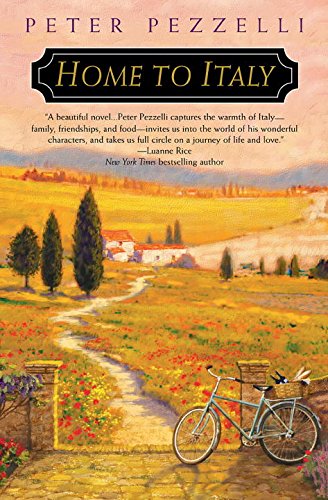
"Home to Italy" by Peter Pezzelli


Peppi has just buried Anna, his beloved wife of almost 45 years. They met and lived in Rhode Island, but Peppi was born in the Italian village of Villa San Giuseppe. He has relatives in Rhode Island, but he and Anna had been childless.  

He came to America as a young man, bringing with him his love of bicycles and bike racing. He hasn’t been home to Italy since he left. But the deed to the house of his parents and its attached mill is still in his name, and he wakes up one morning firmly resolved. He’s going back to Italy, back to where he was born, and he’ll live in the house of his parents. All he brings with him are a couple of suitcases and his bicycle.


Not long after, Peppi’s childhood friend Luca, a fellow bicycling enthusiast, is preparing to leave the village square with his cycling friends for a Sunday morning ride. Luca sees another cyclist coming, and he recognizes who it is. With a bare acknowledgement and no fanfare, Luca and Peppi pick up their friendship right where it left off 45 years before.


Peter Pezzelli

Things in the village have changed, of course. An earthquake destroyed Peppi’s family home and the mill. Luca now owns his family’s candy business, and his fiery daughter Lucrezia runs its daily operations. She’s been something of a terror ever since the accidental death f her husband a decade before. She still mourns him, just as Peppi carries the loss of his wife with him. Gradually, a May-December romance begins to bloom. 


Home to Italy by Peter Pezzelli is the delightful, heartwarming story of Peppi, Lucrezia, and their families and friends, and how sadness and mutual loss gradually gives way to love.


Pezzelli is the author of six novels, all set in Rhode Island or Italy. In his 20s, his girlfriend (and later wife) gave him an electric typewriter, which he used extensively while recovering from a rugby injury. He used the recovery time to try his hand at short stories. Later, he took creative courses at nearby Brown University and the Wesleyan Writers Conference. He eventually set short stories aside to write novels. He lives with his family in Rhode Island.


Home to Italy is a charming, funny, and highly entertaining story. Peppi discovers that it is possible to go home again, even as many things have changed. But the things that matter – the people – have not. 

Wednesday, November 11, 2020

"This Magnificent Dappled Sea" by David Biro


It is the spring of 1992. Luca Taviano is a red-haired boy living with his grandparents. His parents died in an automobile accident when he was a baby; he survived in his car seat in the back of the car. He gets a cold that doesn’t seem to want to go away. The doctor in Rondello, the small town they live in outside of Genoa, Italy, sends him for tests. And the cold that won’t go away is a symptom of leukemia.  

Nina Vocelli is a nurse at the local hospital. The day Luca arrives for his testing is the same day she’s learned that a hospital doctor is breaking off his affair with her. Her anger leads to an initial upset with Luca, but she eventually becomes the boy’s main caregiver and champion. 


The problem is that Luca’s leukemia is responding to treatment that way most childhood leukemia cases respond. In fact, it’s getting worse. The only solution seems to be a bone marrow transplant. But donors can’t be found. Ideally, the marrow needs to come from a close relative. But there’s a problem. Luca’s grandparents adopted his father, or so everyone believes. Only Luca’s grandfather knows the truth: Luca’s father’s parents were Jews trying to escape Italy during World War II, but they were caught and executed by Italian fascists. Luca’s Jewish heritage is about to upend a secret that is decades old.


David Biro

Across the Atlantic, Rabbi Joseph Neiman works in a synagogue in Brooklyn. He’s wrestling with his faith; he’s wrestling with the problems of his 13-year-old son who’s continually getting in trouble at school. His wife is more orthodox; she also hates all things Italian because of what happened to her grandparents and other family members during to the war. Registering with a bone marrow office to help a sick girl leads to the discovery that Rabbi Neiman is an ideal match for Luca in Italy. 


The lives of family and friends in Italy and America are intertwined in This Magnificent Dappled Sea by David Biro. It’s a story of how events and tragedies in wartime can have effects decades later, and how people discover their connectedness to other people they didn’t even know existed.


Biro, a graduate of the University of Pennsylvania, Columbia Medical School, and University of Oxford, is a dermatologist and teaches at SUNY Downstate Medical Center. He’s the author of One Hundred Days: My Unexpected Journey from Doctor to Patient and The Language of Pain: Finding Words, Compassion, and Relief.  He lives with his family in New York City.


This Magnificent Dappled Sea is a moving story of how identity and heritage may never really be what you think it is. It moves the reader to tears as it unfolds the tale of ordinary people thrust into extraordinary circumstances.

Wednesday, June 10, 2020

Finding Romance in Ireland and Italy


If you can’t travel, you can still find romance in Europe

Ruth Davenport is an American romance writer who can’t seem to find any romance of her own. Part of her problem, she thinks, is the men she becomes interested in are themselves more interested in Ruth’s younger sister. Like the one she’s preparing to ask out, when he asks her to put a good word in with the sister. She’s also behind on her new novel-under-contract, as in, she can’t think of anything to write about.

She sees an ad for a marriage bureau and thinks she may have found her novel idea. And what better way to research the idea then go to Ireland and interview some of the clients? Once she arrives, mishaps abound, starting with her lost luggage, followed by the wrong date for her country inn reservation. Directed to a pub and bed-and-breakfast in a nearby village, she wrecks the rental car in a driving rain. And the bed-and-breakfast is no longer that but only a pub, owned by Sean Hughes. He needs money to buy a new boiler, so he agrees to drive her to meet the marriage bureau clients. Ruth has never met anyone quite like Sean, and Sean, once stood up at the altar, has never met anyone like Ruth. 

A Match Made in Ireland by Michele Brouder is the story of Sean, Ruth, and what happens when an American romance writer meets a pub owner who only wants to grow apples. It’s an engaging, warmhearted story, full of Irish locations and scenery and keeping the reader guessing as to what will happen next in the growing relationship between the unlikely couple.
 (first in the Escape to Ireland series)

Brouder has written a number of contemporary romance and young adult paranormal novels, with the books organized in the Escape to Ireland, Happy Holidays and Soul Savers series. A native of New York, Brouder lives with her family in Oreland. A Match Made in Ireland is the first novel in the Escape to Ireland series.

If you’d prefer another country to find romance, there’s always Italy.

British archaeologist Emily Carlyle is working on an extensive and unusual mosaic project on an estate near Naples, Italy. She’s focused completely on her work, until she realizes that funding is running low. She approaches the funding sponsor, the Count di Montecorvio Rovella, to see if he will supplement the money. What she learns is that the old count has died and his son, Alessandro Cavour, is the new count. He’s a property developer and all-business, with little interest in the estate’s Roman mosaic except as something that might make money. What he becomes is very interested in is Emily herself. And then there’s his father’s will, involving both himself and Emily.

Alessandro and Emily both carry considerable emotional baggage. He feels responsible for the death of his wife and first son, who died in what clearly was an accident. For her part, Emily is carrying the physical scars from a knife attack by a former academic advisor and boyfriend who turned into a stalker. Emotional baggage notwithstanding, both feel an immediate and intense physical attraction to each other.

Perfect by Diana Fraser describes the growing relationship between the two and how they both have to overcome their pasts. On her web site, Fraser says she writes sensuous romance stories, and this one is certainly that. It includes several graphic scenes involving the couple. (Not having seen the author’s web site, I was expecting a more traditional romance. This one is still a romance, but it gets steamy.)

Fraser has written numerous romance novels in the Desert Kings, The Sheikhs of Havilah, Italian Romance, The Mackenzies, and Lantern Bay series. A native of England, she lives with her family in New Zealand. Perfect is the first novel in the Italian Romance series.

Top Photograph: The Ring of Kerry Lookout in Ireland by Nils Nedel via Unsplash. Used with permission.

Wednesday, January 8, 2020

"Reluctantly Matched" by Shanna Delaney


Samantha is finally realizing the dream of her young life – traveling to Florence to see and study its great works of art and especially its sculpture. Raised by her grandmother, her art studies in college were cut short when her grandmother developed Alzheimer’s. Her travel to Florence, however, has been beset by delays and canceled flights, and she’s already lost two days. She’s almost bumped from the flight she’s finally on, when a handsome man intervenes with the flight attendant, enabling her to get a seat in first class – and finally some sleep.

Landing in Florence, she’s almost robbed when the handsome stranger, Edo, once again intervenes. He realizes she’s booked her vacation stay at his family’s home outside Florence. It’s the family business he left Italy six years before to try to avoid. He also left a girlfriend who wasn’t interested in moving to the United States. 

Edo’s mother wants grandchildren, and she spots a possible opportunity in Samantha. Her rather obvious matchmaking begins to pay off, when Edo seems less and less reluctant to escort Samantha around Florence and its treasures. He begins to see not only his city but also his home and family with Samantha’s eyes. For her part, Samantha finds herself falling in love, but her vacation will be ending, and she has to return to life in the United States.

Reluctantly Matched by Shanna Delaney is the story of Samantha and Edo, and it’s also the story of Florence and the surrounding countryside, as much a character as the two protagonists. 

Delaney is the author of three romance novels in her Italian Bachelors series: Accidentally Enemies (set in Venice), Reluctantly Matched, and Hesitantly Reunited (set in Rome). She’s also published a related novella, Love in Terminal BReluctantly Matched was formerly entitled Finding Love in Florence, until renamed with the new series title.

Reluctantly Matched is an engaging tale of two people, one American and the other Italian, who discover each other and love in one of Italy’s most beautiful cities.

Top photograph by Heidi Kaden via Unsplash. Used with permission.
Monday, August 20, 2018

“Hear the Echo” by Rob Gittins


Frankie (short for Francesca) is a late-20-, early-30-something woman who lives in contemporary Wales. She has two children and a rather worthless husband. We meet Frankie as she is considering, and coming very close to, earning desperately needed money by becoming an occasional prostitute. She doesn’t quite get there, fortunately. Her much older friend Tony, orphaned as a baby and adopted into Frankie’s family, knows what she’s been up to and admonishes her. Tony isn’t as old as her parents but he’s considerably older than Frankie, and he’s a kind of loving uncle.

Chiara is a teenager living in Italy, at the time of Mussolini’s consolidation of power in the 1920s and early 1930s. Enrico, a man from their village, has returned from England, where he’s been making a good living for himself and is seeking to employ a young person to help him. Eventually, he’s hoping this young person might become his wife. Chiara, seeing little in the way of work in her hometown, heads to England as well. Once she arrives, she learns things have changed: Enrico has lost his job and has decided to start his own business in Wales.

What these two women have in common is their Welsh-Italian background and the fact they both keep a journal. Slowly we come to understand that two women, generations apart, are writing their journals to each other, even though they don’t know of each other’s existence. But their lives are inextricably connected, and we don’t see all of the connections until the very end of the story.

Rob Gittins
Hear the Echo by novelist and screenwriter Rob Gittins is a fascinating story of personal history, how it intersects with national and international events, and how Italian emigrants to the U.K. navigated the culture, the internments of World War II, and their own family dramas.

Gittins has written two biographical novels about the poet Dylan Thomas, The Poet and the Private Eye (2014) and The Last Days of Dylan Thomas (1987). His other novels include Gimme Shelter (2013), Secret Shelter (2015), and Investigating Mr. Wakefield (2016). Gittins is also a screenwriter, having written for such well-known television series as “East Enders” and “Vera.” 

Hear the Echois family saga, contemporary novel, and more than a little mystery all mixed together in a moving, satisfying, and ultimately tender read. 

Top photograph: An Italian store in Wales about 1930.

Monday, July 31, 2017

“Don Camillo and His Flock” by Giovanni Guareschi


I was all of 14 when I first met Don Camillo. A good friend (and rather devout Catholic) recommended the stories to me. I found a paperback edition of The Little World of Don Camillo by Giovanni Guareschi in English translation. It didn’t take long to become a fan of the battling priest in the small village in northern Italy who engaged in a war of words, and sometimes fists, with the village’s communist mayor Peppone.

The stories were hilarious. Both Don Camillo and Peppone continually get themselves in issues, problems, and impending disasters. And while sometimes it’s the priest who triumphs, and sometimes it’s the mayor, neither one is down for long.

As it turns out, that English language edition was first published in the United States, and then used for the British edition. What few knew at the time was that the American publisher had left out some 19 stories deemed unsuitable for American readers (likely because many of them showed a communist mayor who also had a heart). Many of those stories are included in Don Camillo and His Flock, published in 2015 and based on the Italian edition published in 1952.

The stories are still hilarious. This edition includes a total of 27 of them and a map of the fictional town. In some, Don Camillo and Peppone are dealing with the aftermath of World War II. Others concern basic human relationships. All contain at least a hint of the famous rivalry between the two, and the occasional times they’re forced to cooperate and work together.


And there’s a story about a hunting dog named Thunder, and one about the ugly Madonna, that are priceless.

Giovanni Guareschi
What these stories reminded me of was the third main character – and that is the figure of Christ. Don Camillo often has an extended discussion with the figure of Christ on the cross that hangs above the church’s altar. And the figure tries to keep Don Camillo to the straight and narrow, but he also knows his priest well.

Guareschi (1908-1968) was an Italian journalist who joined the Italian army in 1943, just in time for Mussolini’s government to be overthrown, the German army to invade and take over, and himself to be arrested and sent to a prison camp in Poland. Guareschi returned to Italy at war’s end and helped start a pro-monarchist newspaper. 

The character of Don Camillo was based on a real person and priest, Don Camillo Valota (1912-1998), who was a partisan fighting the Germans and sent to the Dachau and Mauthausen concentration camps. And the political battles involving the monarchists (and later the Christian Democrats) and the communists were very real in postwar Italy. The stories were first published in Guafreschi’s newspapers.

Don Camillo and His Flock is funny and moving, and has some rather subtle suggestions for the kind of divided times we live in today.

Illustration: The almost childlike illustrations of Don Camillo (the angel) and communist Mayor Peppone (the devil) accompany every Don Camillo story.

Friday, September 4, 2015

Aili and Andres McConnon’s “Road to Valor”


He was a boy who came from a relatively poor family living in a small town near Florence. He was able to go to a school in Florence, but had to buy a bicycle for transportation. He worked and saved his money, and was finally able to buy a fourth-hand bike.

It changed his life. The boy became Gino Bartali, one of the great cycling legends. In Road to Valor: A True Story of World War II Italy, the Nazis, and the Cyclist Who Inspired a Nation, Aili and Andres McConnon tell Bartali’s story.

Actually, they tell three interlocking stories.

The first is Gino Bartali the great cyclist, who won the Tour de France twice – with each win separated by a decade – a record for time in-between wins that’s still unbroken.

The second is Gino Bartali the Italian resistance messenger, who at the behest of the Archbishop of Florence smuggled fake identity documents all over northern Italy, hidden in his bicycle. What he did saved the lives of hundreds of Jews. He even hid a Jewish family from the Nazis in his basement in Florence.

The third is Gino Bartali, the man whose impossible victory in a Tour de France stage in the Alps helped to stop exploding violence in Italy between the Communist and Christian Democratic parties. As one observer pointed out, men who had been trying to kill each other suddenly turned their attention northward, and celebrated Bartali’s victory together. Bartali had been 21 minutes behind the Tour leader, and in one stage erased the difference. He powered on to win the 1948 Tour, despite all of sports journalists and cycling fans who considered him a “washed-up old man” at 33.

The story of helping the Italian resistance and saving the lives of Jews was learned only fairly recently. Bartali, who died in 2000 at the age of 85, never talked about until late in life, when he told his oldest son some of what happened. Others, especially the Jewish families he helped to save, corroborated his story. His cycling around Tuscany, Umbria and other Italian locales could always be explained as “training.” But secreted in the tubes of his bicycle were false identity papers, to help protect Jews and also to help many escape.

The McConnons tell a riveting, wonderful story. Bartali wasn’t a saint; he had his human frailties like the rest of us. But he had great courage, and he acted on that courage – to save lives, and to win an impossible race. Even if you’re not a cycling fan, Road to Valor is an inspiring, moving account of a terrible time in human history.


Photograph: Gino Bartali cycling in a road race.

Saturday, June 7, 2014

This Could Happen Only in Italy

Only in Italy -- a nun wins the country's national singing competition -- with a song from the movie "Flashdance."