Showing posts with label Keith Moray. Show all posts

Thursday, March 3, 2022

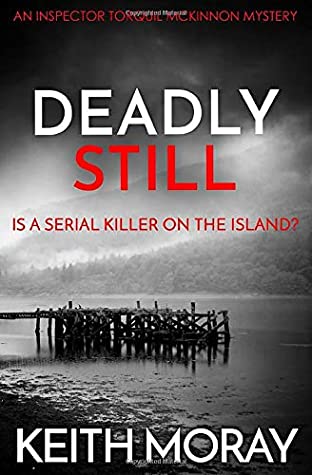
"Deadly Still" by Keith Moray


It may be the perfect murder. A man, living in an isolated area and known to like his drink, is found dead. It appears that he took too much of his insulin, fell, and smashed his face. At least that’s what the initial evidence suggests to Detective Inspector Torquil MacKinnon and the officers of the West Uist Police in the Hebrides. And it might have been the final determination, except for the three teenagers whose drinking part to celebrate end of term result in a boy dying, a girl blinded, and another girl missing. 

Forensic tests determine that the teens were drinking the Scottish equivalent of moonshine, with high levels of methyl alcohol. And it was the same drink consumed by the dead man. Soon additional tests that the dead man was helped to his death – murdered, in fact.


And MacKinnon thought he had his hands full with his upcoming wedding.

 

Keith Moray

Deadly Still
 is the sixth and most recently published Inspector MacKinnon novel by Keith Moray. It has the standing cast of characters – MacKinnon’s Uncle Lachlan, a priest known as “Padre;” Constable Ewan McPhee, the Drummond twins who serve as part-time officers; Sgt. Morag Driscoll, who happens upon the teenagers; Sgt. Lorna Glopsie, Torquil’s fiancĂ©e, Ralph McClelland, the local doctor who serves as a police surgeon; and the newspaper editor and reporter. The series’ cast has also been freshened by the arrival of a new officer, Detective Constable Penny Faversham, who’s joined the West Uist Police from a similar post in Leeds, England.


In addition to the Inspector MacKinnon novels, Moray has also published three historical novels, The Pardoner’s CrimeThe Fool’s Folly, and The Curse of the Body Snatchers; non-fiction books (under the pen name Keith Souter); and several westerns as Clay Moore. When he’s not writing, he practices medicine as a part-time doctor and medical journalist (he studied medicine at the University of Dundee). He lives in Yorkshire in England.


Deadly Still is a lively story, with a considerable number of suspects unfaithful to their spouses, a postman who seems to be in the right place at the right time, a young girl kidnapped, and motives for murder abounding.


Related:


The Gathering Murders by Keith Moray.


Deathly Wind by Keith Moray.


Murder Solstice by Keith Moray.


Flotsam & Jetsam by Keith Moray.


Death in Transit by Keith Moray.

Thursday, January 27, 2022

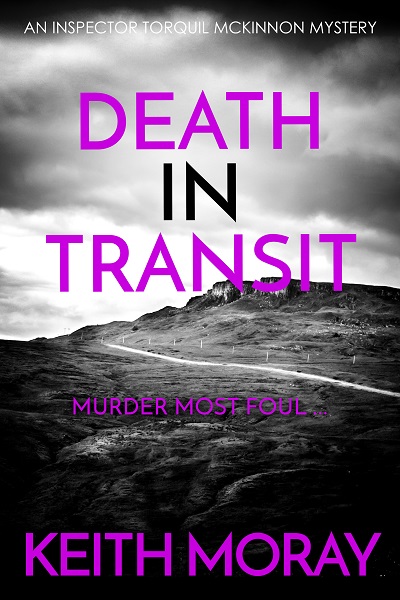
"Death in Transit" by Keith Moray


We’re back in the Hebrides with Inspector Torquil MacKinnon. Astronomers and astrologists from all over are arriving in West Uist, where MacKinnon and his police team are based. People are coming to experience what’s called the “transit,” when Mercury aligns with Venus and the other planets are in close alignment as well. 

More than the usual rivalry between the groups seems to be at play. The astrologists consider themselves more advanced and free-thinking; the astronomers are more than irritated at what they see as unscientific nonsense about how planets affect people’s behaviors. They all attend a lecture but one of the leading astrologists, a woman with a Ph.D. in astronomy who’s embraced the astrological side.


Words are said. And then more than words. The woman’s body is found floating in the harbor the next morning, and the autopsy shows she was bludgeoned from behind and then fell, or was dumped, into the water.


Keith Moray

MacKinnon and his team get to work. He’s dealing with the usual interference from his boss in Scotland, suspects who kept avoiding telling all of what they know, and a newspaper editor and reporter who think they can solve the mystery themselves. And then there’s a second murder.


Death in Transit by British author Keith Moray is the fifth of six Torquil MacKinnon mysteries. It’s a good story, highlighted by the astronomy-astrology rivalry, but it seems a bit choppy in places and a few surprise developments that come out of left field. But it reads well, and Moray leaves enough hints for the reader to begin to identify the killer.


In addition to the Inspector MacKinnon novels, Moray has also published three historical novels, The Pardoner’s CrimeThe Fool’s Folly, and The Curse of the Body Snatchers; non-fiction books (under the pen name Keith Souter); and several westerns as Clay Moore. When he’s not writing, he practices medicine as a part-time doctor and medical journalist (he studied medicine at the University of Dundee). He lives in Yorkshire in England.


Related


The Gathering Murders by Keith Moray.


Deathly Wind by Keith Moray.


Murder Solstice by Keith Moray.


Flotsam & Jetsam by Keith Moray.

Thursday, June 11, 2020

"The Pardoner's Crime" by Keith Moray


It’s 1322. Sir Richard Lee has just been appointed circuit judge of the King’s Northern Realm by Edward II. He’s attended by Hubert of Loxley, and he’s making his way to Pontefract Castle and the town of Wakefield in western Yorkshire. Sir Richard is a great believer in the law and its fair administration, and the indications are that the current judge is anything but fair. The current judge is anything but pleased to greet his replacement. 

In the nearby forest, Sir Richard and Hubert are confronted by the outlaw Robert Hood and asked for a toll (it’s paid). Arriving in Wakefield, they find a man in the stocks for a minor infraction, and the man is the first to be killed by person or persons unknown – an arrow shot through his eye. A young woman has been raped. A pardoner, who sells indulgences for reducing the penalty of sins, is soon found murdered. Sir Richard becomes the target of a murder attempt. And the king himself and his entourage may be targets. It’s the first in the 

The Pardoner’s Crime by British mystery writer Keith Moray is a fine historical brew of murder, mayhem, and revenge. A fun combination of both historical and fictitious characters, the novel is the first of Moray’s Sandal Medieval Thrillers series. 

Keith Moray
Moray has published six Inspector MacKinnon novels, contemporary police procedurals set in the Orkney Islands. He’s also published three historical crime novels, The Pardoner’s CrimeThe Fool’s Folly, and The Curse of the Body Snatchers; non-fiction books (under the pen name Keith Souter); and several westerns as Clay Moore. When he’s not writing, he practices medicine as a part-time doctor and medical journalist (he studied medicine at the University of Dundee). He lives in Yorkshire in England.

In this first story in the series, Robert Hood is something of a peripheral character – considered a traitor because he fought for the wrong (losing) side in the recent civil war. He also gets himself suspected of murder and rape. Sir Richard, with his great faith in the law, refuses to jump to conclusions and closely examines evidence, all the while warding off the attentions of both an apothecary’s wife and a titled lady. The Pardoner’s Crime is a quick-moving, action-packed story.

Related


Top photograph: A recreation of Pontefract Castle, via the Pontefract Museum and Wikipeida

Thursday, January 16, 2020

"Flotsam & Jetsam" by Keith Moray


When you live by the seashore or on an island, a lot of things tend to wash up on the shore: driftwood, the debris from shipwrecks, the proverbial bottles with their messages, perhaps a dead body, a collie tied with ropes to wooden planks. 

Wait, what? A collie?

Inspector Torquil McKinnon of the West Uist police in the Orkney Islands finds the dog, barely alive. Dogs seem to be disappearing, but no one has come across this kind of barbaric behavior. There’s also a rash of burglaries happening, a television program is broadcasting from the island for a week, and some shifty-looking businessmen are hosting a Scottish football star. All kinds of things are washing up on McKinnon’s island.

And then there’s a murder, or two.

Keith Moray
The appropriately named Flotsam & Jetsam is the fourth mystery in the Torquil McKinnon series by British writer Keith Moray. Like its title implies, it meanders in a number of directions, until the bodies begin to turn up. Then it turns into a tightly written police procedural – with always a bit of Scottish humor thrown in (usually courtesy of Torquil’s priestly uncle).

Moray has published six Inspector MacKinnon novels. He’s also published three historical novels, The Pardoner’s CrimeThe Fool’s Folly, and The Curse of the Body Snatchers; non-fiction books (under the pen name Keith Souter); and several westerns as Clay Moore. When he’s not writing, he practices medicine as a part-time doctor and medical journalist (he studied medicine at the University of Dundee). He lives in Yorkshire in England.

Flotsam & Jetsam is another solid entry in the series, with well-drawn characters, considerable games afoot, and long-buried secrets finally seeing the light of day.

Related


Thursday, May 23, 2019

"Murder Solstice" by Keith Moray


It begins with an apparent husband-wife murder-suicide – but with no apparent motive, so the case is left open. Then, months later, the director of a local museum devoted to the “Hoolish Stones.” Similar to and perhaps older than Stonehenge, falls to his death after what looks like a bit too much alcohol. Not long after, a young woman in a hippie-like spiritual organization falls to her death while keeping watch on the stones for the approaching summer solstice. 

Inspector Torquil McKinnon of West Uist in the Orkney Islands finds his hands even more full. Someone has attacked Calum Scott, the local newspaper editor-reporter-owner, with a brick thrown through the window on the newspaper offices. McKinnon’s own constable is knocked out while investigating the brick incident. 

And Sergeant Lorna Glospie is assigned to McKinnon’s team by his arch-nemesis and boss Superintendent Lumsden to perform an audit, aka spying on the team to find something Lumsden can use to get McKinnon dismissed. What Lumsden doesn’t foresee is McKinnon and Glospie falling for each other.

Keith Moray
Murder Solstice by Keith Moray is the third in the Inspector McKinnon mystery series. And it serves up a mix of New Age spirituality, secret dogfighting, and a considerable number of crimes for a small Orkney community.

Moray has published five Inspector MacKinnon novels, with a sixth scheduled for later this year. He’s also published three historical novels, The Pardoner’s CrimeThe Fool’s Folly, and The Curse of the Body Snatchers; non-fiction books (under the pen name Keith Souter); and several westerns as Clay Moore. When he’s not writing, he practices medicine as a part-time doctor and medical journalist (he studied medicine at the University of Dundee). He lives in Yorkshire in England.

Murder Solstice takes its time in helping the investigation team realize that too many dead people are turning up in what can’t be coincidences, but once they understand, the story moves at lightning speed. The mystery is as enjoyable for its Orkney setting, inspector-sergeant romance, and often comic carrying on by the minor characters as it is for the primary crime story.

Related


Thursday, May 2, 2019

"Deathly Wind" by Keith Moray


West Uist in the Hebrides, off the coast of Scotland, looks like the idyllic island community. It has its pub (serving heather ale), it has its fishing boats, it gets its fair share of tourists who come for the scenery, it has a castle, and it has its resident characters. Nearby on the island is the area known as the Wee Kingdom, comprised of a half-dozen or so “crofts,” or small farms, which have existed for several hundred years as perpetual grants from the lord of the castle. This isn’t the kind of community where you’d expect to find violence. But it is exactly that.

Deathly Wind by Keith Moray opens with violence – a family of four have been targeted by someone known as the “assassin,” who ruthlessly and almost gleefully shoots each one as they resting and playing on a beach by the water. A police constable, Ewan McPhee, doing routine rounds on his boat finds the bodies – and he’s promptly knocked unconscious. His boat is later found floating, and he’s presumed dead.

And then the murders really begin, and they seem connected to plans by the new “laird” of the castle to evict the crofters and begin installing a large number of wind turbines for power generation. In fact, the murders come so fast and furious that the reader is left to wonder if there will be any characters left by the end of the story.

Keith Moray
Detective Inspector Torquil MacKinnon of West Uist has been on leave, and he returns to find his constable missing, people dead and dying, the community in an uproar over the wind turbines, and his obnoxious boss on the mainland making MacKinnon and the reader wish him to become the next victim. And MacKinnon finds himself not so much leading the investigation as finding himself sucked into its whirlwind and coming dangerously close to death himself.

Moray has published five Inspector MacKinnon novels, with a sixth scheduled for later this year (Deathly Wind is the second in the series). He’s also published three historical novels, The Pardoner’s CrimeThe Fool’s Folly, and The Curse of the Body Snatchers; non-fiction books (under the pen name Keith Souter); and several westerns as Clay Moore. When he’s not writing, he practices medicine as a part-time doctor and medical journalist (he studied medicine at the University of Dundee). He lives in Yorkshire in England.

Deathly Wind is one wild story of murder, mayhem, motives buried in the past, and few things being what they first appear. 

Thursday, March 7, 2019

"The Gathering Murders" by Keith Moray


It’s perhaps inevitable to compare the Inspector Torquil McKinnon mysteries by Keith Moray to the Jimmy Perez mysteries by Ann Cleeves. Both are set on islands off northern Scotland (the Hebrides and Shetland, respectively). The heroes of both have small police forces (a sergeant and a constable). Both have rather gruesome murders committed generally in isolated places; remote islands have a lot of isolated places. 

But there is a major difference. The Torquil MacKinnon stories, at least as demonstrated in The Gathering Murders, seem to have an element of humor running through them, including a hard-drinking, motorcycle-riding Catholic priest who is MacKinnon’s uncle and who raised him from childhood.

Serious crime doesn’t seem to happen in a small town like West Uist in the Hebrides, until the annual Gathering and Literary Festival happens. As the festival begins, a local poet with an eye for the women, unmarried or not, whose major claim to local fame is his unregulated whiskey still, is found dead, the apparent victim of an accident. Then Fiona Cullen, the young woman already called “the queen of Scottish crime writers” who returns to her home island for the festival is found dead, and there’s nothing apparently accidental about it. She also happens to be Torquil MacKinnon’s old girlfriend who was strongly indicating her interest in rekindling their romance.

Keith Moray
MacKinnon discovers that his dead girlfriend had a tendency to write roman a clef mystery stories – thinly disguised accounts of people she knew and didn’t particularly like. From that literary perspective, suspects abound, and the inspector discovers that his once and future girlfriend not only got literary revenge against people she believed had hurt her, she also slept with just about anyone who could still breathe.

Moray has published five Inspector MacKinnon novels, with a sixth scheduled for later this year. He’s also published three historical novels, The Pardoner’s CrimeThe Fool’s Folly, and The Curse of the Body Snatchers; non-fiction books (under the pen name Keith Souter); and several westerns as Clay Moore. When he’s not writing, he practices medicine as a part-time doctor and medical journalist (he studied medicine at the University of Dundee). He lives in Yorkshire in England.

The Gathering Murders has a bit of rapid plot development toward the end, but that doesn’t detract from the overall enjoyment of the story.

Top photo: the island of South Uist in the Outer Hebrides, courtesy Wikimedia Commons.