Showing posts with label National Book Critics Circle Award. Show all posts

Thursday, October 1, 2015

Claudia Rankine’s “Citizen” Wins Forward Poetry Prize


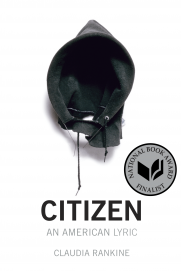
In March at Tweetspeak Poetry, I had a series of articles on the poetry collections nominated for the National Book Critics Circle Award. One of those collections was Citizen: An American Lyric by Claudia Rankine, a series of prose poems on what it means to be Black in contemporary America.

Claudia Rankine
Citizen won the National Book Critics Circle Award for best poetry collection. Monday night in London, Citizen was also selected as the winner of the Forward Poetry Prize for best poetry collection. The prizes kick off the London Literary Festival, which goes on for two weeks and includes readings, lectures, book signings, and other literary events.

Rankine’s work is powerful. As I said in the review at Tweetspeak Poetry, you don’t read a collection like Citizen and remain unchanged.  


Tuesday, March 10, 2015

Poets and Poems: Claudia Rankine and “Citizen”

The fifth nominated work for the National Book Critics Circle Award for poetry is Citizen: An American Lyric by Claudia Rankine. It is as different from the other nominated works as they are from themselves.

Perhaps the most striking difference is that most of the poems in Citizen are prose poems, and they are generally untitled. As such, they assume the character of small stories with large themes – one large theme, actually, better described as one story with running scenes illustrating the theme. And that theme is what it means to an African-American in contemporary America.

The poems of Citizen are not easy poems to read.


To continue reading, please see my post today at Tweetspeak Poetry.

Tuesday, March 3, 2015

Poets and Poems: Willie Perdomo and Saeed Jones


The five finalists for the National Book Critics Circle Award for poetry are, on the face of it, an eclectic group of poetry collections. 

Published posthumously, Abide by Jake Adam York is a continuation of the poet’s project to memorialize the 126 people who died in the civil rights struggle between 1954 and 1968. Christian Wiman’s Once in the West has no title poem, instead, the book’s title is a recurring theme throughout  the poems.

The next two finalists in our discussion series continue the eclectic characterization: Willie Perdomo’s The Essential Hits of Shorty Bon Bon and Prelude to Bruise by Saeed Jones.


To continue reading, please see my post today at Tweetspeak Poetry.

Tuesday, February 24, 2015

Poets and Poems: Christian Wiman and “Once in the West”


Christian Wiman is an essayist, translator, and poet. For ten years (2003-2013), he was the editor of Poetry Magazine. He’s published four collections of poetry; the celebrated My Bright Abyss: Meditation of a Modern Believer; the equally celebrated Ambition and Survival: Becoming a Poet; and a translation of Osip Mandelstom’s poetry, Stolen Air. And with Dona Share, he co-edited the Open Door: One Hundred Poems, One Hundred Years of Poetry Magazine.
 
His most recent collection of poems, Once in the West, is one of the five finalists for the National Book Critics Circle Award for poetry, the winner of which will be announced March 12.

Wiman grew up in West Texas, and the poems of Once in the West find their source in the upbringing and that geography.


To continue reading, please see my post today at Tweetspeak Poetry.

Tuesday, February 17, 2015

Poets and Poems: Jake Adam York and “Abide”

Poet and author Jake Adam York had published three collections of poetry when he died of a stroke in 2012 at age 40. He had a profound interest in social history, and his poetry was focused on the history of the civil rights movement. Specifically, he was writing to remember, and to memorialize, the 126 people who died between 1954 and 1968 in the struggle for equal rights for African-Americans.

His last volume of poems, Abide, was published posthumously in 2014. It’s one of the five finalists for the National Book Critics Circle Award for poetry.

I began reading Abide without looking at the poet’s biography, previous works, or articles about him (this is how I do most reviews –starting simply with the work at hand and considering it on its own merits).

I had a number of surprises.

To continue reading, please see my post today at Tweetspeak Poetry.