Showing posts with label autism. Show all posts

Monday, March 7, 2022

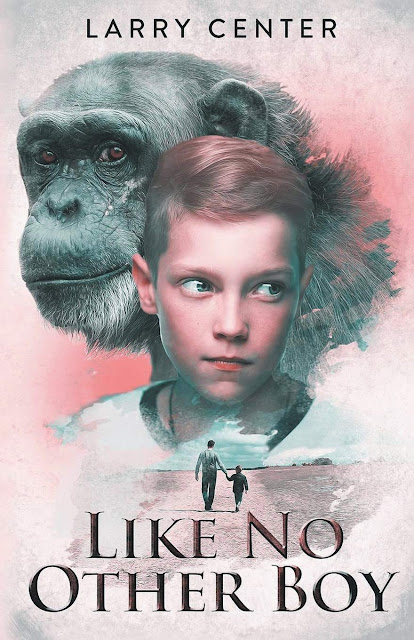
"Like No Other Boy" by Larry Center


It begins at the San Diego Zoo. Chris Crutcher has his eight-year-old son Tommy on an outing. Chris is divorced from Tommy’s mother Cheryl; they share custody. Other zoo visitors occasionally stare at Tommy. He’s a beautiful child. He’s also autistic, and it is not a mild version. 

Since the time he was diagnosed, the boy has bounced from one doctor to another, one expert to another, and one school to another. Cheryl has already begun to talk about another school, this one in Houston, Texas. Chris doesn’t like the idea; even a visit together tells Chris is just like all the rest. Plus there’s his ailing 82-year-old father to consider. Cheryl is more than determined, however, and she’s ready to run Chris over and not look back.


But at the San Diego Zoo that day, something remarkable happens. Tommy connects to the chimpanzees. He makes signs the chimps seem to understand. He even spots one chimp that he tells Chris has a baby. There’s no way for Tommy to know any of this. 


Larry Center

Chris and a reluctant Cheryl allow Tommy to visit the Weller Institute, a research center in San Diego that studies chimpanzees. And something even more remarkable happens. Not only does Tommy communicate with the chimps, but he’s also better able to express himself with people. The institute wants to do a study; Chris gives the okay. And that sets up for a colossal conflict with Cheryl, one that will end up in court.

 

Like No Other Boy by Larry Center is the story of Tommy, Chris, Cheryl, and the chimpanzees. It’s also a heartwarming story of a man’s love for his son, and a man’s love for his father. 


Center has a degree in philosophy, and he’s always been interested in children’s and animal’s communication. He lives in Nashville.


I found myself tensing at several points in the book, especially as the court hearing approaches and then happens. You’re half afraid you know what the decision is going to be, and what that could mean for both Chris and Tommy. All of the characters, with perhaps the exception of chimps, have serious flaws; but the hope of the story is that they’ll be able to get passed them. 

Monday, May 3, 2021

"Autism Goes to School" by Sharon Mitchell


From an old girlfriend who moved away, Ben Wickens learns that he has a son. The girlfriend apparently wanted a child but not a marriage. He supports the child financially, and he even increases the support when the boy is determined to be autistic. He wants to be more involved, but the girlfriend has married and doesn’t want Ben to disrupt the family.

Three years later, the doorbell rings, and it’s the girlfriend, turning over the boy, Kyle, to Ben. She’s pregnant, focused on her marriage, and she thinks it’s time for Ben to step up and take over with Kyle. Given her decision to have the child in the first place and not telling him for two years, Ben does indeed step up. And he gets full custody. 

What he’s not prepared for is Kyle’s autism. He knows nothing about dealing with it, or how to best help his son. He enrolls Kyle in kindergarten at the local school. Despite getting off to a really bad start with Kyle’s teacher, Kyle, and Ben, begin to make progress. The class is an experiment in mixing autistic children with normal children. 

The teacher is Melanie Nichols. She has an older autistic brother, and she’s been specially trained in teaching autistic children. While her initial reactions to Ben Wickens are almost entirely negative, she slowly comes to see he truly wants to learn how best to raise his son. And she begins to find herself attracted to Ben.

Sharon Mitchell

Autism Goes to School
 is the first of six novels in the School Daze series by Dr. Sharon Mitchell. Mitchell uses a fictional story to explain autism, what it is, what it isn’t, and the resources available to help parents deal with it. The story could have easily become a clinical report, but the author neatly sidesteps that with an engaging story with sympathetic characters.

Mitchell has worked as a teacher, counselor, and consultant for several decades. She holds masters and Ph.D. degrees in autism spectrum disorders and has focused on helping children with autism reach as much independence as possible.

My only nit to pick with the story is the occasional use of profanity, mostly by the character of Ben. The narrative doesn’t need it, and it tends to be a distraction at times. But Autism Goes to School is still a good story about an important subject of vital interest to the parents of children with autism – and the rest of us as well.

Monday, March 26, 2018

"A Boy Made of Blocks" by Keith Stuart


After eight years of marriage, Alex Rowe is leaving his family, and not entirely by choice. His wife, Jody, has had it with the constant arguments and fights. What appears to be the cause is seven-year-old Sam. Sam is autistic.

The boy is determined to be at the higher-performance end of autism, but the simplest of activities or statements, or a food served in the wrong way, can set off out-of-control hysteria. He’s been mainstreamed into school, but that presents its own set of problems. The child craves control, in a world that seems out of control, at least to him. His parents, for different reasons, likely agree.

Alex moves in temporarily with Dan, a childhood friend. He’s trying to figure out how to get his life together when the second blow falls – he’s made redundant; i.e., he’s laid off. The problems and issues seem to be mounting, and he knows, sort of, that his basic problems lie in his distant past, with the death of his older brother George. Alex wants to remain a part of his son’s life, but that looks increasingly problematic.

Then Sam discovers the Minecraft video game. Alex begins to teach himself how to play it. And while it doesn’t happen in a straight line, things begin to change.

Keith Stuart
A Boy Made of Blocks by Keith Stuart was something of a surprise best-seller when it was published in Britain in 2016. It shouldn’t have been. Stuart based the novel on his own experience, and the story rings true through to the very end. The reader not only learns about autism, but also walks with Alex as he gradually comes to understand what his son, and himself, are about.

Stuart is the games editor for The Guardian newspaper, and has written extensively on video games, digital culture, and film. His second book, Days of Wonder, is scheduled to be published in 2018. He and his family live in Somerset, England.

A Boy Made of Blocks is a moving, wonderful story of a family nearly wrecked by a child’s serious condition and adults still trying to come to grips with their own pasts, and their own serious problems. It’s a story that helps us understand what it is to be human.

Related:


Top photograph by Glenn Carsten-Peters via Unsplash. Used with permission.

Monday, July 4, 2016

“A Whole Lot” by Bradley Wind


It’s the early 1980s. You’re 12 or 13 years old, a little small for your age, but there’s a world out there that desperately needs exploring. Like the old, decaying mansion where the murders happened. The new video arcade getting ready to open. And the treehouse you find, the one with the dirty magazines.

Abel Velasco is that 12- or 13-year-old, but his has not been a normal childhood. A mother institutionalized for the effects of drug abuse. A father who disappeared when he was a baby. An uncle who took him in but died in a freak accident. A series of foster homes, until finally he lands with his father’s sister, the one Abel calls Aunt Pigpie (and he’s being charitable). She’s abusive, although Abel avoids her wrath with a mention of a sale of junk food at the grocery store.

There’s one additional thing you should know about Abel. He has a form of autism. It manifests itself in his behavior – he has a photographic memory, can’t bear to be touched, likes and dislikes all kinds of smells and tastes, and sees number patterns everywhere. He loves the works of the philosopher and mathematician Rene Descartes. And he is as up-to-date on mathematical theory as any university professor in America.

Abel is the hero of A Whole Lot, the first novel by author Bradley Wind. It’s a story that pulls the reader in and doesn’t let go.

It’s a coming-of-age novel, yes, but it’s unlike any coming-of-age novel I’ve ever read. Wind has drawn characters – children and adults alike – who are recognizable and familiar (well, almost; I never knew an aunt like Aunt Pigpie). The characters often seem a New Jersey version of the people we find in Flannery O’Connor’s stories.

Bradley Wind
Wind is an artist and writer, a native Pennsylvanian. He’s worked as a toy designer for K’nex Industries and as an IT manager for Pearl S. Buck International. He’s currently the director of a child-focused non-profit organization.

What he’s done with Abel is something extraordinary, for we find ourselves inside of a mind that is brilliant and simultaneously normal and abnormal. And all the time the story has a backdrop of numbers, numbers theory, and mathematical patterns, because that is how Abel thinks and functions. And it is how Abel survives.

A Whole Lot is funny, moving, provocative, disturbing, suspenseful – and ultimately satisfying.


Top photograph by Ian L via Public Domain Pictures. Used with permission.

Wednesday, January 12, 2011

Karen Kingsbury's "Unlocked"

People in publishing circles call Karen Kingsbury a brand. That’s likely an understatement. Virtually everything she publishes hits the best-seller list. No, this is not “literary fiction” we’re talking about here. But she doesn’t make that claim. Instead, her novels are popular fiction that are anticipated, read and valued by her readers (there are more than 600 reviews of her latest novel on Amazon).

The simple truth of the matter is, Kingsbury knows how to write a good, engaging story. I read Unlocked in less than a day.

It’s the story of Holden Harris, an autistic teen mainstreamed into a suburban Atlanta high school, and Ella Reynolds, a school cheerleader who is being chased by the football team quarterback and is looking forward to an amazing senior year. Her life intersects with Holden’s, and then she learns that the two of them and their families actually have a past. And the superficial life of high school popularity begins to give way to something else altogether, as Ella becomes the key that might unlock Holden’s mind.

In Unlocked, Kingsbury tackles a number of issues: autism; the pressures of sports celebrity life; bullying in schools; teen suicide; walking away from faith. She handles all of them well, and the scenes of Holden’s autism manifesting itself and what is actually going on in his mind are drawn well and true. If there is any criticism here, it’s that, even with some disclaimers, Kingsbury veers too close to the vaccine-origin-theory of autism, the major medical study for which was just last week determined to be “fraudulent.”

But that’s a minor point. The story reads well and fast; the characters are drawn well and sympathetically. That the reader comes to identify so strongly with Holden is no small feat on Kingsbury’s part. And one learns a lot about autism, and what it is and isn’t.

Unlocked is characteristic of Kingsbury’s work and explains much about here success as a novelist. It’s accessible and readable; the story is familiar because we all know people just like those in the novel; and she deals with issues on a real rather than sentimental level.

In short, it’s a very good read.