Showing posts with label military history. Show all posts

Thursday, January 1, 2026

When It's a Thrill to be No. 2


During this past week, the Emerging Civil War web site has been posting its countdown of the 10 most read articles on its site in 2025. The articles are typically written by historians, national park officials, and other experts in the field of Civil War history.


Which I am decidedly not. 


But.


The site welcomes articles by guests, and you don’t need to be an expert or historian to submit one. The articles, however, are all peer-reviewed. 


In January, I submitted an article explaining how a family story told through at least generations about my ancestor’s involvement turned out to about as far from the truth as you might imagine. I’d been researching the Civil War and an ancestor’s role in it, for my novel Brookhaven, when I stumbled over what he really did and what actually happened. (The story turned out to be far better, and I stuck with it for the novel.)


My article passed the peer review committee and was duly published in January. And it turns out to have been the second-most read article on the site for 2025


You can read the article, “Research for a Novel Upended a Family Legend,” at the site.


Some Thursday Readings

“Christmas (1),” poem by George Herbert – Malcolm Guite. 

“O Christmas Tree!” (German folk song) and “Christmas,” poem by Henry Vaughan – Anthony Esolen at Word & Song.


“My Ghostly Father,” poem by Charles d’Orleans and “Recipe for a Salad Dressing,” poem by Sydney Smith – Sally Thomas at Poems Ancient and Modern.


Bluster – poem by Gerald Allen Barrett.


2025’s Top 10 – Poems for Persons of Interest.


“The Darkling Thrush,” poem by Thomas Hardy – Malcolm Guite.


Ring it in (a poem for a new year) – Seth Lewis. 


Fairer Country, Higher Ground, or Home – Rachel Hicks at Front Porch Republic reviews Home Songs: Poems by Sarah Reardon.


A non-fictional feast: The best of military history from 2025 – Patrick Caddick-Adams at The Critic Magazine.


Photograph: A page of the family records in the Young Family Bible.


Monday, November 21, 2022

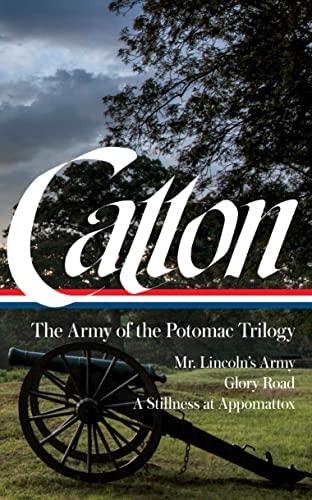
Bruce Catton's Civil War


Bruce Catton (1899-1978) grew up in Petoskey, Michigan, listening to the stories of old Civil War veterans. As a boy, he was enraptured by these first-hand accounts, but his own experiences in World War I led him to believe that those Civil War veterans didn’t really understand modern warfare. His memoir of growing up, which included his interactions with Civil War veterans, was published in 1972 and entitled “Waiting for the Morning Train: An American Boyhood.” 

At some point, he realized how wrong he was. He became a journalist and worked for such newspapers as the Boston American, Cleveland News, and Cleveland Plain Dealer. He never lost interest in the Civil War, and Catton continued studying and researching the period before, during, and after the war. He read extensively on the subject, and what he noticed was how historians talked about battles and generals, without paying much attention to the experiences of soldiers.


To continue reading, please see my post at Dancing Priest.

Monday, May 10, 2021

"Inside the Nazi Ring" by H.M. Denham


H.M. Denham had enjoyed a successful naval career. After graduating from the Royal Naval Colleges at Osbourne and Dartmouth, he served on a number of Royal Navy ships, including as captain. Then, in 1939, with war looming, he joined Naval Intelligence.  

In 1940, he was sent to Sweden, a neutral country that appeared to be staying neutral only with Hitler’s indulgence. To get there, he traveled by boat to northern Norway, then occupied by the German Army. He found his way to Finland, from which he was able to cross the border into Sweden and make his way to Stockholm. His journey was actually easier than that of a colleague, a woman assigned to the Stockholm embassy who traveled there via Capetown, various African railways, a ship from Cairo to Istanbul, and eventually into the Soviet Union and on to Finland and Sweden. The trip took six months.


Inside the Nazi Ring: A Naval Attaché in Sweden 1940-1945 is Denham’s account of his years in Stockholm (six years in all, during which he did not see his wife back in England). As a neutral country, Sweden hosted embassies from all recognized countries, so that Denham often found himself pursuing similar ends as his German counterparts. 


He tells a story that is rarely emphasized in historical accounts of World War II that focus more on military actions or life in occupied countries. Denham’s story is about ball bearings, iron ore, port facilities, and how the British (and presumably the Germans) often resorted to smuggling and deception to ensure needed supplies left Sweden and arrived in the U.K. This is the industrial counterpart to the military aspects of war.


H.M. Denham

Not that the military situation is ignored. Denham tells the story how, two days before the invasion of Norway by the German Army, Winston Churchill discounted the reports from his own intelligence agents. And Denham himself played a critical role in alerting the British of the movement of the German battleships Bismarck and Prinz Eugen into the Atlantic Ocean, where they met their ends at the hands of the Royal Navy. He also describes his experience of having his Stockholm apartment bugged and his movements watched – by the Swedish intelligence forces. And he must have done an effective job for the British, as the Germans and others were routinely seeking his expulsion.


Denham (1897-1993) wrote a number of military memoirs as well as travel books, including Dardanelles: A Midshipman’s Diary 1915-1916The AegeanThe AdriaticThe Ionian Islands to RhodesThe Tyrrhenian Sea; and Southern Turkey, the Levant, and Cyprus. After retiring from the Royal Navy in 1947, Denham became a travel writer and published a number of sea guides. He died in London in 1993.


Inside the Nazi Ring, first published in 1984 and now reprinted by Sapere Books, is a fascinating account of diplomatic life in wartime Stockholm, with its successes, failures, and dangers, and how “war” was waged even in neutral countries.