Wednesday, December 21, 2022

A Year of Reading the Civil War


For a few years before 2022, I’d been occasionally reading about the American Civil War. It’s something I grew up with; my grandparents were all born after it was over, but their parents lived through it. Tw sets of great grandparents lived through the Union occupation of New Orleans; one set lived in an unoccupied part of Louisiana; and one set survived the war as parts of Mississippi were ravaged by war (and often repeatedly).  

This last group was the Youngs. Three sons and a son-in-law all enlisted in the Confederate army. One, the youngest, was too young to enlist when the war began but somehow signed up as a messenger boy. He was the only one to survive, and he was my great-grandfather Samuel. Not long after the wat, his father died, and Samuel became the family patriarch at the ripe old age of 23 or 24. Samuel lived until 1920; my father was four years old when his grandfather died. 


To continue reading, please see my post day at Dancing Priest.


Photograph: Camp scene, Union soldiers guarding Confederate prisoners; National Archives. 

Tuesday, December 20, 2022

Poet Matthew Hollis Writes a Biography of “The Waste Land”


British poet and writer Matthew Hollis has told the story of a poem, arguably the most significant poem of the 20thcentury.  

The year 1922 was an amazing year for authors and literary creations. The Shakespeare & Co. Bookstore in Paris published Ulysses by James JoyceSinclair Lewis published Babbitt. F. Scott Fitzgerald wrote The Beautiful and the Damned. Herman Hesse published SiddharthaVirginia Wolff wrote Jacob’s Room. And T.S. Eliot published that poem, The Waste Land. Literary Modernism was being born, and Joyce, Wolff, and Eliot had much to do with it.


To continue reading, please see my post today at Tweetspeak Poetry.

Monday, December 19, 2022

“Rembrandt Is in the Wind” by Russ Ramsey


Some 15 years ago, my wife and I signed up for an unusual tour of the St. Louis Art Museum. Rory McClure, a student from Ireland studying at Covenant Theological Seminary in St. Louis, hosted an art tour seen through the eyes of faith. Not to press the metaphor too far, it was eye-opening.  

Paintings we had previously considered for their beauty, subject matter, or technical skill became stories. McClure guided us in understanding not only the power of ideas in culture, but how those ideas were represented in art. It was a museum tour you wished would never end. It also changed how we understood art and prepared us for the many visits we’ve made to art museums since that time.


Russ Ramsey, a pastor at Christ Presbyterian Church in Nashville, Tenn., has done in book form what our Irish student did on the tour, and then some. The subtitle of his Rembrandt Is in the Wind tells the story: “Learning to Love Art Through the Eyes of Faith.”


Ramsey tells the stories of nine artists: Michelangelo, Caravaggio, Rembrandt, Johannes Vermeer, Jean Frederic Bazille, Vincent Van Gogh, Henry Ossawa Tanner, Edward Hopper, and Lilias Trotter. He provides the back story, but he usually focuses on a specific painting by each artist. 


In the case of Rembrandt, for example, he discusses “The Storm on the Sea of Galilee.” It’s a wonderful painting, and it is indeed “Rembrandt in the wind,” as the title suggests. It was stolen with 12 other works in 1990 from the Isabella Stewart Gardner Museum. The total value of the artwork involved exceeded $500 million; the paintings have never neem found. The museum has left the empty frame of the Rembrandt painting as a kind of memorial.


This is a discussion about art as only an art lover, and a man of faith, can have. Ramsey talks about art, the artist, faith, culture, and meaning. He tells some wonderful, and some agonizing, stories. In his hands, artists and paintings covering 400 years of Western culture come alive. And the book is a physically beautiful publication, a delight to read and just look at. (I have the limited Edition from The Rabbit Room, but it is also available from Amazon and other distributors.)

 

Russ Ramsey

Ramsey is a pastor, author, and speaker. He’s previously published Struck: One Christian’s Reflections on Encountering DeathThe Advent of the Lamb of GodThe Passion of the King of Glory, and The Mission of the Body of Christ. A native of Indiana, he is a graduate of Taylor University and received his M.Div. and Th.M. degrees from Covenant Theological Seminary in St. Louis. He lives in Nashville with his family.


Rembrandt Is in the Wind is a pure delight of a book. Well-researched, highly readable, and beautifully presented, it tells a story of art that informs, surprises, and resonates. I’d put in in my “top five books I’ve read this year” list.


Top painting: The Storm in the Sea of Galilee by Rembrandt van Rijn.

Sunday, December 18, 2022

Waiting for answers


After Daniel 9:20-27
 

He waited for answers,

the questions growing 

larger, more pressing,

as if the water rising

so fast threatened 

to drown him. Answers

came, answers from

the mouth of an angel,

answers that informed,

explained, comforted,

and even disturbed.

The answers came,

unexpected but

fulfilling. The answers

were more than 

answers or explanations;

the answers were

a plan, a cosmic plan.


Photograph by S Migaj via Unsplash. Used with permission.

Saturday, December 17, 2022

Saturday Good Reads - Dec. 17, 2022


Bari Weiss, a liberal (old-school) reporter who left The New York Times because of its lurch leftward and wokeward, was one of several journalists invited by Elon Musk to examine the Twitter email files. She tells the story of how the journalists came together and what they found. Charles Lipson at The Spectator looks at how damning the Twitter files are to the government. 

Thirty years ago, William Bennett published The Book of Virtues, a collection of writings from several millennia on what has (historically, anyway) guided proper behavior. Robert Pandiscio at City Journal looks at the book, discovering that times change but principles endure.


One of the most moving things I read this week was what initially sounded like a trite reference to the season, that old letter to Santa Claus. But Doug Spurling tells quite a different story


More Good Reads


Life and Culture


Ron DeSantis, Conservationist – James Meigs at CityJournal.


Deep Down Things in a Time of Panic – Ian Marcus Corbin at The Hedgehog Review.


God in the Age of Iron – Paul Kingsnorth at The Abbey of Misrule.


Why is Van Gogh under Attack? – Martin Bailey at The Art Newspaper.


Ukraine


How the West misunderstood Russia’s military capabilities – Rodric Braithwaite at The Spectator. 


“These People Aren’t Going Anywhere”: A heartening reminder, from Chicago’s Ukrainian Village – David Murray at Writing Boots.


American Stuff


Fredericksburg by Night – Sarah Kay Bierle at Emerging Civil War.


Faith


A Time to Say Goodbye: A Father’s Gratitude as Children Leave Home – Jon Bloom at Desiring God.


Christianity Against the Civilizational State(s) – Jake Meador at Mere Orthodoxy.


A Curious Clue about the Origins of the New Testament Canon – Michael Kruger at Canon Fodder.


Putting the Mess in Christmess – Kyle Borg at Gentle Reformation.


The Inklings and the Outbreak of World War II – Bradley Birzer at The Imaginative Conservative.


Writing and Literature


Writing in Cursive – Brian Miller at A South Roane Agrarian.


The Seven Pillars of Western Civilization – Joseph Pearce at The Imaginative Conservative.


St. Nicholas and the Advent of Children’s Literature – LuElla D’Amico at Church Life Journal.


News Media


The 7 Best Articles I Read in 2022 – Chris Martin at Terms of Service.


AI image generation tech can now create life-wrecking deepfakes with ease – Benj Edwards at Ars Technica.


Poetry


Yet – a poem on the Season of Depression – James Tweedie at Society of Classical Poets.


Movies


The Wild, Wonderful, and Poetic World of Ralphie Parker – Matt Mitchell at Literary Hub.


Holy Ghost Power – The Hillbilly Thomists


 Painting: Unknown woman (formerly known as Charlotte Bronte), oil on canvas by an unknown artist, circa 1850.)

Friday, December 16, 2022

Acknowledgement


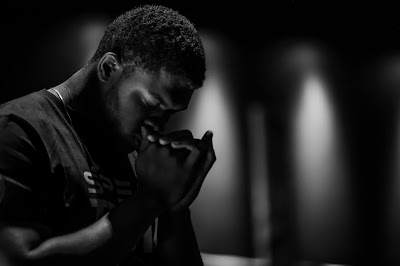
After Daniel 9:1-9
 

What the old man

confessed in his prayer:

wickedness, rebellion,

ignoring the prophets,

treachery, disobedience,

turning from the law,

refusing to concede

sins, willful ignoring

of the call to confess,

and doing all this

for generations.


What the old man

asked in his prayer:

mercy, and

a return home.


Photograph by Jack Sharp via Unsplash. Used with permission.

Thursday, December 15, 2022

"A Christmas Carol" by Charles Dickens - and Megan Willome


Megan Willome has whipped up a new holiday recipe. Take a 179-year-old Christmas Classic that everyone thinks they know backward and forward. Add illustrations by an artist (Arthur Rackham) considered to have been one the leaders in the Golden Age of British Illustration. Annotate the text, but do it subtly and unobtrusively, with the notes at the end. Provide some historical background. Write a poem about the text and suggest a poetry prompt. Provide some questions for journaling or a book discussion group. 

Mix together well, and – voila! – you create A Christmas Carol: Illustrated and Annotated, With an Invitation from Author Megan Willome.


To continue reading, please see my post today at Tweetspeak Poetry.