Showing posts with label Charles Dickens. Show all posts

Tuesday, December 24, 2024

Some Christmas Eve Readings – Dec. 24, 2024


A Little Mischief Poem and Best Wishes for the Holidays – Tweetspeak Poetry. 

The Body in Advent – poem by Angela Alaimo O’Donnell at Rabbit Room Poetry.


Timeless Magic: How Dickens Created a Christmas Classic – Jason Clark at This Is the Day.


“A Visit from St. Nicholas,” poem by Clement Clark Moore – Joseph Bottum at Pomes Ancient and Modern.


A Historic Christmas Message from the Moon – Hugh Whechel at the Institute of Faith, Work, & Economics. (Eve)


Think You Know the Christmas Story? – Michael Kruger at Canon Fodder.


Father Christmas Belongs in Narnia – Aaron Earls at The Wardrobe Door.


Advent IV – Andrew Peterson at Rabbit Room Poetry.


Things Worth Remembering: Winston Churchill’s Christmas Message to America – Douglas Murray at The Free Press.


At Smithfield on Christmas Eve – Spitalfields Life.


I Heard the Bells on Christmas Day, Luke 2:14 - Doug Spurling.


Truman Capote’s “A Christmas Memory” (1966)


Painting: St. Joseph Seeks Lodging in Bethlehem, oil on canvas by James Tissot (1836-1902).

Tuesday, December 17, 2024

Holiday Gifts for the Poet in Your Life (or the Poet in You)


I’m usually reluctant to buy books as gifts for friends and family members. I’ve always thought of books as something personal, chosen after deep consideration at the bookstore or spontaneously when I see something on Amazon. (It also works the other way – spontaneously at the bookstore or after deep consideration at Amazon.) Exceptions exist: our oldest son loves reading Calvin & Hobbes collections; as a child, he saw the cartoon strip as a how-to manual. And a grandson did specifically ask his parents for some Harry Potter books. I’m always ready to indulge a request for books in this age of screens. 

If you have a poet in your life, or if you have a poet in your own heart, I have a few suggestions for holiday gifts. My perspective is personal – I would be thrilled to have received any of these as a gift. I’ll be writing about some of them here early next year. 


My suggestions also reflect my Anglophilia. 


To continue reading, please see my post today at Tweetspeak Poetry.


Some Tuesday Readings


Letters from Father Christmas: A Review for the Advent Season – Sarah Dixon Young at Story Warren. 


Rembrandt in Vienna: Notes on the Exhibition – Rod Dreher at Rod Dreher’s Diary.


To See It – poem by Laura Foley at Every Day Poems. 


50 States of Generosity: Idaho – Sandra Heska King at Tweetspeak Poetry.


Monday, May 13, 2024

"Dickensland" by Lee Jackson


In the last 12 years, I’ve visited the Charles Dickens Museum on Doughty Street in London five times. I tried when we visited the city in 2012, but it but was closed for remodeling, during the 200th anniversary of his birth, no less. In addition to the museum visits, I’ve done a few walks suggested by various guidebooks and maps where you can see what little might be left of the London known and chronicled by Dickens. Some years back, I joined the Dickens Fellowship, a worldwide association founded in 1902 who “share a common interest in the life and works of Charles Dickens.”  

It turns out, I follow in a long line of literary tourists, beginning as early as 1865 (five years before the author died) when a friend guided Louisa May Alcott on a tour of sites associated with Dickens. For fans, of which I number myself, the difference between a real site like the house on Doughty Street and the Thames River stairs where Nancy is overheard ratting on Bill Sykes in Oliver Twist is not one of reality versus fiction. Of course it’s fiction. Except when you actually find it.


Lee Jackson, novelist, historian, and academic advisor to the Dickens Museum, knows the real and imagined passions of literary tourists well. In Dickensland: The Curious History of Dickens’s London, he tells the story of literary tourism and Charles Dickens. For a fan of Dickens, it’s both informative and great fun. For people who aren’t fanatics about the subject, it’s a carefully researched and fully documented history of a phenomenon associated with Dickens and perhaps only other author – William Shakespeare.


Jackson explains that the most avid literary tourists happen to be those from North America (I’m in good company). It was American touristsm in fact, who provided the impetus for what is known today as “The Old Curiosity Shop” to accept its fate and become actually that. It was originally an art gallery, and while Dickens might have seen it, it was never the inspiration for the book. 


Lee Jackson

Dickensland 
takes you on its own tour, identifying the major sites of Dickens tourism and explaining what connection they did (and didn’t) have. You discover cemeteries, haunted bridges, “great rambling queer old places,” and much more. The author also provides some history of the Dickens Fellowship, how it helped bring the Dickens Museum into existence, and what the museum itself has looked like over the years, including the renovation in 2012 that temporarily closed the place.


Jackson received his doctorate degree from Royal Holloway University of London. He’s written novels, anthologies, and non-fiction books, including A Dictionary of Victorian London (2006), Walking Dickens’ London (2012), Dirty Old London (2014), and Palaces of Pleasure (2019). 


Dickensland is a treat for the literary tourist and an entertaining read for those who simply enjoy the works of the man. I count myself fortunate to be both.


Related:


A Week of Dickens: Resources on His Life, Works, Walks, and London.


Some Monday Readings


“Willing to be Useful to His Country”: Robert Q. Shirley of Vicksburg, Mississippi – Jeff Giambrone at Emerging Civil War.


At 200 Years Old, the London National Gallery is Redefining What It Means to Be a ‘National’ Museum – Ann Wallentine at Smithsonian Magazine.


Salman Rushdie Writes Back – Joel Miller at Miller’s Book Review.


Monday, January 1, 2024

Stories I Read This Christmas


I usually read some Christmas-related stories during December. Sometimes it’s to help feel the season; sometimes simply to see how others are writing about Christmas. One year I focused on Christmas romance novellas, and I must have read 20 of them. 

A Christmas Carol by Charles Dickens is an old standby. Last year, I read the TS Poetry edition of the 1843 work, introduced by Megan Willome. This year, I read the facsimile edition published by the Charles Dickens Museum in London. It’s about as close as you can get to the original edition without having to spend a fortune on the first edition. It includes the original illustrations by John Leech. If you want to hold and read something very close to what the readers in 1843 experienced, this is it.


I’ve probably read the story a dozen times, and each time I find something new, or almost new. The official title is A Christmas Carol in Prose, A Ghost Story of Christmas. And Dickens meant exactly that – it was both a carol, or song, and a ghost story. To drive home the musical point, he didn’t use the word “chapters” for the five divisions of the book but instead the word “stave.” The British meaning of “stave” is “staff,” or the five lines and four spaces between them (says the Cambridge dictionary) on which musical notes are written. Dickens was writing a song, a song that was also a ghost story.


The Dickens Museum edition is a joy, and it’s reasonably priced (and you can’t buy it on Amazon, unless you find a used copy somewhere). 


A second story I read this year was On Christmas Day. It is a longish short story jointly published by Spitalfields Life and Burley Fisher Books. The editor (and, in this case, the author) doesn’t publicly disclose his name, simply calling himself “The Gentle Author.”


This edition is more life a poetry pamphlet or chapbook in design. It includes two delightful woodcuts of a snowy landscape by Reynolds Stone (1909-1979). It’s a story of a young boy, an only child, traveling with his parents to visit his maternal grandmother for Christmas. His parents consider the visit something of an ordeal and are filled with a palpable dread. The grandmother is quite the character.


The story has echoes of Dickens, Dylan Thomas and his A Child’s Christmas in Wales, and George Mackay Brown and his Christmas Stories. I was also reminded of A Christmas Memory by Truman Capote, to add an American connection. The Gentle Author’s story is a bittersweet one, in which the last surviving descendant on both sides of the family remembers a particular Christmas. (And like the Dickens facsimile edition, this one is only available through the Spitalfields Life link.)


The third and final story I read was Skipping Christmas by John Grisham. I found it at the sale shop at the Kirkwood Public Library; a first edition, it was published in 2001and looks brand new. Years ago, I’d been a Grisham fan, devouring his legal thrillers like A Time to KillThe Client, and The Pelican Brief. I didn’t know he’d written a Christmas story.


Skipping Christmas
is something decidedly different. Luther and Nora Krank, who live on Hemlock Avenue in a suburb of any city, see their daughter off to Peru for work with the Peace Corps. Luther calculates how much they spend each year on Christmas, some $6,100, and he suggests that they skip Christmas altogether and use half of that money for a Caribbean cruise. Nora finally agrees.


Like all firm resolutions, skipping Christmas is easier said than done. They must contend with neighbors, stationers and other merchants, co-workers, and everyone else who has a vested personal or financial interest in Christmas. Cultural and commercial Christmas keeps intruding on their plans, and the story becomes a test to see how long they can hold out. And what the final straw might be.


It's a simple, intriguing story, but it lacks a sympathetic character, even a minor one. Luther is not surnamed “Krank” for nothing, and even the street name of Hemlock is not only a tree but a poison. I think I understand why the story is not well-known.


Do you read any stories or novels for Christmas, or have any particular favorites? 


Top photograph by Roberto Nickson via Unsplash. Used with permission.


Some Monday Readings


The Weird and Wild Mind of Charles Williams – Joel Miller at Miller’s Book Review.


Shane Skull: A Christmas Fairy Tale – Martin Shaw at The House of Beast & Vines.


A Prayer After the Moon Landing – Douglas Murray at The Free Press on the poem by W.H. Auden.

Monday, July 24, 2023

"Immortalised to Death" by Lyn Squire


June 9, 1870: The great British writer Charles Dickens suffers a stroke and dies in his study at Gads Hill Place in Kent. He’d been working on the next installment of The Mystery of Edwin Drood, which now, alas, will remain forever unfinished. 


Dunston Burnett, a retired accountant and distant relative of the writer, arrives to pay a visit, not knowing Dickens is dead. He’s greeted by a tearful Georgina Hogarth, Dickens’ sister-in-law who serves as housekeeper and general factotum. The doctor arrives to certify the death, and immediately pronounces it was death by strychnine poisoning. 

What?


That is the premise underlying the novel Immortalised to Death by Lyn Squire. It may sound farfetched, but when you read this story, it seems perfectly plausible that Charles Dickens was murdered. While the doctor is determined to report his findings, Georgina and Dunston prevail upon him to hold off for a month while Dunston, with the help of Archibald Line, Scotland Yard’s Chief of Detectives, set out to determine what happened – and who did it. 

What they discover is that the answers lie in the writer’s past, and they unexpectedly also lie in the manuscript of The Mystery of Edwin Drood. Dickens didn’t intend to be murdered, of course, but, as he tended to do, he often drew his fictional narratives from real people and events. What helps the investigation is that Burnett knows the writer’s novels, and how Dickens often included an unexpected twist at the end. 

Lyn Squire

Burnett and Georgina know that they if they solve the Edwin Drood mystery, they will likely solve the murder of Dickens himself. And that’s the task Burnett sets for himself, tracking down leads across London. 

Squire knows his Dickens. The solution offered for the Drood mystery is ingenious and fully in keeping with the great writer’s style and imagination. And Squire adroitly uses the facts (and some of the rumors) of Dickens’ life. The reader is pulled into solving the mystery alongside the professional policeman and the amateur sleuths. And it’s great fun. Even better, it’s envisioned to be the first of a Dunston Burnett trilogy. 


Squire spent 25 years at the Work Bank, where he published numerous articles and books on international development and poverty. He also served as editor of the Middle East Development Journal and was the founding president of the Global Development Network, which supports promising scholars from the developing world. He was attracted to writing mysteries by developing a solution to Drood, which he incorporated into Immortalised to Death. Born in Cardiff, Wales, he is now an American citizen and lives in Virginia.  


If you’re a fan of Dickens, 19th century Victorian fiction, or historical mysteries in general, then Immortalised to Deathoffers a great read.  


(Note: The novel is scheduled for publication on Sept. 26; it can be pre-ordered on the Amazon link.)


Some Monday Readings


The Autism Surge: Lies, Conspiracies, and My Own Kids – Jill Escher at The Free Press.  

John Leighton’s Cries of London – Spitalfields Life. 

Poetry Prompt: Courage to Follow - Callie Feyen at Tweetspeak Poetry.

Monday, February 20, 2023

"The Pickwick Murders" by Heather Redmond


If they are developing a series, most mystery writers today aim at writing the books in the series as standalone books. You can’t be sure how a reader will find your novels, so you work hard to tell enough of the series back story without either giving a reader a reason not to buy the earlier books to confusing or puzzling the reader. It’s true for general fiction as well; I can testify to the difficulty of writing a series with each book striking the right balance. 

British mystery author Heather Redmond has a series of novels – The Dickens of a Crime series, featuring none other than the Inimitable himself, Charles Dickens. When I bought The Pickwick Murders, I assumed something I shouldn’t have – that it was likely the first in the series, given that The Pickwick Papers was the first of Dickens books that collected the magazine serial publication into one novel. 


As it turns out, it’s the fourth in the series, preceded by A Tale of Two MurdersGrave Expectations, and A Christmas Carol Murder. And while The Pickwick Murders works as a standalone, it would have been better to have read it in its order of publication. There is missing background, especially about the villain of the story, that would have made the narrative more understandable. 


It's 1836. Dickens, engaged to Catherine (Kate) Hogarth, works as a newspaper reporter. His popularity is in the ascendant; his Sketches by Boz have made him an almost household name and it’s due to published in book form within weeks. Dickens is on assignment outside of London, covering an election for Parliament between a reformer and Sir Augustus Smirke, a somewhat loathsome Tory suspected of making off with a young servant girl. That charge is brought forward during the electioneering, and Dickens duly covers it for his newspaper. 


Heather Redmond

Back in London, Dickens discovers he’s been invited to join The Lightning Club, which he thinks is just the ticket for a young man on the rise. But when he shows up at the rather spooky museum for his initiation, he discovers he has to navigate a maze, mostly in the dark. And at the center of the maze is a murdered man, one Samuel Pickwick. When the police suddenly arrive, Dickens realizes he’s been framed. He’s taken to jail and then to Newgate Prison, which he’s previously written about but never thought of himself as a potential inhabitant.


Now it falls to Kate Hogarth to save her fiancée. What’s suspected is a case of revenge by Sir Augustus (who won his election and is a very powerful man indeed). But it’s more complex than that, and Kate finds herself being led all over London on a kind of literary treasure hunt – but one that could end in her beloved’s hanging.


In addition to the Charles Dickens novels, Redmond has also published more than 25 other mystery and romance novels under than name of Heather Hiestand. She lives in Washington State with her family.


The Pickwick Murders is a fun story, utilizing a number of names that will be familiar to fans of Dickens. But I would read it in the order it appears in the series.

Monday, February 6, 2023

“England in the Age of Dickens 1812-1870” by Jeremy Black


Historian Jeremy Black, professor of history at the University of Exeter in the U.K., has published more than 100 books, many of them about 18th century American, British, and European history. He’s also a lecturer and has written numerous articles for a wide array of publications (I became aware of his work through his articles for The Critic Magazine).  

He’s turned his attention to the 19th century, and specifically to Charles Dickens. In his England in the Age of Dickens 1812-1870, published in 2021, he begins by asking a question. We think of Dickens as synonymous with the Victorian Age, but should we? Chronologically, roughly only half of his lifetime was lived while Victoria ruled, and she reigned for another 30 years after the author’s death. 


But he doesn’t stop there; Black goes on to discuss a broader question, that of Dickens and his work being synonymous with the England of the 19th century. And he points out that a considerable number of Dickens’ novels are set in the years before Victoria became queen. And yet, such is the influence of books like David CopperfieldGreat ExpectationsOliver Twist, and more that we almost automatically associated Dickens with all of 19th century England and the entire reign of Victoria.


Jeremy Black

Black applies a considerable amount of his historical understanding to assess Dickens and England. The book is indirectly divided into three parts. First, he begins where you must to learn and understand the author – the metropolis of London. He considers the condition of the people. Railroads and technology, crime (a lot of Dickens’ work is about crime), the press. Government, reform movements for change, and culture. 


Second, Black than provides concise summaries of each of the decades of Dickens’ life, from the 1810s to the 1860s. The third part is a discussion of Dickens and the world – Dickens’s America and Britain and its place in the world. He uses passages and quotations from Dickens and his works throughout the book, answering his own questions and demonstrating why Dickens is the author, more than any other, who epitomizes England and the Victorian period. 


England in the Age of Dickens is an entertaining and informative book. Black writes in a style that is somewhere between popular and academic, meaning it’s thoughtful and reasoned and free of jargon. Hi audience is people like me – people who love Dickens’ stories and want a better understanding of his era.

Monday, January 30, 2023

"Mugby Junction" by Charles Dickens


In the Christmas 1866 edition of his weekly magazine All the Year Round, Charles Dickens published eight short stories centered on a theme – railroads. Specifically, the railroad theme was loosely entitled “Mugby Junction,” a fictitious rail junction in England where several routes crisscrossed.  

If the 19th century, and specifically 19th century Britain, had a symbol, it would have been the railroad. From 1826 to 1836, some 378 miles of track were completed. That had risen to 2,210 miles by 1844. By 1870, more than 16,000 miles of track had been opened, carrying 423 million passengers annually.


In Dickens’ lifetime, the railroad had grown from non-existent to a huge technological force, tying the country together, boosting the Industrial Revolution, propelling the growth of cities, and changing the lives of virtually everyone in the country. “Mugby Junction” was a symbol of that impact.


Dickens himself wrote four of the eight stories. In “Barbox Brothes,” a man detrains at the station, not quite sure why he’s doing so, since he bought a thru ticket to London. In “Barbox Brothers and Co.,” the man meets a little girl, who seems to know him far better than he knows her. In “Main Line: The Boy at Mugby,” the boy of the title works in the refreshment room, fully aware that it is likely just the opposite of what it advertises itself as. “No. 1 Branch Line: The Signalman” takes something of a dark technological turn, with the signalman seeing a specter or ghost shortly before various rail tragedies.


Charles Dickens

Even though these stories by Dickens are clearly set in the 19th century, they oddly have a contemporary feel about them. The railroads have brought change, and with the change has come dislocation.


The four remaining stories all concern various branch lines.


In “No. 2 Branch Line: The Engine Driver” by Andrew Halliday, the engine driver explains how he has killed seven men and boys over the course of his career, all as a result of accidents. “No. 3 Branch Line: The Compensation House” by Charles Collins moves the Mugby Junction narrative away from the railroads and to a house being converted for use by the railroads – and a strange house it is. “No. 4 Branch Line: The Traveling Post Office” by Hesba Stretton concerns the theft of a diplomatic box, a crime that seems to be unexplainable (and is only resolved in distant Egypt). And “No. 5 Branch Line: The Engineer” by Amelia Edwards tells the story of two lifelong friends who fall out over a woman toying with them both, and how one seemingly returns from the dead to warn his friend.


Mugby Junction is an interesting mix of stories and genres – literary fiction, mystery, ghost story, and a mixture of all three. The stories are all about the railroad and what it had wrought in both society at large and individual lives in particular. And Dickens and his fellow writers saw the technology as a mixed blessing. Like all technologies, it had brought both good and bad.

Thursday, December 15, 2022

"A Christmas Carol" by Charles Dickens - and Megan Willome


Megan Willome has whipped up a new holiday recipe. Take a 179-year-old Christmas Classic that everyone thinks they know backward and forward. Add illustrations by an artist (Arthur Rackham) considered to have been one the leaders in the Golden Age of British Illustration. Annotate the text, but do it subtly and unobtrusively, with the notes at the end. Provide some historical background. Write a poem about the text and suggest a poetry prompt. Provide some questions for journaling or a book discussion group. 

Mix together well, and – voila! – you create A Christmas Carol: Illustrated and Annotated, With an Invitation from Author Megan Willome.


To continue reading, please see my post today at Tweetspeak Poetry.

Tuesday, March 1, 2022

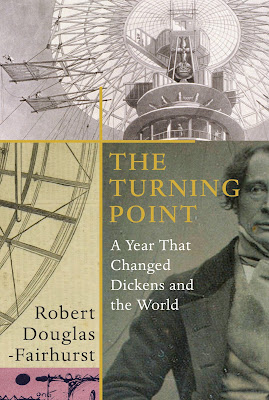
Dickens and the World in 1851: “The Turning Point” by Robert Douglas-Fairhurst


Charles Dickens finished the serialization of his autobiographical novel David Copperfield in 1850. More than a year would pass before he began the monthly installments for Bleak House in March of 1852. The intervening time wasn’t a gap or rest year; “rest” is not usually a word one associates with the British author.  

But it was certainly more than time off between novels. In fact, argues Robert Douglas-Fairhurst in The Turning Point: A Year That Changed Dickens and the World, that year marked a change in Dickens’ writing, which with Bleak House took a darker turn. It was the year of Prince Albert’s Great Exhibition, with the famous Crystal Palace in Hyde Park containing wonders and technology from the world over. Dickens himself was becoming more involved in social causes and projects, like Urania Cottage to provide a haven for prostitutes to leave that life behind. At the same time, his lease on #1 Devonshire Place near Regents Park was ending, and he had to find a new place for his large and growing family to live. And it was a year of personal tragedy for Dickens, with the death of his young daughter and his father.


To continue reading, please see my post today at Tweetspeak Poetry.

Thursday, December 16, 2021

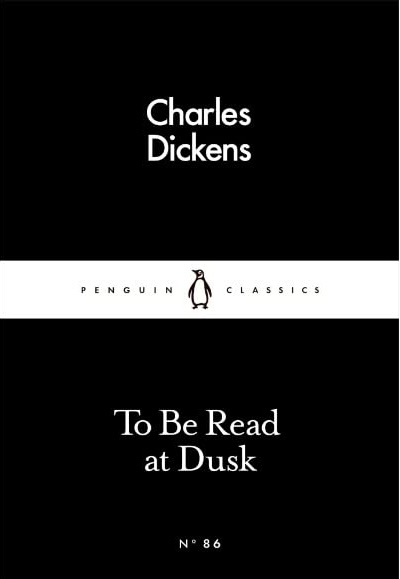
"To Be Read at Dusk" by Charles Dickens


Charles Dickens loved a good ghost story. A Christmas Carol. for example, is many things – a tale of Christmas that changed the holiday forever, a moral injunction to care for those less well off, and a reminder not to let the past strangle the present and the future. But it is, at its most basic, a ghost story. 

For some years, three ghost stories by Dickens have been bundled together and published in a short volume under the title of the first story, To Be Read at Dusk. They were originally published as short stories in various magazines between 1852 and 1866. 


The telling of the title story, “To Be Read at Dusk,” is set in Switzerland, while the story itself is set in Italy. A traveler is staying at a Swiss inn, along with five couriers of various nationalities. He’s quietly listening to their conversation, and soon enough it turns to a ghost story. A newlywed couple from England rent a villa in Italy, and all seems to be going well. But the young bride is terrified of a particular face, and it’s a face of someone she doesn’t know. Almost inevitably, she will meet the bearer of that face. 


Charles Dickens

“In “The Signalman,” a traveler at a train station calls out to the signalman and terrifies the man. The traveler is taken aback; he doesn’t know why the signalman should react the way he does. The signalman tells him a story, and the traveler is left wondering if he himself might be a ghost or something supernatural. 


The third story is “The Trial for Murder.” A youngish man living in the Piccadilly section of London is startled at home one night to see what looks like a dead man beckoning him at the door. No one’s there, and the man might have thought nothing of it. Except he’s called to be on a jury, and is, in fact, elected jury foreman. And the trial involves the man whose apparition was seen at the door.


More than 150 years have passed t=since the stories were first published, but the three tales in “To Be Read at Dusk” remain entertaining, and slightly chilling, ghost stories.

Monday, November 22, 2021

"The Artful Dickens" by John Mullan


When you enjoy reading Charles Dickens as much as I do, you find yourself also reading biographies of the author as well as works of literary criticism. The literature about Dickens is vast. Just when you think there couldn’t be anything original left to be said, along comes a work to change your mind. 

The Artful Dickens: The Tricks and Ploys of the Great Novelist by John Mullan is exactly that kind of mind-changing work. Mullan looks at how Dickens wrote – the narrative devices employed to create works that were entertaining, often original, and typically precedent-setting, anticipating the work of numerous authors in the modern and contemporary periods.


As Mullan notes, Dickens was the first author to use smell as a narrative device, and not just the reeking smells of London and the Thames but individuals’ smells as well. Dickens often changed tenses from past to present, adding both immediacy and urgency (and often inviting the criticism of his contemporary writers and critics). His contemporaries (and some of ours) deplored how he used cliches, even if the word itself didn’t come into common use until after his death. And he did use cliches, but not in ignorance; he used them deliberately both to make fun of them as well as point to a truth in his characters (and in life). 


John Mullan

Other devices Dickens commonly used include fantasizing, haunting and ghosts, laughing, naming (his characters’ names are deservedly famous), coincidences, speaking, drowning, and breaking the rules. Regarding speaking, Dickens would practice (out loud) for many of his characters; their voices became both distinctive parts of the characters and parts of the stories and novels. As Mullan explains, T.S. Eliot was so impressed with the voices of Our Mutual Friend that he considered the title “He do the Police in different voices” for the title of the poem that was eventually published as The Waste Land.


Mullan, the Lord Northcliffe Professor of Modern English Literature at University College London, has published extensively about eighteenth- and nineteenth-century literature. His books include What Matters in Jane Austen? Twenty Crucial Puzzles SolvedSentiment and Socialability: The Language of Feeling in the Eighteenth CenturyEighteenth-Century Popular Culture: A SelectionHow Novels Work, and Anonymity: A Secret History of English Literature. He is also a broadcaster and writers on contemporary fiction for The Guardian. He lives in London.


The Artful Dickens (the title a play on the Artful Dodger of Oliver Twist) is less about tricks and ploys of the subtitle and more about the techniques and devices Dickens used. It adds to our understanding of the author and his works. And with an accessible style itself, the book is a pleasure to read.

Monday, December 21, 2020

"Charles Dickens: A Very Short Introduction" by Jenny Hartley


Oxford University Press has been publishing a considerable number of “very short introductions,” numbering now in the hundreds, covering authors, movements, science, technology, history, and other subjects. Last year, OUP published one for C.S. Lewis, written by James Como. The slender volumes are about 100 pages, and the ones for authors include a biographical overview as well as a discussion of major works. 

And who was I to resist one for Charles Dickens?


Charles Dickens: A Very Short Introduction by literary scholar Jenny Hartley was originally published in 2016, without the “very short” in its title. Last year, it was republished including the “very short,” and packaged like the other OUP introductions. It’s concise, insightful, and covers the highlights of the author’s life and career.


Hartley discusses Dickens’s life through the prism of his works. Through Oliver Twist, we’re introduced to his early professional life and his meteoric rise in public acclaim. Sketches by Boz and other works help explain the public and private Dickens. Several works serve as the platform to explain his mastery of character and plot (and not everyone agrees on his mastery of plot). Bleak HouseDombey and Son, and other novels are used to discuss the author’s relationship with London. Hard Times serves as the platform for his radical politics and public crusades for social change. And A Christmas Carol becomes the window through which we see the man’s enormous impact on literature and culture.


Jenny Hartley

Hartley, Emeritus Professor of English at the University of Roehampton, is the author of Charles Dickens: An Introduction (2016), The Selected Letters of Charles Dickens (2012), Charles Dickens and the House of Fallen Women(2009), Millions Like Us: British Women’s Fiction of the Second World War (1997), Hearts Undefeated: Women’s Writing of the Second World War (1995), and other works. She was president of the International Dickens Fellowship from 2013 to 2015 and serves on the Academic Advisory Board of the Charles Dickens Museum in London. 


Charles Dickens: A Very Short Introduction is not only brief; it’s also an excellent study of the author and his works. Hartley takes “very short” seriously and still manages to provide a broad overview with resorting to broad generalizations. It’s an excellent “very short” volume.


Related:


C.S. Lewis: A Very Short Introduction by James Como

Monday, November 30, 2020

The Lost Portrait of Charles Dickens


In 1843, Charles Dickens sat for a portrait by the English painter Margaret Gillies. At the time, the author’s career seemed to be ebbing. After the spectacular success of Pickwick Papers, Oliver Twist, and Nicholas Nickleby, readership for Martin Chuzzlewit was not only disappointing, it was actually declining with each succeeding installment in the series. His family was growing, and they had just moved from 48 Doughty Street to #1 Devonshire Terrace, across from Regent’s Park (and a step up from the earlier address). 

He was working almost feverishly on another project, but his publisher insisted that he share the costs of the expensive binding and illustrations he wanted to use. The project had begun as a treatise on the treatment of children in Victorian London’s slums, but Dickens had quickly realized it would have a greater impact as a story. So, while sitting for his portrait, the 31-year-old author was working to finish A Christmas Carol.


Gillies, the painter, loved the portrait, so much, in fact, that she exhibited it at the Royal Academy Summer Exhibition in 1844. A steel engraving was made of the painting and reproduced many times. But, after the exhibition, the painting vanished. It would reappear until more than 173 years had passed, and when it did, it was in South Africa. It showed up with other materials meant for auction; at first, no one realized what it was. It was also showing signs of mold, a sure sign it had been left in someone’s attic or cellar and forgotten. 


The identification was finally made and confirmed, and the painting restoration, has made its way to the Charles Dickens Museum in London. Charles Dickens: The Lost Portrait is the short, 52-page account of the painting’s creation and rediscovery, including some educated speculation as to how it made its way from London to South Africa, likely in the 1850s or 1860s. 


The short book includes several essays. The English art dealer Philip Mould, who played a critical role in the painting’s return to England, introduces the book. Emma Rutherford describes how the portrait was painted. Lawrence Hendra provides the informed speculation on the painting’s provenance and how it likely went to South Africa. Lucinda Dickens Hawksley provides an overview of what was going on in Dickens’s life in the 1840s. And Louisa Price provides an interesting discussion of related objects in the Dickens Museum collection that help explain the man’s life.


If you’re a fan of Dickens, as I’ve confessed many times to be, or if you’re interested in painting, portraits, and art mysteries, Charles Dickens: The Lost Portrait is a fascinating story. 

Saturday, June 22, 2019

Saturday Good Reads


The first time I tried to visit the Charles Dickens House Museum in London was in 2012. It was the 200thanniversary of his birth. Through an inexplicable act of bad timing, the museum was closed for renovation. But I did go back, four times, in 2013, 2014, 2015, and 2017. If I return to London, I’ll visit it once again. Yes, I’m a Charles Dickens fan.

Not so fast, David Heddendorf at Front Porch Republic might say. He makes an argument for the fiction of Anthony Trollope over Dickens, and even this Dickens fan thinks he has some good points to make. You can read about it in Puppets and Portraits: Two Victorians.

Josh Hawley, a U.S. Senator from my state of Missouri, barely had time to catch his breath as the state’s new attorney general before he was catapulted into the U.S. Senate. A Republican, he’s struck something of an independent path, criticizing the tech giants before it became fashionable in Washington and opposing a Trump-nominated candidate for a judiciary position. He also surprised a lot of people with his maiden speech in the Senate – calling for a revitalization of the “great American Middle” (guaranteed to offend both parties but especially Republicans).

Imagine my surprise to discover a column this past week in Christianity Today on The Age of Pelagius – on how an ancient heresy continues to plague contemporary culture. And it was written by U.S. Senator Josh Hawley. 

Exactly 130 years ago, Vincent Van Gogh was in an insane asylum, and in the space of one week painted five pictures, including two of his most famous works, Starry Night and Olive Trees with Les Apilles. Martin Bailey at The Art Newspaper tells the story of that week.

More Good Reads

Life and Culture


Competence of Character – Matthew Hosier at Think Theology.

What Really Happened to Malaysia’s Missing Airplane – William Langewiesche at The Atlantic.

Touch – Stewart McAlpine.

Writing and Literature

Preserving the pleasures of the bookshop – Alexander McCall Smith at The Scotsman.

Sherlock Holmes, Hardboiled Detective – Alexis Hall at CrimeReads.

Noir Tropes Are Alive and Well – and Powerful as Ever – Kelsey Rae Dimberg at CrimeReads.

Poetry

On the banks of a quiet creek (poetry as prompt) – Kelly Belmonte (and others) at All Nine.

Sugar on Snow – David Yezzi at The Atlantic.

American Stuff

Seeds of Home: The Story of the Real Miss Rumphius – Elizabeth Harwell at Kingdom Come.


Faith

Foot Washing Words – Eileen Knowles at The Scenic Route.

Art and Architecture

Patrick Dougher – Maureen Doallas at Escape Into Life.

This 16th-Century Italian Church Is Built into the Side of a Cliff – Jessica Stewart at My Modern Met (and see the video below).

Santuario Madonna della Corona


Painting: Woman Reading the Newspaper, oil on canvas by Carl Vilhelm Holsoe (1863-1935).