Showing posts with label books. Show all posts

Saturday, August 29, 2026

Saturday Good Reads - August 29, 2026


This past Thursday was the 250th anniversary of the Battle of Brooklyn. The army of George Washington lost the battle – and the American Revolution was nearly strangled right at the very beginning. What saved Washington’s army was a group of soldiers known as the Maryland 400.  

I own a Kindle, and I have a lot of books on it. I’ve also been paring back my library of physical books; some 400 have already made their way to a school library. But I do love holding a book in my hands while I read. Matthew Adams at Mining the Riches agrees, and he says some things are worth holding on to.


Have you ever wondered how people predicted the weather before we had Accu-Weather? Signs in the sky? Aching bones? Meteorology didn’t begin coming of age until the mid-nineteenth century, but people had been predicting the weather long before that. Becky Little at History takes a look at the various ways people used to figure out what was happening or going to happen with the weather.


Faith


The Best Argument for Christianity – Kelly Keller at Story Warren.


Christian Obedience in Two Words – Michael Kelley at Forward Progress.


Surprised by Silence – Matthew Rubenstein at Mere Orthodoxy.


America 250


The 21-Mile Circle: American Revolution Heritage Sites in the English Midlands – Steve Willis at Journal of the American Revolution. 


Negotiating American Independence and Thwarting the Newburgh Conspiracy – Keli Holt at Just Enough History.


Poetry


Forming the Affections of Our Children – Paul Kearney at Front Porch Republic.


Chaucer Announces His Desire to Retire – poem by Paul Freeman at Society of Classical Poets.


“Farewell to Juliet,” poem by Wilfrid Scawen Blunt and “Don Juan,” (excerpt) by Lord Byron– Joseph Bottum at Poems Ancient and Modern.


Life and Culture


The Trap: A conspiracy theory – Paul Kingsnorth at The Abbey of Misrule.


Writing and Literature


Chesterton & the “Great Religious Genius” of Doctor Johnson – Joseph Pearce at The Imaginative Conservative.


British Stuff


Relics at St. Paul’s From Before the Fire – Spitalfields Life.


The England I Knew Is Gone – Carl Trueman at First Things Magazine.


The Farmers’ Choir – Britain’s Got Talent


Painting: Woman Reading, oil on canvas by Gabriel Metsu (1629-1667).

Wednesday, April 1, 2026

Some Wednesday Readings – April 1, 2026


On Judging Books – Matt Reynolds at Mere Orthodoxy. 

Waking Up Chancellorsville – Chris Mackowski at Emerging Civil War.


Canada wants to make quoting the Bible illegal – Jane Stannus at The Spectator.


What Memoir Scandals Tell Us About Two LLM Writing Scandals – Lincoln Michel at Counter Craft.


The Abolition of the Hereditary Lords & the Death of England – John Horvat at The Imaginative Conservative.


Activism, Uncensored: No Kings in LA – Ford Fischer at Racket News.


Traveling America and Lecturing Like a Madman – Bradley Birzer. 


What Are Iran’s Centers of Gravity and How Are They Being Attacked? – John Spencer at Urban Warfare. 


Photograph: A hall in the Palace of Westminster in London, home of the House of Commons and House of Lords.

Tuesday, December 17, 2024

Holiday Gifts for the Poet in Your Life (or the Poet in You)


I’m usually reluctant to buy books as gifts for friends and family members. I’ve always thought of books as something personal, chosen after deep consideration at the bookstore or spontaneously when I see something on Amazon. (It also works the other way – spontaneously at the bookstore or after deep consideration at Amazon.) Exceptions exist: our oldest son loves reading Calvin & Hobbes collections; as a child, he saw the cartoon strip as a how-to manual. And a grandson did specifically ask his parents for some Harry Potter books. I’m always ready to indulge a request for books in this age of screens. 

If you have a poet in your life, or if you have a poet in your own heart, I have a few suggestions for holiday gifts. My perspective is personal – I would be thrilled to have received any of these as a gift. I’ll be writing about some of them here early next year. 


My suggestions also reflect my Anglophilia. 


To continue reading, please see my post today at Tweetspeak Poetry.


Some Tuesday Readings


Letters from Father Christmas: A Review for the Advent Season – Sarah Dixon Young at Story Warren. 


Rembrandt in Vienna: Notes on the Exhibition – Rod Dreher at Rod Dreher’s Diary.


To See It – poem by Laura Foley at Every Day Poems. 


50 States of Generosity: Idaho – Sandra Heska King at Tweetspeak Poetry.


Wednesday, August 21, 2024

About Those 10 Books


There was a thing last week, I think somewhere on Substack, about “10 books that changed my life.” I tried to find the specific article again, but Google produced an abundance of listings about 10 books, 37 books, 100 books, 20 books, 23 books, 77 books, 25 books, 40 books, well, you get the picture. 

I asked myself the question. Could I identify 10 books that had changed my life?


My answer was no, I couldn’t, at least, not in the sense of some transformational change from what I was before reading the book and what I was after reading the book. But I could identify 10 that had influenced me, in some cases profoundly.

To continue reading, please see my post today at Dancing Priest

Some Wednesday Readings


Sorry, not sorry: Sincere apologies required a shared set of values – Jacob Phillips at The Critic Magazine.


Remembering H.L. Mencken – Ben Boychuk at Chronicles.


“When Earth’s Last Picture is Painted,” poem by Rudyard Kipling – Joseph Bottum at Poems Ancient and Modern.


Monday, June 24, 2024

Some Monday Readings - July 24, 2024


A Brief History of Bedlam Hospital – Robert Lloyd at CrimeReads. 

Initially – poem and artwork by Sonja Benskin Mesher.


The life you save may be your own – Jon Schaff at Current Magazine.


1 Mom, 2 Boys, and a Big, Classic Novel – Joel Miller at Miller’s Book Review.


Remnant Rubens – Michael Prodger at The Critic Magazine on the British folk artist George Smart. 


The Man in the Arena – Douglas Murray at The Free Press on the speech by Theodore Roosevelt.


Two Tree Island – the Last Standing Place on the Thames – A London Inheritance.


Saturday Wanderings – Pamela Steiner at Closed Doors, Open Windows. 


See Something and Say Something – Terry Whalin at The Writing Life.

Wednesday, January 18, 2023

The Pleasures of Reading a Physical Book


I read a lot of e-books. Reviewing poetry for Tweetspeak Poetry means I’m read a lot of collections in pdf or e-book formats. Reviewing books on my Faith, Fiction, Friends blog means the same thing, although almost all of those books are e-books and specifically books found on Amazon Kindle. 

I like my Amazon Kindle Fire (I also have the Kindle app on my laptop and phone). It saves considerable bookshelf space, for one thing. Many of the books I have there will be read once and not likely read again at some time in the future. While the prices of some Kindle books, particularly more academic ones, are eyebrow-raising, most Kindle book prices are reasonable and usually cheaper than the hardback or paperback.


Two recent books I read, however, reminded me of the pleasures of holding and reading a physical book.


To continue reading, please see my post today at Dancing Priest

Wednesday, December 21, 2022

A Year of Reading the Civil War


For a few years before 2022, I’d been occasionally reading about the American Civil War. It’s something I grew up with; my grandparents were all born after it was over, but their parents lived through it. Tw sets of great grandparents lived through the Union occupation of New Orleans; one set lived in an unoccupied part of Louisiana; and one set survived the war as parts of Mississippi were ravaged by war (and often repeatedly).  

This last group was the Youngs. Three sons and a son-in-law all enlisted in the Confederate army. One, the youngest, was too young to enlist when the war began but somehow signed up as a messenger boy. He was the only one to survive, and he was my great-grandfather Samuel. Not long after the wat, his father died, and Samuel became the family patriarch at the ripe old age of 23 or 24. Samuel lived until 1920; my father was four years old when his grandfather died. 


To continue reading, please see my post day at Dancing Priest.


Photograph: Camp scene, Union soldiers guarding Confederate prisoners; National Archives. 

Wednesday, December 7, 2022

Books I'm Not Recommending for Christmas


It’s my annual list of books I’m not recommending for Christmas. I’ve always felt particular about the books I buy and read; I assume most other people share that sentiment. So, I don’t tell people what they should buy; instead, I cite the books I enjoyed most this past year. 

My reading changed considerably this year, as I began to read and research the American Civil War. Some really fine books on the subject were published this year, and I read only a few. I also read several that were published years ago. 


Here’s the list of books I read in 2022 that I’m not recommending. (I stumbled across a few books I wouldn’t recommend under any circumstances; yes, they were that bad. But I never finished them, and they’re not included.)


Art


Rembrandt is in the Wind: Learning to Love Art Through the Eyes of Faith by Russ Ramsey.


Fiction


History of the Rain by Niall Ferguson.

Alexandria by Paul Kingsnorth.

Above the Rain by Victor Del Arbol (there must be something about rain that attracts me).

Brisbane by Eugene Vodolazkin.

The Lost Tales of Sir Galahad, by various authors and published by The Rabbit Room.


Poetry


The Joseph Tree by Isabel Chenot.

Drinking Guinness with the Dead by Justin Hamm.

Tornado Drill by Dave Malone

Vinegar City by Colm Toibin.

As Folktaleteller by Paul Brookes.


Two [poetry anthologies I really liked were Poets of the Civil War, edited by J.D McClatchy, and 

Christian Poets in America Since 1940, edited by Micah Mattix and Sally Thomas.


Literary Criticism


In the House of Tom Bombadil by C.R. Wiley.

Dickens and the World in 1851: The Turning Point by Robert-Douglas-Fairhurst.


History


The Army of the Potomac Trilogy by Bruce Catton (Library of America).

Hearts Torn Asunder: Trauma in the Civil War’s Final Campaign in North Carolina by Ernest Dollar Jr.

Ends of War: The Unfinished Fight of Lee’s Army After Appomattox by Caroline Janney.

The Battle of the Wilderness May 5-6, 1864 by Gordon Rhea (published in 1994).

Hell Itself: The Battle of the Wilderness by Chris Mackowski.

The Last Road North: A Guide to the Gettysburg Campaign by Robert Orirson and Daniel Welch.


News Media


Bad News: How Woke Media is Undermining Democracy by Batya Ungar-Sargon.

Terms of Service by Chris Martin.


Mystery


I read a lot of mystery stories. And I’m always happy to find a new mystery author and series. I read a number of mysteries by Roy Lewis. I loved his Eric Ward series and really liked his Inspector John Crow series. The series I’m reading now, featuring a local planning officer named Arnold Landon, may end up being my favorite. 


Five Decembers by James Kestrel (won the Edgard Award for best mystery and deserved it).

Death at Whitewater Church by Andrea Carter.

A Death in Jerusalem by Jonathan Dunsky.

A Fatal End by Faith Martin.

Murder on the Oxford Canal by Faith Martin.


Biography / Memoir


Making Darkness Light: The Lives and Times of John Milton by Joe Moshenka.

Dorothy and Jack: The Transforming Friendship of Dorothy L. Sayers and C.S. Lewis by Gina Dalfanzo.

Ghost of the Hardy Boys by Leslie McFarlane.

Savage Gods by Paul Kingsnorth.

Eliot After ‘The Waste Land’ by Robert Crawford.


Faith


Dream Small by Seth Lewis.

The Rise and Triumph of the Modern Self by Carl Trueman.


Top photograph by Henry Be via Unsplash. Used with permission.

Monday, January 17, 2022

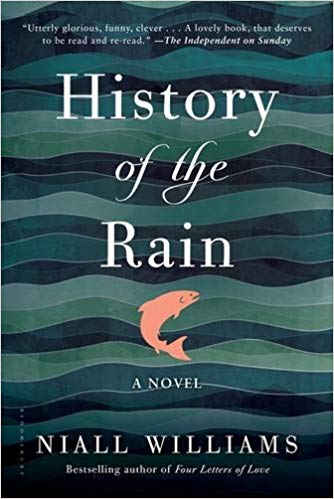
"History of the Rain" by Niall Williams


There is a moment in the novel History of the Rain by Irish writer Niall Williams where the narrator, a young woman suffering from “a sickness of the blood,” says this about books and literature: 

“I can’t remember who said it, but it’s true that whenever anyone reads Shakespeare they become Shakespeare. Well, the same is true for Yeats. Take an afternoon. Sit and read his poems. Any, it doesn’t really matter. Spend an afternoon, read out loud. And as you do…you rise.”


Read History of the Rain, and you will become the story. It is a story about writing and books and literature. It’s about a village named Faha in County Clare, Ireland (four hours by bus to Dublin) with a cast of characters as only could be invented by an Irish writer. Or perhaps Dickens. It’s a story about a family and family tragedy. You know it’s about tragedy because parts, or people, are missing from the outset. And the story is about why.


And it’s a story about love.


“Plain” Ruth Swain, as she describes herself, is in the attic bedroom of her house in Faha. It’s the house where she and her twin brother Aeney were born, Aeney first, of course, because he likely raced to get out. Her mother has lived in this same house since she was born, and of all the suitors she could have married, the one she chose was the Stranger, the one who ignored her when she walk along the bank of the River Shannon into the village. Virgil Swain was staring at the river and seemed completely unaware because he was unaware. Until the time when he comes to realize that he’s in love with her.


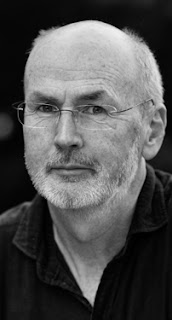
Niall Williams

Ruth is suffering from an illness, never officially identified but it’s what must be leukemia. And she’s trying to discover her father, and the only way she has to do that is to read the books he read, more than 3,000 of them. And as she reads, her father’s story gradually unfolds, as do the stories of her mother, her brother, and herself.


It is a marvelous story.


Williams is the author of several plays and the novels Four Letters of LoveAs It Is in HeavenThe Fall of LightOnly Say the WordBoy in the WorldBoy in ManThis is Happiness, and John, a fictional account of the past year of the Apostle John. History of the Rain, published in 2014, was longlisted for the Booker Prize and has been translated into several languages. With his wife, Christine, he’s published four books about their life in County Clare, Ireland. He’s also written several screenplays for television and film.


I usually read quickly. I started reading History of the Rain and deliberately slowed myself down. It took less than the first chapter for me to see I was holding something remarkable in my hands. It’s a novel in which every sentence is worth reading, at least once. It’s a story that you become part of. It’s a hymn to literature and writing. I read nothing else for a week, and when I finished, I had tears in my eyes because it was a great story and because I didn’t want it to end.


And it doesn’t.

Monday, December 6, 2021

Books I’m Not Recommending for Christmas


My list of “Books I’m Not Recommending for Christmas” continues for 2021. In early December, I take stock of what I’ve read over the year. This isn’t a “best books of the year” activity as much as looking back and reflecting upon the novels, short stories, poetry, and non-fiction I’ve read that have made a particular impact. The “not recommending” description comes from my idiosyncratic view that no one should select books for another person, unless that person has requested it. 

Mt selections were tough in three categories, because they were what I read the most – fiction, poetry, and mysteries. I’ve divided fiction into two groups this year – those written in English and those translated into English. (Note: not all of these books were published in 2021, and all links are to my reviews.)


Children’s Stories


I read children’s stress because I’m always on the lookout for stories for the three grandsons. Two that I read were especially well done. Sara Barkat’s The Midnight Ball is a story about an invitation, telling time, and the oddest collection of partygoers you can imagine. Seth Lewis’s The Notorious Adventures of Nutt the Nefarious has just the right balance of fun (for kids) and satire (for adults). 


Mystery


I’ve been reading mystery stories since I was 9. I’ve probably read more mysteries than any other genre. And I take (some) solace in the fact that T.S. Eliot loved mysteries, too. 


This year, I discovered the William Benson legal thrillers by John Fairfax, aka Willian Brodrick. I had already been a fan of Brodrick’s Father Anselm mysteries, and then found this later series (and they’re not easy to find in print; I find used copies via Amazon and Alibris). Summary Justice is the first of the three published so far. I also enjoyed the Ryder and Loveday mysteries of Faith Martin, set in Oxford and of which A Fatal Obsession is the first (of seven so far). Damien Boyd published a new Nick Dixon mystery, Down Among the Dead, and I thoroughly enjoyed the first of Tim Sullivan’s mysteries, The Cyclist


These mysteries all have one major thing in common. They’re written by British authors.


Faith


Hands down, the book in this category I enjoyed the most this year was Seeing Jesus by Robert Hudson. Hudson takes a historical look at great visions of Jesus claimed throughout the centuries and the impact the people had on the culture, society, and their eras. 


Literary Criticism


My taste in literary criticism leans to (surprise) C.S. Lewis and J.R.R. Tolkien, and this year produced a bumper crop of fine works. On C.S. Lewis, there was C.S. Lewis: Pre-Evangelism for a Post-Christian World by Brian Williams and After Humanity,  Michael Ward’s guide to The Abolition of Man. Holley Ordway published Tolkien’s Modern Reading, tracing his influences to more than what the conventional wisdom holds. 


On the non-Lewis / non-Tolkien side, I really liked Jason Stacy’s Spoon River America and John Mullan’s The Artful Dickens. I also enjoyed the second volume of Aleksandr Solzhenitsyn’s literary memoir, Between Two Millstones


Non-fiction


My non-fiction reading tends to lean to the iconoclastic and anti-prevailing cultural. Jeffrey Bilbro takes a historical and theological journey into news media with Reading the Times. Rod Dreher looks at the lessons of the Soviet era and applies them to America in Live Not by Lies. In An Effort to Understand, David Murray seeks to find a way across the political divide. The Revolt of the Public by Martin Gurri focuses on the role of information today, and how it has seriously undercut the trust in and credibility of our traditional elites.


Poetry


Because of my work for Tweetspeak Poetry, and also because I enjoy it, I read a lot of poetry. And some really fine poetry was published this year. Just a few of the highlights: The Strangeness of the Good by James Matthew Wilson; My Father’s Face by Chandra Gurung; Love in the Time of Coronavirus by Angela Alaimo O’Donnell; Four Texas Quartets by Mark Johnson Cole (a nod to T.S. Eliot); Learning to Pray by Yahia Lababidi; The Courage It Takes by Kelly Chripczuk; and The Green Man by David Russell Mosley.


Fiction: In Translation


The Aviator by Eugene Vodolazhin was first published in English in 2018. It’s a fascinating tale of a man who awakens in a hospital bed who gradually learns he’s the sole survivor of freezing experiments conducted during the Soviet regime of Stalin. He’s as “old as the century,” and his story becomes Russia’s sory in the 20th century. This may get my nod as my favorite book in my 2021 reading.


Gerta by Katerina Tuckova is the story of a girl of German ethnicity living in Brno, Czechoslovakia, before, during and after World War II. It’s a story that often doesn’t get told: what happened to ethnic Germans living in the “wrong countries” after the war. At the End of the Matinee by Keeichiro Hirano, author of A Man (which I loved), tells the story of a classical guitarist and the reporter who falls in love with him. It’s a story of identity, honor, love, and duty. 


Fiction


This was the year Anthony Doerr published a novel after the wildly successful All the Light We Cannot See (2015). This one is entitled Cloud Cuckoo Land, and it is a very different book (and one his wife stopped him from throwing away at one point). It stretches across centuries – the time of the fall of Constantinople, contemporary Idaho, and sometime in the distant future. The book hasn’t had the sensational reception of his previous work, but it a rewarding story, with all the narrative threads brought together at the end.


Other novels I enjoyed include Iron Island by Gareth Griffin, a continuation of his early British history novels; Mildred’s Garden by Laura Boggess; The Sea by John Banville; The Frequency of Us by Keith Stuart; The Weight of Memory by Shawn Smucker; and Mr. Nicholas by Christopher de Vinck. Short story collections I liked include In the Wine Press by Joshua Hren; Scattered Lights by Steve Wiegenstein; and The Pieta in Ordinary Time by William Cook.


Top photograph by Gaelle Marcel via Unsplash. Used with permission.

Tuesday, December 1, 2020

Books I'm Not Recommending for Christmas


Each December, I publish my list of books I’m not recommending for Christmas. I could also call the list “the best books I read this year,” but I try not to press too hard on people as to what my ideas of what they should read. People can usually figure that out for themselves. Perhaps the real point of this is to look back at the year, and review the books that impressed me, challenged me, cheered me, and perhaps even changed me a little. 

Looking at this list, and comparing it to previous lists, I can see that I’m increasingly moving away from what’s popular or celebrated in the culture. You won’t find many bestsellers or national prizewinners here. You also won’t find much that is transiently popular – books that skyrocket to fame because they happened to be available when something notable happened – but soon disappear into the pile you keep in the basement because they’re no longer news.


Here it is, the 2020 edition of the books I’m not recommending for Christmas. I haven’t selected any as “No. 1” in their category; instead, I’ve grouped the handful of the best titles in each category in no particular order. Each are linked to my review either here at Faith, Fiction, Friends, at Dancing Priest, or at Tweetspeak Poetry.


Literary Criticism and Biography


You can find some really fine analyses and biographies of writers and poets. These are some of the best I read this year. I really, really liked Cross of Snow.


The Music of Time: Poetry in the Twentieth Century by John Burnside.


The Making of Poetry: Coleridge, Wordsworth, and Their Year of Marvels by Adam Nicolson.


Cross of Snow: A Life of Henry Wadsworth Longfellow by Nicholas Basbanes.


The Poet and the Fly: Art, Nature, God, Mortality, and Other Elusive Mysteries by Robert Hudson.


The Soul is a Stranger in This World: Essays on Poets and Poetry by Micah Mattix.


Tolkien’s Lost Chaucer by John Bowers


Poetry


I’ve loved poetry since elementary school, when we were required to memorize and recite poems (usually something like “The Midnight Ride of Paul Revere” by Longfellow. I found T.S. Eliot’s “Four Quartets” in high school. It made such a profound impact that I can even remember the bookshop where I bought it. And then poetry stuck throughout my career as (among other things) a speechwriter. 


Saudade: Poems by Nigel Kent.


Left Waiting: Poems by River Dixon.


HellWard: The English Elegies Vol. 1 by James Sale.


The Best Poems of Jane Kenyon, edited by Donald Hall.


Federico Garcia Lorca Blues: Poems by Justin Hamm.


Things My Mother Left Behind: Poems by Susan Richardson.


Railsplitter: Poems by Maurice Manning.


Andalusian Hours: Poemsfrom the Porch of Flannery O’Connor by Angela Alaimo O’Donnell.


When Your Phone Dies: A Hurricane in My Head by Matt Abbott.


Non-fiction and Memoir


On the Shoulders of Hobbits: The Road to Virtue with Tolkien and Lewis by Louis Markos.


Wilber Wilberforce: A Hero for Humanity by Kevin Belmonte.


Land of Hope: An Invitation to the Great American Story by Wilfred McClay.


Between Two Millstones, Vol. 1 by Aleksandr Solzhenitsyn.


Borges and Me by Jay Parini.


The Art of the Commonplace: The Agrarian Essays of Wendell Berry, edited by Norman Wirzba.


What We’re Teaching Our Sons by Owen Booth.


Tough Issues, True Hope by Luke Davis.


General Fiction


I likely read more general fiction than anything else, most likely because I write it. Writing it gives you an appreciation for what fiction writers can do, where they fall short, and where they soar.


Ordinary Grace by William Kent Krueger.


The Old American Artist by Felipe Adan Lerma.


Stay by Catherine Ryan Hyde.


A Man by Keiichiro Hirano.


Waiting for Neruda’s Memoirs by Laura Boggess


Beautiful Sky Beautiful Sky by Stephen Parolini.


Mystery


I love mysteries; I loved reading them since I was a kid. This year, I read (or reread) all of the Philo Vance mysteries by S.S. Van Dine, which were wildly popular in the 1920s and gradually declined in popularity in the 1930s. The great Scribner’s editor Maxwell Perkins said Van Dine was the only author he never had to edit (unlike F. Scott Fitzgerald, Ernest Hemingway, and Thomas Wolfe). Rather than list individual titles, I’ve listed authors of whom I’ve several works this year. Everything they write is good. The links will take you to the most recent review which will include a list of all of their works I’ve read and written about.


Roy Lewis – The Eric Ward Mysteries.


William Brodrick – The Father Anselm Mysteries.


Simon Michael – the Charles Holborn Legal Thrillers.


Jonathan Dunsky – the Adam Lapid Mysteries.


Fire in the Barley by Roger Longrigg.


Romance


Most romance novels are generally written according to a formula: Woman (or man) returns to hometown and rekindles romance with first love. Here are four that break away from that formula.


That Hollister Man by Margaret Desmond.


Peace in the Valley by Ruth Logan Herne.


His Father’s Son by Autumn Macarthur.


Hoping for Hawthorne by Tara Grace Miller.


Classics


Classic books don’t have to be by big-name authors. What defines a classic is that its influence (and popularity) lasts, or that it broke ground when it was published and still hasn’t been equaled. Here are a few I read this year.


The House of Seven Gables by Nathaniel Hawthorne.


Shakespeare of London by Marchette Chute.


The Crime Novels of Ruben Fonseca.


The Tell-Tale Heart: The Life and Works of Edgar Allen Poe by Julian Symon.


Heart of Darkness by Joseph Conrad.


Top photo by Jarred Craig via Unsplash. Used with permission.