Showing posts with label Bible study. Show all posts

Monday, June 8, 2026

“The Sycomore Fig Tree” by Christine Norvell


You can learn a lot from a sycomore fig tree. Ask author Christine Norvell.

The first thing is the spelling of “sycomore.” I had to fight with AutoCorrect (not to mention Google) to keep it from changing the spelling to “sycamore.” Sycamore is the American tree; the British sycamore is actually a maple. The sycomore fig’s official name is Ficus Sycomorus, and it’s native to the Middle East and some parts of Africa. It’s similar to the common fig (Ficus Carica) we know today.


It’s also found in the Bible, and that’s the sycomore Norvell writes about in The Sycomore Fig Tree: Biblical Botany & Scriptural Truth. Her starting point is the prophet Amos, who, when told to go prophesy somewhere other than the northern kingdom of Isreal, says, “I was no prophet, nor prophet’s son, but I was a herdsman and a dresser of sycamore figs. But the Lord took me from following the flock, and the Lord said to me, ‘Go, prophesy to my people Israel.’ Now therefore hear the word of the Lord” (ESV). (Yes, I see that the ESV spells it “sycamore.”)


It is with Amos that Norvell begins her study. The amazing thing is that she adroitly condenses her research in commentaries, ancient Mediterranean horticulture, archaeology, botany, and the Bible into a compact, readableg work of 120 pages. Her thesis: “How the sycomore fig tree and the tending of all trees parallel our life in Christ and the challenges we face.” What follows is something beautiful.


Christine Norvell

She provides a history of the sycomore fig (it was originally native to Israel), explaining how it takes root, tended, harvested and gathered, and pruned, and how caring for tree is a communal function. Amos called himself a herder and dresser of figs, but he worked with other people to do his work. She also goes beyond the sycomore fig and describes the trees she and her family care for on their property. She applies the discussion in each chapter applies to living the Christian life. 


Norvell is a freelance writer who’s published on literature, education, music, and the Bible. She received a master’s degree in Humanities from Faulkner University’s Great Books program. She published Till We Have Faces: A Reading Companion in 2020. She’s also written for The Imaginative Conservative, Front Porch Republic, Mere Orthodoxy, Public Discourse, and University Bookman. The Sycomore Fig Tree also includes notes, a bibliography, and a recommended reading list, and Norvell uses numerous photographs and reproductions to illustrate the text. 


We can learn from trees, trees like the sycomore fig. We can also learn, as Norvell, did, from the trees in our own yards and parks. The Sycomore Fig Tree also is one of the most engaging Bible studies I’ve read. Amos the herdsman and fig dresser was called to be a prophet, because he had the experience and qualities that were needed.


Some Monday Readings


Phyllis Bray, Artist  and Doreen Fletcher’s New Paintings – Spitalfields Life.


Wendell Berry’s Wisdom for Living in Time – Anne Ryan at Plough Magazine.


Poor Bastard: Henry Fielding’s Triumphant Tom Jones – Joel Miller at Miller’s Book Review.


“free and Independent States”: The 250th Anniversary of the Lee Resolution – Kevin Pawlak at Emerging Revolutionary War Era.


Social Media Is Not for Everyone – Terry Whalin at The Writing Life.

Wednesday, February 2, 2022

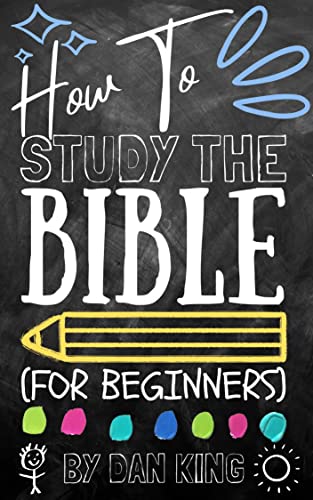
"How to Study the Bible (for Beginners)" by Dan King


More than 40 years ago, as a new Christian, I took a series of courses offered by my church through the extension service of a Bible college. It was one of the most valuable things I could have done. My courses included Old Testament Survey, New Testament Survey, and Bible Study Methods. Our final exam in Bible Study Methods was to discuss one verse in the Gospel of John: John 11:35. It happens to be the shortest verse in the entire Bible: “Jesus wept.”  

What I learned in those courses have lasted a lifetime. 


When Dan King began a new position with his church, the first thing he focused on was how close his students were to the Word of God. That led to a series of lessons on Bible study. And that led to a primer, How to Study the Bible (for Beginners). King has three goals in his teaching and with this book: build a stronger understanding of the Bible, learn how to read the Bible intelligently, and “fall in love with the Book.”


Dan King

The book starts at ground zero – the basic questions in his church’s catechism. What is the Old Testament? What is the New Testament? Why do we call the Bible the Word of God? He moves into evidences for the Bible being inspired. An overview of the Old and New Testaments follows. He reviews the three types of Bible translations (literal, dynamic, and free), explains how to do a Bible word study, considers rules for interpretation, and then outlines what a basic Bible study is like. He also provides a number of resources.


King is the author of The Unlikely Missionary: From Pew-Warmer to Poverty-Fighter. He’s also the co-author of Activist Faith: From Him and For Him and a contributor to Finding Church: Stories of Learning, Switching, and ReformingMaking Space: Welcoming God’s Presence, and Soul Bare: Stories of Redemption. He serves as the director of Family Ministries at St. Edward’s Episcopal Church in Mount Dora, Florida, and founded and operates Fistbump Media, a digital marketing agency. He lives with his family in Florida.


How to Study the Bible (for Beginners) is aimed at young people and people new to faith. But it has value and application for all Christians, no matter where they are in their faith. It’s a guide, it’s a reference manual, and it’s a reminder of just how much value there is in studying the Bible.

Tuesday, May 22, 2018

Can Poetry Help You Understand the Bible?


In 2010, I attended a writer’s retreat at Laity Lodge in the Hill Country of Texas. I was part of the poetry seminar, led by poet and professor Scott Cairns. Our overnight assignment was to write a poem about a Bible passage we found troublesome.

I chose Joshua 5-12.

One of the main themes in that section is herem, a Hebrew word meaning destruction of essentially everything. In that section, before a number of battles, God tells Joshua and the Israelites to commit herem when they defeat the foe. That means killing every living thing – men, women, children, domestic animals and livestock. 

The command is given several times, and the Israelites obey (one tries to hold on to some treasure and gets death for him and his family as a result). At Jericho, only the prostitute Rahab and her family are spared, because she had protected the spies. Every other living thing in the city is put to the sword.

The passage is clear. God told the Israelites to do it. 

To continue reading, please see my post today at Christian Poets & Writers.

Photograph by Watari by Unsplash. Used with permission.

Wednesday, December 6, 2017

“Songs from the Heart” by Tim Riordan


What if the psalms in the Bible are meant to be sung?

What if that’s how they were written and first heard?

Tim Riordan, author and pastor at SonRise Baptist Church in Newman, Georgia, makes a strong case for singing and studying the Psalms in Songs from the Heart: Meeting with God in the Psalms, originally published in 2014. He could have taken a more theological bent, but he didn’t. Instead, Songs from the Heart is engaging, approachable, and fascinating, as he takes the reader on a journey through the psalms.

Riordan begins by telling a fiction story of some 2,500 years ago, how the psalms would have been enmeshed not only in formal ceremonial and worship events but in everyday life. Then he provides a “big picture” view of what the psalms are about, the different kinds of psalms, who wrote them, and how they would have been used. Why is this important? “Psalms is one of the most loved and most read books of the Bible,” he writes. “It is difficult to fully grasp the impact that this central book of God’s Word has had upon humanity.”

Psalms is a book of poetry, he points out, but it’s more than that, and includes a number of literary sub-genres. The word translated as “psalm” comes from a Hebrew word that “literally means ‘to pluck a strong,’” Riordan says, meaning that from the beginning, the psalms were poems meant to be set to music and sung. And there are seven different kinds of psalms – hymn, lament, processional, royal, thanksgiving, reflection, and wisdom. They are organized in the Bible in five different groupings, believed to be aligned with the first five books of the Old Testament, or the Pentateuch.

Tim Riordan
The bulk of the Songs of the Heart is an extended discussion of how the psalms can be used today. Riordan takes 30 of the 150 psalms and explains what they mean, how they were likely used, what was their context, and how they apply to basic questions (and often struggles) people still have today. And that’s a bedrock theme of this book – people still struggle with the same questions and issues that they did when the psalms were written.

Riordan, in addition to his SonRise pastoral duties, received a degree in music from the University of Georgia, a Master of Divinity degree from Southwestern Baptist Theological Seminary in Fort Worth, Texas, and a Doctorate of Ministry degree from the Baptist Theological Seminary in New Orleans. He is also the author of Immovable: Standing Firm in the Last Days (2014), The Published Pastor – Book One: Expanding Your Ministry Through Writing and Publishing (2015), and The Published Pastor – Book 2: How to Write and Publish Books (2015).

Songs from the Heart is an engaging overview of why the psalms are important and how they apply to worship and faith today.


Top photograph by Bryan Minear via Unsplash. Used with permission.

Friday, June 26, 2015

“Paul’s Letter to the Philippians” – Dan King et al


When I became a Christian, I was given a verse as “my verse,” and it has stuck inside my head for more than 40 years. It’s from the Apostle Paul’s letter to the Philippians: “Being confident of this, that he who began a good work in you will carry it on to completion until the day of Christ Jesus” (1:6). Every time I read it or have cause to remember it, I think back to a cool night in January in the basement of one of the main classroom buildings at LSU.

A few decades later, I returned to the classroom where it all happened. That’s the photo above, taken in 2010.

When I saw that a group of people, many of whom I knew in person or online, had created a Bible study for Philippians, I had to see what it was about.

I was not disappointed.

Paul’s Letter to the Philippians is designed as a guide for a group Bible study. To punch that point home, it’s a guide designed by a group for groups. In fact, the individual chapters were not so much edited as curated by Dan King and Crystal Rowe.

In the foreword, King explains how the study and guide were developed: “this community commentary was compiled through an online group study on the epistle, in which we worked through the entire book one passage at a time. Bloggers and writers from various backgrounds led us through the discussion as if we were sitting in someone’s living room together talking through this amazing piece of Scripture.”

The guide includes the historical context for the letter, and then 11 discussions, covering the letter’s major sections. Each section follows a similar format: discussion of the passage, a Greek word study, and an English word study. The word studies focus on a particular word in the passage, providing definitions, synonyms and word origins. Word studies, including their origins, are not superfluous – they provide depth of understanding and often open a study or discussion into a new direction.

As King says, this is a Bible study by “real people,” trying to work out what the epistle teaches and how it applies to life. The writers involved in the discussion and the guide include King, Rowe, Marty Duane Scott, Mark Lafler, Rachel Slough, Lyla Lindquist, Dave Moser, Ryan Tate, Diana Trautwein, Joshua Gillies, Ayomide Akinkugbe, Eric Swalberg, Sheila Lagrand, Asjlet Pichea and Evan Dawson. (I’ve actually met Dan King and Sheila Lagrand in person, both at Laity Lodge near Kerrville, Texas. Online, I’ve “met” Marty Duane Scott, Lyla Lindquist, Ryan Tate, Diana Trautwein and Eric Swalberg.)

The writers represent different Christian faith traditions, from evangelical to Episcopal. They bring their faith traditions to this discussion, and it enriches and deepens our understanding.

Friday, December 13, 2013

T.E. Hanna’s “Raising Ephesus”


One of the first things I learned as a new Christian was the importance of Bible study. And while knowledge of the Bible was a good thing in and of itself, I was told, the really critical thing was application – applying the Bible to my life. It was knowledge, yes; but it was also knowledge and application. It was faith, yes; but it was also faith demonstrated in works.

It sounds so simple and obvious. It is. But it’s not. The not-surprising thing is that we have to relearn this core understanding with each generation. What is surprising is how counter-cultural this idea actually is in practice.

And this is Christianity’s history as well. “In every place (where it has seen explosive growth),” writes T.E. Hanna in Raising Ephesus: Christian Hope for a Post-Christian Age, “Christianity was a powerful counter-cultural movement whose presence took root at the margins and whose impact derived not from privilege or influence, but from an embodiment of the life-transforming presence of the Holy Spirit.” Hanna points out that Christianity is not dying today, but its geographic center is shifting – from what we consider the Western nations to China and the nations of the South – South America and Africa.

It happened just this way in a city in the Roman Empire called Ephesus, near the Aegean coast of what we know today as Turkey. It is the idea of understanding, application, and growth – what empowers an individual’s faith and ultimately transform society and culture – that permeates Raising Ephesus, one of the best studies of Paul’s Epistle to the Ephesians that I’ve read.

Hanna divides his study of Paul’s letter into five parts: Remembering Hope; Recovering Identity; Redeeming Community; Reclaiming Mission; and personal application, which he calls Raising Ephesus.  Each section combines solid understanding of the text and contemporary and often personal examples with a straightforward, engaging style. The study is easy to read, but that doesn’t mean is isn’t packed with insight.

One brief example: In the section of the study on Redeeming Community, Hanna points out how entrenched the myth of individualism is in Western and especially American culture. It’s so entrenched, in fact, that we think it must be in the Bible, somewhere. The myth has permeated the church. “This results,” he says, “in Christians who replace spiritual growth with isolated, self-help projects. These are Christians who believe they can serve God without having to actually seek God.” Ouch. And then he explains how Paul explained the concept of community to the Ephesians.

Hanna, who blogs at Of Dust and Kings (one of my favorite blog titles), is a graduate of Asbury Theological Seminary who is currently the pastor of a small congregation. He says this about himself at his blog: “I’m passionate about reclaiming authentic Christianity in the midst of a culture that has lost its way.” A relatively short work, the book also has an accompanying five-booklet devotional series entitled Ancient Faith for a Modern World.

Raising Ephesus is the kind of study that encourages me to hope Hanna will undertake similar studies. Solid, insightful, and full of understanding, it is also highly readable and applicable.


Painting: Miracles of St. Paul at Ephesus by Jean Restout (1693)