Showing posts with label Brian Miller. Show all posts

Wednesday, February 19, 2025

Some Wednesday Readings


The speech Vice President J.D. Vance gave at the Munich Security Conference last week continues to reverberate. I don’t think I can recall a recent speech that has had as much reaction and response as this one, and it was on top of the one Vance gave at the Paris meeting on artificial intelligence. The Critic Magazine in the UK said Europe deserved it; The Spectator says it sent shockwaves across the continent. Matt Taibbi at Racket News looked at the reaction and said the mask has dropped

To prove Vance wrong, CBS followed German police who made arrests for violations of speech, and somehow managed to prove Vance right. Ben Domenech, a former CBS newsman, wonders why CBS has developed a penchant for censorship

Meanwhile, the new Administration in Washington makes its first move against sex trafficking. Oliver Wiseman at The Free Press describes what’s happening overall in Washington as the “everything is broken” administration

More Good Reads

Patrick Colquhoun and the Thames River Police – A London Inheritance.

Mud – Brian Miller at Notes from an East Tennessee Farmer.

The (British) police are ruining their reputation – Fred de Fossard at The Critic Magazine.

5 Tips for Writing Page-Turning Historical Fiction – Julie Hartley at Writer’s Digest.

“Street Light,” poem by John Crowe Ranson – Sally Thomas at Poems Ancient and Modern.

Photograph: Poet John Crowe Ranson in 1941.

Monday, November 20, 2023

"Kayaking with Lambs" by Brian Miller


I grew up in a rather stereotyped suburb of New Orleans. Except for residents' last names, which reflected the post-World War II migration out from the city center, it could have been a suburb in Chicago, Cleveland, Denver, or any other American city. Suburban kids learned early that food came from grocery stores and supermarkets. An uncle had a small farm across Lake Pontchartrain, and we visited a time or two. There’s even a picture of five-year-old me on a horse to prove it. 

Decades later, I found myself working for a company in the agriculture business. I had one the best jobs imaginable – I gave money away. For years I traveled back and forth across the country, funding programs for wheat growers, corn growers, soybean producers, farm youth, farm broadcasters, and more. I’d visit farms, tour grower associations, and visit research centers. And I’d attend their conventions – in Nashville, Des Moines, Reno, Denver, San Diego, Orlando, Phoenix, and more. Once I was even forced to spend a week – on business – in Honolulu.


I was a latecomer to agriculture and farming, but once I was in it, I learned that farming is something for life. Even when you retire from it, you still pay attention.


Brian Miller came to agriculture considerably earlier. I found his blog, A South Roane Agrarian, through a site called Front Porch Republic. Miller posts weekly about weather, raising cattle, sheep, and pigs, weather, farm life, neighbors, weather, crops, life in rural East Tennessee, family (he’s a southwest Louisiana boy), weather, and more. Oh, did I mention weather? (No one in the planet is more concerned about weather than a farmer. That’s true for every culture, climate, and continent.)


The book arm of Front Porch Republic has published Miller’s first book, Kayaking with Lambs: Notes from an East Tennessee Farmer. The title is based on a true story. Yes, it may not be the most expected of activities on a farm, but kayaking with a lamb can happen, not unlike the Biblical story of leaving the 99 and searching for the one lost sheep. Except in a kayak. 
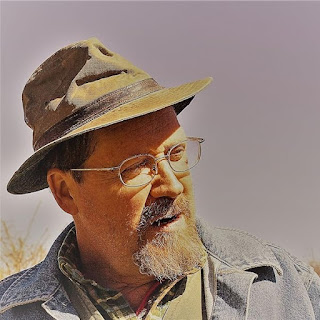
 

Brian Miller

Miller’s farm is not Big Agriculture. It’s diverse, not monoculture. It’s him, his partner Cynthia, and (usually) one of the neighbor’s farm kids. And, as he points out, there’s a huge difference between a farm kid and a kid raised on a farm. If you get a choice, always, always hire the farm kid. That’s the one with the work ethic.  


With Kayaking with Lambs, what you walk into is a world animated by the values of family, faith, neighborliness, caring for the land, and respect. These aren’t the values of contemporary culture; they are the values the culture has forgotten and for which we’re already paying a tremendous price.


There is a structural emphasis upon the sacredness of the life Miller is describing. The book is organized by eight of the monastic offices of the day, combining Vigil and Matins under Matins. Without ever becoming overtly religious, that organization tells you much about the thought animating each entry in the book. There is a time to be watchful, to pray, to work (and work hard), to rest, to celebrate, to mourn, and to cherish. This is a sacred business to be about.


Miller doesn’t romanticize farm life; it’s extremely hard, physically, emotionally, and mentally taxing labor. But it’s the life he’s chosen, the life he lives, and the life he obviously enjoys. Even with the freezing nights when you find your arm inside a ewe struggling to give birth. 


Since 1999, Miller and his partner Cindy operate Winged Elm Farm in eastern Tennessee, supplying pork, ham, mutton, and beef to customers in Knoxville and Chattanooga. And he updates his blog weekly (I subscribe to it, so I had some idea of what this first book of his would be like). 


Kayaking with Lambs is already one of my top five favorite books of the year. It’s written with humility and self-understanding, and with a deep love of the land and the work that’s organized upon it. It’s also written with a strong sense of dry wit; I found myself often smiling and occasionally laughing out loud as I read it.


Some Monday Readings


The people who ruined the internet – Amanda Chicago Lewis at The Verge.


John Thomas Smith’s Rural Cottages – Spitalfields Life.


A Blank Page – poem by Jerry Barrett at Gerald the Writer.


Employers are fed up with college ‘waste,’ opt for skilled blue-collar workers instead – Taylor Penley at Fox News Business.

Saturday, March 30, 2013

Saturday Good Reads: Slowing Down


This week didn’t start out in Frantic Mode – we first had to dig out from a 12-inch snow that arrived Sunday. (A huge thank you to the young man who knocked on our door Monday and asked if we needed our driveway shoveled.)

Then on Tuesday, as if to prove exercise is bad for you, I was riding the stationary bike at 6 a.m. prior to my workout with the personal trainer when a partial bridge in my mouth decided to relocate. So – it was pray that the dentist had some space to squeeze me in (he did).

And at work, a situation that had started the previous week was continuing to build, and build some more, until the tsunami arrived on Thursday, and ebbed only slightly by Friday afternoon. I finally had to stop Thursday night (Friday morning?) about 12:15 a.m.; I decided the crisis would be waiting for me when I woke up. It was.

What helped was watching a few Netflix videos and finding a few oases of calm in the online world, like the Saturday Good Reads below.

First, four poems.

Two by Steven Marty Grant at Urbanality, whose poetry always seems to transport me to New York City: Winter in Midtown and God Looks Down.

One by Chris Yokel, whose music I like as much as his poetry: Green Arms (A Good Friday Poem).

And one by Brian Miller, whom I first met at One Stop Poetry when it was going gangbusters and who’s now one of the movers behind dVersePoets: I’ll have the usual.

Am I the only person who reads poetry when things get crazy?

Then over at Slow Church, John Pattison posted a reflection on the novel Silence by Shasaku Endo, in honor of Endo’s birthday. I had read the novel three years ago (and even blogged about it a few times). Pattison’s article is well worth reading.

David Mathis at Desiring God did something unexpected and truly beautiful. He visited and interviewed the 96-year-old theologian Robert Duncan Culver, and came away with The Old Man and His Big Book.

I was rather awed by Culver and his razor-sharp mind, and I was also awed by something slightly older – a graffiti found during a 19th century excavation of the Palantine Hill in Rome. Tim Challies at Informing the Reforming wrote about it in The History of Christianity in 25 Objects: the Alexamenos Graffito.

I learned something new on Friday. Lyla Lindquist, one of my colleagues over at Tweetspeak Poetry, has more than a slight interest in the Spanish language, and wrote about it in The Poetics of Learning (and Loving) Language.

And then John Blase at The Beautiful Due wrote one of the most original articles I’ve seen about Easter: What Do I Know?

Finally, Greg Sullivan at Sippican Cottage posted a short video the likes of which I’ve never seen. Well, I take that back. I’ve seen the actor Kenneth Branagh do it, but I’ve never seen the “We Happy Few” speech from Henry V by William Shakespeare performed like it is by this young actor.


Photograph by Jean Sander via Public Domain Pictures. Used with permission.

Friday, March 25, 2011

It's a New York Day


We try to visit MOMA
but it’s closed on Mondays,
bummer, so we walk
down Fifth Avenue
in the light rain to the Plaza,
we want high tea but
we’re politely shown
to the Grill (improper attire).
We find a rare book shop,
barely noticeable from the street,
and walk up the stairs when
we’re buzzed through the door
to see and smell rows and shelves
of leather-bound words.
I go solo to see this revival
of Moon for the Misbegotten
at the Cort and have a drink
at intermission on the warm,
wet, June sidewalk.
I still smell the rain, different
here than anywhere else.

This poem is submitted to Poetically Friday at One Stop Poetry, hosted by Brian Miller. To see other poems about New York, please visit the site.

Painting: At the Sherry-Netherland, oil on board by Amy Stewart. Via Lost Coast Daily Painters.