Showing posts with label historical fiction. Show all posts

Wednesday, February 19, 2025

Some Wednesday Readings


The speech Vice President J.D. Vance gave at the Munich Security Conference last week continues to reverberate. I don’t think I can recall a recent speech that has had as much reaction and response as this one, and it was on top of the one Vance gave at the Paris meeting on artificial intelligence. The Critic Magazine in the UK said Europe deserved it; The Spectator says it sent shockwaves across the continent. Matt Taibbi at Racket News looked at the reaction and said the mask has dropped

To prove Vance wrong, CBS followed German police who made arrests for violations of speech, and somehow managed to prove Vance right. Ben Domenech, a former CBS newsman, wonders why CBS has developed a penchant for censorship

Meanwhile, the new Administration in Washington makes its first move against sex trafficking. Oliver Wiseman at The Free Press describes what’s happening overall in Washington as the “everything is broken” administration

More Good Reads

Patrick Colquhoun and the Thames River Police – A London Inheritance.

Mud – Brian Miller at Notes from an East Tennessee Farmer.

The (British) police are ruining their reputation – Fred de Fossard at The Critic Magazine.

5 Tips for Writing Page-Turning Historical Fiction – Julie Hartley at Writer’s Digest.

“Street Light,” poem by John Crowe Ranson – Sally Thomas at Poems Ancient and Modern.

Photograph: Poet John Crowe Ranson in 1941.

Wednesday, October 23, 2024

Some Wednesday Readings


Thou shalt not pray? – Lois McLatchie at The Critic Magazine. 

What Salman Rushdie Doesn’t Want to Talk About – Douglas Murray at The Free Press.


Writing in Spare Moments of Life – Terry Whalin at The Writing Life.


Confederate Guerillas: Effective Commands or Detrimental Service? Part 1 and Part 2– Daniel Welch at Emerging Civil War. 


Morphing: Lessons from Year of the Monarch – Dheepa Maturi at Tweetspeak Poetry.


Bookish Diversions: Lewis and Tollkien, Pen Pals – Joel Miller at Miller’s Book Review.


3 Goals for Writing Great Historical Fiction – Ryan Coleman at Writer’s Digest.


“I, Being a Woman and Born Distressed,” poem by Edna St. Vincent Millay – Sally Thomas at Poems Ancient and Modern.


Generations by Jean Twenge – book review by Samuel D. James at Digital Liturgies.


Photograph: Mosby's Rangers during the Civil War, with John Mosby in the center wearing a feathered hat.

Monday, August 19, 2024

"The Muralist" by B.A. Shapiro


It’s 1939, and Europe is on the verge of war. Alizée Benoit, a young woman born in France but now a naturalized American, is an artist working in New York City and eking out an existence because of the artists program with the Work Projects Administration. She works with a group of artists in a warehouse, unknowns all but who will eventually remake American art: Mark Rothko, Lee Krasner, and Jackson Pollock.

They’re all painting murals for the WPA and struggling with their own art. It is Alizée who provides the creative spark that will eventually transform these artists into international celebrities. And she is increasingly driven by what is happening in Europe to her fellow Jews, including members of her immediate family – her brother, her aunts, uncles, and cousins. She’s spending increasing amounts of time trying to find visas but, like so many others, discovering the immigration roadblocks being erected by Breckenridge Long, once of Franklin Roosevelt’s top State Department officials. 


When the war starts, Alizée’s desperation becomes almost manic, leading to her involvement in an attempted assassination.


It’s also 2015. Alizée’s story is told in parallel with that of her great-niece Danielle, the granddaughter of her brother Henri. Seventy-five years after the start of World War II, Danielle works in the art department of the auction house Christie’s in New York. And she’s always wondered what happened to her great-aunt, who disappeared in 1940. The mystery deepens when Danielle is handed a square cut from a larger work, one she believes was painted by her great-aunt. Fellow workers think it might be an early Rothko or Krasner. Danielle thinks otherwise, and she’s determined to prove that the mural fragment was painted by her great-aunt – and to find out what happened to her.


B.A. Shapiro

The story of Alizée and Danielle are told in The Muralista 2016 novel by B.A. Shapiro. It’s a story peopled by both historical characters and fictional ones, describing the birth of and inspirations for Abstract Expressionism, how the war in Europe increasingly encroached upon America, and how prevalent anti-Semitism was in the America of the 1930s and 1940s.


The Muralist includes well-known political figures of the pre-war and war eras, including Brecjkenridge Long, Eleanor Roosevelt, and even a cameo appearance by Franklin Roosevelt. It’s generally a satisfying novel and an engaging read, even if you’re not a fan of Abstract Expressionism. For some reason I couldn’t identify, the scenes involving Eleanor Roosevelt seemed less satisfying, possibly because she comes across as more two-dimensional. 


Shapiro has published several bestselling literary thrillers, including Metropolis (2022), The Collector’s Apprentice, and The Art Forger. A sociologist y training and career, she has also worked as a systems analyst / statistician and headed the Boston office of a software development firm. She also worked as an adjunct professor in sociology at Tufts University and creative writing at Northeastern University. She lives in Boston and Naples, Florida. 


Some Monday Readings


Critical Editorial Decisions – Terry Whalin at The Writing Life. 


Salvaging Our World – Brian Miller at A South Roane Agrarian.


Albert Jay Nock: A Return to the Liberal Arts? – Bradley Birzer at The Imaginative Conservative.

Monday, April 3, 2023

“The Partisan’s Daughter” by Michael Behagen


Aaron is now in a retirement home in Israel. His granddaughter regularly visits, and he’s told her almost all the stories about his life and the life of her mother Machale when she was a child. But there’s one story he hasn’t told, mostly from a sense of shame. 

In 1940, the German government created the Warsaw ghetto in Poland, an area of 1.3 square miles into which were herded tens of thousands of Jews. Including Aaron, his wife Raizel, and their daughter Machale. For the next three years, groups of Jews would be taken by rail cars to the Treblinka concentration camp and killed.


Even though the stories of deportation and death are always denied, even from many of the Jews themselves, Aaron and Raizel know better. And they decide they have to do something to get their daughter to some kind of safety. A Polish friend helps; a bribe to a ghetto guard helps Machale escape. But Raizel is killed at the ghetto hospital where she works, and Aaron is sent to Treblinka. The family that had agreed to hide Machale decide to get rid of her when the money Aaron paid runs out. 


Michael Behagen

And the story Aaron tells his granddaughter begins there, with all that as the backdrop.


The Partisan’s Daughter by Michael Behagen is the story of what happens to Aaron and Machale, as the war grinds on. And Aaron will learn much about the Poles, the Germans, and himself before the story comes to an end. The story unfolds as both a kind of documentary about Aaron’s war years and escape from Treblinka and his confession about a terrible injustice.


Behagen is a filmmaker and writer best known for a 1980s thriller television series called “Late Night Stories.” He’s written and produced a number of documentary and feature films, and he published hi first novel, Lullaby, in 2002. A native of Israel, he lives in both Israel and France. 

Thursday, July 15, 2021

"Iron Island" by Gareth Griffith


Eleri Gwir, a Briton chieftain’s daughter, is sitting in a monastery, writing her history. She’s an old woman now, but she’s remembering her life when she was much younger, beginning when she returned from voluntary exile after the death of her father, her great love, and her people in a battle against Saxon invaders. She’s returning to the kingdom called Dyfneint, what today is called Devon. It’s 578 A.D., a year after the devastating Battle of Dyrham. 

Eleri is not only a chieftain’s daughter; she’s also a healer, someone in great demand in a perilous time of almost ongoing warfare. She knows the current king, Kadwy, and many of his officers and warriors. Kadwy is relatively young, as yet untested in battle, and he occupies a palace and a land full of intrigue and treachery. Eleri befriends Eilineth, a girl of 12 savagely disfigured by invaders or bandits, which are often interchangeable descriptions. And she befriends Morlais, a stable boy who’s a natural storyteller. 


The three soon find themselves involved in a planned deception by Kadwy, capture by the Saxons, and a daring escape. And a new battle looms, a battle that may mean final defeat for the Britons.


Gareth Griffith

Iron Island
 by Gareth Griffith is the sequel to Glass Island, the thrilling fictional account of the Battle of Dyrham. Griffith has a gift for describing battles and battle scenes, and both books place the reader squarely in the thick of the action. Eleri Gwir is the heroine at the center of the story, and Griffith draws a character who both understands the expectations for women in the period and resists conforming to those expectations. And Eleri threads her way through the story, telling a gripping account of the times, herself, her friends, and her enemies.


Griffith was born in Wales and moved to Australia. He’s been a teacher, researcher, and writer, and served as the director of research for the parliament of New South Wales for many years. He’s now focused on writing about Wales and the Dark Ages. 


Iron Island is historical fiction, but it rests on what is clearly extensive research by the author. The reader experiences the smells of the kitchens as much as the smells of battle. The story sits within from what is known of this period of British history, with its remnants of the fumes of Roman occupation, unknown tribes arriving and raging over the land, banditry, the growing presence of the Saxons, and the Britons desperately trying to defend what they have left. It’s a well-told and stirring story.


Related:


Glass Island by Gareth Griffith.

Monday, April 26, 2021

“The Shenandoah Road” by Lynne Tagawa


Historical fiction takes considerable work. Good historical fiction is similar to writing two books simultaneously – the story being told and the period of history the is set within. The finished story has to pass muster with people familiar with the era. And it has to tell a good story.

The Shenandoah Road by Lynne Tagawa is good historical fiction.

The year is 1744. John Russell has a farm in the Virginia colony’s Shenandoah Valley. John’s wife has died during an attack by Indians (pioneers would not have used the term “native Americans), accidentally hit when another target was intended. He’s now rearing his young daughter alone, and he knows she needs a mother. But he is still grieving his deeply loved wife.

It’s the time of the Great Awakening in the colonies. Preachers like George Whitefield are crisscrossing the land, preaching repentance and revival. John has a profound Christian faith, and the sermons of the revival resonate with his heart.

With his cousin Roy, John travels to Philadelphia for supplies and, he hopes, to find a wife. The roundtrip journey will last several months, and friends and neighbors in the valley have given him a list of needed supplies.

Lynne Tagawa

Abigail Williams is the daughter of a Philadelphia merchant. She’s in her early 20s and is fascinated with herbs, plants, and what uses they can be put to. The merchant’s bookkeeper tells them about John Russell, and soon introductions are made. And now a young woman who has only known city life is getting married and setting off to live on the frontier, with all its implied dangers and opportunities. The Russells depart Philadelphia the same day they are married.

Much of the story is about the trip. But it’s also a story of faith, and how a young woman learns she is not the believing Christian she thought she was. She worries about her faith, or lack of it, and what she faces as the wife of a frontiersman. John worries about her faith as well, and whether he can overcome the loss of his first wife.

Tagawa tells fascinating story, one filled with historical detail and figures worked well into the narrative, so well, that it doesn’t seem like fiction at all. With the Russells, the reader experiences scoundrels, storms, the importance of folk medicine, the making of soap, religious conflicts, and colonial travel.

A biology teacher by career, Tagawa has also published The Heart of Courage (another historical novel), the novel A Twisted Strand, and Sam Houston’s Republic, a Texas history curriculum. She lives in south Texas.

The Shenandoah Road brings colonial history and the Great Awakening alive by telling the story of ordinary people living in tumultuous times.

Thursday, April 1, 2021

"Confronting the Invisible" by David Field


Curate Matthew West, his fiancée Adelaide Carlyle, and her father Dr. James Carlyle attend a performance of the circus. What looks like an accident happens – a trapeze artist falls to his death. Upon close examination, however, Dr. Carlyle suspects and then determines that this was no accident. But no one can interest Scotland Yard in investigating; too many other crimes are demanding attention. 

Matthew is working is his new parish posting of St. Dunstan’s. Three children have gone missing; the police know children in the poorer neighborhoods go missing all the time. There are also rumors of disembodied children floating outside their parents’ and others’ windows.


Two months later, when Matthew and Adelaide return from their honeymoon, three missing children are now 12 missing children. Their investigations lead them to two discoveries – that the missing children may be linked to the circus murder, and there is now the specter of highly contagious disease to deal with.


David Field

Confronting the Invisible
 by David Field is the third of four books in the Carlyle & West Victorian Mystery Series. The first is Interviewing the Dead, the second is Death Comes But Twice, and the fourth is Death Among the NightingalesField also written six historical novels set in Tudor England and eight novels in the Esther and Jack Enright Mystery Series. A native of Nottingham, England, he practiced and taught criminal law for his professional career. He now lives in Australia.


The investigation story is farmed by the time period – early Edwardian London – and by the social issues involving women (Adelaide is a champion for women’s rights). Confronting the Invisible is another fine entry to the Carlyle & West mystery series.


Related:


Interviewing the Dead by David Field.


Death Comes But Twice by David Field.

Friday, December 6, 2019

Best Books I'm Not Recommending for Christmas - 2019 Edition


For quite a few years now, I’ve posted a list of books I’m not recommending books for Christmas. My reason for “not recommending” is that I’ve always considered book-buying to be a personal decision, best left to the reader. But I do like to highlight the best of what’ve read during the year, as much as for myself as for others. This list is always a reminder of what helped to guide me and shape me during the previous 12 months.

It’s also a way to see just how out-of-step I am with the general culture. The past weekend, the St. Louis Post-Dispatchpublished its list of its (or the book editor’s) 25 favorite books of 2019. I read two of the 25 – A Better Man by Louise Penny (what’s not to like about Inspector Gamache?) and The Long Call by Ann Cleeves – both mysteries. I can agree on Louise Penny, but the new Ann Perry book was disappointing. At the end of the Post-Dispatch article, they list best or favorite books from Publishers Weekly and a host of local booksellers. I hadn’t read any of those, either. I must be a real cretin. Or countercultural. Or both.

What’s nice about this year’s list was how difficult it was for me to select one book in each category. I read a lot of really good books, so if a work is noted at all, it means I really, really liked it or loved it as well. 

Children’s Books

I surprised myself here. Except for books I’ve read to my grandsons, all of the children’s books I read this year are by British authors. The best include a traditionally-told story, Poppy Field by Michael Morpurgo (he of War Horse fame); a wonderfully written but horrifying tale in The Boy in the Striped Pajamas by John Boyne;  and three rather strange ones: The Boy Who Hit Play by Chloe Daykin, The 1000-Year-Old Boy by Ross Welford, and Boom! by Mark Haddon (which made me laugh out loud). My nod for best goes to The 1000-Year-Old Boy; the story captured me on page one and never let go.

Mysteries

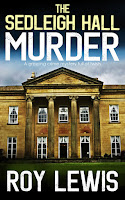
I’ve been reading (and buying) mystery stories since I was six years old, and I’ve never outgrown them. (T.S. Eliot loved mysteries, too, so I’m in good company.) Louise Penny published the afore-mentioned A Better Man; she hasn’t written a bum one in the entire Inspector Gamache series. Magpie Murder by Anthony Horowitz was amazing – a book within a book within a book. The British Library keeps publishing its Crime Classic Series, and they’re all good stories. I read two by Jonathan Dunsky – A Debt of Death and The Dead Sister – that reinforce my admiration for Israeli noir. The Eric Ward series by Roy Lewis, first published in the early 1980s, are being republished, starting with The Sedleigh Hall Murder. And I discovered two new police detectives – Scott Hunter’s DCI Brendan Moran and Keith Moray’s Torquil Mackinnon – which I thoroughly enjoyed. 


My choice for best is a tie – Dunksy’s A Debt of Death and Lewis’s The Sedleigh Hall Murder, which are as different as night and day. The first is about an Auschwitz concentration camp survivor who is a private detective in 1950s Tel Aviv, and the second other an attorney gradually going blind from glaucoma in 1980. I’ve now read all of Dunsky’s books (another one is coming soon) and the first four of Lewis’s (with a bunch more being republished), so I’m a happy mystery reader.

History

My reading of history books was less in 2019 than last year, but I read some really good ones. Dominion by Peter Ackroyd continues the author’s history of England series and covers the Victoria era. Andrew Delbanco’s The War Before the War is focused on the issues, people and events that led up to the American Civil War. The Pioneers by the American institution David McCullough studied the settling of the Ohio Territory. Justice on Trial by Mollie Hemingway and Carrie Severino is technically more “current affairs” and history; it addressed the confirmation hearings of Brett Kavanaugh for the Supreme Court. 

My choice for best among all of these really good books is McCullough’s The Pioneers; he tells history like few other Americans writing today. (And this book will not make the “best” list of virtually any mainstream media, for the simple reason is that it’s a traditional popular history which doesn’t bow the knee to the cult of victimization.) (It was still a best-seller.)

Biography and Memoir

Jean Moorcraft Wilson published a fine biography of poet and author Robert Graves, one of the World War I poets best known for his novel I Claudius. I read Kevin Belmonte’s Defiant Joy: The Remarkable Life and Impact of G.K. Chesterton; it was published in 2011 but I read it this year (which serves to point out that any of the books noted in this post were ones I read this year and were not necessarily published this year). Michael Brendan Dougherty’s My Father Left Me Ireland is as much a memoir as it is an exploration of a family history that wasn’t what the author had been taught it was. James Como’s C.S. Lewis: A Very Short Introduction is a wonderfully concise summary of his subject’s life and works. Ian Sansom’s September 1, 1939 is as much about Sansom as it is the poem that is its ostensible subject, by W.H. Auden. 

The Graves biography is excellent, but my choice for best biography I read this year is Belmonte’s Defiant Joy, which truly brings Chesterton to life.

Poetry

Poetry presented a a really tough choice for “best.” There were simply too many collections that I read that could qualify, like Joe Spring’s Let There Be LightSome Permanent Things by James Matthew Wilson, A Child’s Year by Chris Yokel, Deaf Republic by Ilya Kaminsky, Soft Launch by Aaron Belz, Bravery & Brevity by Edward Holmes, Justin Hamm’s The Inheritance, and Umbilical by Michael Spence. (I just noticed that all of these collections were written by men.)

I finally narrowed my list down to two, and both actually tell stories. Ali Nuri’s Rain and Embers is about the life of a family forced to flee Saddam Hussein’s Iraq, and Black Sunday by Benjamin Myers tells a highly creative tale of the Dust Bowl of the 1930s. 

Fiction

I read so much good fiction this year that it’s difficult to know where to start. Noah Hawley’s Before the Fall is a can’t-stop-reading novel about a man and a young boy who survive a plane crash. Paris in the Present Tense by Mark Helprin is a wonder, as is Akin by Emma Donoghue. Throw Me to the Wolves by Patrick McGuiness and Lanny by Max Porter are about our out-of-control media, shaming, and trolling culture. Where the Desert Meets the Sea by Werner Sonne is about the transition in Palestine to the new Israeli state. Mark Haddon’s The Porpoise is a blend of contemporary and Greek myth, an amazing feat of writing.

If I had to select one book that affected me the most and moved the most, it would have to be the story of an insurance adjuster named Will Phillips, it would be Adjustments by Will Willingham. It’s my favorite novel of the year.

Historical Fiction

I read more historical fiction this year, and the works fell generally into one of two categories – English history and Civil War history. I read two by Annie Whitehead that were excellent – To Be a Queen and Cometh the Hour, both set in Anglo-Saxon times. Gemma Lawrence’s The Bastard Princess was a riveting story of the young Elizabeth I. Soldier’s Heart by Michele McKnight Baker and A Stranger on My Land by Sandra Merville Hart were both well-told stories of the American Civil War. 

For best historical novel, I’d say it was Annie Whitehead’s To Be a Queen

Romantic Fiction

I know it’s strange – a guy reading romance novels. They’re generally quick, easy reads, and you can learn a lot from them if the stories you write involve romantic scenes. The standouts this year were Tender Love by Juliette Duncan, Bending Toward the Sun by Mona Hidgson, The Man from Yesterday by Florence Witkop, A Rose Blooms Twice by Vivkie Kestell, Falling for You by Leanna Morgan, and Homecoming by Carolyn Aarsen. 

Vickie Kestell’s A Rose Blooms Twice get my nod for best romance. It’s set in pioneering, sodbusting days, and it tells the story of both a woman who loses her entire family in an accident and two Norwegian brothers who bring their families to America to make a better life. And it’s the first in a trilogy, with the other two books just as good.

Faith

This is such a broad category that it could have several sub-categories. There were theology books like Church Reformed by Tim Bayly and Living the Dream? by Tristan Sherwin; practical living books like Living a Life of Yes by David Rupert; current affairs books like Who is an Evangelical? by Thomas Kidd and In Search of the Common Good by Jake Meador; and one that defies classification, The 21: A Journey into the Land of the Coptic Martyrs by Martin Mosbach.

The best book about faith that I read is also the best book I read about writing and creativity – Adorning the Dark by Andrew Peterson. It’s marvelous.

Photograph by Dakota Corbin via Unsplash. Used with permission

Monday, November 18, 2019

"The Bastard Princess" by Gemma Lawrence


I just finished a six-week course on the Tudor dynasty, offered (free, with some payment options) by the University of Roehampton in London. The course covered British history from 1485 to 1603, roughly the period from Henry VII through Elizabeth I. It was a fascinating look at a tumultuous period, including the English Reformation, Henry VIII and his six wives, the religious conflict that continued even with the Reformation, and how all three of Henry’s surviving children occupied the throne.

It was a good introduction to reading The Bastard Princess, a historical novel by British author Gemma Lawrenceabout the life of Elizabeth from childhood to her half-sister Mary becoming queen.

It is one compelling novel.

The story begins in 1603, the last year of Elizabeth’s life. She’s looking backwards at her family, her times, what she accomplished, and, most of all, how she learned to survive. Lawrence writes the account in the first person, reading almost like a journal or diary, and that perspective provides a sense of immediacy, urgency, and individuality. The Elizabeth that emerges from these pages is a girl who loves her father, understands early on how easy it is to make a misstep that can lead to imprisonment or death, and quietly mourns her mother, executed when Elizabeth was a young child:

“They said my mother had never my father; she had never been the Queen. They said she had done bad things. And then…they stopped talking of her at all. Her pictures and portraits disappeared from the walls…

Gemma Lawrence
“I was no longer to be called My Lady Princess or Your Highness. I was now just the Lady Elizabeth, the King’s bastard daughter. It was though I had never had a mother. But I remembered her…”

We walk with Elizabeth in her gardens, sit with her in her rooms, listen as she considers all that has happened and is happening, and become shocked when she falls in love with her stepmother’s husband. We see her learn from her tutors and how she teaches herself the art of survival. The story captures our attention and doesn’t let go. It shows Elizabeth as a highly intelligent, highly observant young woman.

Lawrence, an independently published author living in Cornwall in the U.K., is the author of a considerable number of historical novels. Her series include The Story of Catherine Howard, The Chronicles of Matilda, Lady Anne, and Elizabeth of England, of which The Bastard Princess is the first of eight.

Gemma Lawrence has told an enthralling story here. The Bastard Princess gives us an Elizabeth who is flesh and blood, always conscious of who she is, and always watchful of those who might both help and harm her. 

Monday, October 14, 2019

“Cometh the Hour” by Annie Whitehead


Blame it on Petrarch.

The Italian scholar (1304-1374) is credited with coining the phrase “Dark Ages” to describe the period from the fall of the Roman Empire to the early Renaissance. The idea of “dark” (backward and violent) contrasted with the “light” of his own day. The term was especially popular during the so-called Enlightenment (roughly the 17th-18th century) which gave us both great learning and the Reign of Terror in the French Revolution. It’s at least arguable which era was actually the darkest (and none of them may hold a candle to the death, destruction, and violence of the 20th century). 

Historians today generally avoid using the term “Dark Ages,” but it persists in popular culture. In Britain, the period includes the departure of the Romans (about 400 A.D.), the Anglo-Saxon invasions, the Viking invasions, and the Norman Conquest, to about the time of Chaucer (14th century). Some of the most familiar icons of British and English history were created during this period, including the Tower of London, the monumental castles, and the great church buildings like Westminster Abbey and the numerous cathedrals. 

It’s this era that historical fiction author and historian Annie Whitehead has focused upon for her books. Her novel To Be a Queen is set in the 870-918 A.D. timer period. Her history of Mercia is about one of the Anglo-Saxon kingdoms that dominated England for a few hundred years. She writes with deep insight of the era and the people, making extensive use of both the original documents that exist and scholarly research. 

Based on that same kind of in-depth research, Cometh the Hour tells the story of four kingdoms in the seventh century A.D. – Mercia, Bernicia/Northumberland, Deira, and East Anglia. And while it is largely a story of kings and their struggles against each other and often their own siblings, it is also a story of the women, who often had to run kingdoms while their husbands were off fighting (and the husbands are often off fighting). The various kingdoms in this period (and there were more than these four) seemed to stay in almost constant warfare, with a few brief years of peace in between. 

England about 600 A.D.
The major characters in the story are all historical figures. Because the story and the interaction between the characters is complex, Whitehead includes a helpful royal genealogy for each of the four kingdoms and a list of the major characters. She’s telling four primary stories; how they merge, diverge, interweave, and sometimes abruptly end are what make the genealogies and character lists so helpful.

And what stories she tells! Princesses used as political pawns, revenge for the deaths of fathers and sons, double-dealing and treachery, and the occasionally real love story all make for an absorbing read. This is also the period during which Christianity was making major inroads among the various Anglo-Saxon tribes, and Whitehead tells that story, too. Favorite characters are Penda, king of Mercia, and his wife Derwenna. Penda resists Christianity to the very end, even though he doesn’t oppose his subjects hearing and accepting the message, but he behaves as more of a Christian king than most of his believing peers in the other kingdoms.

Of particular note are the battle scenes. This author knows how to write a vivid, realistic battle scene. She does it so well that you find yourself ducking to miss the swing of a sword or an ax. 

Annie Whitehead
Whitehead, a member of the Royal Historical Society and the Historical Writers Association. She has published three novels set in Mercia: To Be a Queen (2013); Alvar the Kingmaker (2016); and Cometh the Hour (2017). Her non-fiction work, Mercia: The Rise and Fall of a Kingdom, was published in 2018. Her books have won a number of prizes and recognitions, and she is a frequent contributor to anthologies on English history and a lecturer. She blogs at Casting Light upon the Shadow and Time Traveler.

Cometh the Hour is fiction, yes, but it is fiction that provides a factually based understanding of what actually happened during this period of English history. By the story’s end, you’ll come out with a deeper understanding of the times and a deeper appreciation for just how well Whitehead told her story. These ages won’t remain dark while we still have such great storytellers.

Related


Top illustration: A stained glass window in Worcester Cathedral depicting the death of Penda at the Battle of Winwaed is 655 A.D., via Wikimedia Commons. Map of England in 600 also via Wikimedia Commons.

Monday, July 8, 2019

“To Be a Queen” by Annie Whitehead


Any writer of historical fiction will emphasize the importance of research – a lot of research. Once the research is done, assuming it’s ever really “done,” the temptation becomes trying to pack too much of the research into the story. Even in historical fiction, the story is paramount.
In To Be a Queen, the historical account of Aethelflaed or the “Lady of the Mercians,” author Annie Whitehead gets the balance of research and story exactly right. And what a story she tells!

Aethelflaed (ca. 870 to 918A.D.) was the daughter of Alfred the Great, King of the English based in Wessex. The most significant fact of this entire period was the repeated invasions by and battles with the Vikings. The Viking threat framed Aethelflaed’s life, as it did the lives of her father, her brother Edward, her husband Aethelred, and the entire people of the British Isles.

Aethelred, lord of the Mercians, becomes allied with Alfred to fight the Vikings. They’re successful, and to cement the alliance between Wessex and Mercia, Alfred gives his daughter Aethelflaed in marriage to Aethelred. Whitehead creates a love interest for Aethelflaed, one closer to her age, but the young girl knows what her royal duty is. Her considerably older husband is aware of her love for another man, but wisely bides his time. 

In the story, Aethelflaed eventually comes to love her husband deeply and earns the respect of the Mercian people, to the degree that they accept her as their ruler when Aethelred is struck down by illness and later dies. She holds the distinction of being the only woman ever to ruled an Anglo-Saxon kingdom.

The heart of the story is in its details – the accounts of day-to-day activities (royal women worked, often just like non-royal women), the love stories Whitehead builds, Aethelflaed’s many miscarriages, and the personalities of the characters themselves, including the heroines, heroes, and villains. What makes this historical novel even more interesting is that what is known of the Mercians is what was written down by their enemies and allies; no first-hand, Mercian accounts of their rulers and history exist. 

Annie Whitehead
Whitehead, a member of the Royal Historical Society and the Historical Writers Association. She has published three novels set in Mercia: To Be a Queen (2013); Alvar the Kingmaker (2016); and Cometh the Hour (2017). She has also published the non-fiction work Mercia: The Rise and Fall of a Kingdom (2018). Her books have won a number of prizes and recognitions, and she is a frequent contributor to anthologies on English history and a lecturer. She blogs at Casting Light upon the Shadow and Time Traveler.

To Be a Queen is a rousing story, well researched and expertly told, of a woman who served and ruled in a perilous time. 

Related:


Top illustration: a 13th century representation of Aethelflaed, found in The Cartulary and Customs of Abingdom Abbey (1220 A.D.)