Showing posts with label children's books. Show all posts

Wednesday, January 31, 2024

The First Book I Ever Bought


It was the summer before I turned seven. A favorite activity for all of us kids in the neighborhood was to ride our bikes up to the TG&Y dime store in the local shopping center and usually just drool over all the toys in the children’s section. The distance between our block and the dime store was about a mile-and-a-half; we’d ride back streets to get there, avoiding the more direct, and busy, nearby U.S. Highway 61. 

The shopping center included the TG&Y, a Beall’s department store, a Western Auto, a Mackenzie’s Bakery, and the anchor, the A&P grocery store. A few years later, a Katz & Bestoff (K&B) drug store was added on the western end. 

As young as I was, I was reading beyond my years. I liked the dime store’s toys and games as much as anyone, but I also would wander over to where the children’s books were displayed in something like a magazine rack, with staggered rows so you could see all the titles. The books were for all ages, from toddler to young teen. 

To continue reading, please see my post today at Dancing Priest.

Photograph by Eleanor Brooke via Unsplash. Used with permission.


Some Wednesday Readings


The Pulls and Fears of Andersonville – Sarah Kay Bierle at Emerging Civil War. 


Will this Civil War soldier Bible find its way back to his family? – John Banks’ Civil War Blog.


Book Review: Building a House Divided: Slavery, Westward Expansion, and the Roots of the Civil War – Patrick Kelly-Fischer at Emerging Civil War.

Monday, January 22, 2024

"Poetic Pete" by Rob Jones


Poetic Pete has a problem, at least as far as the other kids are concerned. He likes to rhyme when he talks. 

He’s considered something of a freak. He tries to keep his mouth shut and avoid others, but then there’s Billy the Bully, who seems to go out of his way to harass Poetic Pete. The bully laughs at what Pete has written, which, of course, are poems, and poems that rhyme. The poor boy writes poems to push the pain away.


Both of his parents have his back, offering comfort and encouragement. His father tells him to stay strong, because, he says, there’s magic inside of him that will inspire people. His mom finds a poetry contest for him to enter.


Rob Jones

And then Poetic Pete wins the contest and discovers what Billy is such a bully. The world begins to change.


Poetic Pete by author Rob Jones is a delightful children’s book, aimed at those of us who’ve always felt a little bit weird for liking, or writing, something like poetry. And it’s a bit more: a story for any child who feels out of place. I think it’s wonderful that it’s a story told in rhyme. And the illustrations by Lily Grace Jackson are lovely -- simple, clean, and help tell the story beautifully.


Jones is a poet, songwriter, and musician. He’s previously published The Hidden Work: Poems Inspired by the Writings of C.S. LewisRe-Enchanted: Poems for the Imagination and Inspiration,  the novel Bad Boys of the Kingdom, and the children’s book Here Comes the Night.


Read Poetic Pete, and cheer on the child poet in all of us. 


Some Monday Readings


The Juvenile Almanack and Costume of the Metropolis – Spitalfields Life. 


Summer of ’73 – poem by Gigi Ryan at Society of Classical Poets.


The Diary of a Tree Standing on its Head – artwork (video) Jack Baumgartner at The School of the Transfer of Energy. 

Monday, November 29, 2021

"The Midnight Ball" by Sara Barkat


It’s a few minutes after 12 p.m., and Little Song has received an invitation – a special invitation to a midnight ball. Because it will take all day to get to the ball, she immediately hops on her bike and sets out. 

It’s an eventful ride. At very precise times, Little Song meets a host of characters as she pedals along. And being the kind of person she is, she stops and chats. And, of course, each character she meets wants to go to the ball, too. There’s a mouse, a dragonfly, a snake, a frog, a cat, a rabbit, a crow, a spider, a wolf, a moth, a bat (you can tell it’s getting late), and an owl. Ad each brings something along for the ball. But with all the visiting, time is running out.


The Midnight Ball
, written and illustrated by Sara Barkat, is the children’s story of Little Song, her journey, and the friends she meets. It’s also a story about the clock and keeping time. And it’s a sheer delight of a tale (although I got worried when I saw the wolf join the group).


Barkat is the author of The Shivering Ground & Other Stories and The Yellow Wall-Paper : A Graphic Novel. She also worked with Tania Runyan in a collaboration for How to Write a Form Poem: A Guided Tour of 10 Fabulous Poems. A writer for Poetic Earth Month, she lives near the Hudson River in New York. 


Part of The Beautiful Math Series, The Midnight Ball is all the things you expect a good children’s story to be, including the beautiful illustrations.


Top illustration: The spider in The Midnight Ball.

Wednesday, February 10, 2021

“Joey Flynn’s Extraordinary Tale” by Meghan White

J


oey Flynn has moved with his family from California to Oregon. His dad has a new job, and the family’s new house is in a remote area, not far from Multnomah Falls. Joey’s rather miserable; he’s left behind everything that’s familiar, including friends and school. 

One good thing about the new home is the nearby forest, perfect for an 11-year-old boy to explore. What he doesn’t expect to find is Zibbis, a roughly three-foot tall, well, something, like a racoon who walks around on two legs. Zibbis hands joy a silver calling card that reads “Special Agent Zibbis, Department of Children’s Needs and Emergencies.”


The strange creature doesn’t explain where he’s from, but Joey discovers his new friend is extremely resourceful (with a kangaroo-like pouch full of bubble gum soda and purple stones ideal for skimming across water, among other things). What Zibbis doesn’t say, or at least say immediately, is what his mission is. And the mission has a lot to do with Joey.


Meghan White

Joey Flynn’s Extraordinary Tale
 by Meghan White is the story of what happens to Joey and his new friend Zibbis during that first summer in Oregon. Joey is going to learn about trust, faith, and putting others before himself.


The short novel is White’s first published work. She says it began when her family lived in Oregon and her husband got an idea for an illustrated book, based on a character he’d drawn. She resisted the idea for years, until the family moved to Texas, where she finally wrote the story.


Joey Flynn’s Extraordinary Tale is reminiscent of the Glade series of novels by Martha Orlando. A mythical-like character appears to guide a troubled boy to an understanding of faith and self. We need more stories about children like Joey Flynn; Our children do, too.

Tuesday, December 15, 2020

Forgotten Classics: “Understood Betsy” by Dorothy Canfield Fisher


I don’t remember exactly when I first read Understood Betsy by Dorothy Canfield Fisher. I was eight or nine years old, and I seem to remember reading a Scholastic Book Club edition. It might have come from the neighbor next door, who was two years older and a prolific reader. She gave away books she finished reading, and I was often the happy recipient.  

Almost 40 years later, I was at one of St. Louis’s book fairs, looking for old editions of The Hardy Boys, when I spotted an old edition of Understood Betsy. I remembered the story, and into my shopping cart it went. It has sat on a bookshelf, unread, for almost 20 years. And then I picked it up and read it.


It tells the story of Elizabeth Ann, a little girl living with aunts in a Midwestern city. Both of her parents have died, and she’s been reared by dear Aunt Frances for almost all of her nine years. Aunt Frances is a doting character, so doting that she nearly smothers the little girl in love and affection. She tells Elizabeth Ann about her distant relatives, including the dreaded Putney cousins in Vermont. 


To continue reading, please see my post today at Tweetspeak Poetry.

Wednesday, March 25, 2020

Rabbits at War: 2 Green Ember Stories by S.D. Smith


For several years, children’s writer S.D. Smith has been creating a series of swashbuckling adventure stories – all starring rabbits. First was The Green Ember, told from the perspective of two children whose lives are upended with an attack by wolves. And it is much greater than an isolated attack; the wolves are making war upon the rabbit world.

The Black Star of Kingston is a prequel to The Green EmberEmber Falls is the second installment in the main series, and the third – Ember’s End – is due to be published next week (its publication date moved up a bit because of the general upheaval from the coronavirus epidemic). 

Smith has also published two related stories, more of novella length.

The Wreck & Rise of Whitson Mariner takes place during the great wars. King Whitson Mariner is sailing to safety, carrying a precious cargo – the royal jewels, elderly women, other women and children, and his own family, Queen Lillie and Prince Lander. Sailing on another ship with him is Lord Grimble, who might be better named Lord Grumble, a sour and resentful aristocrat who seems to believe hem and not Whitson, should be king.

And sure enough, Grimble turns out to be a traitor, in league with the feared dragons. Whitson’s ship is tricked onto treacherous rocks and is shipwrecked. Queen Lillie is kidnapped by dragons. The cargo is lost, and those aboard who are not rescued die in the water. Lieutenant Massie Brunson is ordered by the king to stay with Prince Lander at all costs. The prince, for his part, is soon seen running into the woods on shore. Massie knows he’s needed with the rescue, but he obeys the king and follows. And a great adventure ensues.

In The Last Archer, Jo Shanks is Living at Halfwind Citadel. It’s wartime, and Jo is desperate to prove he’s as good an archer as the famed Nate Flynn. But he doesn’t seem to make a very good soldier – he oversleeps, he has an unpolished sword, and his commanding officer has little use for him. But there’s an archery contest, and Jo proves his skill by not only placing but coming very close to beating Nate.

Nate needs a temporary replacement on his team of archers, and he asks Jo to fill in. Jo discovers that Nate is nothing like Jo imagined him to be. He still has trouble with the commanding officers, but he finds he’s fitting in with Nate’s crew. And then the wolves attack and enter the citadel itself.

Both stories have underlying lessons aimed at children (but equally valid for adults). They’re about obedience, mistaken impressions, trust, and having courage in the face of overwhelming odds. Using rabbits instead of children likely takes some of the immediate terror out of the situations, but children will identify with Massie, Prince Lander, Jo, and Nate. These are rollicking good stories, with good messages. 

Related:


Top illustration by Zach Franzen: Whitson Mariner takes up the Stone Sword of Flint

Friday, December 6, 2019

Best Books I'm Not Recommending for Christmas - 2019 Edition


For quite a few years now, I’ve posted a list of books I’m not recommending books for Christmas. My reason for “not recommending” is that I’ve always considered book-buying to be a personal decision, best left to the reader. But I do like to highlight the best of what’ve read during the year, as much as for myself as for others. This list is always a reminder of what helped to guide me and shape me during the previous 12 months.

It’s also a way to see just how out-of-step I am with the general culture. The past weekend, the St. Louis Post-Dispatchpublished its list of its (or the book editor’s) 25 favorite books of 2019. I read two of the 25 – A Better Man by Louise Penny (what’s not to like about Inspector Gamache?) and The Long Call by Ann Cleeves – both mysteries. I can agree on Louise Penny, but the new Ann Perry book was disappointing. At the end of the Post-Dispatch article, they list best or favorite books from Publishers Weekly and a host of local booksellers. I hadn’t read any of those, either. I must be a real cretin. Or countercultural. Or both.

What’s nice about this year’s list was how difficult it was for me to select one book in each category. I read a lot of really good books, so if a work is noted at all, it means I really, really liked it or loved it as well. 

Children’s Books

I surprised myself here. Except for books I’ve read to my grandsons, all of the children’s books I read this year are by British authors. The best include a traditionally-told story, Poppy Field by Michael Morpurgo (he of War Horse fame); a wonderfully written but horrifying tale in The Boy in the Striped Pajamas by John Boyne;  and three rather strange ones: The Boy Who Hit Play by Chloe Daykin, The 1000-Year-Old Boy by Ross Welford, and Boom! by Mark Haddon (which made me laugh out loud). My nod for best goes to The 1000-Year-Old Boy; the story captured me on page one and never let go.

Mysteries

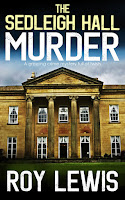
I’ve been reading (and buying) mystery stories since I was six years old, and I’ve never outgrown them. (T.S. Eliot loved mysteries, too, so I’m in good company.) Louise Penny published the afore-mentioned A Better Man; she hasn’t written a bum one in the entire Inspector Gamache series. Magpie Murder by Anthony Horowitz was amazing – a book within a book within a book. The British Library keeps publishing its Crime Classic Series, and they’re all good stories. I read two by Jonathan Dunsky – A Debt of Death and The Dead Sister – that reinforce my admiration for Israeli noir. The Eric Ward series by Roy Lewis, first published in the early 1980s, are being republished, starting with The Sedleigh Hall Murder. And I discovered two new police detectives – Scott Hunter’s DCI Brendan Moran and Keith Moray’s Torquil Mackinnon – which I thoroughly enjoyed. 


My choice for best is a tie – Dunksy’s A Debt of Death and Lewis’s The Sedleigh Hall Murder, which are as different as night and day. The first is about an Auschwitz concentration camp survivor who is a private detective in 1950s Tel Aviv, and the second other an attorney gradually going blind from glaucoma in 1980. I’ve now read all of Dunsky’s books (another one is coming soon) and the first four of Lewis’s (with a bunch more being republished), so I’m a happy mystery reader.

History

My reading of history books was less in 2019 than last year, but I read some really good ones. Dominion by Peter Ackroyd continues the author’s history of England series and covers the Victoria era. Andrew Delbanco’s The War Before the War is focused on the issues, people and events that led up to the American Civil War. The Pioneers by the American institution David McCullough studied the settling of the Ohio Territory. Justice on Trial by Mollie Hemingway and Carrie Severino is technically more “current affairs” and history; it addressed the confirmation hearings of Brett Kavanaugh for the Supreme Court. 

My choice for best among all of these really good books is McCullough’s The Pioneers; he tells history like few other Americans writing today. (And this book will not make the “best” list of virtually any mainstream media, for the simple reason is that it’s a traditional popular history which doesn’t bow the knee to the cult of victimization.) (It was still a best-seller.)

Biography and Memoir

Jean Moorcraft Wilson published a fine biography of poet and author Robert Graves, one of the World War I poets best known for his novel I Claudius. I read Kevin Belmonte’s Defiant Joy: The Remarkable Life and Impact of G.K. Chesterton; it was published in 2011 but I read it this year (which serves to point out that any of the books noted in this post were ones I read this year and were not necessarily published this year). Michael Brendan Dougherty’s My Father Left Me Ireland is as much a memoir as it is an exploration of a family history that wasn’t what the author had been taught it was. James Como’s C.S. Lewis: A Very Short Introduction is a wonderfully concise summary of his subject’s life and works. Ian Sansom’s September 1, 1939 is as much about Sansom as it is the poem that is its ostensible subject, by W.H. Auden. 

The Graves biography is excellent, but my choice for best biography I read this year is Belmonte’s Defiant Joy, which truly brings Chesterton to life.

Poetry

Poetry presented a a really tough choice for “best.” There were simply too many collections that I read that could qualify, like Joe Spring’s Let There Be LightSome Permanent Things by James Matthew Wilson, A Child’s Year by Chris Yokel, Deaf Republic by Ilya Kaminsky, Soft Launch by Aaron Belz, Bravery & Brevity by Edward Holmes, Justin Hamm’s The Inheritance, and Umbilical by Michael Spence. (I just noticed that all of these collections were written by men.)

I finally narrowed my list down to two, and both actually tell stories. Ali Nuri’s Rain and Embers is about the life of a family forced to flee Saddam Hussein’s Iraq, and Black Sunday by Benjamin Myers tells a highly creative tale of the Dust Bowl of the 1930s. 

Fiction

I read so much good fiction this year that it’s difficult to know where to start. Noah Hawley’s Before the Fall is a can’t-stop-reading novel about a man and a young boy who survive a plane crash. Paris in the Present Tense by Mark Helprin is a wonder, as is Akin by Emma Donoghue. Throw Me to the Wolves by Patrick McGuiness and Lanny by Max Porter are about our out-of-control media, shaming, and trolling culture. Where the Desert Meets the Sea by Werner Sonne is about the transition in Palestine to the new Israeli state. Mark Haddon’s The Porpoise is a blend of contemporary and Greek myth, an amazing feat of writing.

If I had to select one book that affected me the most and moved the most, it would have to be the story of an insurance adjuster named Will Phillips, it would be Adjustments by Will Willingham. It’s my favorite novel of the year.

Historical Fiction

I read more historical fiction this year, and the works fell generally into one of two categories – English history and Civil War history. I read two by Annie Whitehead that were excellent – To Be a Queen and Cometh the Hour, both set in Anglo-Saxon times. Gemma Lawrence’s The Bastard Princess was a riveting story of the young Elizabeth I. Soldier’s Heart by Michele McKnight Baker and A Stranger on My Land by Sandra Merville Hart were both well-told stories of the American Civil War. 

For best historical novel, I’d say it was Annie Whitehead’s To Be a Queen

Romantic Fiction

I know it’s strange – a guy reading romance novels. They’re generally quick, easy reads, and you can learn a lot from them if the stories you write involve romantic scenes. The standouts this year were Tender Love by Juliette Duncan, Bending Toward the Sun by Mona Hidgson, The Man from Yesterday by Florence Witkop, A Rose Blooms Twice by Vivkie Kestell, Falling for You by Leanna Morgan, and Homecoming by Carolyn Aarsen. 

Vickie Kestell’s A Rose Blooms Twice get my nod for best romance. It’s set in pioneering, sodbusting days, and it tells the story of both a woman who loses her entire family in an accident and two Norwegian brothers who bring their families to America to make a better life. And it’s the first in a trilogy, with the other two books just as good.

Faith

This is such a broad category that it could have several sub-categories. There were theology books like Church Reformed by Tim Bayly and Living the Dream? by Tristan Sherwin; practical living books like Living a Life of Yes by David Rupert; current affairs books like Who is an Evangelical? by Thomas Kidd and In Search of the Common Good by Jake Meador; and one that defies classification, The 21: A Journey into the Land of the Coptic Martyrs by Martin Mosbach.

The best book about faith that I read is also the best book I read about writing and creativity – Adorning the Dark by Andrew Peterson. It’s marvelous.

Photograph by Dakota Corbin via Unsplash. Used with permission

Monday, October 21, 2019

“Boom!” by Mark Haddon


In 1992, British author Mark Haddon published a middle grade book with the improbable title of Gridzbi Spudvetch!He says that, with a title like that, only 23 people bought the book (and he claims that number is an exaggeration). 

It went out of print, but he’d occasionally hear from fans who loved it. He’d been writing and publishing other books (like The Curious Incident of the Dog in the Night-Time in 2003) and his publisher would ask him about updating Gridzbi Spudvetch! He reread the book and realized it needed more-than-serious updating, plot hole-filling, and other improvements. He put it off, until he heard from a schoolteacher in Oxford, who read it aloud to her students, who loved it. So, Haddon tackled the rewrite, and Boom! was born in 2009.

The book, still aimed at the middle grades, is now 10 years old, just about the age of its hero, Jim, called Jimbo by the family. The story is fiction, and science fiction, and comedy, and drama, and downright funny. I knew I was captured when I laughed out loud on page three, as Jimbo lets fly from a balcony a “helicopter sandwich” of cheese and strawberry jam that smacks his sister’s greasy boyfriend squarely in the face. What brother hasn’t wanted to do exactly that, or something like it?

Mark Haddon
Jimbo and his best friend Charlie get into all kinds of mischief. When Jimbo’s sister claims she’s heard teachers at school talking about sending Jimbo to a “special school” for discipline, he and Charlie concoct a plan to bug the teachers’ lounge with walkie talkies. Mostly what they hear is boring teacher talk, until only two teachers are left in the room. They begin to speak in a language neither Charlie nor Jimbo has ever heard, saying things like “Gridzbi spudvetch!”

From there, the two boys stage a break-in of one of the teacher’s homes and find strange papers and documents that look like they’re in code. One turns out to be coordinates for an ordnance map of a location on the Isle of Skye in Scotland. And then Charlie disappears. A strange policeman tries to capture Jimbo. Two men break into his family’s apartment and are fought off by Jimbo, His sister, and the greasy boyfriend. Jimbo and his sister hop aboard the boyfriend’s motorcycle, and they’re off to Scotland to rescue Charlie. 

It’s all wildly improbable. It’s completely within the imagination of a nine-, ten-, or eleven-year old, defending Earth against scheming extra-terrestrials. And it’s totally fun.

Haddon is the author of several novels and young adult novels, including A Spot of Bother (2007) and The Red House (2013). He blogs under his own name.

I can easily see my fourth-grader grandson reading Boom!, while his second-grade brother listens, enraptured, and the two saying things to each other like “Spleeno ken mondermill.”

Related:


Monday, February 18, 2019

“The 1000-Year-Old Boy” by Ross Welford


Alfie Monk is 11 years old. He lives with his mother in a secluded house in the middle of some woods in northern England. A town is nearby, and it’s been growing steadily closer.

Alfie is 11, and he’s been 11 for more than a thousand years. He and his mother broke open two life pearls provided by his father and mixed it in their blood. They’re not immortal, but their bodies did stop aging.

They meet two children who live nearby and who are themselves 11 years old. Roxy lives with her disabled mother. Aidan lives next door, and his family has just moved to the area. When Alfie’s mother dies in a fire (never-aging bodies aren’t immune or resistant to death by accidents, like fire and drowning), Aidan and Roxy have to make two decisions. Do they help Alfie? And do they believe his story about being a thousand years old?
Ross Welford

The 1000-Year-Old Boy by British children’s writer Ross Welford tells the story pf Alfie, Aidan and Roxy, and what a cracking good story it is. Aidan and Roxy have to help Alfie navigate normal life, and help him escape of another of the “Never-Dead” on the scene – Aidan’s Uncle Jasper. When Alfie decides to find the one-remaining life pearl, the one he and his mother hid long ago and the one that will start the aging process again, Aidan and Roxy begin the adventure of a lifetime.

Welford is the author of three other children’s novels: Time Travelling with a HamsterWhat Not to Do If You Turn Invisible, and The Dog Who Saved the World. He was a business editor and writer and television program producer before turning to the writing of children’s stories. He lives in London.

The 1000-Year-Old Boy is a delightful story, full of twists and turns, and describing what friendship truly means.

Monday, January 14, 2019

“The Boy Who Hit Play” by Chloe Daykin


Elvis Crampton Lucas is 12, and he doesn’t know where he came from. What he does know is that his father George found him as a baby on a bench at the zoo, wrapped in a Norwegian newspaper. He loves his father (even if he did name him after three music CDs) but he wants to know his story. 

Accompanied by his father and his father’s best friend, Lloyd, he travels to Norway. Very little about the trip goes as planned – including the discovery that they’re being shadowed and somewhat threatened by Lloyd’s brother. Elvis will eventually succeed on his quest, but it won’t be what he imagined or expected.

Chloe Daykin
The Boy Who Hit Play by Chloe Daykin is the story of Elvis and his journey. It’s aimed at roughly the 10-13 age group (I bought it thinking it might be a Christmas present for an 8-year-old; it’s just a bit beyond that) but it’s an entertaining read for adults as well. It’s completely credible as an account by a 12-year-old; you realize that this author must be the mother of boys (and she is.)

Daykin is the author of Fish Boy (2017), a widely acclaimed story about a boy’s loneliness and friendship that won a number of prizes and recognitions. A third novel is scheduled for publication in June 2019. She lives with her family in Northumberland in England.

Monday, November 19, 2018

"The Boy in the Striped Pajamas" by John Boyne


It’s one of the most disturbing books for children I’ve ever read.

Bruno is a nine-year-old boy living in a large home with his parents and older sister in a well-to-do section of Berlin, with the grandparents living next door. In many ways, the family seems like a normal family. Bruno loves sliding down the banister from the top to the bottom of the house. He considers his sister a “hopeless case” (what nine-year-old boy doesn’t consider his older sister a hopeless case?). his house is so large that he keeps finding new things to explore. He has good friends at school.

All seems familiar, except this is 1942. His father wears an impressive uniform and seems to be an influential person. Even some well-known person, whom Bruno calls “The Fury,” has taken an interest in his father. And the family is moving to a new home, because his father has taken an important job, a job Bruno’s heard his parents arguing about. 

The family moves, and Bruno’s new house is much smaller than his house in Berlin. If he stands on his tiptoes, he can see out of a room in his home to wear people are milling about. They all wear striped pajamas. Bruno understands the name of this new home to be “Out-With.”

And we know, if Bruno doesn’t, that his father is the new commandant of the Auschwitz concentration camp. We know who “The Fury is,” and why the people at Out-With all wear striped pajamas. 

The Boy in the Striped Pajamas was published in 2008 by Irish writer John Boyne. The book, published in a 10thanniversary paperback edition, won two Irish book awards, was shortlisted for the British Book Award, reached No. 1 on The New York Timesbestsellers list, and was turned into a movie. It’s a difficult book to put down and a difficult book to read; we experience an almost helpless feeling as we watch Bruno in his innocence, desperate to find a friend, discover the reality of Out-With, a reality he never fully comprehends. Boyne effectively uses the gap between the reader’s knowledge and the boy’s ignorance to create first a sense of uneasiness and then a growing sense of horror.

John Boyne
Boyne has written 11 novels for adults and five for children, including The Heart’s Invisible Furies, A Ladder to the Sky, The House of Special Purpose, The Boy at the Top of the Mountain, The Absolutist, This House is Haunted, A History of Loneliness, Next of Kin, Crippen, The Thief of Time, Mutiny, Beneath the Earth, Noah Barleywater Runs Away, The Dare, The Congress of Rough Riders, The Brocketts Get a Dog, The Second Child, Stay Where You Are and Then Leave, and Cyril Avery. He lives in Dublin.

At some point, we know where The Boy in the Striped Pajamas is headed; the ending seems inevitable even as we resist the inevitability. It’s a story that holds us in fascination and horror. I can’t say I would feel comfortable with recommending that children read this book, but then I didn’t feel comfortable reading this book. But comfort isn’t the point.

Top photograph: The commandant’s house at Auschwitz.

Monday, July 2, 2018

“War Horse” by Michael Morpurgo


Before it was a stage playthat won five Tony awards, before it was a moviedirected by Steven Spielberg, it was a book, a book for older children. It was first published in 1982, and it remains in print. A new centenary edition, to mark the anniversary of the start of World War I, was published in 1914. By any measure, it’s a beloved book.

It’s War Horse, by Michal Morpurgo.

War Horse is the story of Joey, a horse separated from his mother at a young age. And it’s the story of Albert Narracott, the son of a Devon farmer who raises the horse, trains the horse, rides the horse, and loves the horse.

And it is the story of the First World War, told from the perspective of Joey.

It seems almost unbelievable today, but the beginning of the First World War in 1914 saw armies across Europe using cavalry troops. It was long at all before horses were replaced by machines, but horses played an important role. 

In the case of Joey, and unbeknownst to Albert, Albert’s father sells Joey to an officer preparing to leave for the fighting in France. Devastated, Albert soon learns he’s too young to enlist. But Captain Nicholls, Joey’s new rider, promises Albert he will look after the horse. 

Joey describes his training, in England, his transport to France, his friendship with the black stallion Topthorn, and his first engagement in warfare, during which Captain Nicholls is killed. The experiences of the two horses tell the story of what happens to British soldiers, German soldiers, and French civilians.

Michael Morpurgo
Morpurgo is one of Great Britain’s best-known and best-loved children’s writers. He’s written some 130 children’s books and won numerous prizes and recognitions. Earlier this year, he received a knighthoodfor his services to literature and charity.  

I could say more, a lot more, but that would be giving the story away. Suffice it to say that War Horseis a simply marvelous story, the story of a horse and the boy who loves him. 

The trailer from the 2011 film:


Top photograph: A scene from theWar Horse stage play at the National Theatre, London