Showing posts with label Sara Barkat. Show all posts

Tuesday, June 23, 2026

Sara Barkat Takes Us into “Otherside”


Until the late 1970s, my reading of science fiction was limited to the stories and novels of Ray BradburyStranger in a Strange Land by Robert Heinlein, and The Day of the Triffids by John Wyndham. I didn’t have any inherent bias against science fiction; it was more my reading interests were in other directions. 

For some reason, I picked up a paperback edition of Lord Valentine’s Castle by Robert Silverberg. Then I went to the Foundation trilogy by Isaac Asimov (published in the 1950s, it may explain American politics of the last decade). Then the novels of Jerry Pournelle and Larry Niven. And Arthur C. Clarke, whose Rendezvous with Rama and Childhood’s Endremain among my favorite books. But as much as I loved the writing of J.R.R. Tolkien and The Lord of the Rings, even then I knew how much it was changing science fiction. Fantasy was taking over. 


Years passed. Reading interests changed. And then the old memories stirred when I read The Shivering Ground by Sara Barkat. The wonderful graphic version she did of H.P. Lovecraft’s The Colour Out of Space, was another reminder, even though it’s usually called a horror story. And now she has a new novel, Otherside, which is about as close as you can get to mainstream science fiction as you can.


To continue reading, please see my post today at Tweetspeak Poetry.


Some Tuesday Readings


For the Road to Santiago – poem by David Whyte.


The Wordless Rose: Ruchard Wilbur’s ‘Advice to a Prophet’ – Alexander Fayne.


Veshicular – poem by Franco Amati at Garbage Notes.


Poetry in Prose – Where Love is Born – L.L. Barkat at Tweetspeak Poetry.


Lives upon Lives – poem by Baruch November at Evey Day Poems.


“Requiem,” poem by Robert Louis Stevenson – Joseph Bottum at Poems Ancient and Modern.

Thursday, March 13, 2025

"The Sadbook Collections 2" by Sara Barkat


I’ve been following Sadbook on Substack by Sara Barkat for quite a while now. At first, I thought the character might be intended for a younger generation. And Sadbook certainly has that appeal – a kind of updated Charlie Brown. (I don’t want to imply that Sadbook is a male; gender isn’t specified and really doesn’t matter.) And it can be a little odd or slightly offbeat, causing you to turn your head and say “What?”  

But then I read Barkat’s The Sadbook Collections 2, essentially all of the Sadbook cartoons from 2024 (the first volume covers 2023). And it was then that it hit me: Sadbook is a poet


To continue reading, please see my post today at Tweetspeak Poetry.


Some Thursday Readings


“Upon my Son Samuel His Going for England,” poem by Anne Bradstreet – Sally Thomas at Poems Ancient and Modern.


A Review of Homage to Soren Kierkegaard, edited by Dana Gioia and Mary Grace Mangano – Matthew King at New Verse Review.


Questions that arise from a poem – Padraig O Tuama at Poetry Unbound.


An Appreciation of Ted Kooser – Judith Harris at Literary Matters.


Moonwalk – poem by Jerry Barrett at Gerald the Writer.

Thursday, November 14, 2024

"The Colour Out of Space" by H.P. Lovecraft and Sara Barkat


I’m a words guy. I’ve always been a words guy. Yep, I collected comic books, including Classics Illustrated, and I was an avid fan of Mad Magazine, the operating manual for adolescent boys from the 1950s to the 1970s. And, of course, there was television and movies. But still, I was a words guy – all through high school, studying journalism in college, and making a general career of words. 

The arrival of audiobooks and graphic books barely made a dent in my consciousness. Their fans are legion, but I was never among them, although I do enjoy my Kindle e-books (more words). But two things happening almost simultaneously pitched me headfirst into graphic books. First, a friend recommended a new book on the friendship of C.S. Lewis and J.R.R. Tolkien called The Mythmakers. I ordered it because I implicitly trusted her judgment on books. When it arrived, I discovered it was a graphic book, combined both non-fiction and informed fiction. Reluctantly, I read it. Enthusiastically, I read it right to the end. I was blown away.


Almost within hours of my graphic book initiation, TS Poetry Press announced a graphic version of The Colour Out of Space by H.P. Lovecraft (1890-1937), the famous writer of horror and gothic stories. Lovecraft’s original version was all text; this new edition was illustrated, and a bit more than illustrated, by Sara Barkat

To continue reading, please see my post today at Tweetspeak Poetry.

Some Thursday Readings 


Triptychs: Interview with Poet Megan Merchant – Tweetspeak Poetry.


How France uncovered the mystery of the forbidden photos of Nazi-occupied Paris – Eleanor Beardsley and Nick Spicer at NPR.

Tuesday, January 2, 2024

Inspired to Draw “Dracula” Daily – 200 Times


Bram Stoker (1847-1912) was an Irish theater critic and writer who became friends with Sir Henry Irving (1838-1905), one of Britain’s leading stage actors of the late 19th century. A favorable review of Irving in Hamlet led to the friendship between the two men and eventually Stoker becoming business manager of Irving’s Lyceum Theatre in London’s West End.   

It was Irving who suggested that Stoker and his family visit Cruden Bay in Scotland, which Stoker would use as the setting for two novels (and eventually architectural inspiration for Dracula). Irving also suggested a visit to Whitby, on the coast of northeastern England, the port from which Captain James Cook set forth on his worldwide voyage and the site of St. Mary’s Church and the ruins of Whitby Abbey. The church and abbey, despoiled by Henry VIII during the dissolution of the monasteries, become one the significant settings in Dracula. 


To continue reading, please see my post today at Tweetspeak Poetry.


Some Tuesday Readings


Revelation Must be Terrible – poem by David Whyte.


City of Ashes, City of Ghosts – poem by Paul Wittenberger.


Nothing – poem and artwork by Sonja Benskin Mesher.


The Darkling Thrush – poem by Thomas Hardy via Malcolm Guite.


Sound Over All Waters – poem by John Greenleaf Whittier at Kingdom Poets (D.S. Martin)


Reading Resolution for the New Year? – Joel Miller at Miller’s Book Review.

Tuesday, June 20, 2023

A TS Classic: “The Picture of Dorian Gray” by Oscar Wilde


It’d been years, well, decades, in fact, since I read The Picture of Dorian Gray by Oscar Wilde. I knew the basic outline of the story. A young man permanently retains his youthful appearance while his portrait assumes the countenance of his dissipated, depraved life. The tale is well known enough to have entered popular culture almost as a theme.  

Several different film productions (including 1945, 1973, 2009, and 2021) likely helped, too. In the 1945 movie, Hurd Hatfield played Dorian Gray; the cast included a young Angela Lansbury, George Sanders, Donna Reed, Peter Lawford, and Sir. Cedric Hardwicke. The 1973 version starred Shane Briant in the title role and added several characters not in Wilde’s story. The 2009 version starred Ben Barnes as Dorian; Colin Firth and Ben Chaplin also had major roles. In the 2021 film, Fionn Whitehead plays the title role.


To continue reading, please see my post today at Tweetspeak Poetry


Some Tuesday Readings


A poetry showcase: some republished poems by Nigel Kent – at Fevers of the Mind (H/T: Paul Brookes). 


The New Remorse – Oscar Wilde.


“Distant Thoughts from Nearby” and “Bathtub Madonna” – poems by C.B. Anderson at Society of Classical Poets.


Western media helped Soviets cover up the Katyn Massacre – Peter Pomerantse at The Spectator.

Tuesday, July 12, 2022

Experiencing Nature and the Earth with “Earth Song” by Sara Barkat


Do you know where you were on April 22, 1970? 

On a warm April Wednesday, I was on the parade ground at Louisiana State University, sitting in the grass with about a thousand other people. We were part of the first nationwide Earth Day, inspired in part by the infamous Santa Barbara oil spill the year before. We listened to speeches and music, we signed petitions, and we chanted slogans. We knew we had become something larger than ourselves, and we knew that college and high school students all over the country were doing exactly what we were doing.


I also got sunburned. 


Four days earlier, on April 18, poet Allen Ginsburg participated in what may have been one for the first Earth Day poetry readings. At Sr. Generosity’s in New York City, Ginsberg and two other poets read Earth Day poetry. Ginsberg’s reading, apparently, included chanting along with Hare Krishnas. 


Earth Day 1970 witnessed the birth of the national environmental movement, bringing together a number of disparate streams of concern that had been building over the previous decade. Twenty years later, in 1990, Earth Day went global.


More than 50 years after that first Earth Day, we’re still concerned about the planet. We’re still observing Earth Day. National governments have made the environment a special area of focus. 


And we’re still reading, and writing, poetry about the earth. It turns out we’ve been doing that far longer than Earth Day 1970.


Writer, artist, book illustrator, dancer, and medieval armorist Sara Barkat has edited a collection of 93 poems about the earth or some facet of it. Earth Song: a nature poems experience includes poems well-known and not-so-well-known. It includes poets who are household words and poets who are striving to be household words. It includes poems you might expect and some you don’t. And it surprises: I didn’t know, for example, that novelist Louise Erdrich also wrote poetry.


To continue reading, please see my post today at Tweetspeak Poetry.

Monday, December 27, 2021

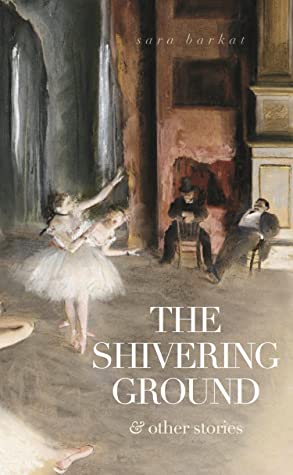
"The Shivering Ground & Other Stories" by Sara Barkat


The Shivering Ground & Other Stories
 may be one of the most unusual collections of short stories I’ve read. These 11 stories by Sara Barkat defy classification. They might be literary, science fiction, alternative, speculative, dystopian, or something else. Every time I tried to define them, they slipped away and then around and laughed at me. 

Whatever the genre, the stories are all good ones. Fascinating ones, in fact.


“The Door at the End of the Path” is ostensibly about a door in a garden and the little girl who wonders what’s on the other side. But it becomes a metaphor for something else entirely. “Conditions” is about a man and the sister he hates more than anyone in the world. “The Mannequin” is just that – a mannequin, which stands dusty in a corner and contains the narrator’s heart. 


In “Brianna,” the title character is seeking a kind of escape, depending upon her brother orfriend or relative Peter to design an airship. “Noticing” is a bird story, told from the birds’ perspectives. “The Day Before Tomorrow” is a dystopian story, as two girls watch the gradual but relentless encroachment of a “mass of dark buzzing:” containing the “sound of waves.” It’s a phenomenon no one talks about, but it’s getting closer. 


Sara Barkat

The title story, “The Shivering Ground,” is a futuristic (or perhaps not) story about a man guarding a captured Solenoid, a creature whose people have waged war against humanity for a long and vicious time. And jailer and jailed are beginning to understand each other.


Barkat is the author of The Midnight Ball and The Yellow Wall-Paper: A Graphic Novel. She also worked with Tania Runyan in a collaboration for How to Write a Form Poem: A Guided Tour of 10 Fabulous Poems. A writer for Poetic Earth Month, she lives near the Hudson River in New York. 


The stories of The Shivering Ground are dark, often dystopic and apocalyptic tales. Common themes course through them: environmental concerns, broken relationships, and a sense that what we know is ending, and how we cling to that familiarity even when it should be abandoned. These are provocative and thought-provoking stories, placing the reader on the edge between the familiar and the unknown.


Related: The Midnight Ball by Sara Barkat.

Monday, November 29, 2021

"The Midnight Ball" by Sara Barkat


It’s a few minutes after 12 p.m., and Little Song has received an invitation – a special invitation to a midnight ball. Because it will take all day to get to the ball, she immediately hops on her bike and sets out. 

It’s an eventful ride. At very precise times, Little Song meets a host of characters as she pedals along. And being the kind of person she is, she stops and chats. And, of course, each character she meets wants to go to the ball, too. There’s a mouse, a dragonfly, a snake, a frog, a cat, a rabbit, a crow, a spider, a wolf, a moth, a bat (you can tell it’s getting late), and an owl. Ad each brings something along for the ball. But with all the visiting, time is running out.


The Midnight Ball
, written and illustrated by Sara Barkat, is the children’s story of Little Song, her journey, and the friends she meets. It’s also a story about the clock and keeping time. And it’s a sheer delight of a tale (although I got worried when I saw the wolf join the group).


Barkat is the author of The Shivering Ground & Other Stories and The Yellow Wall-Paper : A Graphic Novel. She also worked with Tania Runyan in a collaboration for How to Write a Form Poem: A Guided Tour of 10 Fabulous Poems. A writer for Poetic Earth Month, she lives near the Hudson River in New York. 


Part of The Beautiful Math Series, The Midnight Ball is all the things you expect a good children’s story to be, including the beautiful illustrations.


Top illustration: The spider in The Midnight Ball.