Showing posts with label novella. Show all posts

Wednesday, August 19, 2026

Some Wednesday Readings - Aug. 19, 2026


The Joy of Baseball – Daniel Darling at One Little Word. 

Know your rights as an author and don’t get scammed – Nathan Bransford.


Submerged memory: C.S. Lewis and the art of forgetting – Henry Oliver at The Common Reader.


Remembering Blaise Pascal’s Night of Fire – Emily Kleinhenz at The Imaginative Conservative.


On the third day: On the religious illiteracy of college students – The New Criterion. 


Child – poem by Sonja Benskin Mesher.


Britain: How taboos have stifled truth – Guy Dampier at The Critic Magazine.


Short Story, Deep Treasures: Biblical Allusion in “The Gift of the Magi” – John Savoie at Literary Matters.


Flashback: The Uses of a Novella – my post at the American Christian Fiction Writers blog.


Painting: Blaise Pascal about 1691.

Sunday, September 22, 2024

"Death and Papa Noel" by Ian Moore


In a small town in France, transplanted Englishman Richard Ainsworth operates a bed-and-breakfast inn. It’s Christmas, and there are no guests, so he’s looking forward to a long holiday of binging on his favorite movies. 

His plans are not only upset but incinerated with the arrival of Valerie d’Orcay, a private detective who is currently on a most unusual mission. She’s representing a dead person, attempting to identify who perpetrated the murder. And she’s enticed a group of suspects to meet at Richard’s B&B to play a mystery game, with clues scattered around the town. Richard himself gets to play Papa Noel, or Father Christmas, at least until he realizes that the costume is about three sizes too small. Her goal: determine who killed her client.


Ian Moore

It's a generally unlikeable group, and no one divulges their real name. Instead, they use the name assigned to them by d’Orcay, Like Madame Rouge and Monsieur Vert (the detective has a penchant for using colors for the names of suspects). And then the mayhem and the comedy begin.


Death and Papa Noel by British author Ian Moore is that story of 

mayhem, comedy, murder, and flushing out the killer. It’s funny, but in the British sense of the word. Quite a few of the lines sound like a comedy sketch, and that reflects Moore’s career as a comedian. The story is novella in length, a rather quick and rather fun read.


Moore has published several short mysteries in this series, including Death and Croissants, Death and Fromage, and Death at the Chateau, as well as The Man Who Didn’t Burn, the first in the Juge Lombard thriller series. Moore is also a standup comedian and chutney maker. He lives in France.


Some Monday Readings


Writing Tempest: John Haley’s Soundbite Wins the Title – Chris Mackowski at Emerging Civil War.


A Word About (Book) Dedications – Sophie Masson at Writer Unboxed.


Magnetic – artwork by Sonja Benskin Mesher.


Church Visits and Garden Walks – James Stevens Curl at The Critic Magazine reviews A History of English Churches in 100 Objects by Matthew Byrne.


Things Worth Remembering: ‘A Time for Choosing’ – Douglas Murray at The Free Press.

Tuesday, June 25, 2024

Honeybees, Death, Grief, and Life: “The Honey Field” by Laura Boggess


Years ago, my company hired an expert on bees. Concern had been expressed about one of our product’s effect on bees and bee colony collapse was a general issue. I spent considerable time with this expert on work projects, and I learned, among many other things, that honeybees came from Europe, that Missouri is home to some 75 different kinds of bees, that most bees live in the ground, that commercial beekeepers transport hives for pollination of crops like almonds in California, and what I should plant in my home garden that bees would like. 
 

Our beekeeper expert became a good friend. And I was inspired to plant Monarda, commonly known as bee balm. It’s a member of the mint family, and it spreads like mint, so you have to manage it. And I found myself spending considerable time watching it attract bees – four different kinds, in fact, two of which were easy to identify – bumble bees and honeybees. The other two were small, almost tiny, and you had to get close to see that they were indeed bees, not gnats.


The Honey Field by Laura Boggess is about bees, too, but it’s also about much more. Of novella-like length, it’s a story of death and grief, illness and healing, and life and love. And food, including a few recipes. And bees, honeybees to be precise, occupying several hives in a semi-rural area.

To continue reading, please see my post today at Tweetspeak Poetry.

Some Tuesday Readings


“Hyla Brook” by Robert Frost – Sally Thomas at Poems Ancient and Modern.


Wordsworth’s “Excursion”: 1 and Wordsworth’s “Excursion” 2: The Ruined Cottage – Adam Roberts at Adam’s Notebook.


Reaching for Something Beyond: Father Ian Ker and The Catholic Revival in English Literature 1845-1961 – Dermot Quinn at The Imaginative Conservative.


A pair of sonnets for St. John the Baptist – Malcolm Guite.


The Poetry Club: Bookmark It – Tweetspeak Poetry. 

I Shall Return – poem by Claude McKay at Every Day Poems.

Thursday, May 2, 2024

"A Novel Way to Kill" by Benedict Brown


Eighteen-year-old Christopher Prentiss is visiting his grandfather, retired Scotland Yard Superintendent Lord Edgington. An unexpected invitation arrives, one marked urgent, from the Shipley sisters, who live in Suffolk. The three are well-known, except to young Christopher. One writes historical biography, one is a mystery novelist, and the third (and youngest) is a travel writer.  

The invitation doesn’t explain the urgency, but Lord Edgington and Christopher quickly pack up and head to Suffolk.


The three, now in their 50s and 60s, live together with their elderly father at the large family estate. Only the youngest is married. The conversation at dinner still doesn’t explain the urgency, but it does focus on how to commit the perfect crime. When old Mr. Shipley is found dead the next morning, seemingly having fallen from a window during the night, Lord Edgington quickly sizes up the situation. It was no accident, and it was definitely murder.


A Novel Way to Kill is a novella in this 1920s Lord Edgington series by British author Benedict Brown. It falls about halfway in the (so far) 12-book series, the twelfth being the recently published The Puzzle of Parham House. The story told in the novella is essentially a murderer testing how much the great Lord Edgington still knows about the business or murder. It’s a rather fun read, and a quick read.


In addition to the Lord Edgington stories, Brown has written seven Izzy Palmer mystery novels and three novellas. A native of south London, he lives with his family in Spain. The Lord Edgington mysteries are likely aimed at both the general reader as well as the young adult audience. And they’re well-researched stories, full of information about the mid-1920s.


Related:


Murder at the Spring Ball by Benedict Brown.


A Body at a Boarding School by Benedict Brown.


The Mystery of Mistletoe Hall by Benedict Brown.


 Death on a Summer’s Day by Benedict Brown.


The Tangled Treasure Trail by Benedict Brown.


The Curious Case of the Templeton-Swifts by Benedict Brown.


The Crimes of Clearwell Castle by Benedict Brown.


The Snows of Weston Moor by Benedict Brown.


What the Vicar Saw by Benedict Brown.


Blood on the Banisters by Benedict Brown.


A Killer in the Wings by Benedict Brown.


The Christmas Bell Mystery by Benedict Brown.


Some Thursday Readings


On the Invention of M. Dupin – Olivia Rutigliano at CrimeReads.


‘France! à l’heure où tu te prosternes’ (1853) by Victor Hugo – Adam’s Roberts at Adam’s Notebook.


The State of the Crime Novel, Part 1: The Writing Life  and Part 2: The Future of Crime Writing – Molly Odintz at CrimeReads.


“Confused about the Ivy League,” poem by A,M Juster – Joseph Bottum at Poems Ancient and Modern.


Tuesday, June 20, 2023

A TS Classic: “The Picture of Dorian Gray” by Oscar Wilde


It’d been years, well, decades, in fact, since I read The Picture of Dorian Gray by Oscar Wilde. I knew the basic outline of the story. A young man permanently retains his youthful appearance while his portrait assumes the countenance of his dissipated, depraved life. The tale is well known enough to have entered popular culture almost as a theme.  

Several different film productions (including 1945, 1973, 2009, and 2021) likely helped, too. In the 1945 movie, Hurd Hatfield played Dorian Gray; the cast included a young Angela Lansbury, George Sanders, Donna Reed, Peter Lawford, and Sir. Cedric Hardwicke. The 1973 version starred Shane Briant in the title role and added several characters not in Wilde’s story. The 2009 version starred Ben Barnes as Dorian; Colin Firth and Ben Chaplin also had major roles. In the 2021 film, Fionn Whitehead plays the title role.


To continue reading, please see my post today at Tweetspeak Poetry


Some Tuesday Readings


A poetry showcase: some republished poems by Nigel Kent – at Fevers of the Mind (H/T: Paul Brookes). 


The New Remorse – Oscar Wilde.


“Distant Thoughts from Nearby” and “Bathtub Madonna” – poems by C.B. Anderson at Society of Classical Poets.


Western media helped Soviets cover up the Katyn Massacre – Peter Pomerantse at The Spectator.

Monday, May 29, 2023

“The Wonderful Visit” by H.G. Wells


H.G. Wells (1866-1946) is best known for his science fiction stories, like The Time MachineThe Island of Dr. MoreauThe Invisible Man, and the story Orson Welles made famous on radio (which terrified the listening audience), The War of the Worlds. But Wells wrote far more, including a curious novella called The Wonderful Visit

People living near the Sidderton Moor in rural England begin reporting the sighting of a strange bird. It seems suffused with light, and the bird is typically seen at night. Occasional sightings are reporting, and the local Vicar of Sidderton, a hunting enthusiast, decides he’s going to find and bag this strange bird.


The Vicar is successful, at least to some extent. He wings what he thinks is the bird, only to discover he has wounded an angel.


Mortified by his action, the Vicar (who remains unnamed) brings the angel home to recover. The angel goes by the name of Thomas, and he presents the first shock to Victorian sensibility by appearing in his very slight angel clothes before a group of women meeting at the Vicar’s house. Thomas is a beautiful creature, and the women at first believe the unmarried Vicar has brought an unescorted and scantily clad woman to his house.


H.G. Wells

Other encounters ensue. The villagers grow increasingly incensed, not only by Thomas himself but also the Vicar. What is the clergyman thinking here?


What the story of the Vicar and Thomas the Angel allows Wells to do is offer a humorous if rather biting commentary on how different people would react to experiencing an angel in their midst. The story was published in 1895, at the very pinnacle of Britain’s empire and worldwide influence.


Wells published more than 50 novels and numerous short stories. He’s been called “the father of science fiction,” but fans of Jules Verne might disagree. He was well known for his socialist and pacifist views. He was also something of a futurist and foresaw such technological developments as space flight, nuclear weapons, satellite television, aircraft, and even something resembling the worldwide web. His literary influence was extensive, not only in science fiction circles with such writers as Isaac Asmiov, Ursula LeGuin, Frank Herbert, and Ray Bradbury, but also with literary writers like Vladimir Nabakov, Sinclair Lewis, and Jorge Luis Borges.


The Wonderful Visit is still great fun to read with a bit of social commentary. And it makes one think of how people in our own time might react to having an angel in their midst.

Tuesday, December 28, 2021

Some Light and Dark Holiday Reading


Holidays are a good time to catch up on reading – and here are two short works that make some light and dark reading. 

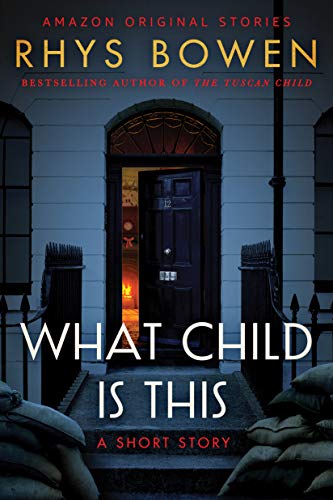
What Child is This by Rhys Bowen

What Child is This, a novella by Rhys Bowen, is the story of Jack and Maggie, a young couple who live in London’s East End. It’s Christmas Eve, 1940, the Blitz is on, and German bombers decide to bring an extra Christmas present. Jack and Maggie flee their home when an incendiary bomb is dropped on the block, and they lose everything. She wants to go her sister’s farm in the country, but Jack has to stay near the docks, where he works and is exempted from military duty because of his protected status.


Virtually penniless, then find themselves in London’s West End near Hyde Park, until Jack discovers a nearby home with the front door wide open. The block is deserted, no one’s in the house, so they make themselves at home is what is a very posh place. And then a little boy wanders downstairs and asks if they’re burglars. It’s a Christmas-time story, overlaid by the tragedy of wartime and loss.


Bowen is a bestselling author of more than 40 novels. Her novel The Tuscan Child has sold more than a million copies, and her works have been translated into numerous languages. She’s received several awards for both her mystery books and her historical novels. A transplanted Brit, she lives in California and Arizona. 


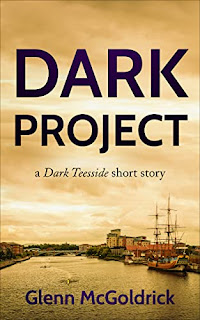
Dark Project by Glenn McGoldrick


For a darker (and shorter) story, British author Glenn McGoldrick has published his latest story in the Dark Teesside series, Dark Project


Brian is the type of work colleague who seems to blend into the background. He’s known as “Boring Brian,” and it seems that women don’t find him very interesting, either. He had dated Jane, one of his fellow workers, for a time, but she lost interest or just stopped responding to him. 


He follows the news, and he’s currently following the disappearance of a man well-known to police for his drug and assault offences. The police believe the disappearance is gang-related, by Brian knows better. Dark Project is one of those stories that has you looking over your shoulder.


Writing since 2013, McGoldrick specializes in short stories. He’s worked for both land-based casinos and cruise ships for a time, basing many of his stories on those experiences. His stories are dark, gritty, often involve a twist, and inevitably open insights into the human psyche. And his characters run the gamut of good, bad, and something in between, and often find themselves moving far beyond the boundaries of acceptable behavior. He lives in northeastern England. 


Related:


“Yellow Feet” by Glenn McGoldrick.


Three New Dark Stories by Glenn McGoldrick.


“Six Down,” “Somewhere in England,” and “Dark Progresion” by Glenn McGoldrick.


 4 Stories by Glenn McGoldrick.


3+ Stories by Glenn McGoldrick.


Five Mysteries: 2 Short Stories, 2 Novellas, and a Long Story.


The Dark Stories of Glenn McGoldrick.


Watching Crows by Glenn McGoldrick.

Thursday, October 21, 2021

"Death the Halls" by Adam Blumer


This is one Christmas that doesn’t go exactly as planned. 

Lauren Henry is arriving at her family’s cabin, preparing to celebrate Christmas. 

With her are her mother and grandmother; Lauren and her grandmother are barely on speaking terms after a spat. Soon to arrive are Lauren’s father and her boyfriend, veterinarian James Coleman, who’s meeting the family for the first time.


At the cabin, the three women discover intruders. Within minutes, Lauren’s mother and grandmother are lying on the kitchen floor, shot and presumably dead, while Lauren is speeding down the mountain on a snowmobile, a killer’s arms holding on to her waist. And the man claims to be her brother.


Adam Blumer

Death the Halls
 by Adam Blumer is a Christmas novella that you don’t want to start reading as you prepare to go to bed. You’ll want to find out what happens next, and so you keep reading. 

And you just may get yourself wired enough to have a sleepless night.


Adam is the author of Fatal Illusions, The Tenth Plague, and Kill Order. A print journalism major in college, he works as a novelist and freelance writer and editor after serving in editorial roles for publishers more than 20 years. He was the editor for my first two novels, Dancing Priest and A Light Shining. Adam lives in Michigan’s Upper Peninsula with his family.


Death the Halls has a bit of romance in it, but it is more a combined thrilled and mystery. It may not get you into the Christmas spirit, but it’s definitely an entertaining read.


Related


Talking about The Tenth Plague.


Adam Blumer’s Fatal Illusions


Talking to Adam Blumer about Kill Order.

Monday, September 13, 2021

“A Study in Stone” by Michael Campling


Dan Corrigan is taking advantage of his sister’s office to spend some time at her cottage in Embervale in Devonshire. He needs some serious downtime from his work in London, and he might possibly need to leave it behind permanently. Embervale is not easy to find, but he manages. And he discovers that the cottage has none of the modern amenities, like wifi.  

But he does meet a nice neighbor, Alan Hargreaves, a teacher and writer. Together they eventually find what Dan considers a decent coffee shop in nearby Exeter. And the owner tells them the story of the spring behind the shop. Covering the spring is a stone with a coded message – and no one has ever been able to crack the code. 


Dan and Alan set themselves to the challenge, and they’ve soon figured it out. But the owner is not only uninterested but downright hostile. And the two neighbors begin a search for the story behind the stone, which will take them back to World War I.


Michael Campling

A Study in Stone
 is the first in the Devonshire Mysteries by British author Michael Campling. It’s an intriguing story in that it has no murders, no violence, and no crimes whatsoever. What it offers is a mystery engraved on a stone.


Campling is the author of four books in the Devonshire Mysteries series: A Study in StoneValley of LiesMystery in May, and Murder Between the Tides. He’s also published numerous works of science fiction. 


A rather quiet story, A Study in Stone is nonetheless an engaging tale of secrets from the past, a family in turmoil, and an even a family would prefer to see left buried.

Wednesday, September 1, 2021

"Healed" by Dean Skinner


What a life!  It’s been one disaster after another for this man. One physical problem after another. Sometimes it’s an accident. Other times he’s been afflicted by things others have done. Everything he touches seems to turn to ashes. 

But for three years, he’s been a Christian, and he’s been holding on to his faith. So far, the disasters haven’t stopped. He talks with a priest, Father Harry, and the talks seem to help. But Father Harry knows more than he’s saying, and he knows more about the man than the man knows himself.


The man’s name is Job. And yes, his story, Healed by author and artist Dean Skinner, is a retelling of the biblical story of Job. It’s missing the three so-called friends of the biblical book, and a figure in a hooded sweatshirt whose face is never seen but whose activities are out-and-out evil clearly plays the role of Satan. But Healed is the story of Job, told in a contemporary setting and a contemporary way (including considerable profanity).


Dean Skinner

The story excels at making the reader understanding experience Job’s very personal and very private pain. At times, the reading almost hurts.


Skinner had had a 20-year career in advertising when, after a serious bout with depression, he returned to a love of painting in 2012. His work has been displayed in numerous galleries and exhibitions. He has also published two novellas, Broken and Paths. He lives with his family in Cleveland. 


One question keeps arising in the reader’s mind. We know how the biblical story ends, but will Healed end in a similar way? We’re kept guessing until the end. It’s a good story, a story of a man dealing with intense pain and almost horrible circumstances. And it’s a story that affirms life.

Monday, August 9, 2021

"The Turn of the Screw" by Henry James


Many consider The Turn of the Screw by Henry James to be one of the best, if not the best, ghost stories. The novella was first serialized by Collier’s Magazine in 1898; reading it today is to read a classic gothic horror story. James, apparently, needed money, and he deliberately wrote a story he was confident would sell. It did. And it did more than sell. 

The Turn of the Screw influenced Joseph Conrad when he wrote The Heart of Darkness. Numerous movies based on the story have been made. It inspired Benjamin Britten to write an opera. And the story has been told and remade over and over again by many authors, including Joyce Carol Oates. 


The novella is a kind of story-within-a-story. A group of people celebrating Christmas Eve in an old house are talking about ghost stories. One, a man known only to the reader by his first name, Douglas, says that he has a manuscript given to him some 20 years previously by a woman when she died. The others convince Douglas to send to his home to get it, and it arrives the next evening. 


Douglas begins to read the story which begins straightforwardly enough. A young woman is engaged to be a governess to a niece and nephew left in the charge of their uncle, their parents having died in India. The boy is usually at school; his sister lives at the uncle’s country home, called The Bly. The man sets one unusual requirement: the new governess is not to contact him about the children, for any reason whatsoever. She travels to the home, which is quite large, old, and rebuilt and added onto many times.


Henry James

The first problem is that a letter arrives from the boy’s school; he’s being “sent down,” or expelled. The cause isn’t specified. After meeting the boy, the governess can’t imagine what might have happened, and she decides to ignore it, for the time being. The second problem is that she begins to see a man around the house, looking in a window from outside or near the house itself. When she describes the man to the cook, the cook is shocked. It is the description of a particularly nasty valet who once worked there. The problem is that the man is dead. Not too long after, a second person is spotted, that of a woman, the former governess, who also had died. And what the governess comes to realize is that the two apparitions want the children.


Or do they? Could it be a case of the governess having an overactive imagination? Is she possibly suffering from a mental illness? 


James (1843-1916) is considered as having been one of the best novelists writing in English His works include The AmbassadorsPortrait of a LadyWings of the DoveDaisy MillerThe Bostonians, and Washington Square, and he published numerous short stories, novellas, plays, biographies, and criticism. Critics point to James as the transition between the Realist School and Modernism.


The word most frequently used in describing The Turn of the Screw is “ambiguity.” A major reason the story leaves so many readers unsettled is that it never really answers the question of ghosts versus madness. But that is its genius; it is a horror story regardless of which interpretation is accepted.

Wednesday, December 23, 2020

Christmas Romance Novellas (Part 1)


The novella is a popular form for romances of all types. It introduces readers to a writer; it’s less expensive (and a less expensive risk) if you’ve never encountered the writer before. It can serve as a promotion for a series or a standalone novel.  

And the novella form seems to proliferate in the Christmas season. Its popularity at this time of the year is likely due to several factors, including the romance we often associate with Christmas, a shorter from is easier to digest during the busy season, and a short-form work of fiction offers a nice escape from gift buying, decorating, food preparation, and all of the other “events” of the Christmas season. And if it’s a novella and a romance, it has to have a happy ending – and this year, of all years, it’s nice to escape to something (or anything) with a happy ending. 


If the past few weeks, I’ve binged on Christmas novellas. Part of the reason was a few happened to come my way almost by accident, a few showed up as promotions, and more than a few showed up from a publisher’s promotion. Today and tomorrow this week, and for two days next week, I’ll be doing short reviews of only a few examples of what’s available. Here are five.


In Mary’s Christmas Surprise by Carol James, Mary Sherman returns unexpectedly to her parents’ home after her fiancé has broken their engagement. What was expected to have been a celebratory Christmas in Colorado has become something more like ashes on the hearth. Her parents are traveling, and she expects to be alone with the family dog. Except for Jake Wolesky, a carpenter who is renting a room from the Shermans until he finds a place to live. 


Mary hears someone moving around the house in the middle of the night and calls the police. It turns out the police know Jake very well – the officers work in his carpentry shop and share a Bible study with him.  The story has a cute premise and is an entertaining read.


Redeeming Christmas, also by Carol James, involves romance writer Olivia Slootsky (whose pen name is Olivia St. Madeleine) doing what she does best – watching people to invent stories for them and insert new characters into her books. One she spots buying perfume is Gabe Winter, whom she imagines to be an undercover copy, single dad, and half a dozen other things. Gabe turns out to be her grandmother’s new neighbor, and it’s clear that one thing is going to lead to another. It’s Christmas time, and Olivia’s grandmother is going to make sure Gabe is at their house. A lot. It’s a fun story.


Penny’s Yuletide Wish
 by Sally Britton is a historical romance novella set in a small town in Regency England. Robert Ellsworth and Penelope Clark had been inseparable childhood friends, until Penny’s parents died, and she and her brothers moved away to live with relatives. She and her aunt are visiting, staying with a local family for the Christmas holiday. Robert is an estate manager, feeling the sting of the class structure which places him far down the social ladder.


Penny, for her part, believes she offers a poor prospect for marriage, having a relatively small dowry and no real social position. She and Robert gradually discover their mutual attraction through a series of dinners and balls. Britton does a good job of capturing the class consciousness of the period and as well as the historical detail. 


Dr. Noah and the Sugar Plum Fairy
 by Carla Rossi might have a title that raises eyebrows, but it is a funny story; Rossi has a gift for comic dialogue and a ditz of a character in Jane Trumbull. Jane brings an ailing cat to the emergency vet service. Expecting to see her usual veterinarian, she’s surprised to a different vet, young Noah Barron. They strike up a friendship, and Dr. Noah (which is what Jane calls him) learns that Jane by choice takes a back seat to her sister’s ballet dancing. The Local production of The Nutcracker is imminent, and the sister gets the flu. Jane’s ballet opportunity happens simultaneously with a growing romance with Dr. Noah.


Time’s Arrow
 by Clare Revell is a time travel romance. Jonni Peterson is housesitting while friends are on their honeymoon. It’s a big old pile of place, and the friends have hereditary titles. She’s quit her job because of the pressure exerted by her boos to become something more than an employee and a girlfriend. She goes out for a walk one snowy evening and finds herself run over by a horse and carriage.


Lord Sebastian Tyler, third Earl of Elton, is being driven home with his sister and mother when the coachman pulls up short. A young woman has been trampled and is lying unconscious on the side of the road. The Tylers take her home, noting how strangely she’s dressed, wearing pants like a man. When Jonni awakens, she learns she’s now living in the year 1841, and a considerable part of the plot centers on the differences between the 19th and 21st centuries and how Jonni will get back to her own time. That’s assuming, of course, she decides that what she wants to do. The story is fun romp set in the early Victorian period.


Tomorrow: Christmas, Suspense, and Romance.


Top photograph by Julia Bonilla via Unsplash. Used with permission.

Monday, November 9, 2020

"The Adventure of the Beryl Anarchists" by Craig Stephen Copland


It’s 1912, Dr. Watson in 59 and Sherlock Holmes is 57. And in pursuit of their next case, both men are going to utilize a newfangled machine called the motorcycle. 

In The Adventure of the Beryl Anarchists by Craig Stephen Copland, Holmes and Watson are consulted by a private banker. The man’s records have been stolen from the safe in his home, and they contain an account of all payments made by customers – including payments made to keep certain people quiet about everything from affairs to bribery. Some of the leading names in Britain could be threatened by blackmail.


And as expected, the first attempt to extort money goes to a lord and lady rather notorious for their dalliances. The titled pair laugh it off, believing the publicity will be fantastic for their upcoming tell-all book (it is). The second attempt includes a kidnapping, and it goes seriously wrong.


Craig Stephen Copland

The trail to the culprit, or culprits, will lead through the banker’s own family, to veterans of the Boer War, a motorcycle club, and even to a boy scout camp-out. It’s a thrilling tale with an exciting, cliffhanger-type of ending.


Copland is a longtime fan of Arthur Conan Doyle’s Sherlock Holmes. After he retired, he set himself a goal of writing a new Sherlock Holmes mystery related to and inspired by each of the 60 stories published by Conan Doyle. He’s also written monographs on Holmes and two non-Holmes mystery stories featuring a detective in the Old American West, the Reverend Ezekiel Black. He currently lives and writes in Toronto, Buenos Aires, New York, and the Okanagan Valley in British Columbia. 


The Adventure of the Beryl Anarchists is a tale of revenge, outrage, and outright evil, with Holmes and Watson receiving last-minute help from a completely unexpected source. The emphasis is less on Holmes’s thinking and detective skills and more on an action-packed story.


Related:


New Sherlock Holmes Stories by Craig Stephen Copland.


Five Mysteries: 2 Short Stories, 2 Novellas, and a Long Story