Showing posts with label best books. Show all posts

Wednesday, December 7, 2022

Books I'm Not Recommending for Christmas


It’s my annual list of books I’m not recommending for Christmas. I’ve always felt particular about the books I buy and read; I assume most other people share that sentiment. So, I don’t tell people what they should buy; instead, I cite the books I enjoyed most this past year. 

My reading changed considerably this year, as I began to read and research the American Civil War. Some really fine books on the subject were published this year, and I read only a few. I also read several that were published years ago. 


Here’s the list of books I read in 2022 that I’m not recommending. (I stumbled across a few books I wouldn’t recommend under any circumstances; yes, they were that bad. But I never finished them, and they’re not included.)


Art


Rembrandt is in the Wind: Learning to Love Art Through the Eyes of Faith by Russ Ramsey.


Fiction


History of the Rain by Niall Ferguson.

Alexandria by Paul Kingsnorth.

Above the Rain by Victor Del Arbol (there must be something about rain that attracts me).

Brisbane by Eugene Vodolazkin.

The Lost Tales of Sir Galahad, by various authors and published by The Rabbit Room.


Poetry


The Joseph Tree by Isabel Chenot.

Drinking Guinness with the Dead by Justin Hamm.

Tornado Drill by Dave Malone

Vinegar City by Colm Toibin.

As Folktaleteller by Paul Brookes.


Two [poetry anthologies I really liked were Poets of the Civil War, edited by J.D McClatchy, and 

Christian Poets in America Since 1940, edited by Micah Mattix and Sally Thomas.


Literary Criticism


In the House of Tom Bombadil by C.R. Wiley.

Dickens and the World in 1851: The Turning Point by Robert-Douglas-Fairhurst.


History


The Army of the Potomac Trilogy by Bruce Catton (Library of America).

Hearts Torn Asunder: Trauma in the Civil War’s Final Campaign in North Carolina by Ernest Dollar Jr.

Ends of War: The Unfinished Fight of Lee’s Army After Appomattox by Caroline Janney.

The Battle of the Wilderness May 5-6, 1864 by Gordon Rhea (published in 1994).

Hell Itself: The Battle of the Wilderness by Chris Mackowski.

The Last Road North: A Guide to the Gettysburg Campaign by Robert Orirson and Daniel Welch.


News Media


Bad News: How Woke Media is Undermining Democracy by Batya Ungar-Sargon.

Terms of Service by Chris Martin.


Mystery


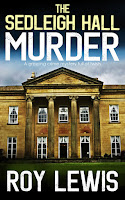
I read a lot of mystery stories. And I’m always happy to find a new mystery author and series. I read a number of mysteries by Roy Lewis. I loved his Eric Ward series and really liked his Inspector John Crow series. The series I’m reading now, featuring a local planning officer named Arnold Landon, may end up being my favorite. 


Five Decembers by James Kestrel (won the Edgard Award for best mystery and deserved it).

Death at Whitewater Church by Andrea Carter.

A Death in Jerusalem by Jonathan Dunsky.

A Fatal End by Faith Martin.

Murder on the Oxford Canal by Faith Martin.


Biography / Memoir


Making Darkness Light: The Lives and Times of John Milton by Joe Moshenka.

Dorothy and Jack: The Transforming Friendship of Dorothy L. Sayers and C.S. Lewis by Gina Dalfanzo.

Ghost of the Hardy Boys by Leslie McFarlane.

Savage Gods by Paul Kingsnorth.

Eliot After ‘The Waste Land’ by Robert Crawford.


Faith


Dream Small by Seth Lewis.

The Rise and Triumph of the Modern Self by Carl Trueman.


Top photograph by Henry Be via Unsplash. Used with permission.

Friday, December 6, 2019

Best Books I'm Not Recommending for Christmas - 2019 Edition


For quite a few years now, I’ve posted a list of books I’m not recommending books for Christmas. My reason for “not recommending” is that I’ve always considered book-buying to be a personal decision, best left to the reader. But I do like to highlight the best of what’ve read during the year, as much as for myself as for others. This list is always a reminder of what helped to guide me and shape me during the previous 12 months.

It’s also a way to see just how out-of-step I am with the general culture. The past weekend, the St. Louis Post-Dispatchpublished its list of its (or the book editor’s) 25 favorite books of 2019. I read two of the 25 – A Better Man by Louise Penny (what’s not to like about Inspector Gamache?) and The Long Call by Ann Cleeves – both mysteries. I can agree on Louise Penny, but the new Ann Perry book was disappointing. At the end of the Post-Dispatch article, they list best or favorite books from Publishers Weekly and a host of local booksellers. I hadn’t read any of those, either. I must be a real cretin. Or countercultural. Or both.

What’s nice about this year’s list was how difficult it was for me to select one book in each category. I read a lot of really good books, so if a work is noted at all, it means I really, really liked it or loved it as well. 

Children’s Books

I surprised myself here. Except for books I’ve read to my grandsons, all of the children’s books I read this year are by British authors. The best include a traditionally-told story, Poppy Field by Michael Morpurgo (he of War Horse fame); a wonderfully written but horrifying tale in The Boy in the Striped Pajamas by John Boyne;  and three rather strange ones: The Boy Who Hit Play by Chloe Daykin, The 1000-Year-Old Boy by Ross Welford, and Boom! by Mark Haddon (which made me laugh out loud). My nod for best goes to The 1000-Year-Old Boy; the story captured me on page one and never let go.

Mysteries

I’ve been reading (and buying) mystery stories since I was six years old, and I’ve never outgrown them. (T.S. Eliot loved mysteries, too, so I’m in good company.) Louise Penny published the afore-mentioned A Better Man; she hasn’t written a bum one in the entire Inspector Gamache series. Magpie Murder by Anthony Horowitz was amazing – a book within a book within a book. The British Library keeps publishing its Crime Classic Series, and they’re all good stories. I read two by Jonathan Dunsky – A Debt of Death and The Dead Sister – that reinforce my admiration for Israeli noir. The Eric Ward series by Roy Lewis, first published in the early 1980s, are being republished, starting with The Sedleigh Hall Murder. And I discovered two new police detectives – Scott Hunter’s DCI Brendan Moran and Keith Moray’s Torquil Mackinnon – which I thoroughly enjoyed. 


My choice for best is a tie – Dunksy’s A Debt of Death and Lewis’s The Sedleigh Hall Murder, which are as different as night and day. The first is about an Auschwitz concentration camp survivor who is a private detective in 1950s Tel Aviv, and the second other an attorney gradually going blind from glaucoma in 1980. I’ve now read all of Dunsky’s books (another one is coming soon) and the first four of Lewis’s (with a bunch more being republished), so I’m a happy mystery reader.

History

My reading of history books was less in 2019 than last year, but I read some really good ones. Dominion by Peter Ackroyd continues the author’s history of England series and covers the Victoria era. Andrew Delbanco’s The War Before the War is focused on the issues, people and events that led up to the American Civil War. The Pioneers by the American institution David McCullough studied the settling of the Ohio Territory. Justice on Trial by Mollie Hemingway and Carrie Severino is technically more “current affairs” and history; it addressed the confirmation hearings of Brett Kavanaugh for the Supreme Court. 

My choice for best among all of these really good books is McCullough’s The Pioneers; he tells history like few other Americans writing today. (And this book will not make the “best” list of virtually any mainstream media, for the simple reason is that it’s a traditional popular history which doesn’t bow the knee to the cult of victimization.) (It was still a best-seller.)

Biography and Memoir

Jean Moorcraft Wilson published a fine biography of poet and author Robert Graves, one of the World War I poets best known for his novel I Claudius. I read Kevin Belmonte’s Defiant Joy: The Remarkable Life and Impact of G.K. Chesterton; it was published in 2011 but I read it this year (which serves to point out that any of the books noted in this post were ones I read this year and were not necessarily published this year). Michael Brendan Dougherty’s My Father Left Me Ireland is as much a memoir as it is an exploration of a family history that wasn’t what the author had been taught it was. James Como’s C.S. Lewis: A Very Short Introduction is a wonderfully concise summary of his subject’s life and works. Ian Sansom’s September 1, 1939 is as much about Sansom as it is the poem that is its ostensible subject, by W.H. Auden. 

The Graves biography is excellent, but my choice for best biography I read this year is Belmonte’s Defiant Joy, which truly brings Chesterton to life.

Poetry

Poetry presented a a really tough choice for “best.” There were simply too many collections that I read that could qualify, like Joe Spring’s Let There Be LightSome Permanent Things by James Matthew Wilson, A Child’s Year by Chris Yokel, Deaf Republic by Ilya Kaminsky, Soft Launch by Aaron Belz, Bravery & Brevity by Edward Holmes, Justin Hamm’s The Inheritance, and Umbilical by Michael Spence. (I just noticed that all of these collections were written by men.)

I finally narrowed my list down to two, and both actually tell stories. Ali Nuri’s Rain and Embers is about the life of a family forced to flee Saddam Hussein’s Iraq, and Black Sunday by Benjamin Myers tells a highly creative tale of the Dust Bowl of the 1930s. 

Fiction

I read so much good fiction this year that it’s difficult to know where to start. Noah Hawley’s Before the Fall is a can’t-stop-reading novel about a man and a young boy who survive a plane crash. Paris in the Present Tense by Mark Helprin is a wonder, as is Akin by Emma Donoghue. Throw Me to the Wolves by Patrick McGuiness and Lanny by Max Porter are about our out-of-control media, shaming, and trolling culture. Where the Desert Meets the Sea by Werner Sonne is about the transition in Palestine to the new Israeli state. Mark Haddon’s The Porpoise is a blend of contemporary and Greek myth, an amazing feat of writing.

If I had to select one book that affected me the most and moved the most, it would have to be the story of an insurance adjuster named Will Phillips, it would be Adjustments by Will Willingham. It’s my favorite novel of the year.

Historical Fiction

I read more historical fiction this year, and the works fell generally into one of two categories – English history and Civil War history. I read two by Annie Whitehead that were excellent – To Be a Queen and Cometh the Hour, both set in Anglo-Saxon times. Gemma Lawrence’s The Bastard Princess was a riveting story of the young Elizabeth I. Soldier’s Heart by Michele McKnight Baker and A Stranger on My Land by Sandra Merville Hart were both well-told stories of the American Civil War. 

For best historical novel, I’d say it was Annie Whitehead’s To Be a Queen

Romantic Fiction

I know it’s strange – a guy reading romance novels. They’re generally quick, easy reads, and you can learn a lot from them if the stories you write involve romantic scenes. The standouts this year were Tender Love by Juliette Duncan, Bending Toward the Sun by Mona Hidgson, The Man from Yesterday by Florence Witkop, A Rose Blooms Twice by Vivkie Kestell, Falling for You by Leanna Morgan, and Homecoming by Carolyn Aarsen. 

Vickie Kestell’s A Rose Blooms Twice get my nod for best romance. It’s set in pioneering, sodbusting days, and it tells the story of both a woman who loses her entire family in an accident and two Norwegian brothers who bring their families to America to make a better life. And it’s the first in a trilogy, with the other two books just as good.

Faith

This is such a broad category that it could have several sub-categories. There were theology books like Church Reformed by Tim Bayly and Living the Dream? by Tristan Sherwin; practical living books like Living a Life of Yes by David Rupert; current affairs books like Who is an Evangelical? by Thomas Kidd and In Search of the Common Good by Jake Meador; and one that defies classification, The 21: A Journey into the Land of the Coptic Martyrs by Martin Mosbach.

The best book about faith that I read is also the best book I read about writing and creativity – Adorning the Dark by Andrew Peterson. It’s marvelous.

Photograph by Dakota Corbin via Unsplash. Used with permission

Saturday, December 13, 2014

Books I’m Not Recommending This Year – Part 2


Yesterday, I focused on describing the books of poetry nd books related to poetry or poets that I’m not recommending this year. Today, it’s books on faith, novels and general non-ficiton.

Which I suppose suggests I read a lot of poetry and books about poetry.

Which is true.

Faith

Wounded Women of the Bible by Dena Dyer and Tina Samples.

The Adam Quest by Tim Stafford.

Love Idol by Jennifer Dukes-Lee.

Refuse to Drown by Tim Kreider with Shawn Smucker.


Atlas Girl by Emily Weirenga.

The Annie Project by Joanne Norton.

Mortal Blessings: A Sacramental Farewell by Angela Alaimo O’Donnell

Slow Church by Christopher Smith, John Pattison and Honathan Wilson-Hartgrove.

Playdates with God by Laura Boggess.

Identity Crisis by Michael Perkins.

Fiction

The Sands of Ethryn by C.S. Lakin.

Remembering for Ruth by Sheila LaGrand.


How Sweet the Sound by Amy Sorrels.

Murder Underground by Mavis Doriel Hay.

They Shall See God by Athol Dickson.

The Late Scholar by Jill Paton Walsh.

The Dark Clue by James Wilson.


Non-Fiction

Stealing the Mystic Lamb by Noah Charney.


Monet by Carla Rachman.

The Yellow House by Martin Gayford.

Becoming Dickens: The Invention of a Novelist by Robert Douglas-Fairhurst.

Fierce Convictions by Karen Swallow Prior.


On Being a Writer by Charity Craig and Ann Kroeker.


Photograph of a print of Charles Dickens at his writing desk by Karen Arnold via Public Domain Pictures. Used with permission.

Friday, December 12, 2014

Books I’m Not Recommending This Year – Part 1


So it’s time for that annual list I compile of books I’m not recommending for Christmas. I don’t recommend them because I’m likely over-sensitive to buying (or suggesting) books for other people. However, I can get around the recommendation issue by simply listing those books I truly enjoyed but would never suggest to anyone that they read them.

Makes sense? (Not to me, either).

This year, I’m dividing the list into two parts. Today is poetry books and non-fiction books related to poetry or about poets; tomorrow will be books on faith, fiction and general non-fiction.

And here we go. (And note the number of books connected to the poets of World War I – 2014 was the centenary of the beginning the war.)

Poetry


Living in the Nature Poem by Mary Harwell Sayler.

View from the North Ten by Dave Malone.

Idiot Psalms by Scott Cairns.

The Wrecking Light by Robin Robertson.


American Psalm World Psalm by Nicholas Samaras.

The Abandoned Eye by J.P. Dancing Bear.

Caribou by Charles Wright.

Holy Luck by Eugene Peterson.

This Day by Wendell Berry.

Beowulf, translated by J.R.R. Tolkien.

In the Dark Before Dawn by Thomas Merton.

Poetry of the First World War, edited by Tim Kendall.

Upon the Blue Couch by Laurie Kolp.

Scape by Luci Shaw.

The Book of Goodbyes by Jillian Weise.

Glitter Bomb by Aaron Belz.

Once in the West by Christian Wiman.

All the Wasted Beauty of the World by Richard Newman.

Non-Fiction Related to Poetry or Poets


How to Read a Poem by Tania Runyan.


The Poet and the Vampyre by Andrew McConnell Stott.


Photograph by Vicky van de Kerckhoven via Public Domain Pictures. Used with permission.

Monday, December 12, 2011

Books I'm Not Recommending for Christmas


It’s that time of the year when I don’t recommend books for Christmas. Books have always been a personal thing for me, and I usually hesitate, and hesitate long, before I buy a book for someone else, unless they’ve expressed a desire for it.

That said, I can say there are a number of books I thoroughly enjoyed reading this year, and even though I’m not recommending them, I do think others – a lot of others – would enjoy them as well. They would definitely fall into the “best books I read in 2011” list.

One note: some of the titles below appeared first or only in their ebook versions. The industry is a-changing.

Fiction

Paradise Valley by Dale Cramer.

Lime Creek by Joe Henry.

Bright’s Passage by Josh Ritter.

The Emperor of Lies by Steve Sem-Sandburg.

The Devil’s in the Cows by Greg Sullivan.

The Opposite of Art by Athol Dickson.

Paper Angels by Billy Coffey.

Dancing Priest by Yours Truly (I had to include it, even though I’m biased)

Suspense

Maximal Reserve by Sam Batterman.

Darkness Follows by Mike Dellosso.

Nick of Time by Tim Downs.

Gravestone by Travis Thrasher.

Fantasy


Poetry

Neruda’s Memoirs by Maureen Doallas.

Delicate Machinery Suspended by Anne Doe Overstreet.

Underworld: the Modern Orpheus by Matthew Duggan.

Another Hotel Room (new edition) by Steven Marty Grant.

The Back Chamber by Donald Hall.

Saint Sinatra by Angela Alaimo O’Donnell

Why the House is Made of Gingerbread by Ava Leavell Haymon.

Kingdom Come by John Estes.

The 93rd Name of God by Anny Krugovoy Silver

Faith

One Thousand Gifts by Ann Voskamp.

All is Grace by Brennan Manning.


Discovering Advent by Mark Roberts.

Man Shoes by Tom Watson.


My Amish Roots by Shawn Smucker.

The Four Holy Gospels by Makoto Fujimura.
                                                     
Non-Fiction

Rumors of Water by L.L. Barkat.


Words Made Fresh by Larry Woiwide.


Photograph: Old Books by Petr Kratochvil via Public Domain Pictures. Used with permission.