Showing posts with label Constitution. Show all posts

Monday, May 30, 2022

"Power and Liberty" by Gordon Wood


Gordon Wood is the Alva Way University Professor and Professor of History Emeritus at Brown University. He’s won numerous prizes for his books, including the Pulitzer Prize for History for The Radicalism of the American Revolution. His area of focus is the American Revolution and the period of the early American republic.  

Wood is a good author to read in a time when so many calls are arising from the left-of-center to change the Supreme Court, do away with the Electoral College, repeal various constitutional amendments, and perhaps even rewrite the Constitution. His newest work, Power and Liberty: Constitutionalism in the American Revolution, tells the story of how the U.S. Constitution was actually born in the throes of the revolution itself, years before the Constitutional Convention of 1787.


Before the U.S. Constitution existed, the idea of written constitutions, especially in English history, was largely associated with governments. In other words, constitutions were all about governments and how they functioned along with customs, traditions, and common law. It was different in America. “By the end of the Revolutionary era,” he writes, “Americans had come to view a constitution as no part of government at all. It was a written document distinct from n superior to all the operations of government.” Instead, it functioned like a Bible, embodying the principles of government to be sure, but principles derived from the people.


Wood explains how this happened. Before the American Revolution, a debate emerged between America and Britain, which eventually became a debate with the British king. That debate culminated in the Declaration of Independence, which Wood calls “the most important document in American history.”


Gordon Wood

Constitutionalism was thriving during the Revolutionary War. The states were experimenting with a number of different approaches, and if something didn’t work, something else was tried. That constitutional ferment was reflected in the articles of Confederation, and it continued into the Constitutional Convention period. 


The slavery debate at the Constitutional Convention happened in the context of the debate over representation for both large and small states. Slavery was more prevalent in the southern states, but every state had its slaves. Wood includes a reminder that slavery had existed for thousands of years, but the idea of ending it received a major push during the revolution and early republic. He also points to the emergence of the judiciary as a separate branch of government, instead of an extension of royal or executive officers. And this period also inaugurated what was one of the most radical innovations ever – the demarcation between the public and the private. The distinctions between these two spheres did not exist at the time the Constitution was approved and implemented.


Power and Liberty is a relatively short (and highly readable) book – 188 pages of text, excluding notes, bibliography, and index. But it is an important book, important in that it helps explain what was happening at the time the Constitution was written, the vital developments leading up to it, and how it changed American (and the world) forever.

Wednesday, April 27, 2022

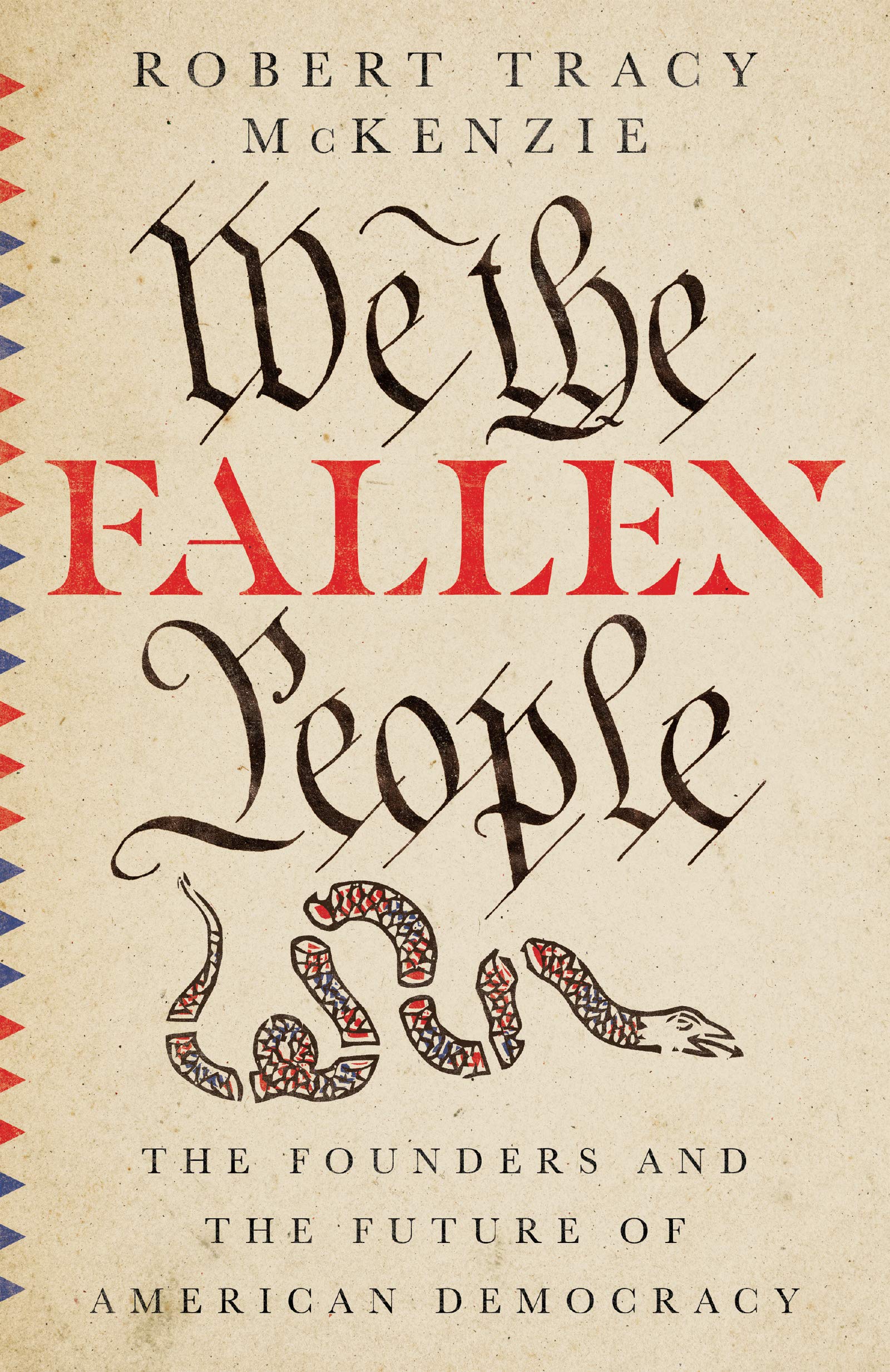
"We the Fallen People" by Robert Tracey McKenzie


The calls for a new Constitution, changing the Supreme Court, cumulative voting, and doing away with the Electoral College seems to happen whenever a particular political viewpoint or candidate fails to prevail. We’re told none of this works any more, that the founders used flawed or biased reasoning, and that direct democracy is the preferred alternative. 

What most people don’t know, or have forgotten, says Robert Tracey McKenzie, is the founders considered direct democracy and saw what problems it could lead to. They understood the tyranny of the majority. They knew from history how easily democracy can fail. They were trying to deal with an immediate failure in democracy – the Articles of Confederation. And what they crafted with a republican form of government for the United States, with its three branches and its notable checks and balances.


McKenzie, the Arthur Holmes Chair of Faith and Learning and professor of history at Wheaton College in suburban Chicago, also argues something else, something fundamental to understanding why the founders did what they did (and how they’ve been proven right over and over again). He says that the founders knew that people were fallen, that people were not inherently good, that, if given the chance, would inevitably suborn the common good to their own self-interest. As Christians would say, man is a sinner.


The founders, he says, were not so much focused on creating a God-inspired document in the Constitution as they were a mankind-aware document. They knew what, if left to their own devices, what people could be capable of. 


Robert Tracey McKenzie

In We the Fallen People: The Founders and the Future of American Democracy, McKenzie makes his well-researched case. He concisely recounts the history of how the Constitution was written, and why. He explains how the presidency of Andrew Jackson clearly demonstrates how majorities can become tyrannical – with the examples of the U.S. Bank and the removal of the Cherokees from their native lands in Georgia. He reviews what Alexis de Tocqueville, the 19thcentury writer about and admirer of America, really had to say. And he offers ideas on how we Americans today can go about renewing our thinking about government, republicanism, democracy, and the Constitution. 


We the Fallen People makes a strong case. It might have been stronger if McKenzie had been less dismissive of some of his fellow historians, and if he’d examined more closely what happens when the problem is less tyrannical majorities and more political, social, and economic elites.


McKenzie has also published Lincolnites and RebelsA Little Book for New Historians, and The First Thanksgiving: What the Real Story Tells Us About Loving God and Learning from History.


McKenzie’s argument is a somewhat brave one to make. We have a long history of believing that Americans are special because Americans are good, and our presidents and others have spent an enormous amount of time telling us that. Not to mention that we like being told we’re basically good. The reality is that we’re not inherently good, and the Founders of our country knew that and planned a government accordingly.

Monday, January 3, 2022

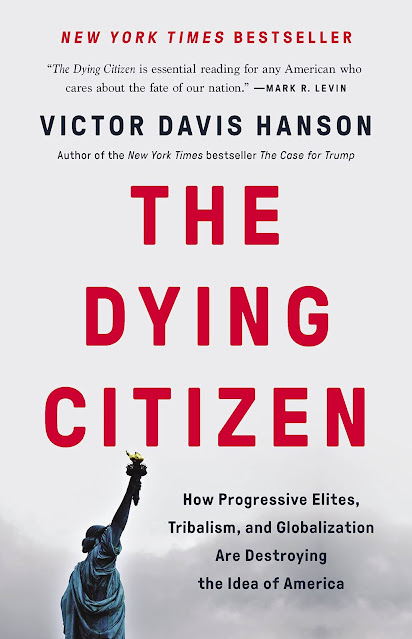
“The Dying Citizen” by Victor Davis Hanson


Victor Davis Hanson sees a war going on for America. In The Dying Citizen: How Progressive Elites, Tribalism, and Globalization Are Destroying the Idea of America, he makes his case, and a well-documented, well-written, and disheartening case it is. The ultimate result of this war could be the death of the idea of American citizenship, he says, and it may already be on life support. 

It is a paradox that the very people who have benefitted most from American culture and society are the ones waging this war – the elites of business, politics, academia, culture, and the media. 


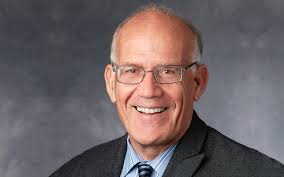
The Martin and Illie Anderson Senior Fellow in Residence of Classics and Military History at the Hoover Institution, Stanford University, and a Distinguished Fellow in History at Hillsdale College, Hanson is a writer, speaker, teacher, Hanson has written or edited 24 books. He’s received numerous award and recognitions, including the National Humanities Medal, the Bradley Prize, the Edmund Burke Award, William F. Buckley Prize, Claremont Institute’s Statesmanship Award, a National Endowment for the Humanities fellowship, and many others. 


He’s an excellent lecturer, and I’m speaking from experience. I took his “Athens and Sparta” online course offered by Hillsdale College. He’s also taught on “The Second World Wars” and “American Citizenship and Its Decline.” The Dying Citizen is paired to this last course. 


Victor Davis Hanson

Hanson develops six key themes to make his case that the idea of citizenship is on life support: the squeezing of the middle class to create a rich-poor society; using undocumented and illegal immigration to diminish the value of citizenship; the push away from the melding of people into Americans and instead emphasizing tribes of origin; the growth of a federal bureaucracy immune from accountability; the ongoing attacks on the Constitution and the idea of a federal republic; and the embrace of globalism by America’s elites.


In an epilogue, Hanson discusses the elections of 2016 and 2020, the impact of Donald Trump, and the emergence of the COIVD-19 pandemic, and how all these events and people reflect and explain the war over the idea of America and citizenship.


Hanson is a conservative. He doesn’t dance around difficult or controversial topics. He states his hypothesis clearly and assembles considerable evidence to support it. And he clearly describes what’s at stake. 

Wednesday, October 23, 2019

"The Global and American Spirit" by Evan Lanning


It’s rare to find a collection of essays that range intelligently over a broad array of subjects, are easily readable and engaging, and fully hold your interest for 238 pages. That’s what author Evan Lanning has managed to achieve with The Global and American Spirit.

Aristotle, Cicero, St. Augustine. The Constitution and the Anti-Federalists objections to it. Alexis de Toqueville. The controversy over Thomas Jefferson and Sally Hemmings. A fascinating survey of the American novel. How about philosophical perspectives in The Grapes of Wrath? Book reviews. An examination of Tolkien’s ideas. 

Lanning seems comfortable and eminently knowledgeable in the worlds of American history, literature, politics, philosophy, and current events. Here are a few of the standout essays.

“Aristotle and Politics” discusses the Greek philosopher’s ideas on the three associations which serve as the basis of community – the household., the village, and the polis – and how they conflict with socialism (proving there’s nothing new under the sun; ancient Greece had its socialism proponents, too). 

In “Cicero and De Oratore,” Lanning considers that convincing oratory doesn’t necessarily happen because of “rational argument, logical dialog, or elegant and adorned prose.” Convincing oratory happens through appeals to the passions and the emotions.

“Integrity and the Constitution” examines the argument between constitutionalist originalists and those who believe the Constitution should be a “living document.”

“The Jefferson Controversy: When Politics Meet History” views the Jefferson / Sally Hemmings issue through the lens of politics and delves into the actual evidence for Jefferson fathering children by his slave.

“The Continuity and Progress of the American Novel” studies how American literature has been shaped by culture, politics, religion, or some combination of the three. Lanning looks at Harriet Beecher Stowe’s Uncle Tom’s CabinThe Mysterious Stranger by Mark Twain, The Awakening by Kate Chopin, My Antonia by Willa Cather, The Sun Also Risesby Ernest Hemingway, John Steinbeck’s The Grapes of WrathThe Invisible Man by Ralph Ellison, and Wise Blood by Flannery O’Connor. 

“Taking Sides in American History” asks, and answers, questions like, did the Great Society fail? Did rock and roll upend American family and social customs? Was the Americanization of the war in Vietnam inevitable? And should America remain a nation of immigrants?

And there’s much more.

Lanning is a field representative of the Leadership Institute, which provides training for conservatives in campaigns, fundraising, grassroots organizing, youth politics, and communications. He lives in Indiana.

The Global and American Spirit is a collection of insightful, well-written essays that directly and indirectly inform many of our contemporary social, economic, and political issues.

Top photograph by Tom Coe via Unsplash. Used with permission.