Showing posts with label American history. Show all posts

Thursday, November 24, 2022

Why We Celebrate Thanksgiving


We celebrate Thanksgiving Day because of Henry VIII, the Gunpowder Plot, the 1619 landing of 38 English colonists in Virginia (without slaves), the Pilgrims, the end of the American Revolution, the beginning of the American Republic, the Civil War, and the need to stimulate the economy in the late 1930s. And it might have been called Evacuation Day.  

Thanksgiving as we know it today in the United States evolved over a period of some 400 years. The idea of thanksgiving observances goes back to the Protestant Reformation in England under Henry VIII, consolidating a rather large number of thanksgiving holidays during the Roman Catholic period. Special days of Thanksgiving would be called for military victories and for deliverance from such events as the Gunpowder Plot of 1606.


To continue reading, please see my post today at Dancing Priest.


Top photograph: Union soldiers celebrate the first national Thanksgiving Day in 1863.

Wednesday, April 27, 2022

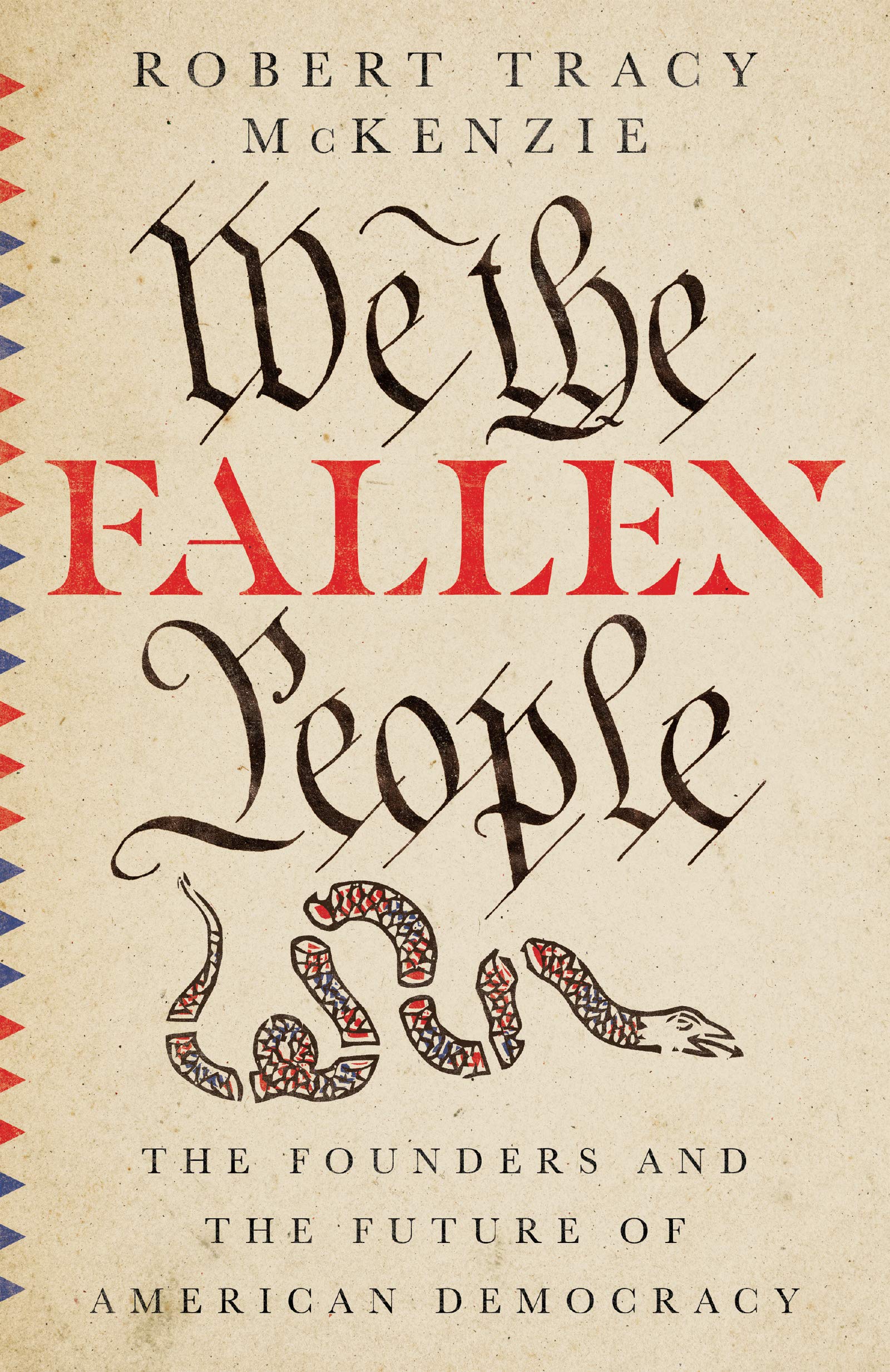
"We the Fallen People" by Robert Tracey McKenzie


The calls for a new Constitution, changing the Supreme Court, cumulative voting, and doing away with the Electoral College seems to happen whenever a particular political viewpoint or candidate fails to prevail. We’re told none of this works any more, that the founders used flawed or biased reasoning, and that direct democracy is the preferred alternative. 

What most people don’t know, or have forgotten, says Robert Tracey McKenzie, is the founders considered direct democracy and saw what problems it could lead to. They understood the tyranny of the majority. They knew from history how easily democracy can fail. They were trying to deal with an immediate failure in democracy – the Articles of Confederation. And what they crafted with a republican form of government for the United States, with its three branches and its notable checks and balances.


McKenzie, the Arthur Holmes Chair of Faith and Learning and professor of history at Wheaton College in suburban Chicago, also argues something else, something fundamental to understanding why the founders did what they did (and how they’ve been proven right over and over again). He says that the founders knew that people were fallen, that people were not inherently good, that, if given the chance, would inevitably suborn the common good to their own self-interest. As Christians would say, man is a sinner.


The founders, he says, were not so much focused on creating a God-inspired document in the Constitution as they were a mankind-aware document. They knew what, if left to their own devices, what people could be capable of. 


Robert Tracey McKenzie

In We the Fallen People: The Founders and the Future of American Democracy, McKenzie makes his well-researched case. He concisely recounts the history of how the Constitution was written, and why. He explains how the presidency of Andrew Jackson clearly demonstrates how majorities can become tyrannical – with the examples of the U.S. Bank and the removal of the Cherokees from their native lands in Georgia. He reviews what Alexis de Tocqueville, the 19thcentury writer about and admirer of America, really had to say. And he offers ideas on how we Americans today can go about renewing our thinking about government, republicanism, democracy, and the Constitution. 


We the Fallen People makes a strong case. It might have been stronger if McKenzie had been less dismissive of some of his fellow historians, and if he’d examined more closely what happens when the problem is less tyrannical majorities and more political, social, and economic elites.


McKenzie has also published Lincolnites and RebelsA Little Book for New Historians, and The First Thanksgiving: What the Real Story Tells Us About Loving God and Learning from History.


McKenzie’s argument is a somewhat brave one to make. We have a long history of believing that Americans are special because Americans are good, and our presidents and others have spent an enormous amount of time telling us that. Not to mention that we like being told we’re basically good. The reality is that we’re not inherently good, and the Founders of our country knew that and planned a government accordingly.

Monday, October 26, 2020

"Land of Hope" by Wilfred McClay


If there was a subject I loved in school as much as literature, it was history. I had good teachers for both subjects, but one history teacher really stood out – my high school American history teacher. A graduate of Purdue, she faced down her classes in an all-boys public high school with wit and iron. All American history classes were required to spend six weeks on communism (this was the Cold war period), and the text most history teachers used was Masters of Deceit: The Story of Communism in America and Hot to Fight It by none other than J. Edgar Hoover. It was the strongly suggested but not mandatory text. 

My teacher said if we wanted to understand communism, we had to go to the source. Our class used Das Kapital by Karl Marx. After the first few pages, we understood that before it did anything else, communism was likely to bore you to death, or at least reading about it would. But the teacher supplemented our readings with lectures that explained the differences between capitalism, communism and socialism. It may not have been as exciting as the Hoover book, but we learned what the systems were and why they clashed.


In college, I took the two required semesters of American history. We had large lecture classes, with the professor utilizing several graduate students as graders and essay readers. Our textbook was the two-volume History of the United States edited by T. Harry Williams (1909-1979), the Pulitzer Prize-winning biographer of Huey Long, chairman of my university’s history department, a renowned Civil War historian, and the professor who taught the most highly sought after course on the entire campus – “The History of the Civil War.” During my four years there, the university was known for its football team and its history department. 


Wilfred McClay

In 1980, Howard Zinn (1922-2010) published A People’s History of the United States, likely the most influential history textbook of the part 40 years. A young people’s version was published in 2007. Forty years after publication, it remains a bestseller, used in many universities and high schools. It is also a Marxist interpretation of American history. More recently, The New York Times began to promote another alternative (and controversial) view of American history, the 1619 Project. (It should be noted that both the Times and the project’s author have dialed back some of the earlier statements they made about it.) 


More than a few of us are wondering what happened to American history. And some are asking, is it possible to write and publish an American history textbook that addresses controversial aspects of U.S. history yet still retains a sense of why and how this country was founded?


Wilfred McClay, a history professor at the University of Oklahoma, has answered that question in the affirmative. His Land of Hope: An Invitation to the Great American Story shows that it is indeed possible to tell the remarkable story of the United States and fairly address the failures, shortcomings, and tragedies that people experienced during the colonial period, the founding of the new republic, and the history of the country since that founding as a federal republic in 1787.


McClay doesn’t gloss over the “difficult subjects.” He’s telling a story, perhaps the story, of the United States, and that story includes barbaric treatment of native Americans, the enslavement of millions of Africans, and an often-rapacious capitalist economy whose excesses had (and have) to reined in. His point is that, with all of its failures and shortcomings, the United States has remained a “land of hope” for the world at large. He doesn’t paint a rose-colored view; instead, he tells a story that is both familiar and scrupulously fair. 


As he says in the boo’s epilogue, McClay sees this history as “a contribution to the making of American citizens. As such, it is a patriotic endeavor as well as a scholarly one.” There is much to cherish and celebrate in American history, he says, but that doesn’t mean it’s an uncritical celebration of the good and the best and the ignoring of the bad and the worst. Both conditions exist in U.S. history and America today; to ignore either is to fall prey to a false, shallow patriotism or a destructive (and unfounded) Jacobin sentiment to “tear it all down.” 


Land of Hope is a much-needed book at a time when reasoned thought and understanding have been reduced to caricatures at the extremes. My high school American history teacher would have liked it.

Monday, August 10, 2020

“Mavericks, Misfits, and Mystics” by Arthur Hoyle


Europeans came to America for a variety of reasons. The Pilgrims and Puritans sought the freedom to worship. Others were looking to make their fortunes. Some wanted to escape the smothering class structure of European society. To survive and flourish in the New World, these immigrants, says author Arthur Hoyle, had to be both dissatisfied and ambitious, hardy of body and strong of mind, hard-working, resourceful, inventive, and practical. 

“The two seemingly contradictory traits that enabled survival in the New World – independence and cooperation – have unfolded in a dynamic tension across American history,” he writes. These traits continue to play out in contemporary society; you have to look no farther than the growing conflict between red states and blue states, urban populations and rural populations, and populists and the elites. 

In his recently published Mavericks, Mystics, and Misfits: Americans Against the Grain, Hoyle chronicles the lives of 12 Americans who have exhibited these enduring qualities of “being American” even while they often went against the grain of the society around them. In 10 chapters (two of the subjects are actually married couples), he provides fresh and highly readable accounts of who they were, what they did, and why it continues to matter,

Roger Williams was initially part of the Massachusetts Bay Colony but found the ruling Puritans to be as oppressive as the king left behind in Britain; he insisted upon a complete separation of state from the Church of England and the mingling of civic and religious authority. A contemporary, Anne Bradstreet, was the first American poet, at a time when poetry was the exclusive province of men. She evaded criticism by writing passionately religious poetry.

A fuller picture of Thomas Paine is presented than what one usually finds in the history textbooks. He was arguing against injustice long before he wrote Common Sense, but it was that pamphlet that started the tipping of the balance in opinion in favor of independence. During the French Revolution, he veered close to finding himself guillotined in Paris. Josiah Gregg was a merchant, explorer, author, news correspondent, and several other occupations; his wanderings on the prairies, the Southwest, and California, and his writings about his travels, would help feed the idea of Manifest Destiny.

William and Ellen Craft were slaves who escaped their Georgia plantation using a most ingenuous ruse. Ellen was fair enough to pass for white, and she disguised herself as a man, traveling mostly by train with her “slave” William all the way to Massachusetts. The son of a Norwegian-American farmer, Thorstein Veblen became an economist and sociologist and a major critic of capitalism. Thomas Merton was the Cistercian monk was a man of “contradictory and passionate character” Hoyle says, who sought spiritual meaning by distancing himself from society. 

Arthur Hoyle
Brummett Echohawk was a Native American, a member of the Pawnee Tribe, who set out to prove that Native Americans could be just as patriotic as anyone else, and he proved it in World Wat II. Judith Baca is a Chicana muralist who uses her art for social change. Husband and wife Warren Brush and Cynthia Harvan-Brush work in agriculture, creating small, self-sufficient farms that are “thoughtfully and deliberately integrated with the conditions and features of their local ecosystems.”

None of the Americans featured were comfortable with their society’s majority and prevailing thought. Each sought to change both their individual worlds and the worlds around them. Some ended well; some did not. But they all displayed aspects of what we might call the classic American character. 

Hoyle received his B.A. and M.A. dsgrees in English from the University of California, Los Angeles. He’s a writer, educator, administrator, naturalist, independent filmmaker, and author of The Unknown Henry Miller: A Seeker in Big Sur (2014). He lives in California. 

Mavericks, Mystics, and Misfits is a delightful and highly readable collection of essays about Americans who often infuriated their contemporaries, followed their individual stars, and yet still displayed the traits we understand and recognize as “American.”

Top illustration: Drawing of Thomas Paine.

Monday, January 27, 2020

"Sherman's March to the Sea" by John Marszalek


Many events of the American Civil War would reverberate and be remembered for decades afterward – the Battle of Gettysburg, the siege of Vicksburg, and the firing upon Fort Sumter among them. But few had as lasting an impact as Sherman’s March to the Sea.

In September 1864, the army of General William Tecumseh Sherman captured Atlanta, an important Confederate city and transportation hub. In addition to giving President Lincoln a significant election campaign boost, the fall of Atlanta disrupted the South’s rail system and posed the possibility of dividing the Confederacy east of the Mississippi (the fall of Vicksburg had already severed the eastern and western halves of the South). 

General William Tecumseh Sherman
In Mid-November, Sherman began to move his army of 62,000 men in three columns from Atlanta eastward toward Savannah. This became the lore of “Sherman’s March to the Sea,” hailed in the Union and reviled in the South. The army had no effective opposition, and about three weeks after the march began, the Confederates abandoned Savannah to the oncoming Union army. 

Those three weeks would loom large for decades after the war. What the Union army did and didn’t do would become an integral piece of the South’s “Lost Cause” story, used to justify Jim Crow laws, “separate but equal” arguments with schools, and a host of other actions an programs. 

In Sherman’s March to the Sea, historian John Marszalek takes a look at what happened. He evaluates what evidence exists from official records, reports in Northern and Southern newspapers, diaries, and other sources.

Marszalek considers why Sherman decided on the march, one that would cut his army off from supply lines and force it to live “off the land;” how the march was organized and went forward; what happened to the towns; farms, and plantations in the path of the army; what happened to the slaves on those farms and plantations; and whether Sherman achieved his objective of eliminating a supply base of food and support from the Confederate armies. 

The general met his objective; the march dealt a mortal blow to Southern psychology and supply lines. Unintended if to-be-expected results, however, included untold misery on the civilian population, white and black alike. Union soldiers who strayed too far from the advancing to pillage and loot were often caught and hanged by Confederate troops. Reprisals would follow, sometimes on civilians. Farms were stripped of livestock and food supplies, and buildings burned. 

Marszalek devotes two chapters to what happened to the slaves. As the federal army moved through the countryside, slaves abandoned their owners and attached themselves to the army. Sherman had expressly forbidden the “contrabands,” as they were called, to do this, but try telling that to people long enslaved getting their first taste of liberation. Disillusion at ill treatment by the federals soon developed, but thousands of people kept following the army eastward. While food was plentiful, like it was in the early days of the march, Sherman companied about the contrabands but did nothing to stop them. But the food situation worsened as the army moved more eastward into areas where food supplies and livestock were less plentiful. 

John Marszalek
At Ebenezer Creek, one corps used a pontoon bridge to cross. Some 650 liberated slaves, many of them women and children, were held back, until the bridge was cut loose and floated down the creek. The people threw themselves into the creek, trying to get across. A Few succeeded; others drowned. Most were left on the shore, where they were quickly rounded up by Confederate troops. Reports of what happened quickly surfaced in Washington, where they were used by Sherman’s political enemies. Secretary of War Edwin Stanton sailed to Savannah to see for himself and met with local black church leaders, who supported Sherman.

Marszalek is professor emeritus at Mississippi State University, where he taught courses in the Civil War, Jacksonian America, and race relations. His published works include Sherman: A Soldier’s Passion for OrderCourt Martial: A Black Man in AmericaCommander of All Lincoln’s Armies: A Life of Henry W. Halleck, A Black Congressman in the Age of Jim Crow: South Carolina’s George Washington Murray, and several others.

The following years would see Sherman lionized in the North and reviled as Satan incarnate in the South. Legends grew up about the march, and it’s not easy separating fact from Lost Cause propaganda. Sherman’s March to the Seamakes the attempt, even as the author’s sympathies lie clearly with Sherman.

Top photograph: Sherman’s soldiers destroying a railroad in Atlanta.

Monday, August 12, 2019

"The Pioneers" by David McCullough


In 2004, historian and author David McCullough gave the commencement address at Ohio University in Athens, Ohio. It was the school’s 200thanniversary, and to prepare for the speech, McCullough researched the school’s history. He discovered a building on campus was named Cutler Hall, after a New Englander, Manasseh Cutler. Cutler would eventually lead McCullough to Marietta, Ohio, and the Legacy Library at Marietta College.

It was a long and winding road from the commencement speech to The Pioneers: The Heroic Story of the Settlers Who Brought the American Ideal West. McCullough tells a great story, but then he has great material to work with.

Manasseh Cutler
It’s a story involving a multitude of people, but McCollough focuses on four families or individuals – the Cutlers, the family of Rufus Putnam, a Revolutionary War veteran and hero who helped lead settlers to the new Northwest Territory; physician Samuel Hildreth; and a carpenter named Joseph Barker who became an architect. Manasseh Cutler and Putnam were directors of the Ohio Company, a stock company that aimed to settle the Northwest. Cutler did the lobbying work with the congress functioning under the Articles of Confederation, and eventually the Northwest Ordinance was born. 

Samuel Hildreth
Cutler was instrumental in having the ordinance exclude slavery. His son Ephraim was instrumental in convincing the Ohio legislature, when it was drawing up a constitution for statehood, to exclude slavery. And Ephraim’s son William was an abolitionist congressman giving fiery speeches against slavery. The town they helped to found and develop, Marietta, known for its New England flavor, would become a stop on the Underground Railroad for runaway slaves. 

Rufus Putnam
What strikes McCullough about the Cutlers and the other early settlers is what strikes the reader as well. They traveled overland from Massachusetts, crossing the Allegheny Mountains (and sometimes in winter). They arrived in a land that was famous from its heavy, dense forests, and they had to clear the trees to plant crops and build houses. They had to contend with deadly epidemics of yellow fever and influenza. The native Americans seemed to shift constantly from friendly to hostile and back again. And they always kept their eye on the future, creating schools and planning and founding universities. 

Marietta would never grow to the size of what Cincinnati and Cleveland became, but it was the spirit of Marietta that permeated Ohio and its sister states of the Old Northwest, and eventually what would become known as the American Midwest. That spirit was born in the American Revolution, and it was the ideals of the revolution that would become the ideals of the region.

David McCullough
McCullough is himself something of an American institution, He’s won the Pulitzer Prize twice and the National Book Award twice. He’s received the Presidential Medal of Freedom. His books include The American Spirit: Who We Are and What We Stand ForThe Wright BrothersThe Johnstown FloodThe Great BridgeThe Path Between the SeasMornings on HorsebackBrave CompanionsTrumanJohn Adams1776, and The Greater Journey. On television, he hosted Smithsonian World and The American Experience, and he narrated such documentaries as Ken Burns’ The Civil War.

The Pioneers is a stirring tale, the story of the vision of a small number of Revolutionary War veterans who brought their beliefs and ideals into what would become the expansion of the United States from 13 colonies hugging the Atlantic seacoast to 50 states straddling a continent.

Related:

Saturday, April 27, 2019

Saturday Good Reads


Over the past decade, I spent more than a few days in “the canyon,” the Laity Lodge complex in the hill country of Texas. It is a starkly beautiful place, evoking a sense of how landscape and geography often have an inherent sacredness.

One of the more indulgent aspects of Laity Lodge is the food, and one of the best-tasting aspects of the food is the graham cracker cookies. They will probably never taste like they taste in the canyon, but Laity Lodge posted the recipe

Speaking of food, growing up in the South meant growing up with grits. My mother frequently made them; my grandmothers made them; and they were usually a staple on hotel and restaurant breakfast menus. Some of the best grits I’ve ever eaten were at Tujaque’s Restaurant on Decatur Strreet in the New Orleans French Quarter, right cross from Café du Monde (the coffee and doughnuts or beignets place). They were a side dish to barbequed shrimp, and I would have been content to have eaten the grits as the appetizer, main course, side dish, and dessert. 

Grits were born in poverty, says a report by Kristen Hartke at National Public Radio, and now they’re showing up on fine-dining menus everywhere.

More Good Reads

Faith

Why We Need the Apostles Creed in 2019 – Michele Morin at The Gospel Coalition.


Silencing the Scream – Chris Castaldo at Tabletalk.

Life and Culture


Is This ‘Common’ Language? A College’s Misguided Guide – Rand Richards Cooper at Commonweal.

News Media

The Press Will Learn Nothing from the Russiagate Fiasco – Matt Taibbi at The Rolling Stone.

Writing and Literature

Salvaging: Boat Trailers, T.S. Eliot, and Resurrection – Jeff Bilbro at Front Porch Republic.


The Magic of Ed McBain’s 87thPrecinct – Paul Abbott at CrimeReads.

The Protestant World of Shakespeare – E.J. Hutchinson at Mere Orthodoxy.

Poetry

Light and Fear – Joe Spring.

Auction – William Baer at The Agonist.

American History

What was So Wrong with Slavery? – Stewart Henderson at Emerging Civil War.

Art

Notre Dame: experts explain why Macron's five-year restoration deadline is impossible – Hannah McGivern and Nancy Kenney at The Art Newspaper.

Greenland – Land of Unending Ice – Stefan Forster


Painting: Woman Reading a Book, oil on canvas by Jean-Baptiste-Camille Corot (1796-1875).

Saturday, October 27, 2018

Saturday Good Reads


My personal trainer, who helps me keep my back problems at bay, often tells me that the human being is designed to walk. I take walks around my own suburb in St. Louis and the one next door to us, and when we were in London last year, I walked around St. James Park nearly every morning. (One morning, I circumvented the perimeter of Buckingham Palace. It was a good distance, but the exhaust fumes from the traffic could be stifling.) Zach Morgan at Thin Difference recommends walks for several reasons, including their meditative nature, while Jean Janzewn at Image Journalhas a poem about walking – on water in Venice.

Hugh Whelchel at the Institute for Faith, Work, & Economics has a post about religious freedom, and how it was a very near thing that it was almost “religious tolerance.” James Madison made the decisive argument. From the same period, one of the founding fathers, the man who served as secretary of the Constitutional Convention, could have become a great historian. Instead, he became a Bible translator. Justin Taylor has the story at The Gospel Coalition.

U.S. Senator Ben Sasse of Nebraska quite Twitter for six months, and he now tells his family (and us) what he learned. Speaking of Twitter, it turns out that being exposed regularly to viewpoints opposite your own on Twitter makes you more convinced your own are correct. Ezra Klein at Vox has the story.

Aleksandr Solzhenitsyn spent years in the Soviet Gulag, never thinking that he would not only outlast the Soviet system but also help play a significant role in its downfall. At The Imaginative Conservative, Joseph Pearce writes about Solzhenitsyn’s courage to be a Christian.

More Good Reads

Faith

Why a Ukrainian Church Said ‘No’ to American Aid – Peter Greer at the Institute for Faith, Work, & Economics.

The Life of a Good Man – Marilyn Gardner at Communicating Across Boundaries.

Can my prayer reach his suffering? – Sylvia Schroeder at 936 Pennies.

Writing and Literature


Life and Culture

The Glorious Inefficiency of Local Bookstores – Dean Abbott at The Imaginative Conservative.

Why Do We Keep Seeing Remakes? We Have Lost the Metanarrative – Zak Schmoll at Entering the Public Square.

The Public Square is About Parenting – Samuel D. James at Mere Orthodoxy.

Art and Photography

Humdinger – Tim Good at Photography by Tiwago. 

The last. lovely gift of the day – Diana Trautwein via Facebook.

Yo-Yo Ma: NPR Tiny Desk Concert


Painting: Couch on the Porch, Cos Cob; oil on canvas by Frederick Childe Hassam, 1914.

Saturday, April 28, 2018

Saturday Good Reads


Some 10 years ago, I attended a training seminar for elders and deacons at church that featured a well-known pastor from Nashville. The surprise was his language and how peppered it was with four-letter profanities. I don’t remember a single idea he articulated, but I remember the profanities. John Piper asks the question we were too polite to ask at the seminar: does profanity make us more relevant (and cool) in reaching the culture?

It’s been building for years, perhaps decades. The humanities in our colleges and universities are in serious trouble. This is no longer the worry of only the conservative side the political spectrum. Eric Bennett, a professor of English at Providence College, lets loose in The Chronicle of Higher Educationand puts the blame squarely where it belongs.

What’s the No. 1 bestselling book in America right now? The 12 Rules for Living by Jordan Peterson. Guess which book doesn’t appear on The New York Times Bestseller List? We’ve known for a long time that the Times doesn’t include “overtly religious” books (they would occupy 9 of the first 10 slots) but Jordan Peterson is not a religious writer. The conservative National Review has the story.

Charity Craig tells a story of a man who went from slave to landowner, Vintage posts photographs from the Work Projects Administration of former slaves in the late 1930s, 18thcentury missionary David Brainerd has a 300th birthday, Ann Kroeker suggests you write your own obituary, and more.

Faith


Heroism Deconstructed: Serving Faithfully through Our Work– Hugh Whelchel at the Institute for Faith, Work, & Economics.

Love in Action– Kenneth Kovacs at On the Way.

American History

David Brainerd’s 300thBirthday– Thomas Kidd at The Gospel Coalition.

Reconsidering William Jennings Bryan– Michael Martin at The Imaginative Conservative.


1989: A Tale of Three Cities & the End of the Old New World Order– Joseph Mussomeli at The Imaginative Conservative.

Foraging Through History– Charity Singleton Craig.

British History

Shakespeare’s Dark Lady of Spitalfields– Niall McDevitt at Spitalfields Life.

Poetry

The Years Were Patient with Me– Jeanne Murray Walker at Image Journal.

Long Enough– Jim Schmotzer at The Faithful Skeptic.

Dark Dancing– Helen at His Refuge Wings.

Art and Photography

Spring’s Popping– Tim Good at National Geographic / Your Shot.

Life and Culture

Is Modernity a Success?– Alastair Roberts at Alastair’s Adversaria. 

Dear Humanities Profs: We Are the Problem– Eric Bennett at The Chronicle of Higher Education. 

Children’s Crusades– Alan Jacobs at Snakes and Ladders.

A Sky of Parchment Made– A.G. Harmon at Image Journal.


Writing and Literature

Write Your Own Obituary– Ann Kroeker.

The Deepest Dive in Antarctica Reveals a Sea Floor Teeming with Life


Image: Girl Reading, illustration for the cover of Good Housekeeping Magazine by Coles Phillips (1915).

Tuesday, August 15, 2017

Childhood, Poetry, and History: “The Courtship of Miles Standish”


In a box stored in the basement of our home, I have a record of my school history, grades 1 through 12. It was a box my mother kept, and kept adding to, and included everything from report cards and penmanship books to tests and notebooks. Best of all, my mother put a date on everything.

Longfellow (1859) by Matthew Brady.
And so, from 1958, I find the “November Activity Unit,” about the size of a very thin comic book. We had one of these for each month of the school year, and the units contained topical information about the month, holidays, and similar events, with every page containing illustrations to color. I suspect this was a form of busy work, something to keep the children in my second-grade class occupied while the teacher did other things. By second grade, I was familiar with Thanksgiving dinner, but it was that activity unit that introduced me to the Pilgrims.

A few years later in sixth grade, we read The Courtship of Miles Standish by Henry Wadsworth Longfellow, and that reading supplemented what we were learning in history. Longfellow took the names of his main characters in the poem – Miles Standish, John Alden, and Priscilla Mullins – from the names of real people who arrived in America on the Mayflower. The poem includes events that are certainly historical – conflict with native Americans and disease – but how much of the love story is factual is open to debate.

To continue reading, please see my post today at Tweetspeak Poetry.


Painting: John Alden and Miles Standish, as painted by N.C. Wyeth.