Showing posts with label Social media. Show all posts

Monday, April 27, 2026

Some Monday Readings - April 27, 2026


The Hunger for the Real – Christine Rosen at Commentary. 

Who is Blake Whiting? – Andrew Lawler at The American Scholar on the most productive historian in publishing.


The Secret of Shakespeare’s London House – Joseph Pearce at The Imaginative Conservative.


Review: The Wandering Army: The Campaigns That Transformed the British Way of War by Huw J. Davies – Ben Powers at Emerging Revolutionary War Era.


Agatha Christie & the metaphysics of murder – Theodore Dalrymple at The New Criterion.


The right-wing case for social media – Alex Yates at The Critic Magazine.


Create a System for Consistency – Terry Whalin at The Writing Life.


The American Way is Under Fire – The Editors at The Free Press.


Photograph: Agatha Christie at work.

Saturday, September 13, 2025

Saturday Good Reads: In Memoriam Charlie Kirk


I had a whole set of links planned and ready for this edition of Saturday Good Reads, and then Wednesday happened. 

I didn’t know Charlie Kirk personally. I followed him on Instagram, in news reports, and on other social media. I was amazed at his steel-trap mind; he could talk with anyone, anywhere, on an any issue. He could be firm, but he never went in for ad hominem attacks; he attacked the argument, not the person making it. 


He also made no secret of his faith in Christ. So many of us wondered why we felt his death so deeply and personally. It’s because Charlie Kirk was a member of the Body of Christ.


As the news reports of his shooting poured in, and then the news of his death, where should my thoughts go but to Facebook.


I try to avoid politics as much as I can on Facebook and other social media. I post book reviews, faith-based poems, and photographs, usually of the flowers in my garden and the sky. Or historical things we’ve seen in England. Or the Missouri Botanical Gardens and Shaw’s Nature Reserve. 


I have a number of friends, Christian friends, who do not avoid politics. They rage about politics. Or, more precisely, they rage about Donald Trump. The rage is outsized, vicious, and all-consuming. I’m somewhat amazed that people who say they hate the man don’t see how much he’s come to dominate their thinking. Perhaps I should say they don’t see how much the image they’ve created of Donald Trump has come to dominate their thinking.


Lately, the rage has been extended to the people who support Donald Trump. It’s classic objectification – separating these “MAGA people” from the rest of humanity and ascribing to them various negative characteristics. President Biden did this when he was in the White House. Objectification is how Europe ended up with a Holocaust. 


And this is how we end up with the murder of people like Charlie Kirk. 


Language matters. Words matter. Before you repost something vicious and exaggerated from Occupy Democrats, some ignorant thread on Reddit or Blue Sky, and similar sources on Facebook, consider that you’re contributing to the normalization, and embrace, of violence. 


And this is far more widespread on the left than on the right. 


You need to keep it out of my news feeds. I’m done with tolerating it. Simply done.


American Stuff


Charlie Kirk believed in free speech. He died for it – Jacob Heilbrun at The Spectator.


The Charlie Kirk I Knew – Adam Rubenstein at The Free Press.


Charlie Kirk is dead. And I and sad (sad and angry) – Stephen McAlpine. 


The Assassination of Charlie Kirk – Rod Dreher. 


The Assassination of Charlie Kirk and the Fight for America’s Soul – Ben Shapiro at The Free Press.


Charlie Kirk saw himself as holding back revolution – Ben Domenech at The Spectator.


A La Carte: Charlie Kirk Special Edition – Tim Challies (links to various statements by theologians and religious figures)


Charlie Kirk Wasn’t Just Assassinated; He Was Martyred – Kylee Griswold at The Federalist.


‘Ugliest Moment I Ever Witnessed’: House Dems Object to Prayer for Charlie Kirk – Leif Le Mahieu at Daily Wire.


This Will Turn Us into Radicals – Melissa Edgington at Your Mom Has a Blog.


How Great the Chasm That Lay Between Us – Samuel D. James at Digital Liturgies.


Twitter Files: The Muzzling of Charlie Kirk – Matt Taibbi at Racket News.


Statement by the Vice President – J.D. Vance on X.


Je Suis Charlie – editorial by The Free Press.


Photograph: Charlie Kirk at the 2025 Student Action Summit in Tampa, Florida. Photo by Gage Skidmore via Flickr and Wikipedia.

Wednesday, March 5, 2025

Some Wednesday Readings


I really didn’t think politicians were giving substantive speeches of ideas anymore, the kind with thesis statements, the marshaling of evidence, and a compelling call to action. Whether you’re a supporter or not, that’s what Vice President J.D. Vance has been doing. He gave two speeches in Europe that are still ricocheting back and forth across the ocean – one at the AI conference in Paris and one at the security conference in Munich. Weeks later, people are still talking about them. Christian Hacking at The Critic Magazine says Vance was right about free speech in Britain; Madeleine Kearns at The Free Press interviews the grandma arrested by Scotland’s speech police. N.S. Lyons at The Upheaval says Vance’s real message to Europe was give up the information war. And he’s continuing to speak; at a recent National Catholic Prayer Breakfast in Washington, D.C., he said that “foreign misadventures” have sometimes led to the eradication of historic Christian communities

Mad Monks and Alchemists – Paul Kingsnorth at The Abbey of Misrule.

Murders for March – Jeremy Black at The Critic Magazine.

How Movie Theaters Got Their Start in America – Dave Roos at History.

Data and Social Media Effectiveness – Chris Martin at FYI.

Sewing Kit Save: Clement Evans – Phil Greenwalt at Emerging Civil War.

Civil War Era Themes in Mardi Gras Celebrations, 1880-1940 – Neil Chatelain at Emerging Civil War.

The American West – Writing Advice from John Steinbeck – William Groneman at Cowboy State Daily.

Photograph: John Steinbeck.

Wednesday, June 26, 2024

A Year Away from Twitter / X


Twitter was the first social media platform I joined, way back in 2008. I was far from being an early adopter, but I was one of the first people at work to sign up. 

Even that early, you could see the enormous potential for good and bad that a social media platform like Twitter could have. What we know as cancel culture developed early.


From 2008 to 2023, I had a consistent strategy in how I used the platform. I tweeted positive stuff. I didn’t engage in politics or controversies. I highlighted good things people were doing or writing. And I have to say I was steadfast from the beginning to the end.


To continue reading, please see my post today at Dancing Priest.


Photograph by David Paschke via Unsplash. Used with permission.


Some Wednesday Readings


Failure to Thrive – Brian Miller at A South Roane Agrarian.


The Previous Lives of Used Books – Thea Rosenberg at Story Warren.


Buckner, Jr. at Gettysburg 1913 – Chris Kolakowski at Emerging Civil War.


Why Are the Classics Necessary? – Louise Cowan at Th imaginative Conservative.


In Search of the Rarest Book in American Literature: Edgar Allen Poe’s Tamarlane – Bradford Morrow at Literary Hub.

Wednesday, June 19, 2024

How I Came to Social Media


It was work that originally led me to sign up for Twitter and other social media platforms. For a number of years, social media became my work. Even when I retired, I was still managing the company’s social media platforms. 

From 2003 to 2004, I spent nine months working in communications for St. Louis Public Schools, which was in dire straits. Enrollment had declined to an official 40,000 from a peak of about 100,000, and the district was still operating school buildings, a headquarters building, and an administrative staff that supported a 100,000 enrollment. A management firm was hired by a reform school board to take over and do the painful stuff that had to be done. The management firm was in place all of two days when it discovered that the district was bankrupt.


To continue reading, please see my post today at Dancing Priest.


Photograph by Sara Kurfeß via Unsplash. Used with permission.


Some Wednesday Readings


R.E. Lee, the father: Great tickle fighter and more – JoAnna McDonald at Emerging Civil War. 


How Normandy Remembers the Only U.S. Military Chaplain Killed on D-Day – Blake Stilwell 

at Military.com. 


Book Notes: Union General Daniel Butterfield – Civil War Books & Authors. 

Monday, March 20, 2023

"The Wolf in Their Pockets" by Chris Martin


When pastors or priest look out at their congregations each Sunday, do they think about how the social internet has changed the people in front of them? For that matter, do they think about how the social internet has changed themselves? 

Chris Martin has some answers to those questions, and it’s not welcome news. In The Wolf in Their Pockets: 13 Ways the Social Internet Threatens the People You Lead, he methodically examines all the ways the internet affects people, from the perspective of what it means for church leadership. And it’s not much of a reach to say that what he says applies to anyone in a position of leadership – including business, government, non-profits, and education.


Martin works at Moody Publishers as a content marketing editor and a consultant in social media, marketing, and communications. He has a deep background in social media and digital content strategy. He perhaps best known for his blog, Terms of Service (and his book of the same title) where he writes thoughtfully and with great insight about topics as diverse as the metaverse, TikTok, Wordle, and the impact of social media on society and culture.


The Wolf in Their Pockets begins with a summary of how social media changes us. We usually find ourselves in either uncritical embrace or passive ignorance, he writes. He argues for the need to move to something of a middle position, what he calls “international engagement,” in which we engage thoughtfully and carefully.


Chris Martin

The chapters that follow explain how that intentional engagement might happen, and how church leaders can facilitate that. Dethrone entertainment. Recover purpose. Build friendships (and not virtual ones). Reorder priorities. Foster discernment. Seek humility. And more.


Take the chapter on fostering discernment as an example. When Martin asked a number of church leaders a rather neutral-sounding question, “Can you tell me how you have seen social media affect people at your church?,” the common response was about discernment – and how the lack of it leads people to accept and believe in untruths about current events (also known as fake news). Lest you think this is only affecting conservative churches, it’s equally applicable to more liberal churches as well.


What’s beyond Martin’s purpose here, but perhaps we can convince him to address it on his Substack site, is what happens when the traditional media exacerbate that lack of discernment – when opinion masquerades as news, when significant stories aren’t covered, and when a media narrative quickly emerges and dominates journalists’ understanding. The problem of discernment is not only a problem of social media; social internet sites can explode the problem at warp speed. 


The Wolf in Their Pockets isn’t an all-encompassing treatise of how to address the effects of social media on church congregations (and their leaders). But it is an important first step in how to understand the problem to begin with, and it offers practical advice to help church leaders recognize and deal with the impacts.


Related:


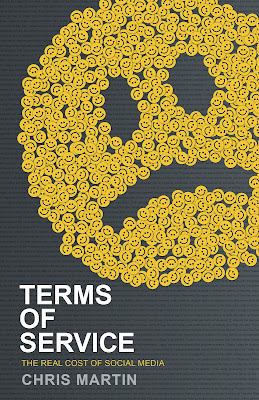
Terms of Service: The Real Costs of Social Media by Chris Martin

Wednesday, May 18, 2022

In praise of gentleness


It’s difficult to look at almost anything online these days and not be offended. It seems worse when the person doing the offending is someone you know, a Facebook friend you’ve actually met in person, say, and you know them to be kind, compassionate, and caring. And then on Instagram, POW, a bowlful of anger gets dumped on a specific target but splashes all of us. 

It was ugly. I was stunned. I knew the person leaned leftward politically, but I never expected what I saw. It’s not only the leftward leaning; the rightward crowd does it as well. And I’ve caught the tendency in myself, when you see something or read something that takes you from a calm-and-collected zero to a red-hot 90 in 4.3 seconds.


It’s not an attractive characteristic. It’s fueled by frustration and anger. It’s heightened on social media, which we seem to think gives us license to behave badly. 


We forget the call to be gentle, with others and ourselves.


Gentleness has been on my mind this week; it was part of a sermon by our pastor Sunday, when he preached on Galatians 6:1-10, in which the Apostle Paul exhorts us to be gentle in reproof, not to become weary in doing food, and do good to everyone, “especially those of the household of faith.”


The target of my friend’s ire was a well-known conservative commentator, who also happens to be a Christian. And I wondered what might be the outcome if my friend, instead of heaping outrage and condemnation, had instead prayed for this individual, not that they would come around to my friend’s thinking, but instead would experience God’s grace, God’s blessing, and God’s encouragement. And what if my friend prayed daily for this person for a week.


And what if my conservative friends selected someone they disagreed with – Rachel Maddow, Elizabeth Warren, Stephen Colbert – and prayed for that person for a week, that they would experience God’s grace, God’s blessing, and God’s encouragement. 


In either situation, nothing might happen. But I suspect that, if nothing else, the heart of the person praying might change. And that may be one of the unexpected benefits of prayer.


A gentle word


If I would choose

my word, it would not

be power or glory, 

it would not be pride

or control, it would not

be wealth or position or 

title. Instead, if I could,

I would choose gentle,

the word I’d want 

to describe my demeanor,

to describe my actions,

to describe my spirit.

Gentle is accepted

in all situations, 

sometimes used and

abused but accepted

nonetheless. Gentle

is a being word. Gentle

is an action word. Gentle

is a word, a life that’s

learned, a condition

that’s taught. And

it is so hard.


Photograph by Godwill Gira Mude via Unsplash. Used with permission.

Wednesday, February 16, 2022

"Terms of Service" by Chris Martin


Chris Martin works at Moody Publishers as a content marketing editor and a consultant in social media, marketing, and communications. He has a deep background in social media and digital content strategy. He perhaps best known for his blog, Terms of Service, where he writes thoughtfully and with great insight about topics as diverse as the metaverse, TikTok, Wordle, and the impact of social media on society and culture. 

His new book is entitled, appropriately enough, Terms of Service: The Real Cost of Social Media. The book is a primer on social media and the internet but is also more than that – a look at how the internet shapes us and what can we do about it. And his solutions are not “let’s pass a law” type of prescriptions, but instead what individuals can do themselves.


To continue reading, please see my post day at Dancing Priest.


Wednesday, January 26, 2022

The Convergence of Social Media and Big Media


A work colleague in a Latin American country sent an email, asking for help. A manufacturing plant had been proposed, and while most people wanted it, a small number of radical environmentalists did not. There had been protests, road blockades, and rallies. And then, when it appeared that both the company and the authorities were going ahead, the ante was raised. 

Using anonymous Twitter accounts, the protestors targeted the company’s spokesman. Scores of people were tweeting. A bounty was placed on the spokesman head -- $5000 US was being offered for the spokesman dead or alive. And the tweets included his home address.


To continue reading, please see my post today at Dancing Priest.


Photograph by Olivier Bergeron via Unsplash. Used with permission.

Saturday, October 9, 2021

Saturday Good Reads - Oct. 9, 2021


The Facebook app Instagram has been credited with a serious revival in poetry. Poets such as Nikita Gill, r.h. sin, Rupi Karr, Neal Sehgal, and others often have hundreds of thousands of followers who not only like their posts but also buy their books. Instagram ha clearly had a major impact on the reading (and buying) of poetry. Kyle Chayka at The New Republic asks a different but related question: has Amazon changed fiction? 

How to make yourself the election issue: Billionaire George Soros is the political right’s favorite villain. He gives money to leftist causes and candidates, and many people argue that his giving is sparked by a hatred of the United States (he does hold U.S. citizenship). And he and his various organizations have contributed to the elections of numerous city prosecuting attorneys in St. Louis, Philadelphia, Chicago, and other places. (The one in St. Louis is so controversial that even the progressive St. Louis Post-Dispatch routinely calls her out for office turnover, legal missteps, and bad policy decisions.) And now Soros has gone a step further – he’s contributed $500,000 to fight a ballot measure in Austin, Texas, that would require certain levels of police staffing. The contribution was made after the deadline for submitting contribution reports, which meant it wouldn’t be included in the final published report before the election. 


Big Tech censorship is a hot discussion item, and Facebook, Twitter, and YouTube often seem to go out of their way to make stupid decisions (mistakes) guaranteed to get conservatives mad. Chris Martin at Terms of Service turns his attention to another group that sees censorship lurking behind every smile of Jack Dorsey and Mark Zuckerberg – Christians. And Mart argues that censorship isn’t Christians’ biggest social media problem.


More Good Reads


Poetry


‘The Shepherd Who Remained in the Fields’ and ‘On Falling Asleep While Praying’ – Duane Caylor at Society of Classical Poets. 


Poetry and Holding the Center – Glenn Arbery at The Imaginative Conservative.


The Test – A Spoken-Word Poem – Seth Lewis.


Snow Moon over Singer Island – Paul Mariani.


Life and Culture


Wendell Berry and Rebuilding Rural Communities – James Decker at West of 98.


Autumnal Reflections on America – Mark Malvasi at The Imaginative Conservative.


The classroom culture war – Frank Furedi at The Critic Magazine.


The sorrows and occasional joys of speaking while masked (and being spoken to) – David Murray at Writing Boots.


Writing and Literature


My Life as a Ghostwriter – Jonathan Kay at Quillette.


On the Invention of Fiction – Lee Child at CrimeReads.


Faith


Redemption Gives Us a Glimpse of True Shalom – Hugh Whelchel at the Institute for Faith, Work, & Economics.


The Stubborn Love of Imagination – Millie Sweeney at Story Warren.


Cultural Christianity Gave Us the Golden Age of CCM – Samuel James at Insights.


American Stuff


The Key to Richmond – Edward Alexander at Emerging Civil War.


The Boone Family, the Struggle for Kentucky, and the Kidnapping That Rocked Colonial America – Matthew Pearl at CrimeReads.


Afghanistan


Desperate and in hiding, Afghan artists beg international community for help – Sarvy Geranpayeh at The Art Newspaper.


Lessons from Kabul – Robert Kelbe at Gentle Reformation.


This is My Song (Finlandia) – VOCES8


Painting: Portrait of Fred Uhlman, oil on canvas by Kurt Schwitters (1887-1948).

Monday, August 16, 2021

"OOF" by Strobe Witherspoon


If you’ve ever wondered what an “OOF” is, it’s the acronym for “online outrage fiesta.” It’s also the title of a new novel by Strobe Witherspoon, whose main character is – a writer named Strobe Witherspoon. 

Witherspoon has landed a contract for a novel by a fictional former first lady (FLOTUS) who has written a memoir. She is originally from an Eastern European country, emigrated to the United States for her modeling career, eventually brought her parents over, and married a wealthy tycoon-type of businessman who unexpectedly became President of the United States. Not that there’s any similarity to people living or dead, of course.


The online world, both haters and supporters of the former president, get wind of the memoir’s existence and the bidding war from publishers. Outrage ensues (you know the kind of outrage – what has dominated Facebook, Twitter, and other social media from 2016 to 2020) The story that unfolds in an exercise in understanding how cancel culture from both ends of the political spectrum operates. 


What OOF does, and does remarkably well, is describe that cancel culture in all its permutations, including how mainstream media play their roles is ensuring cancel culture continues and thrives. The author does this through a creative narrative device – using articles, reports, studies, tweets, blog posts, email newsletters, and other kinds of communications. And what he nails is both The New York Times and The New Yorker, among several others, with chapters that sound as if they written by the publications themselves. 


What this story shows is just how close society is sailing to individual and mass violence, aided and abetted by our communication-soaked culture.


Witherspoon’s first novel was furtl (2014), which was selected as a book of the year by Kirkus Reviews. While Strobe Witherspoon is more than highly likely a pseudonym, the author can be found on Facebook, Medium, and Instagram as @strobewitherspoon and on Twitter as @strobewither.


 OOF is a riot of a read, with “riot” meaning both funny and disturbing, occasionally terrifying. It holds up a mirror to our culture and our institutions, and none of them, and none of us, look good in the reflection. 

Saturday, November 9, 2019

Saturday Good Reads


It was a 21st-century morality tale that exemplifies what social media can do. A young Iowa man holds up a sign during an ESPN-televised game, asking for beer money. Donations pour in. The young man makes a donation to a children’s hospital. Anheuser Bush jumps in with a sponsorship. Then a newspaper reporter finds old tweets the young man made when he was 16. The story runs, outrage ensures, the beer company cancels its sponsorship. Then people find old, just-as-boneheaded tweets by the reporter. Outrage ensues. The reporter ends up fired. Now the reporter is telling his side of things, and I can’t say I’m entirely convinced. See “Twitter hates me. The Des Moines Register fired me. Here’s what really happened” at the Columbia Journalism Review.

The recent Amazonian Synod held by the Catholic Church in Rome embraced some revolutionary (for the church) ideas, including the possibility of married priests in certain geographies. Controversy erupted over certain images of gods being placed in a church, then stolen, then replaced, and finally missing from the closing ceremonies. Dwight Longenecker at The Imaginative Conservative also looks at the old Enlightenment image the synod embraced, that of “the noble savage.” 

Jeff Bilbro at Front Porch Republic takes a look at a famous story told by Wendell Berry, about a story that stopped being told. At first, the story has elements of some of Mark Twain’s humorous writing, But then it becomes something of a moral fable. See “Two Great Interruptions.”

One of the most moving things I read this past week had to do with a boy coming home from school, and his grandfather sees the sadness in the boy’s face. As you read “Peyton’s Saunter” by Doug Spurling, you understand once again what divorce leaves in its wake.

More Good Reads

Writing and Literature

Author: Are You Doing These Marketing Activities? – Sarah Bolme at Marketing Christian Books. 

Poetry

Mysterium Tremendum – Peter Venable at the Society of Classical Poets.

A Visit to Stonehenge – Jan Sizemore at Facebook Poetry Society.

A Portable Paradise – Roger Robinson via The Guardian (poem of the month).

A Villanelle and Video – Joseph Charles MacKenzie at the  Society of Classical Poets.

Owls – Nicholas Friedman at Literary Matters.

Sometimes autumn – Kathleen Everett at The Course of Our Seasons.

Faith


How Can Christians Bring Something Greater to Politics? – John Pletcher at the Institute for Faith, Work, & Economics. 

Final Words to my Faithful Flock in South Africa – Clint Archer at The Cripplegate.

Who Could Ever Be a Saint? – Seth Lewis.

British Stuff

The Queen’s Speech and the Principle of Subsidiarity – Joseph Pearce at The Imaginative Conservative.

Eyewitness to History: The Battle of Culloden – Kimberley Jordan Reeman at English Historical Fiction Authors.

News Media

Christianity and Freedom of the Press – Zak Schmoll at Entering the Public Square.


American Stuff


Did Christianity Profoundly Influence the Founding of America? – David Hall via Justin Taylor at The Gospel Coalition. 

Life and Culture

Death of a Critic – Samuel D. James at Letters & Liturgy.

Japan in 8K 60fps


Painting: Woman Reading, oil on canvas by Jacque-Emile Blanche (1861-1942)

Saturday, May 11, 2019

Saturday Good Reads


I’m active on Twitter, but not as an enthusiastic participant in conversations, news stories, and what could only be called “general outrage and venting.” I’ve seen that latter category many, many times. Too many. Twitter can get ugly, and it can get ugly fast.

I’m also surprised at how a friend on Facebook can become transformed on Twitter. One such individual – a professing Christian and one who operates an online business, is Dr. Jekyll on Facebook and Mr. Hyde on Twitter. The first time I saw this was a shock, and I doublechecked to make sure it wasn’t someone with the same name. It wasn’t. 

Pew Research recently published a study of who inhabits the Twitter universe, and Alexis Madrigal at The Atlantic has the story. It turns out that if there is such a thing as a typical Twitter user, that individual does not reflect the typical American. Twitter users tend to be younger, more educated, wealthier, and more liberal politically than the general population. And for the Twitter sub-group that includes the news media and the people who follow and interact with the media, the distinctions are even sharper. Read “Twitter is Not America.”

If you have the time, or if you can make the time (it’s a long read), Paul Miller at Mere Orthodoxy has a remarkably thoughtful article on identity, identity politics, the replacement of the humanities with identity studies at universities, and what it all means. See The Jedi are Selfless: Nationalism, Identity, the Humanities, and Liberalism

More Good Reads

News Media


Down and Out in the Gig Economy – Jacob Silverman at The New Republic.

Why Facebook’s Bans Merit Concern – David French at National Review.

Poetry

James Matthew Wilson on What Poetry Is, and Isn’t – Mary Spencer at National Review.

Find poems to love in anthologies – Mary Harwell Sayler at The Poetry Editor.

Les Murray – D.S. Martin at Kingdom Poets.


Freestone Peaches – Floyd Skloot at John Hopkins Review.

On Poetry, Faith, and Grief – Katherine Willis Pershey at Image Journal.

Some children – Barbara MacKenzie at Signed…bkm. 

Life and Culture


A Kinder, Gentler Gulag: A Review of ‘A Socialist Manifesto’ - William Voegli at the Claremont Review of Books.

Against sterility – David Warren at Essays in Idleness.

The Yankee Southern Agrarian – John Murdock at Front Porch Republic.

Faith

It’s Time to Rethink Retirement – Jeff Haanan at the Institute for Faith, Work, & Economics.

The Fault Lines of Biblical Scholarship – Thomas Kidd at The Gospel Coalition.

Writing and Literature


Will the Real Sherlock Holmes Please Stand Up? – Daniel Smith at The Millions.

British Stuff

St. Cuthbert’s Church, Wells – Barb Drummond at Curious Histories.

Counting Every Blessing – Rend Collective


Painting: Woman Seated by an Easel (1884-86) by Georges Seurat (1859-1891).