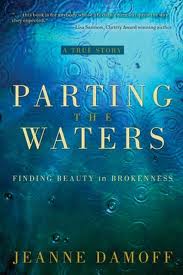
 How do you write a story like Jeanne Damoff’s Parting the Waters: Finding Beauty in Brokenness?
 With a lot of pain, joy, heartache, anger, love; most of all, love.
How do you read a story like Parting the Waters?
With a lot of pain, joy, heartache, anger and, yes, love. As you read it, you forget how well and beautifully written it is because the story this mother tells is that compelling.
We all know what being under water for at least 10 minutes means: brain damage. And that’s what it meant for Jacob. But no one would know how extensive until he awoke from a coma.
In the meantime, what did his parents hear?
“His brain is dying.”
“I have to tell you of all the options,” which included removing his feeding tube.
“At best he’ll be a vegetable the rest of his life.”
In Parting the Waters, Jeanne Damoff tells a story you read with tears and often in tears. And you ultimately read it with joy and a sense of wonder at the sheer tenacity of life.
It would trite but true to say that the Damoffs clung to their faith in God. But cling they did, even as they questioned and fought and doubted, even when the answer was often a silence, especially for the question of why.
Damoff walks the reader through those months and years of prayer, choices, decisions and agonies, along with the triumphs and successes and joys. And you do rejoice when Jacob takes his first steps, when he says his first word, when he wants to see his bedroom again, when he remembers things that should have been wiped away.
Damoff also introduces the hundreds of people who rallied around her family and stayed rallied – long-time friends, close relatives, doctors, nurses, therapists, Jacob’s classmates, and the people of their hometown of Marshall, Texas, sometimes total strangers. Many, many people were involved in this miracle named Jacob Damoff. His story is an affirmation of life, love and the human brokenness we all share.
I’ve never met Jeanne and George Damoff and their family, but if I asked them how they managed to survive, manage and overcome what happened to their family, I expect they would say something like, “We didn’t.”
Related:
Jacob’s Blessing, a poem.


