Showing posts with label The Artists Way. Show all posts

Thursday, July 12, 2012

Recovering a Sense of Faith

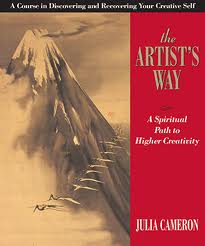
“Creativity requires faith,” writes Julia Cameron in The Artist’s Way: A Spiritual Path to Higher Creativity. “Faith requires that we relinquish control. This is frightening, and we resist it…This resistance is really very understandable. We are not accustomed to thinking that God’s will for us and our own inner dreams can coincide.”

The discussion of The Artist’s Way at TweetSpeak Poetry concluded a couple of weeks ago, but I kept reading and rereading, and blogging. Last week, I wrote that I was waiting for an email, one that I hoped would resolve a dilemma about the manuscript for A Light Shining, the sequel to Dancing Priest.

The email came. Nothing was resolved. Things got murkier.

The problem was that a serious reader, whose opinion mattered, had problems with the manuscript. As it turns out, the editor didn’t have the same problems; he had different problems. The publisher had only minor, very minor problems, easily fixable.

The problems posed by the reader and the editor would require an extensive rewriting of the manuscript. I don’t mean minor editing. I mean wholesale rewriting – characters disappearing, new characters appearing, new introduction, elimination of scenes that played through to then end, and elimination of whole sections (except for part 3 – everyone liked part 3). What they were describing was an entirely different book. Two entirely different books, actually.

Right now, I’m thinking through three possible courses.

First, choose the reader’s recommendation or the editor’s recommendation, or a hybrid of the two, and completely rewrite the book.

Second, ignore both and plunge ahead.

Third, shelve it. Put it away. Go on to something else. Essentially, forget it and the rest of the Michael Kent saga, because there is no saga without this book. This one is the critical one, the pivot upon which all the rest turn.

The first course is possible, but then whose book am I writing? The serious reader’s? The editor’s? Something inside me resists doing this, and I’m honest enough with myself to admit it could be pride or ego. But I don’t think that’s it. If I were writing to sell lots of books, writing to “the market,” writing to get on the New York Times Bestsellers List or become famous, this would clearly be the path to follow.

I’m not doing any of those things.

The second course is really not an option. If two significant readers had major problems with the manuscript, then there is clearly something wrong with it. Something has to be changed.


Notice how I’m talking about the manuscript. It’s no longer a manuscript. It’s a problem.

The third course – put it aside, shelve it – means shelving a dream. Perhaps shelving the dream.

I’m truly not trying to make this more dramatic, but these stories, starting with Dancing Priest, were part of a dream. This is what I wanted to do, almost as far back as I can remember. I set the dream aside for a long time, but I never forgot it. It was always there in my mind.

When I started writing it all in my head in 2002 and started putting it on paper in 2005, and then adding more and more to the story, and then turning it all into a series of stories, I didn’t know if there would ever be anyone besides myself who would read it.

And that was OK.

While the problem seems to be one of editing or rewriting, it’s actually bigger than that: I’ve lost faith in the manuscript, and that means I’ve lost faith in all the manuscripts that follow. Perhaps my faith in the story was too fragile to withstand what’s now happened. Perhaps it’s best to let it all go and look in other directions.

So I read this final chapter in The Artist’s Way, “Recovering a Sense of Faith,” and I find that it’s good to read. It doesn’t really change anything about the manuscript. But it’s good to know that others have experienced this, that a lot of the resistance comes from within, and that my inner dream may be exactly what God has planned for me.

That is the hope.


We’ve finished reading The Artist’s Way at TweetSpeak Poetry. Next Wednesday, Lyla Lindquist will begin a new discussion – the first six chapters of The Anthologist by Nicholson Baker. Come join us if you’re so inclined, or at least come see what it’s all about.

Wednesday, July 4, 2012

Waiting for an email


I’m waiting, rather patiently, I believe, for an email. The email will have an attachment. The attachment is the edited version of A Light Shining, the sequel to my novel Dancing Priest. As important as the edited version is, the message of the email itself is also important.

The message contains the answer to a question. And the question is – does the first part of the manuscript need a significant rewrite?

A reader who’s read the manuscript says yes. The publisher, who’s read the manuscript twice, says no. The first report from the editor was a kind of rave, indicating no problem with the part in question. In my response, I asked the direct question: Does Part 1 need to be rewritten?

So I’m waiting. The answer, and the edited manuscript, are coming soon.

To explain why the reader had this reaction would be to give away a chunk of the story, so as maddening as it is, I can get more specific. The rewrite, if it happens, would not be minor. It would require some fairly extensive reworking of other parts of the manuscript, and possibly push the publication date back.

You might think, if the publisher likes it and the editor likes it, does this one reader’s report really matter?

The answer is: yes, it matters.

It matters because I trust the reader’s judgment. I trust the reader, the one who said Part 1 need to be written, along with some other things.

It matters to the point that my faith in the manuscript has been shaken.

And I’ve indulged myself – indulged is the right word – with the thought of chucking the whole thing. That isn’t going to happen, but it’s some indication of how I’ve reacted.

It’s not like getting one bad book review in the midst of a whole bunch of good reviews. Authors can fixate on one bad review, so they don’t read reviews at all. I read all the reviews of Dancing Priest. They were all good; a few had some minor criticisms (“Anglican ordinations don’t happen exactly that way!”) but they were minor points in otherwise good reviews.

This was a book review. This was a report by a serious reader. This wasn’t a reader whom you’ve asked for a jacket blurb. It was more serious than that.

How the editor answers the question is important, but it still may not be the deciding factor.

It’s been helpful to have been reading The Artist’s Way: A Spiritual Path to Higher Creativity by Julia Cameron. I’ve been reading it for the TweetSpeak Poetry book discussion, and while the discussion ended last week (everyone else reads faster than I do), I decided I wanted to continue reading it closely and post on each of the three remaining chapters (which will also take me right up to the next book scheduled for discussion, The Anthologist by Nicholson Baker).

In Chapter 11 of The Artist’s Way, entitled “Recovering a Sense of Autonomy,” Cameron says this: “The creator made us creative. Our creativity is our gift from God. Our use of it is our gift to God.”

Cameron is right. And I take this gift seriously, but the receiving and the giving. In the middle of all of this personal, inward turmoil, I've found an odd comfort in those words, and in the book itself.

Even without the answer from the editor, I know what I am likely to do.

But I’m still waiting to see what he says.

Wednesday, June 27, 2012

Using Work to Block Creativity

You will never hear of any organization – business, government, non-profit (including religious) – say that creativity is no value. No one posts a sign over the building door that says “Abandon creativity, all who enter here” or “Leave your imagination at the door.”

Yet, as an executive I once wrote speeches for always said, “Policy is what you do, not what you say.”

The fact is, in organizational settings, we like to strangle creativity in the cradle, if not sooner.

I might even go so far as to say that most workplaces want work as opposed to creativity – even if creativity will save money. We are encouraged to work long and hard. Workplaces like workaholics – people who live their jobs 16 hours a day (and longer).

I know this. I speak from experience.

As Julia Cameron points out in The Artist’s Way: A Spiritual Path to Higher Creativity, workaholism is a self-inflicted block on creativity – one among several, including food, alcohol, dry and desert-like times, fame, sex, and even competition with your peers. (Cameron has an interesting discussion, in which she contrasts the spirit of competition with the spirit of creation.)

I once worked at a place that offered a rather toxic combination of many of these things. Long hours were encouraged and expected. People were encouraged to compete against their colleagues, with the inevitable back-stabbing and politics. The most proficient politicians were promoted. A “blame culture” prevailed, in which taking risk, trying new things and stepping outside a very small comfort zone were all discouraged.

Not for nothing did the company stay in continual reorganization.

In that environment, the choices were two: go with the flow, or go against the flow. Both could be done. Both had costs.

Creativity can be a threatening thing to an organization, because it leads to change, and the upending of carefully constructed political systems, and the threatening of someone’s perceived influence and power.

But creativity is equally threatening to individuals, including those of us who try to practice it, and for very similar reasons: it leads to change, it upsets the way we’re used to doing things, and it can often force a sense of honesty when you would prefer to remain in ignorance.

So you take refuge in workaholism. You work harder. You pay less attention to your family and friends. You don’t volunteer at church or with the local scouting troop. You bury yourself in a busy-ness that is only the appearance of work, and not anything like God intended our work to be.

And while we can blame “the office,” management, our colleagues or all of the above, the fact is that we are the ones making the choice. And we will choose the creativity block of workaholism because we find a benefit of some kind – safety, security, maintaining the status quo, avoiding painful decisions, preserving our empire or any of a host of other things we tell ourselves we need or want.

But this is not the way it’s meant to be, and deep down, we know it.


Led by Lyla Lindquist, we’re discussing The Artist’s Way over at TweetSpeak Poetry. Today’s discussion concludes with the last three chapters of the book. I chose to focus on chapter 10, “Recovering a sense of Self-Protection,” and plant o continue posting for two more weeks on the two remaining chapters.

Wednesday, June 20, 2012

Knocking Down All the Excuses

“Creativity occurs in the moment,” Julia Cameron writes, “and in the moment, we are timeless.”

Led by Lyla Lindquist over at TweetSpeak Poetry, we’re reading The Artist’s Way: A Spiritual Path to Higher Creativity by Julia Cameron. We’re recovering a lot of things in this book, and in the two chapters we’re working through today, we’re recovering a sense of strength and a sense of compassion.

The term “strength” is a bit misleading here. It is that, but it’s also about all the things we do, say and believe that prevent us from the creativity we’re capable of. And acknowledging them. And overcoming them.

Like how we allow criticism, or a thoughtless word, completely deflate us.

How we allow academia – professors and teachers – to work out their own anxieties and failures on us.

Or idiotic statements from publishing experts, like an agent at a writer’s conference: “if it doesn’t have vampires or werewolves in it, it ain’t gonna sell” (my own true story) (to my credit, I thought the statement was ridiculous when I heard it).

How we allow a single failure or loss determine everything else that happens.

Or my favorite, the one that hits closest to home:

I’m too old for that.

I’m too old to publish my first novel. I’m not 25 or 28. Publishers will totally disregard me because of my age. Publishers worship youth.

It’s all true.

And it’s all false.

The decision to publish my first novel came when I was 59. I was 60 when it was actually published. I will be 61 when the second one is published.

I am in what is probably the most creative period of my life. I watch a YouTube video, and immediately plot out a short novel. And more to the point, I write a draft of it – almost 20,000 words. (Another excuse: Who’s going to buy a short novel?)

My first and second novels are about a young man in his 20s, not an older man in his early 60s. Neither book is autobiographical. Some of my experiences inform both books; they couldn’t help but do that. But it’s almost all in the novels’ small stuff . Of course, small stuff is important, too.

It turns out I wasn’t too old to write a first novel. Or a second. Or what may follow after.

"Too busy,” “too many demands on my time,” “too tired” – they’re all excuses.

"Too old" -- another excuse. I owned it. And I kissed it goodbye. See ya!

My friend David Rupert describes a woman he met at a writers’ conference – who was 90. It was her first writers’ conference.

She wasn’t too old. She still isn’t.

When I wrote the closing Olympic ceremonies scene in Dancing Priest, I was in the moment with 23-year-old Michael Kent, holding that flag, walking around that stadium, listening to that great silence, and weeping.


“Creativity occurs in the moment,” says Cameron, “and in the moment we are timeless.”


To see more posts on these chapters of The Artist’s Way, please visit TweetSpeak Poetry today.

Wednesday, June 13, 2012

Moving Inside the Story

Today at TweetSpeak Poetry, we’re discussing chapters 6 and 7 of Julia Cameron’s The Artist’s Way: A Spiritual Path to Higher Creativity at TweetSpeak Poetry. The two chapters, “Recovering a Sense of Abundance” and “Recovering A Sense of Connection,” include issues and problems experienced by every writer, and presumably every painter, sculptor, musician, and every other creative arts person. In fact, I’d go so far to say that what Cameron describes in these chapters has been experienced by anyone who has done something creative, and not just us writerly and painterly types.

The problems?

The desire to suffer and be deprived. Perfectionism. Risk (actually, adversity to risk). Jealousy.

Of all the issues she raises, the most familiar to me is perfectionism. It took a long time for me to be convinced (or convince myself) to let go of a manuscript. I had never had that problem with speeches, press releases, term papers, backgrounders, and all kinds of documents for school and work – likely because they had deadlines.

My two novel manuscripts? A totally different story. I rewrote the first until I couldn’t stand it any more and put off someone who wanted to publish it for more than a year. The second was not as intense, but letting go of it was still difficult.

And I read something in The Artist’s Way that explained why. A quotation by Fernando Botero, the Colombian artist. He’s speaking of painting, but what he says applies equally to writing:

When you start a painting, it is somewhat outside you. At the conclusion, you seem to move inside the painting.

Letting go of those manuscripts was letting go of myself. The story I was writing had become part of me, and I had become part of the story. To put those manuscripts in the hands of someone else was to make myself open and vulnerable. Allowing others to read the manuscripts –  including my wife, who has not yet read the second one – was to stop playing it safe, to take a risk.

I’ve said before that my wife noted that I was all over the first manuscript, what became Dancing Priest. It’s about the same for the second, A Light Shining. If we make it to Numbers 3 and 4 (still a question for the publisher and for me), and especially Number 4, I’m going to be a basket case. There is a character in Number 4 whom I gradually came to understand as autobiographical. I can’t explain how it happened, or why it happened, but the events of the story necessitated a character like this one.

When I realized who this character was, and it took quite a while for that to happen, I was rather stunned. I still don’t understand it. But he plays a vital role in the story.

Had I deliberately planned to create a character I knew was largely like me, it wouldn’t have been this one. For one thing, he’s a lawyer.


Led by Lyla Lindquist, we’re discussing The Artist’s Way over at TweetSpeak Poetry, where you’ll find links to more posts on these two chapters.

Monday, June 4, 2012

Fiction Grounded in Reality


“People frequently believe the creative life is grounded in fantasy. The more difficult truth is that creativity is grounded in reality, in the particular, the focused, the well observed or specifically imagined.”
                              Julia Cameron, The Artist’s Way

A few months back, my wife told me something that startled me. “Your book,” she said, referring to Dancing Priest, “is filled with you.”

I was surprised because (1) I’ve never been in the Olympics, (2) I do ride a bike but have never raced, (3) I am not an ordained priest or even a member of the Anglican Church, (4) I met my wife in very different circumstances than Michael Kent met Sarah Hughes, and (5) I don’t know how to tango. A quick glance says there’s very little about me that is obviously in the book, with one significant exception: how one character comes to faith is based very closely on my own experience.

So her comment at first didn’t make much sense. And then I reread it, and discovered she was right. The fiction that is Dancing Priest is grounded in reality – a reality that’s very familiar.

And more than that, the sequel manuscript is as well. I’ve been editing – wrestling is a better word – the manuscript, and I’m realizing that it, too, is grounded in a familiar reality. So are the other manuscripts in the series (if it goes that far). So is the poetry I write. And the novel manuscript that’s completely different from what I’ve done so far. And the extended outline for still another novel. And the novella I’ve been working on, which is still unfinished but I have a really cool photo by Claire Burge for the cover.

Reading over everything I’ve done, I’ve learned there are some consistent themes, also grounded in that familiar reality.

The desire to create something exceptional.

How that desire faces circumstances or people standing in the way.

Unknown, unexpected forces or people becoming actively involved, without one’s awareness.

A belief that all will come right, even if not in this life.

The reality of faith, and the conflict it evokes.

These themes play through Dancing Priest and its sequel; through six more manuscripts behind it; through a manuscript totally unrelated to Dancing Priest; and the novella.

All of the themes are grounded in a reality I’m more than familiar with.

Nonetheless, it is still surprising. I thought I had made all of this stuff up. It turns out I hadn’t. Not really.


Led by Lyla Lindquist, we’re discussing Julia Cameron’s The Artist’s Way: A Spiritual Path to Higher Creativity over at TweetSpeak Poetry. This week’s discussion covers chapters 4 and 5 – “Recovering a Sense of Integrity” and “Recovering a Sense of Possibility.” The main article at TweetSpeak will post on Wednesday.

Tuesday, May 29, 2012

20 Sentences


Over at TweetSpeak Poetry, we’re reading Julia Cameron’s The Artist’s Way: A Spiritual Path to Higher Creativity. The book is designed for people experiencing a creative block, like writer’s block. This week’s reading covers two chapters, “Recovering a Sense of Identity” and “Recovering a Sense of Power.”

Reading about all the skepticism, doubts, self-doubts, poisonous playmates, crazymakers and missed opportunities makes me grateful that I generally haven’t experienced any of these things. Perhaps it’s more of a case of seeing them coming and avoiding them. I do know a lot of things can influence writing, including a lot of frustrations.

Cameron suggests a short exercise to help retrieve memories and misplaced fragments of ourselves and our lives, a kind of remembering to create understanding of who we are and who we might want to be, and what happened in between. The exercise is completed 20 sentences. I did it, and I learned a few things.

So here goes.

My favorite childhood toy was: not a toy. It was actually a small red suitcase that I carried everything important in – my drawstring bag full of marbles, my plastic army soldiers, my cowboy gun and holster, occasionally a book. The only important thing that didn’t fit was a jack-in-the-box my father brought home for me from a trip to New York.

My favorite childhood game was: Monopoly. After that, it was playing army in the woods near my house.

The best movie I ever saw as a kid was: “Some Like It Hot.”I know I’m supposed to say something like “Old Yeller” or “Bambi,” but the Jack Lemmon- Marilyn Monroe movie was the one I have the best memories of.

I don’t do it much but I enjoy: hiking, like in Shaw’s Nature Reserve west of St. Louis. It has everything – trails, hills, a river, bottomlands, bluffs, wildflowers, everything.

If I could lighten up a little, I’d let myself: laugh more at work

If it weren’t too late, I’d: bike across America. Who knows, maybe it’s not too late.

My favorite musical instrument is: the violin. It used to be the piano. I don’t play either, or any other instrument, with the possible exception of the air guitar.

The amount of money I spend on treating myself to entertainment each month is: between $50 and $75. Mostly on books. Well, entirely on books. This doesn’t include things I do with my wife.

If I weren’t so stingy with my artist, I’d buy him/her: a house in the woods, or maybe a loft condo. Well, most likely an occasional ice cream cone.

Taking time out for myself is: easier than it used to be.

I am afraid that if I start dreaming:…actually, I’m not. I dream all the time.

I secretly enjoy reading: crime stories, murder mysteries and certain romance novels.

If I had had a perfect childhood I’d have grown up to be: boring.

If it didn’t sound so crazy, I’d write or make: fiction full-time. Or spend six months in India. Or both.

My parents think artists are: OK. My mother is thrilled to have a published author in the family. If he were still alive, I don’t know what my father would say.

My God thinks artists are: creating in His image.

What makes me feel weird about this recovery (from artist’s block) is: I don’t have one to recover from. I’m not exactly sure why I’m reading this book but I am enjoying it.

Learning to trust myself is probably: something fairly new.

My most cheer-me-up music is: Abba.

My favorite way to dress is: t-shirt, shorts, barefoot. Like I’m dressed while writing this blog post.

So how would you complete these sentences?


Led by Lyla Lindquist, we’re reading at discussing The Artist’s Way at TweetSpeak Poetry. The main weekly post is tomorrow, and you can check then for links to other posts on these two chapters. 

Thursday, May 24, 2012

Confessions of a Shadow Artist

When I graduated from college with a degree in journalism, my dream was not to be a great newspaper reporter or editor. What I wanted to be was a writer – a novelist, to be specific. In my early 20s, I started working on a novel manuscript entitled “Sisters.” A friend at work was working on a non-fiction book, and we often talked and compared notes and read each other’s stuff.

For a time, I even wrote a few short stories and submitted them to magazines (popular magazines that actually published short stories) but my experience was the usual rejection notes.

Then life intervened: career, children, and, well, just life. The novel manuscript ended up in a file drawer, and it may (or may not) be moldering away in my basement.

The dream didn’t die. But it wasn’t exactly alive, either. Perhaps it went comatose for  25 years.

What I became was a shadow artist, as defined by Julia Cameron in The Artist’s Way: A Spiritual Path to Higher Creativity. A shadow artist sits on the fringe of his or her art, prevented by time or circumstances or discouragement or whatever from engaging the art they might actually want to be part of.

That’s where I was.

I continued to read novels, a lot of novels, in fact. I read across genres – literary and popular, mystery and science fiction. I read a lot of Mark Twain and Charles Dickens. I did something I did not do in college – I read the entire works of William Faulkner. And Flannery O’Connor. I read a large number of Southern writers, and subscribed to a few literary magazines, like Southern Review and the Oxford American.

I had largely forgotten about that dream from my 20s, until a decade ago. I met a young pastor in Germany, and I heard a song on an airplane. And that meeting and that song eventually became Dancing Priest.

Perhaps still not serious about the dream, I kept the story in my head for three years, until Hurricane Katrina. That was a major event in the life of my family in Louisiana, and was transformative for me as well. And one thing that happened was that I started writing down what was in my head.

In 2008, I went to a writer’s conference with my pitch and my summary and my 10-minute meeting with an agent and my 15-minute consultation with an editor. Some encouraging things happened, and some discouraging things happened. I kept writing. I sent queries out to all the recognized agents (Christian fiction agents) and got turn-downs from every one of them. I kept writing.

I’ve told the story before. The publisher found me and finally persuaded me to let him publish it. I didn’t expect to tear up the New York Times bestsellers list, and I didn’t. And while it would have been wonderful for the book to receive major attention, the fact is that it didn’t.

But it did do something else. Everyone who read it, even a few who were mildly critical, were moved by it. A few put their finger on something that became more than obvious in hindsight: it is not a work of Christian fiction, as defined by the Christian publishing industry. And it is not a work of general fiction, as defined by the general publishing industry. It is something else again, perhaps a hybrid of the two.

I learned something else. People read it with great care. They paid attention to it. They called it a “big story,” which isn’t exactly the current fashion in Christian or general publishing circles (I should have thrown in a vampire or werewolf, or called it Dancing Vampire). But the people who read it closely made some interesting observations.

One of the most telling was this: that the book read like the author was wrestling with becoming a minister.

I’ve read it twice all the way through since it was published, and I believe I can say it is a work by a shadow artist who’s leaving the shadow behind him.


We’re discussing The Artist’s Way over at TweetSpeak Poetry, led by Lyla Lindqusit. I had a post here on Tuesday about the introduction to the book. Come join us over at TweetSpeak.

Tuesday, May 22, 2012

Logic-Survivor-Artist Brain

I’m reading Julia Cameron’s The Artist’s Way: A Spiritual Path to Higher Creativity. TweetSpeak Poetry is starting a discussion series tomorrow on it. The book, now 20 years old, is about creativity, artist’s block, and how to break artist’s block, and structured over a 12-week course.

Knowing our discussion leader Lyla Lindquist, I expect we will take a little less time than 12 weeks. Like maybe six. Tomorrow’s discussion ill cover the “introductory sections” and the first of 12 lessons. “Introductory sections” is a specific phrase. Lyla did not say “introduction.” She said “introductory sections” for a good reason – those sections cover 15 percent of the book (and my Kindle knows). These sections are of critical importance to the rest of the book, because they include your daily and weekly assignments.

Bah! More work! Who cares?

Well, I do. This may be some of the most important work I’ve done.

Part of what’s included in the introductory material is the “three brains” we deal with in life – Logic Brain, Survivor Brain, and Artist’s Brain. How many places have I worked where Logic Brain and Survivor Brain (doing only what’s known or safe) institutionally gang up on Artist Brain to kill off even small lurches toward creativity? And how many places have I worked there that turned out to be a terrible mistake?

The answer to both questions is the same. It’s not that Artist Brain is necessarily superior to the other two; I suspect all three are needed in any organization. But when faced with an overwhelming challenge, Logic Brain and Survivor Brain rarely come up with a solution.

Those three brains may explain most of my professional career.

In 1992, email had finally reached critical mass in the organization here I was working. We proposed doing an email newsletter for employees. The people responsible for our email system predicted the end of western civilization if we published even a text-only email newsletter. The discussions went on for months, until I realized that, short of shutting down the system, no one could really stop the newsletter. We launched our newsletter, and nothing happened to the system. Western civilization survived.

Three years later, something similar happened with the organization’s first web site. Western civilization once again survived.

Organizations, even artistic organizations, aren’t by nature kind to Artist Brain. Organizations tend to take on their own dynamic, and perpetuation of the status quo can become paramount, even when the status quo is falling apart and something new is called for.

Julia Cameron (not to mention Lyla Lindquist) would be amused to see how far I’ve already moved from creativity and artist’s block, and this is just the first week. I plan on having another post on Thursday on the first lesson – “Recovering a Sense of Safety.”

Come join us at TweetSpeak Poetry.