Showing posts with label William Brodrick. Show all posts

Monday, July 3, 2023

"Fatal Proof" by John Fairfax


Barrister William Benson has an unusual defendant in a murder trial. Karmen Naylor is the daughter of Tony Naylor, the leader of one of London’s two crime families. Karmen appears to be the exception – she left home early, made her way to university, and stayed away from London. She only returned to care for her father after he suffered a stroke. She’s charged with the murder of one her father’s top lieutenants. 

Of course, Benson himself is unusual, especially for a barrister. He served 11 years in prison for a murder he didn’t commit, studied law, and determined that he would become a criminal defense attorney. He has a string of legal victories over some of London’s top prosecutors. The prosecutors, and sometimes the judges, hate Benson and believe he was guilty. His assisting attorney is Tess De Vere, who hails from one of London’s top legal firms. She’s a top-notch investigator, more than attracted to Benson, and struggling with her own demons from the past.


The case against Karmen Naylor is largely circumstantial, complicated by the fact that the victim’s body has never been found. Investigators found his blood, and a lot of it, at the office where he worked. Traces of his blood were found in Naylor’s car and her boat. But the case is becoming more complex. More evidence unfolds. More witnesses emerge. And Benson is warned that if his client walks free, Benson and his associates won’t live to enjoy the victory. 


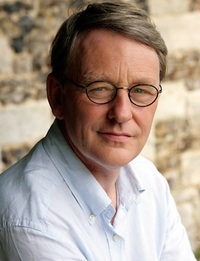
John Fairfax, aka William Broderick

Fatal Proof
 is the fourth William Benson novel by British author John Fairfax. Like its predecessors, it’s finely written, a gripping story that grabs you by the throat. Fairfax throws so many curves at his legal heroes that you wonder how they’re going to overcome them. But Benson’s prison time, extraordinary mind, and knowledge of the law will see the story through. More problematic is his relationship with De Vere, which is full of its own seemingly insurmountable obstacles.


John Fairfax is the pen name for British writer William Brodrick, the author of the Father Anselm mysteries. Under the Fairfax name, he’s also published Blind Defence and Forced Confessions. Brodrick was a friar in the Augustine order before he became a barrister and a writer. The Father Anselm mystery A Whispered Name won the Crime Writers’ Association Gold Dagger Award in 2009, and Forced Confessions was shortlisted for the Crime Writers Association Award in 2020. Brodrick lives in France. 


Fatal Proof and the other William Benson novels, like the Father Anselm stories, are among the very best mystery and legal thriller novels being written today. Fairfax / Brodrick has a gift, and I’m glad he’s sharing it with his readers.


Related:


Forced Confessions by John Fairfax.


Blind Defence by John Fairfax.


Summary Justice by John Fairfax.


My review of The Day of the Lie by William Brodrick.


My review of Brodrick’s The 6th Lamentation.


My review of The Gardens of the Dead by William Brodrick.


My review of A Whispered Name by William Brodrick.


My review of The Discourtesy of Death by William Brodrick.


My review of The Silent Ones by William Brodrick.


Some Monday Readings


Ten of the Most Important Battle Sites in the United States – Aaron Spray at The Travel.


Hitting the Road with Gettysburg – Elliott Drago at Jack Miller Center.


One Island in Time – Jeffrey Bilbro at Current Magazine reviews A History of the Island by Eugene Vodolazkin, as does J.C. Scharl at The European Conservative.


AI Is a Lot of Work – Josh Dzieza at The Verge.

Thursday, October 14, 2021

"Blind Defence" by John Fairfax


Barrister Will Benson is defending a particularly obnoxious client accused of murder. The client is a borderline small-time hoodlum, prone to use his fists, once accused of beating a policeman senseless but inexplicably released and not brought to trial. He’s now accused of killing the young woman he’d lived with for years. She was found hanging by her neck, a blood orange jammed into her mouth. 

Benson has his own deep issues to deal with. Convicted for a murder he said he didn’t commit, and serving 11 years of his sentence, he changed his plea and obtained an early release – and promptly became a barrister, causing no end of consternation in London’s legal and political establishment. An anonymous benefactor has backed him, providing him with funds to obtain his license, set up his practice, and even buy a houseboat, where he lives on one of London’s canals. Benson himself doesn’t know who the benefactor is. 


He’s already had one spectacular jury trial, defending someone everyone thought was guilty (Summary Justice). In this current case, even the DNA evidence says his client committed the murder, not to mention motive, opportunity, and how many times the client has lied to police. Benson has to raise the idea of the victim being a possible suicide, at least sufficient to raise a reasonable doubt. 


John Fairfax, aka William Brodrick

With the help of his legal solicitor Tess De Vere and his loyal office staff, Benson soon finds himself embroiled in a case with roots in organized crime, police corruption, and his own old demons from prison. And the Cabinet-level minister of Justice is pulling out the stops to destroy him, and Benson doesn’t even know it.


Blind Defence (British spelling) by John Fairfax is the second of the Will Benson legal thrillers, It is so engrossing that the reader finds himself on the edge of his seat, holding his breath as he wonders what will happen next. It’s a story in which nothing is ever what it seems to be, with an defending attorney whose fight for his clients is saturated with his own guilt and innocence.


John Fairfax is the pen name for British writer William Brodrick, the author of the Father Anselm mysteries. Under the Fairfax name, he’s also published Summary Justice and Forced Confessions. Brodrick was a friar in the Augustine order before he became a barrister and a writer. The Father Anselm mystery A Whispered Name won the Crime Writers’ Association Gold Dagger Award in 2009. Brodrick lives in France. 


With Blind Defence, Fairfax has produced a story in which the supposed upholders of law and justice often compromise themselves, villains can emerge from the dark at a moment’s notice, and the ghosts of past crimes return to haunt the living. Including the barrister.

Thursday, September 23, 2021

"Summary Justice" by John Fairfax


William Benson is not your typical British barrister. In his early 30s, he has a philosophy degree. He comes from a family of fishermen. Never married, he lives by himself with a cat on a houseboat on one of London’s canals. He’s also a convicted murderer. 

Summary Justice by John Fairfax is the first in the William Benson legal thriller mysteries, and it keeps the reader wide-eyed at how all of this happened, the murder case Benson’s defending, how he’s managed to practice law after serving 11 years of a life sentence in prison, and how he’s managing to continue working despite the opposition of the legal establishment, a leading member of Parliament, and the family of his alleged victim, who are not above acts of petty harassment, vandalism, and even physical attacks. 


The case Benson is the defending attorney for involves the murder of the owner of a transport company. A woman working for the company is accused of the murder, and it looks like an airtight case. Her DNA was even found on the murder weapon, a broken bottle of beer. She had motive, opportunity, and was seen at the scene of crime. The evidence seems seriously stacked against her. 


John Fairfax, aka William Brodrick

What Benson sees, however, is the similarities to his own murder trial, and a successful defense may help vindicate his own experience, at least in his own mind. How the author weaves the past and the present together is one of the hallmarks of this first-rate mystery novel. And he adds to the narrative blend with Tess De Vere, the woman solicitor who is working with Benson. De Vere is a member of one of London’s most reputable legal chambers, and she faces intense opposition to her work with Benson. She’s also learning that Benson isn’t what she first thinks he is.


John Fairfax is the pen name for British writer William Brodrick, the author of the Father Anselm mysteries. Under the Fairfax name, he’s also published Blind Defence and Forced ConfessionsBrodrick was a friar in the Augustine order before he became a barrister and a writer. The Father Anselm mystery A Whispered Name won the Crime Writers’ Association Gold Dagger Award in 2009. Brodrick lives in France. 


Summary Justice becomes one of those books that is difficult to put down – until it becomes impossible to put down. Fairfax/Brodrick had a different sleuth altogether in his previous novels – a former lawyer who became a monk. In this series, he has a different kind of monk – a convicted murderer. It’s a crackerjack story.


Related:


My review of The Day of the Lie by William Brodrick.


My review of Brodrick’s The 6th Lamentation.


My review of The Gardens of the Dead by William Brodrick.


My review of A Whispered Name by William Brodrick.


My review of The Discourtesy of Death by William Brodrick.


My review of The Silent Ones by William Brodrick.

Thursday, February 6, 2020

"The Silent Ones" by William Brodrick


Between 2003 and 2015, British monk turned barrister William Brodrick published six mystery novels in the Father Anselm Duffy series. To call them mysteries is something of a disservice; that’s the genre they fit but they are far more. Brodrick writes really fine novels that happen to have a strong mystery element to them, and to start one is to know that you will not end up where you might expect.

The Silent Ones is the sixth and (so far) final entry in the series. It doesn’t disappoint. Like Canadian author Louise Penny and her Inspector Gamache mysteries, Brodrick’s stories only get better with each succeeding book. 

What Brodrick tackles here is the story that has publicly dominated the Catholic Church for the past 20 years – the abuse of children by the clergy. It’s a difficult story to tell and to read, even if it omits graphic descriptions. The reader doesn’t need to know the details because they are, tragically, so easy to imagine from today’s headlines.

William Brodrick
A homeless man comes to Larkwood, the monastery of the Gilbertine Order where Father Anselm lives and works. Like any visitor seeking shelter, he’s given a bed, and slowly he comes to make himself rather useful as a handyman. Then Father Anselm receives a mysterious and unnamed visitor, who asks him to find a man who’s disappeared after being question about child abuse. The man is Larkwood’s handyman, and he turns out to be a priest from another order.

But nothing in the case is straightforward. The child who made the accusation may have lied. His grandfather and uncle know more about what’s happening than they say. A reporter is tipped off about what’s going on, and he leads the press to Larkwood. The reporter himself has a family that will turn out to have untold secrets. 

Through an unusual set of circumstances, Father Anslem soon finds himself having to defend the accused man in the courtroom. And it’s there that the secrets of so many people come to be pulled into the light of day. 

Brodrick was a friar in the Augustine order before he became a barrister and a writer. He’s written six of the Father Anselm mysteries, with A Whispered Name winning the Crime Writers’ Association Gold Dagger Award in 2009. He lives in France. (And the Gilbertine Order was a real order of monks but was disbanded by Henry VIII during the dissolution of the monasteries in the 1530s.)

The Silent Ones takes hold of you and doesn’t let go. Gradually one surprise after another, and one secret after another, get teased out. By the end, we’re struck with wonder at what has turned into an exceptional story of the brokenness and frailty of the human condition.

Related:


Thursday, November 8, 2018

"The Discourtesy of Death" by William Brodrick


William Brodrick, author of the Father Anselm mysteries, doesn’t shy away from tough questions. In The Day of the Lie, he tackled the multiple shades of gray in old communist regimes, and how secret police and prisoners might not be so different after all. In The Whispered Name, the subject was cowardice in wartime. 

In The Discourtesy of Death, Brodrick considers mercy killing. Or is it assisted suicide? Or is it murder?

The prior of Larkwood Monastery, where Father Anselm lives and works, has decided that Father Anselm’s gift of detection needs to be shared, a “light in the darkness,” so to speak. Without his cooperation, Father Anselm has just been featured in a splashy Sunday newspaper story – about how a monk solves crimes. It results in the monastery receiving all kinds of communications seeking Father Anselm’s help. 

Then an anonymous letter arrives. It suggests that a woman who had been paralyzed had not died of cancer but was actually murdered. And that’s the case Father Anselm is told to pursue. The woman’s husband, a well-known television personality, is the likely suspect. He’s due to be discharged from prison after throwing a brick through a store window that injured a boy. The couple’s young teenaged son has been living with his grandparents; the grandfather is a former British Army commando who was stationed in Northern Ireland during the Troubles. And there’s the attending doctor, who signed the woman’s death certificate and would have known if it had been murder.

In short, there’s no lack of suspects. Father Anselm enlists the help of a former client from his law practice days whom he successfully defended twice for fraud, even though the man was likely guilty. Through all of the investigation, Anselm hopes the man will show remorse and make restitution. 

William Brodrick
But in a Father Anselm mystery, things are never what they appear to be. And Father Anselm knows far more than he lets on, even to his prior.

Brodrick was a friar in the Augustine order before he became a barrister and a writer. He’s written six of the Father Anselm mysteries, with A Whispered Name winning the Crime Writers’ Association Gold Dagger Award in 2009. A seventh, The Silent Ones, is being published this month. He lives in France. (And the Gilbertine Order was a real order of monks but was disbanded by Henry VIII during the dissolution of the monasteries in the 1530s.)

The Discourtesy of Death is a compelling mystery that forces the characters (and the reader) to seriously examine beliefs and notions of life, compassion, and mercy. No one, including the reader, is going to be let off easy.

Related:


Top photograph by Andrei Lazarev via Unsplash. Used with permission.

Thursday, October 11, 2018

“The Day of the Lie” by William Brodrick


This is one of the best books I’ve read this year.

Father Anselm of the Gilbertine Order Larkwood Monastery near Cambridge receives a call from John Fielding, who’s been a friend since they were 11 years old and sent to the same school. Anselm had gone into law before becoming a monk, while John went into journalism. John had traveled globally and had been a reporter for BBC when he was forced to leave Warsaw in 1982 for “espionage.” Which translates as talking to dissidents.

Since then, John had been involved in an automobile accident and had lost sight in both eyes. And he needs help. The woman he was meeting with in 1982, who was to connect him to a shadowy dissident known as the Shoemaker and had herself been arrested, had shown up at his door in London. She was asking for help in bringing to trial the man in the secret police who had arrested them. 

But this wasn’t her first arrest by the secret police officer. That had happened in 1951. She and the officer had been in the anti-Nazi resistance together as teens. In 1951, he had arrested her but executed her husband. He had also persuaded her to give up the child she was carrying and gave birth to in prison.

And now, the officer had survived the fall of the communist regime in 1989 and was quietly retired, spending his days with his stamp collection. Many people want him brought to justice.

In other hands, The Day of the Liewould have been an interesting story of the aftermath of the Cold War. In the hands of author William Brodrick, the story is less a mystery novel and far more serious literary fiction, with a slight suspense element to it. This novel is as good as any of the John LeCarrenovels, and LeCarre ranks as one of the best spy story writers.

William Brodrick
Reading this story is like opening kachina dolls. You think you’ve found the answer – for example, who the informant was that betrayed John and the woman – and it turns out not to be an answer but only a path deeper into the story. And along the way Brodrick explores human motivation and psychology, the damage wreaked by years of first Nazi and then Soviet domination, and how all that history continues to shape, guide, and distort the present.

Brodrick was a friar in the Augustine order before he became a barrister and a writer. He’s written eight of the Father Anselm mysteries, with A Whispered Name winning the Crime Writers’ Association Gold Dagger Award in 2009. He lives in France. (And the Gilbertine Order was a real order of monks but was disbanded by Henry VIII during the dissolution of the monasteries in the 1530s.)

The Day of the Lieis a masterpiece, and I don’t use that term lightly.

Related:


Top photograph: Mokowtow Prison in Warsaw, by Jolanta Dyr via Wikimedia. The prison plays a significant role in The Day of the Lie.

Thursday, July 26, 2018

"A Whispered Name" by William Brodrick


You start to read a mystery, one in a series that you’ve been enjoying. You like the detective, you like the way the author writes, you like the interesting stories that are told. And as you begin reading the next book in the series, you discover you’re reading something else entirely. You keep looking for the mystery, the whodunit, and it doesn’t seem to be there. 

You realize as you read on – because you’re compelled to read on – that this is no mystery novel. Yes, it has the familiar detective – Father Anselm of Larkwood monastery in England. Yes, it has an air of mystery about it, because there is a mystery to be solved, or to describe it better, a 90-year-old enigma to be deciphered. And if it can be deciphered, it must also be understood.

A Whispered Name by British-Canadian author William Brodrick is a stunning, serious, literary novel, one of the best I’ve read in years. I should have been prepared for it by the second Father Anselm mystery, The Gardens of the Dead, because that novel, too, broke the boundaries of the genre. But not to the extent of A Whispered Name, originally published in 2008.

Father Anselm, a former barrister, is tending his beehives at Larkwood. He’s approached by a woman and an old man, who ask him if he knew Father Herbert Moore, a member of Anselm’s Gilbertine Order and a founder of the monastery where Anselm lives and works. He did, but, as it turns out, not well, or not well enough. She tells him that if he didn’t know that Moore was an officer in World War I, then he wouldn’t know that Moore participated in a court martial of a young soldier named Joseph Flanigan. And she leaves.

Anselm, at the direction of his prior, begins to investigate. No one in the monastery apparently knew about Father Moore’s military service. Anselm must look farther afield, to old military records stored at Kew Gardens, diaries, and descendants of other officers. Each tidbit of information he’s able to glean comes with its own enigma.

The reader has a slight advantage over Father Anselm. Not only do we get the story of Anselm’s investigation, we also get the story of Herbert Moore as it unfolded at the time. The two lines of narrative move back and forth, until they finally converge. And what looks to be a fairly straightforward court martial during the Battle of Passchendaele in 1917 turns out to be anything but. And what happened in 1917 still has its clutches around the present.

William Brodrick
Brodrick was a friar in the Augustine order before he became a barrister and a writer. He’s written eight of the Father Anselm mysteries, with A Whispered Name winning the Crime Writers’ Association Gold Dagger Award in 2009. He lives in France. (And the Gilbertine Order was a real order of monks but was disbanded by Henry VIII during the dissolution of the monasteries in the 1530s.)

In the last 50 to 75 pages, there were few times I wasn’t moved to tears. I knew what had happened, and I knew why, in all of its convolutions. And when I finished, I knew I had read a story of substitution and redemption. 

A Whispered Name is a marvelous novel, a novel of war and family, national passions, bravery and cowardice and how the two may often be confused. And it's a novel about human decency surviving in the face of some of the worst conditions imaginable.

Related:


Thursday, March 8, 2018

"The Gardens of the Dead" by William Brodrick


A notable high court judge walks to a flea market-type location near Regent’s Canal in London. She has a purpose in mind – the visit the table of one Graham Riley. Minutes afterward, with a purchase of old spoons, she is sitting in her car, frantically making a phone call. And then she dies.

The dead woman is Elizabeth Glendinning, a former partner in law chambers with Father Anselm. Anselm is now a monk in the Gilbertine Order, who follow a rule similar to that of St. Benedict. When he learns of Elizabeth’s death, he knows he’s been left a key to a security box, a key given to him by his former law partner and to be used only if she dies.


Anselm is still haunted by the last case they worked on together, and his last case before joining the order. He and Elizabeth were defending a man charged with procurement of teenaged girls for prostitution. A single question by Anselm asked of the prosecution’s chief witness caused the witness to leave the courtroom, the case to collapse, and the defendant to be freed. The defendant was Graham Riley.

Elizabeth’s son, Nicholas, a doctor in Australia, flies home for his mother’s funeral. He finds the security box key as well and gets to the box before Anselm. What’s inside is the transcript of the Graham Riley trial. But why would his mother be concerned with a trial that happened 10 years earlier?

The Gardens of the Dead, first published in 2006, is the second Father Anselm mystery by British-Canadian author William Brodrick. It’s not so much a “whodunit” as it is a “what is going on here” and “nothing is what it appears to be” story. In that sense, it is similar to the first Father Anselm mystery, The 6th Lamentation, in which what appears to be a story about collaboration with the Nazis and war crimes turns out to be something quite different.

William Brodrick
This second mystery involves the full unraveling of the story of Elizabeth, Graham Riley, and George Bradshaw, the witness who walked out of court. And that unraveling will change everyone involved, including Anselm and Nicholas. The story moves from Anselm’s investigation, Nicholas’s research on his own, and Bradshaw, who has spent the last five years homeless but is the pivot in whatever it was that Elizabeth was up to.

In his own life Brodrick reverses the story of Father Anselm. He was a friar in the Augustine order before he became a barrister and a writer. He’s written eight of the Father Anselm mysteries, with The Whispered Name winning the Crime Writers’ Association Gold Dagger Award in 2009. He lives in France. (And the Gilbertine Order was a real order of monks, but was disbanded by Henry VIII during the dissolution of the monasteries in the 1530s.)

The Gardens of the Dead is a complex mystery, one that requires close reading. But when the answers finally come, the reader feels just as changed as the characters.

Related:


Top photograph: Part of Lincoln’s Inn, where Elizabeth and Anselm were members of law chambers in The Gardens of the Dead. Photo via Wikimedia Commons.