Saturday, March 19, 2022

Saturday Good Reads - March 19, 2021


I mentioned last week that one thing that concerned me about the Russian invasion of Ukraine was how our national media was marching in lockstep on the subject. It’s reached the point where if you question the prevailing narrative, you are by definition a supporter of Vladimir Putin. The direction our media seem to be marching in is toward war. Even my own local newspaper, the St. Louis Post-Dispatch, tipped in that direction this week. It’s been said that the media, particularly the national media, don’t report the news but instead report the ruling class’s prevailing narrative. Rod Dreher at The American Conservative turns that thought to the Russian invasion. 

Ryan Burge is a mainstream Protestant who studies the state of religion in America based on research and data. He’s published a book, 20 Myths About Religion and Politics in America, that says most of what we “know” and what’s reported about religion is flat-out wrong. One myth: Evangelical faith is declining. Terry Mattingly at Get Religion interviewed Burge about the book


Now we know it’s true, because The New York Times reported it. The Hunter Biden laptop story was not Russian disinformation; in fact, it was real. The big factchecking firm NewsGuard had to scramble to explain its original assessment two years ago. Jen Psaki, the White House press spokesperson, bobbed and weaved about her many tweets on the subject. Silence from Big Tech, which censored the story and the New York Post for reporting it. As the Washington Post says, democracy dies in darkness. Especially darkness of the news media’s own making.


More Good Reads


Ukraine


The Weakness of the Despot: An expert on Stalin discusses Putin, Russia, and the West – David Remnick at The New Yorker.


Faith With Feet And Hands’: Christians Bring Hope To Ukraine’s War Zone – Paula Rinehart at The Federalist. 


Poetry


“A White Knight” and “Never to Wend This Road Again” – Phil Rogers at Society of Classical Poets.


Late Winter – Maureen Doallas at Writing Without Paper.


Emily Dickinson and the creative ‘solitude of space’ – Magdalena Ostas at Psyche Magazine.


Life and Culture


Go Vegan & Electric? Unlikely – I’m an Environmentalist – Matthew Hosier at Think Theology.


If We're Back to 'Normal,' Why Am I Still So Exhausted All the Time? – Dan Sinker at Esquire.


Saturn’s Children: The Culture of Inversion, Part 2 – Paul Kingsnorth at The Abbey of Misrule.


The Identity Cult: On the mass conversion of our institutions – Martin Gurri at CityJournal. 


Escaping American tribalism: Only personal bravery can end polarisation – William Deresiewicz at UnHerd.


British Stuff


St. Bride’s Fleet Street – A London Inheritance. 


News Media


9 Films That Explore the Relationship Between Journalism and Truth – Maggie Smith at CrimeReads.


The Essential Value—and Deep Cost—of Reporting from War – Dan O’Brien at Literary Hub.


Writing and Literature


The Impossibility of Writing about Motherhood – Sarah Blake at Literary Hub.


John Dickson Carr: The Master of the Locked-Room Mystery – Gigi Pandian at CrimeReads.


Faith


Have You Ever Considered How Statistically Unlikely It Is that Jesus Changed the Course of History? – Justin Taylor at The Gospel Coalition.


A Bit of Earth – Glenna Marshall.


American Stuff


A Taste of Vicksburg – The Story of the Jam Jar – Sheritta Bitikofer at Emerging Civil War.


Blowin’ in the World – Girl Named Tom


Painting: Lady Reading, oil on canvas by Charles Joseph Frederic Soulacroix (1825-1879)

Friday, March 18, 2022

Definitions upside down


After Luke 22:24-30
 

He speaks a new definition

of greatness, the greatness

of heaven, not earth,

the greatness of love,

not authority, the greatness

of serving, not accomplishment,

a greatness they did not

recognize, the greatness of less,

the greatness of lesser,

the greatness of least.


He speaks a new definition

of service, of serving,

a serving that matters

more than receiving,

more than greatness,

a serving to meet

the needs of others,

not self.


He speaks a new definition

of leadership, the leader

who serves, leads by serving,

showing the way by meeting

the needs of others,

by sacrificing self.


Photograph by Nuno Silva via Unsplash. Used with permission.

Thursday, March 17, 2022

"The Other Victim" by Helen Durrant


An estate agent is stabbed to death in a house he was about to show the prospective and committed buyer. A burned body in found in a car in a canal. And a sixteen-year-old girl is missing. They all seem like isolated crimes, but Detective Inspector Matt Brindle of the Pennines Police and his team slowly come to realize that the various crimes are connected. But it takes a while to figure that out. 

The Other Victim by Helen Durrant is the second in the Detective Matt Brindle series, and it’s a complex tale of murder, organized crime, revenge, money laundering, and club dancers gone missing. Brindle is still dealing with a leg injury from an attempt on his life – an attempt which took the life of his police partner. The man the police ordered the hit is likely involved in this set of crimes as well.


Helen Durrant

Brindle lives with his mother on the family estate – one which needs a lot of work and with no money to pay for it. He convinces his mother to hold a fair and offer house tours. During the fair, his mother is seemingly saved from a robbery attempt by a charming older man, and she becomes quite smitten. Brindle, however, is convinced that the man is up to no good. He doesn’t know just how right he is – and there’s a connection to the crimes he’s investigating.


Durrant has published some 24 mystery books in several series. The first in the Detective Matt Brindle series is The Third Victim. Durrant is a retired teacher and lives in the northwest of England.


The Other Victim is a solid police procedural, but little seems to happen except the investigation for a considerable part of the book. And when things do begin to pop, they come with a rush. And while the estate agent is the first case to be investigated, it ends up being the last to be solved.


Related:


His Third Victim by Helen Durrant.

Wednesday, March 16, 2022

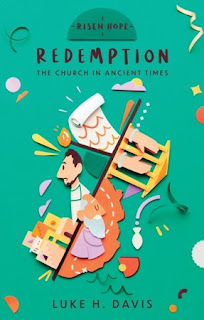
“Redemption: The Church in Ancient Times” by Luke Herron Davis


My knowledge of church history was spotty – at best – for a very long time. My grade school and undergraduate education was almost entirely secular. I took two years of catechism (Lutheran version), and in my 20s took several extension courses about the Old and New Testaments. But if you asked me what I knew about the history of the early church before my mid-30s, I would have given you a timeline that leaped from the book of Acts to St. Augustine, and from St. Augustine to the Reformation.  

That state of affairs changed, dramatically, when I pursued a liberal arts master’s degree in my mid-30s. I took course like “Athens or Jerusalem,” “History of the Early Christian Church,” and “The Image of Rome.” I read the early church fathers, like Origen, Athanasius, Clement of Alexandria, and Tertullian. I read Peter Brown’s marvelous biography of Augustine. I read the Didache. And the Desert Fathers (and a few Desert Mothers). I read Kenneth Scott Latourette’s A History of Christianity (two fat volumes) and The Rise of Christianity by W.H.C. Frend. And a whole lot more. 


And I learned that the Christian church had an unbelievably rich, complex, and often profound history. And I realized how much of that history had been erased from so many of my history courses in high school and college. And I’ve often wondered how one could introduce that history to children and young people.


Luke Herron Davis has an answer – a series on church history written especially for younger readers. The first volume in that series is Redemption: The Church in Ancient Times. And far from being a weighty tome that could be a weapon if thrown at someone, it’s short, readable, interesting, and tells engaging stories taken straight from the Gospels and the Book of Acts as well as other sources of early church history.


Davis tells the story of the church by telling the stories of some of its leading historical figures from the first through the sixth centuries A.D. Each entry is 10 to 12 pages, written in story format – enough to impart important information about each figure and whet the appetite for more.


The people included are Peter, Paul, Ignatius, Polycarp, Cyprian, Constantine, Athanasius, Ambrose, John Chrysostom, Jerome, Augustine, and Patrick. Many others are mentioned in side notes (including one of my favorite figures, Tertullian). Each chapter is written like a story, bringing a freshness and a contemporary feel. The reader feels an integral part of what’s happening. 


It's an easy, interesting read, and I suspect that even adults would enjoy it (and learn a few things).


Luke Herron Davis

Davis teaches at 
Westminster Christian Academy in St. Louis and chairs the Bible Department there. He’s also taught at schools in Louisiana, Florida, and Virginia. He describes himself as “Presbyterian body, Lutheran heart, Anglican blood, Orthodox spirit,” all of which have served him well in writing the Cameron Ballack mysteries. He has published three Ballack mysteries, Litany of Secrets (2013), The Broken Cross (2015), and A Shattered Peace (2017), and the first book of a new series, Joel: The Merivalkan Chronicles Book 1 (2017). He blogs at For Grace and Kingdom.


Redemption is not written to be a complete, encyclopedic overview of church history. What it does is, aiming at young readers, provide an introduction to some of the leading figures of early church history, the people who evangelized, taught, encouraged, and admonished, and who often had the specter of martyrdom hanging over them (like Polycarp, bishop of Smyrna, who was himself discipled by the Apostle John). These are the people who faithfully transmitted the faith to future generations, and Davis is providing a real service in introducing them in such an engaging way to contemporary readers.


Next weekReign: The Church in the Middle Ages.


Related:


Reading a Novel that Stars Your Hometown.


My review of Litany of Secrets.


My review of The Broken Cross.


My review of A Shattered Peace.


My review of Tough Issues, True Hope by Luke Davis.


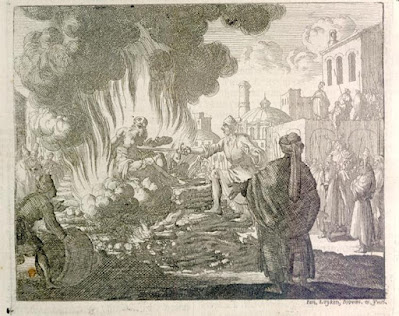
Top illustration: a representation of the burning of Polycarp of Smyrna (168 A.D.), drawn by Jan Luyken in 1685.

Tuesday, March 15, 2022

Poems and Photos: Kelly Belmonte, Tom Darin Liskey, and “Transit”


You might say I was there at almost the creation of Transit by Kelly Belmonte and Tom Darin Liskey. 

Well more than a year ago, I was pulled into a Facebook conversation between Belmonte and Liskey. They had been talking for some time about a collaborative effort. Belmonte is a poet, a blogger, and a management consultant specializing in non-profit organizational development.  Liskey is a poet, author, and photographer and photojournalist. If you read Belmonte’s poems and study Liskey’s photographs, a collaborative effort is a no-brainer. 


At the time, they were talking the basics of collaboration: what to include and exclude, how large a work, what publishing venues should be explored, layout and design, and related questions. Fascinated, I listened and offered only a word or two. The collaborators had this project well in hand.

To continue reading, please see my post today at Tweetspeak Poetry.

Monday, March 14, 2022

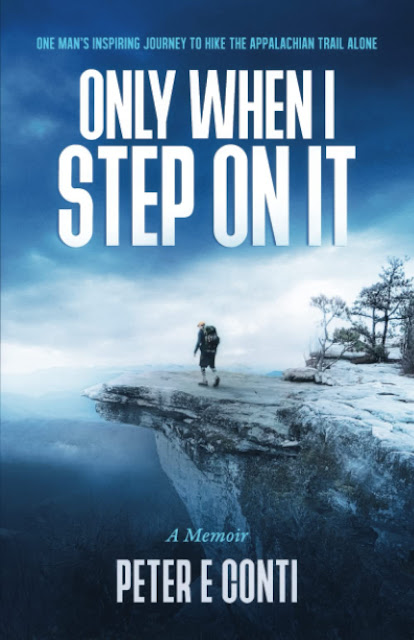
“Only When I Step on It” by Peter Conti


Peter Conti led what by any definition would be an active lifetstyle – running, biking, marathons, camping, motorbikes, marathons. His wife finally prevailed, and he sold his motorbikes, only to take up dirt bikes. He promised no racing. 

Until he raced. And crashed. And broke his pelvis into 23 pieces. His femur was separated from his pelvis, and when the doctors reattached it, they inadvertently crushed a main nerve. The result: excruciating pain.


After three physical therapies, three different doctors with three different pain med regimens, and no improvement, Conti gave up pain meds. Cold turkey. And he decided he would control and perhaps conquer pain by hiking the Appalachian Trail. The trail from Georgia to Maine is longer, in miles, than the distance from Washington, D.C. to Los Angeles. And he would do it, he decided, with almost no physical preparation except for what to carry in his backpack.


Conti tells his story in Only When I Step on It: One Man’s Inspiring Journey to Hike the Appalachian Trail Alone. And what a story it is, and what a journey he takes himself and the reader on.


Peter Conti

We learn the lingo of the trail, like NOBOs (northward-bund hikers, like Conti) and SOBOs (southward-bound hikers). We discover the kindness and helpfulness of people, and we also find a few jerks. We learn about wildlife and majestic views. We find out that “trail” often means rocks and rocky inclines. And we discover what it’s like to hike when every step of the hike is painful. 


Conti was determined to hike through the pain and to hike the trail within a year, a status known as “thru-hiker.” What he learns is that his physical impairment required him to rethink. He made it 400 miles, and through the Smoky Mountain National Park, before hitting a wall in Erwin, Tennessee. And he quit, almost permanently. After months of rest, he began to take short hikes on the trail near where he lived in Maryland. And slowly he discovered a way that might enable him to complete the trek – using his car to allow for shuttling back. Purists might sneer, but for Conti, this was his journey to conquer his pain. 


He tells an engaging story. Given Conti’s physical shape, Only When I Step on It also tells an amazing story of determination and resilience.


Related:


The video made by Peter Conti’s children when he completed the trail.

Sunday, March 13, 2022

A supper of bread, wine


After Luke 22:14-23
 

It’s set before them,

this simple meal of bread

and wine, a familiar rite

performed each year, 

a rite of remembrance.


This meal is a rite

of remembrance, but

remembrance forward,

a meal of passing over

becoming a meal

of passed over, named

for the one whose blood

is splashed on the door,

the sign given to save

those within.


They take bread,

break it.

They drink wine,

share it.

Forever.


Photograph by Sandro Gonzalez via Unsplash. Used with permission.