Saturday, April 30, 2022

Saturday Good Reads - April 30, 2022


If no one noticed before, it’s clear now that Russia has weaponized energy it its war on Ukraine. Europe has certainly taken notice; Russia cut off gas supplies to Poland and Bulgaria and Germany is now taking steps to reduce its dependence on Russian gas. The war has injected a healthy dose of realism into Europe’s energy policy, writes Peter Cleppe at The Critic Magazine. That realism, however, hasn’t made its way across the Atlantic. 

Author and speaker Randy Alcorn. Director of Eternal Perspectives Ministries, lost his wife Nanci last month after an extended illness. He writes about mourning her, but he reminds us all of what death is for the Christian: Dying is but going home.


E.C.R. Lorac (1894-1958) was a mystery novelist whose life and writing career spanned the Golden Age of Mystery. The British Library Crime Classics has republished some of her books, and editor Martin Edwards tells us they’ve gone a step farther with the well-known series. They’re publishing one of Lorac’s unpublished novels, the manuscript for which was recently found. It’s called Two-Way Murder.


More Good Reads


Writing and Literature


How to Write History While It’s Happening: Lessons from Tacitus – Richard Cohen at Literary Hub.


The Jovial Father and Tom Bombadil – C.R. Wiley at The Imaginative Conservative.


The Hard Stories of Katerine Peterson – Jessica Burke at Story Warren.


British Stuff


The Tower of Old London – Spitalfields Life. 


Ukraine


War without end: Putin’s Syria model – David Smith at The Critic Magazine.


The fate of the Moskva: The sinking of the decaying Soviet-era warship symbolizes Russia’s military malaise – Peter Caddick-Adams at The Critic Magazine.


The World Order Reset: China’s Ukraine Catastrophe, the Rise of Trans-Atlantis, and a New Age of Power – N.S. Lyons at The Upheaval.


Faith


The Tale of Two Kingdoms – Greg Doles at Chasing Light.


Revitalising the West – Marc Sidwell at The Critic Magazine.


John and Amy’s Kitchen Table (and what it says about worship) – Stephen Mcalpine.


Words in the Dark – Kara Dedert at Tabletalk Magazine.


Dispelling Unbelief – Andrew Kerr at Gentle Reformation.


Poetry


Counting Snails – Todd Wedel at Story Warren.


Proper Poetical Education – Peter Wayne Moe at The Millions.


Cold Pleasure – Curtis Yarvin at Imperial Melodies.


Life and Culture


Injured Parties: Considering the Wider Effects of Harmful Speech – Alan Jacob at The Hedgehog Review.


Come What May – We are Messengers


Painting: A young woman reading on a balcony, oil on canvas by Carl Schmitz-Pleis (1877-1943).

Friday, April 29, 2022

Broadcast news


After Luke 24:1-12
 

The women return, murmuring

among themselves, grappling

with the shock of the stone

rolled away, an empty tomb,

dazzling messengers saying

he was not there but risen.

They speak the news, meet

denial (what do women know?),

find accusations of idle talk,

fake news, ridiculed

in disbelief of what they say,

what they say they’ve seen.

Except for one, only one 

who runs to see, to prove

one way or the other, and

he finds the broadcast news

to be good.


Photograph by Kane Reinholdtsen via Unsplash. Used with permission.

Thursday, April 28, 2022

"Or Else" by Joe Hart


Alan Drake is a writer of thrillers. He’s returned from New York City to his hometown in upstate New York to care for his father, who’s been diagnosed as being in the early stages of Alzheimer’s Disease. Drake moves into a house across the street from his father. His mother died some years before; his divorced younger sister Kelly lives in a nearby community with her two young daughters. 

The town is filled with memories good and bad. His youngest sister Emma committed suicide here. His primary memory of the local Catholic church his family attended is being locked in the cavernous basement by his older brother, for which his mother blamed him. The neighbrohood has something else – his childhood friend Rachel Barren and her verbally abusive husband David, with their two young boys. He and Rachel fall into an easy friendship, and then fall into an affair. That is, until; Alan finds an anonymous note, telling him to stay away from Rachel. 

Joe Hart

One night, Alan hears a bang at two in the morning. Across the street, his father hears it, too. The bang turns out to be a gunshot; David is found dead, and Rachel and the two boys are missing. The police investigation goes nowhere. Alan is determined to find Rachel and her children, or at least find out what’s happened. He knows that if the police find out about the affair, he’d be Suspect No. 1.


And that takes the writer on his own journey of chases in the dark, financial skullduggery, the death of a beloved family friend, and an almost-successful attempt to kill him and his father. 


Or Else by Joe Hart is the story of Alan and his investigation. It’s an excellent fast-paced, layered story of love, family drama, the past haunting the present, and murder.


Hart is the author of 14 other novels, several novellas, and two short story collections. He lives in Minnesota. 

Wednesday, April 27, 2022

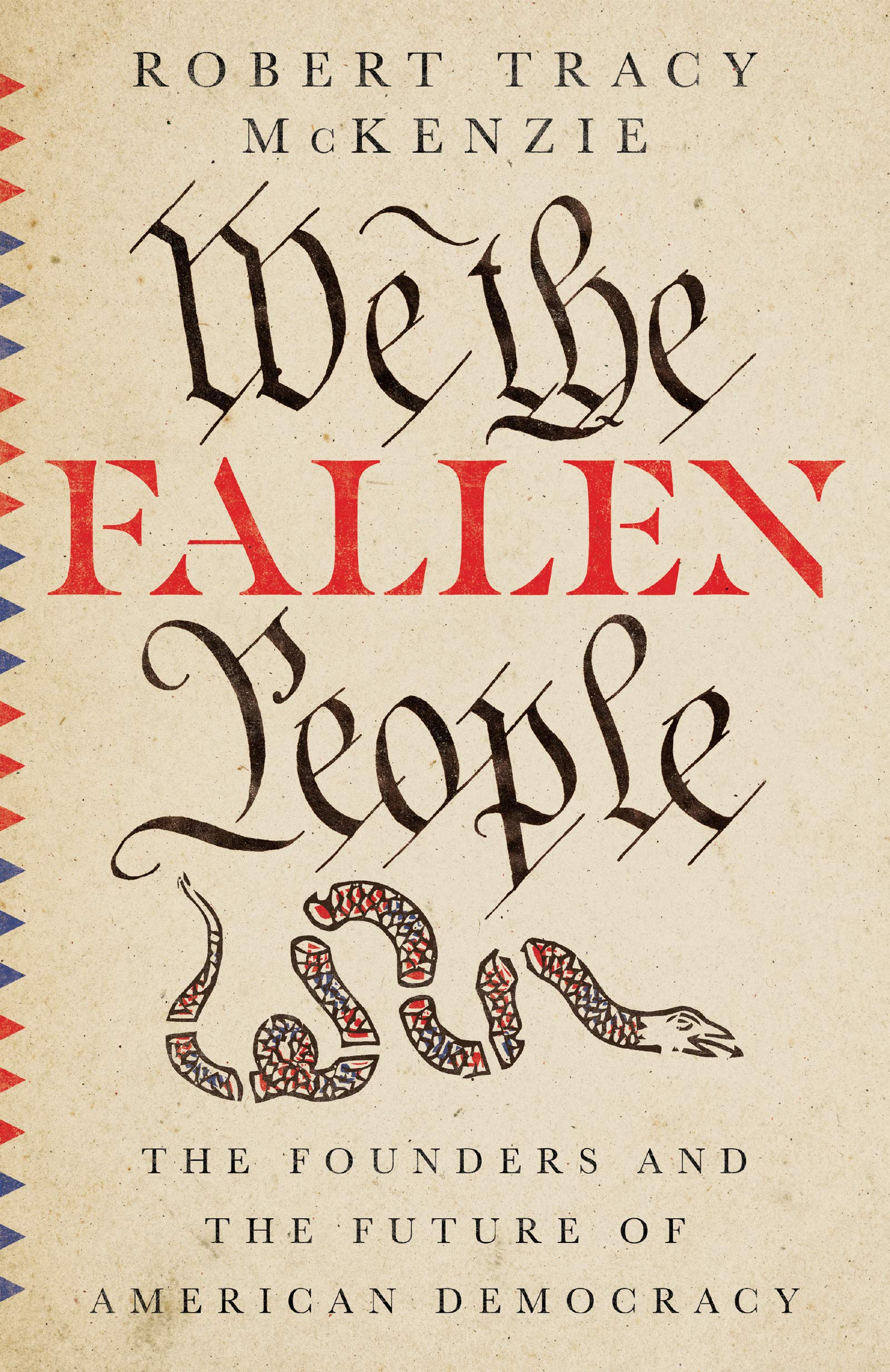
"We the Fallen People" by Robert Tracey McKenzie


The calls for a new Constitution, changing the Supreme Court, cumulative voting, and doing away with the Electoral College seems to happen whenever a particular political viewpoint or candidate fails to prevail. We’re told none of this works any more, that the founders used flawed or biased reasoning, and that direct democracy is the preferred alternative. 

What most people don’t know, or have forgotten, says Robert Tracey McKenzie, is the founders considered direct democracy and saw what problems it could lead to. They understood the tyranny of the majority. They knew from history how easily democracy can fail. They were trying to deal with an immediate failure in democracy – the Articles of Confederation. And what they crafted with a republican form of government for the United States, with its three branches and its notable checks and balances.


McKenzie, the Arthur Holmes Chair of Faith and Learning and professor of history at Wheaton College in suburban Chicago, also argues something else, something fundamental to understanding why the founders did what they did (and how they’ve been proven right over and over again). He says that the founders knew that people were fallen, that people were not inherently good, that, if given the chance, would inevitably suborn the common good to their own self-interest. As Christians would say, man is a sinner.


The founders, he says, were not so much focused on creating a God-inspired document in the Constitution as they were a mankind-aware document. They knew what, if left to their own devices, what people could be capable of. 


Robert Tracey McKenzie

In We the Fallen People: The Founders and the Future of American Democracy, McKenzie makes his well-researched case. He concisely recounts the history of how the Constitution was written, and why. He explains how the presidency of Andrew Jackson clearly demonstrates how majorities can become tyrannical – with the examples of the U.S. Bank and the removal of the Cherokees from their native lands in Georgia. He reviews what Alexis de Tocqueville, the 19thcentury writer about and admirer of America, really had to say. And he offers ideas on how we Americans today can go about renewing our thinking about government, republicanism, democracy, and the Constitution. 


We the Fallen People makes a strong case. It might have been stronger if McKenzie had been less dismissive of some of his fellow historians, and if he’d examined more closely what happens when the problem is less tyrannical majorities and more political, social, and economic elites.


McKenzie has also published Lincolnites and Rebels, A Little Book for New Historians, and The First Thanksgiving: What the Real Story Tells Us About Loving God and Learning from History.


McKenzie’s argument is a somewhat brave one to make. We have a long history of believing that Americans are special because Americans are good, and our presidents and others have spent an enormous amount of time telling us that. Not to mention that we like being told we’re basically good. The reality is that we’re not inherently good, and the Founders of our country knew that and planned a government accordingly.

Tuesday, April 26, 2022

Poets and Poems: Andrea Potos and "Marrow of Summer"


It’s somewhat obvious to say that a poet writes with precision, defined as a carefully chosen word that delivers exactly the meaning the poet intends.  But rarely have I read a collection of poems in which the poet’s precision in constant in poem after poem as Marrow of Summer by Andrea Potos. In this latest collection, Potos has written 52 generally short poems, many of them about relationships – and her precision packs a wallop.  

Perhaps it is the brevity of each poem – very few longer than 15 lines – that requires succinct and precise words. One thinks of Emily Dickinson often while reading these poems, and, in fact, two of them cites Dickinson. But Potos also cites her inspiration as John Keats. One poem is about the poet (“Conversing with Keats”) welcoming her to the house in which he lived in Camden, London near Hampstead Heath. If you’ve been there, or even seen photos of the house, her poem becomes a piece of visual reality.


To continue reading, please see my post today at Tweetspeak Poetry.

Monday, April 25, 2022

"Above the Rain" by Víctor del Árbol


How does one describe a book like Above the Rain? A literary novel that dances closely to a crime story? A crime novel as good as any literary novel? A story that starts slowly and then takes such hold of you that you can’t let it go? A story about aging and the past and memory, with an undercurrent of violence and darkness? 

This novel by Víctor del Árbol, translated from the Spanish by Lisa Dillman.


The characters live in different places in Europe – Tangiers; Seville, Madrid, and Barcelona in Spain; and Malmo in Sweden. A brief glance tells you they have no connections to each other. But as you read, you discover that, while several different stories are being told, they are related. And they are converging. The connections become gradually apparent over the course of this almost-600-page novel.


Miguel and Helena are 70-somethings who first meet in a retirement home. Miguel has reluctantly agreed to living there after he’s diagnosed with early very dementia, with a prognosis of two to three years before it changes into full-blown Alzheimer’s Disease. Helena is a widow, her husband having died some years before. They both have back stories. Each is a parent of a single child. Miguel’s daughter is married to a man he can’t stand, a serial abuse whose uncontrollable rages leads to beating his wife. Helena is haunted by her relationships with her dead husband, her son, and her best friend. But only slowly do we learn all of the details for both characters. 


Victor del Arbol

The Swedish story concerns a crime boss, simply known as Sture, his wife and stepson, and the family of one of the prostitutes working for him named Yasmina. She has one basic job: stay aware of what a deputy police chief is up to regarding Sture. Unfortunately, she’s also fallen in love with the policeman. And her family, immigrants from North Africa, go back decades with Sture. Her grandfather owes Sture a debt, and part of paying it off has been Yasmina’s prostitution. 


As the ties and connections start to be made, the reader sees not many stories but ultimately only one, a story about the past never really staying the past and how parents can haunt their children. It’s a hard story at times; some of the violence is graphic. But it is also a compelling story, a story that slowly gets its fingers around your throat and then doesn’t let go.


Del Árbol has also published the novels Breaking Through the Wound, A Million Drops, The Sadness of the Samurai, and The Heart Tastes Bitter. From 1992 to 2012, he was an officer with the Catalan police force. He’s won several European prizes for his work: the Nadal prize, the Tiflos Prize, and the Prix du Polar Europeen. A Million Drops was named a Notable Book of the Year in 2018 by the Washington Post. 

Sunday, April 24, 2022

Truth dazzles


After Luke 24:1-12
 

The messengers dazzle 

in their brightness,

their message a meteor:

He is not here,

He is risen.

It is the first proclamation

of the billions to come,

a shooting star to remind

them of what they were

told, what they heard

before, what he would do,

that he would rise.

The living is not to be

found among the dead.

You knew this.

He said this, 

that he would die,

that three days pass,

that he would rise.

The messengers dazzle

in their brightness,

the message even more.

It’s early dawn.


Photograph by Wonderlane via Unsplash. Used with permission.