Showing posts with label 19th century. Show all posts

Tuesday, September 2, 2025

Poets and Poems: Teow Lim Goh and “Bitter Creek”


Two great waves of immigration occurred in the United States beginning in the 1840s. The first was the Irish, driven by the Great Potato Famine. The potato blight eventually eased, but Irish immigration continued; many were greeted by army recruiters during the Civil War – as soon as they stepped off the boat. 

The second wave arrived beginning in the late 1840s, driven by unfavorable conditions at home and attracted by the potential wealth offered by California Gold Rush. This wave was the Chinese, who kept coming through the 1850s, and 1860s, and beyond. They helped to build the Transcontinental Railroad and worked in the mines of Wyoming, Colorado, and Montana. 


In the East, the Irish often faced discrimination. In the West, the Chinese faced discrimination and violence. 


Epic poetry isn’t exactly the fashion in literary circles these days, but match good poetry with a good story, and I suspect no one will mind whether its epic or not. This is what Teow Lim Goh has done with Bitter Creek: An Epic PoemI don’t know how else one could tell this story poetically other than in an epic framework.


And what a story she tells.


To continue reading, please see my post today at Tweetspeak Poetry.


Some Tuesday Readings


The 2025 International Poetry Competition and The 2025 International High School Poetry Competition – Society of Classical Poets.


“Miniver Cheevy,” poem by Edwin Arlington Robinson – Sally Thomas at Poems Ancient and Modern.


A Little Contraband – poem by Malcolm Guite at New Grub Street.


English Poet John Milton’s ‘Paradise Lost’ and 3 Great One-Liners – James Sale at The Epoch Times.


Open for Halloween Subs / Best of the Net Nominations – Steve Knepper at New Verse Review.

Tuesday, June 24, 2025

What Happened to the Fireside Poets?


When I first envisioned my novel Brookhaven, I focused on a family story passed down through generations, which turned out to be a legend, as in, almost entirely untrue. But two things shifted my focus. 

First, in 2022, I had the old family Bible conserved. It had seen better days; my father gave it to me wrapped in grocery store bag paper and tied with strong. My contribution had been to remove the paper and string, wrap it in acid-free paper, and store in an acid-free box. It sat on a closet shelf for years, until I brought it to a book conservator in St. Louis. He discovered something tucked in the Book of Isaiah that both my father and I had missed – a yellowed envelope containing a lock of auburn hair.


For various reasons, I believe the hair belonged to my great-grandmother Octavia. She died in 1888 at age 44. Unusual for the time, my great-grandfather Samuel never remarried. He died in 1920. And I thought to myself, “There’s a love story here.”


Second, also in 2022, we saw a movie entitled “I Heard the Bells.” It’s a snapshot of the life of Henry Wadsworth Longfellow (1807-1882) during the Civil War, including both the tragic death of his beloved wife and the near death from a war wound of his oldest son Charles. Both events contributed to Longfellow’s writing the poem that became a Christmas hymn, “I Heard the Bells on Christmas Day.” 


To continue reading, please see me post today at Tweetspeak Poetry.


Illustration: Henry Wadsworth Longfellow.


Some Tuesday Readings


Trembling Aspen – poem by Jerry Barrett at Gerald the Writer.


“Archaic Torso of Apollo” by Rilke and “Reconciliations” by Goethe – poems translated by Josh Olson at Society of Classical Poets.


“Pied Beauty,” poem by Gerard Manley Hopkins – Sally Thomas at Poems Ancient and Modern.


Mystic Affection – poem by Sharon Powlus Wheeler at Every Day Poems.


Sonnet 60 by William Shakespeare – Rabbit Room Poetry.

Thursday, August 8, 2024

"Clear" by Carys Davies


Two significant events of 19th century Scottish history form the backdrop to Clear, the wonderful and moving novel by British author Carys Davies. The first is the Disruption of 1843, when evangelicals broke with the Church of Scotland to form the Free Church of Scotland. The second is the second wave of what’s known as the Highland Clearances, when the great landowners of Scotland realized they could make more money from sheep than from tenant farmers – and drove them off the land.  

John Ferguson is a Church of Scotland minister who joins the dissenting and departing ministers. The problem he faces is financial – how to support himself and his wife Mary until the new church is a going concern. Mary’s brother-in-law prevails upon a landowner to give John a position.


The job has one duty. John must travel to an island in the North Sea between Shetland and Norway and evict the last remaining tenant, a bear of a man named Ivar who leads something of a hardscrabble life with a few sheep, a blind cow, and an old horse. Ivar doesn’t speak English; his language is something between Gaelic and Norwegian. So Ferguson’s first need is to talk to a teacher in Lerwick who is said to know Ivar’s language.


The man doesn’t know the language, but John presses onward, finally reaching the island. His boat transportation will return in a month. He has to somehow explain to Ivar what is happening and convince him to leave.


Carys Davies

John sets up in the baillie or old manager;’ house and then finds a spring to take a bath. He accidentally falls down a cliff and loses consciousness. Ivar finds him and carries him back to his own hut. Unconscious for days, John eventually regains consciousness and slowly recovers from his injuries. In the meantime, the two men have to find a way to communicate, and John has to explain what is to happen. 


The story centers on the relationship the two men begin to build, and the words they teach each other. Back in Scotland, Mary begins to worry about how ill-prepared her husband was to undertake the assignment, and she decides to join him. 


The story of the three is simply and beautifully told. Davies has a gift for placing the reader as a silent observer, experiencing the feelings, emotions, and growing affection the characters have for each other.


Davies has previously published the novels West and The Mission House and two short story collections, Some New Ambush and The Redemption of Golden Pike. Her novels and stories have received numerous awards, prizes, and recognitions, and she is a Fellow of the Royal Society of Literature. A native of Wales, she grew up there and in England, and she now lives in Edinburgh. 


And with Clear, she’s written a terrific story.


Some Thursday Readings


Murders for August – Jeremy Black at The Critic Magazine.


One Day I Wrote Her Name Upon the Strand,” poem by Edmund Spencer – Sally Thomas at Poems Ancient and Modern.


Year of the Monarch: Butterfly Kisses – A Romantic Comedy – Dheepa Maturi at Tweetspeak Poetry.


Tuesday, March 5, 2024

"New Orleans Poems in Creole and French" by Jules Choppin


When you are born and grow up in a state that has parishes instead of counties, whose legislature was required to write laws in both French and English as late as 1911, whose legal system is based on Napoleonic Code, and where Mardi Gras is an official state holiday, you gradually realize that you come from a very different place. 

Louisiana is an unusual state. North Louisiana, where my father grew up, could pass for East Texas or Mississippi; it’s Bible Belt country. My mother’s family was a combination of German immigrants and Cajuns from south-central and southwest Louisiana. I grew up in New Orleans, where people’s accents could pass for Brooklynese. I had close relatives who spoke German, Cajun French, and English. My mother didn’t go grocery shopping; she “made groceries.” 


When you’re a child, however, all of that seems normal. It’s your day-to-day experience. Only when you grow up and move away do you realize how strange it all sounds – and how difficult it can be to explain to people not from Louisiana. 

My childhood and family experiences came back in a rush when a friend handed me a copy of New Orleans Poems in Creole and French by Jules Choppin (1830-1914). 

To continue reading, please see my post today at Tweetspeak Poetry.

Some Tuesday Readings

The Men Who Were Worthy of Athens – Douglas Murray at The Free Press.


Poetry Prompt: Revels & Celebrations at Colony! – L.L. Barkat at Tweetspeak Poetry.


Which words are not – poem by Laurie Klein at Kingdom Poets (D.S. Martin).


‘Insomnia, My Sometime Muse’ and ‘Netherworld’ – poems by Norman Solowey at Society of Classical Poets.


‘Dover Beach’ by Matthew Arnold – Joseph Bottum at Poems Ancient and Modern.


Tuesday, November 28, 2023

"The Strange Case of Dr. Jekyll and Mr. Hyde" by Robert Louis Stevenson


“X” marks the spot. Pirates hunting for buried treasure. Parrots perched on the shoulders of pirates. Treasure maps.  

It all came from a single source.


In 1883, Scottish writer Robert Louis Stevenson published The Sea Cook: A Story for Boys. It has been first serialized in 1881 and 1882 in a children’s magazine, Young Folks, under another title – Treasure Island, or the Mutiny of the Hispaniola. It was under the title Treasure Island that the novel became what may be the most adapted book of all times, inspiring films, radio programs, comic books, television series, theater plays, musical compositions, and even video games.


It was the first book by Stevenson I read, about age 10. Not long after, I read his 1883 novel The Black Arrow: A Tale of the Two Roses, his adventure (and romance) story of the War of the Roses. I recall reading it three times; I found it far more compelling that Treasure Island.


If I read The Strange Case of Dr. Jekyll and Mr. Hyde (1886), I’ve forgotten when it was. It’s become so much of the general culture that it’s difficult to know if I read it or saw the movie(s) a dozen times. I read the edition just published by T.S. Poetry Press, illustrated by Sara Barkat, and it surprised me. It’s not the story of the stark contrast of the good and evil in all of us, or the dangers of scientific experiments. 


To continue reading, please see my post today at Tweetspeak Poetry.


Some Tuesday Readings


Poetry book – poem and artwork by Sonja Benskin Mesher.


T.S. Eliot and the Fight to Recover What Has Been Lost – Douglas Murray at The Free Press.


The enormous humility of C.S. Lewis – A.N. Wilson at The Spectator.

Monday, March 13, 2023

“The Signal and Selected Stories” by Vsevolod Garshin


Perhaps it was the fact that he died young. Or perhaps it was because he never published any famous novels, or even unfamous ones. But Vsevolod Garshin (1855-1888) may be the most famous Russian writer I never heard of. 

Garshin’s entire literary output consists of art exhibition reviews published in newspapers and 20 short stories published in one volume. The stories may be few in number, but they are wonderful works of experience, empathy, and observation. They’ve been published together as The Signal and Selected Stories.


I started reading Garshin’s stories without knowing anything about the author except that he died at 33. By the time I reached the second story, entitled “Four Days” and one of the author’s best known works, I knew he’d been a military veteran and had fought in a war. He had indeed; it was the Russo-Turkish War of 1877-78, which involved several Eastern European countries and Russia against the Ottoman Empire. (The European countries were fighting against Ottoman oppression; Russia was hoping to regain territory it had lost in the Crimean War (1853-1856). 


“Four Days” may be the short Russian answer from the Russo-Turkish War to Erick Maria Remarque’s All Quiet on the Western Front about World War I. A Russian soldier lies seriously wounded, forgotten by his comrades. And he lies next to a dead Turkish soldier, whose supplies keep the Russian alive and whose presence keeps the Russian from losing his mind. And what transpires is an understanding that two young men, trying to do their duty, were caught up in a terrible conflict.


Vsevolod Garshin

“The title story, “The Signal,” concerns the life of railroad signalmen. These were the men who, living near the rail lines, signaled open or busy lines to train engineers. One young signalman becomes disenchanted and angry with his treatment by the supervisor, and he decides to do something drastic in retaliation.


Other stories concern young men waiting to be called up for military service; love stories; stories of frustrated love, where a young man to get the attention of a nurse he’s infatuated with becomes deathly ill; and other things. Several of the stories remind me of the short stories of Aleksandr Solzhenitsyn, who often wrote about military themes. Written 70 and 80 years after Garshin, Solzhenitsyn’s stories often have the same sense of fate and surprise twists at the end.


Garshin died of injuries from an attempted suicide; he threw himself down a flight of stone stairs. He had previously had mental problems. And yet his stories are clearheaded, straightforward narratives. He knew war, and he knew people, and it’s unfortunate that he died so young and with a small if insightful body of work.

Monday, December 20, 2021

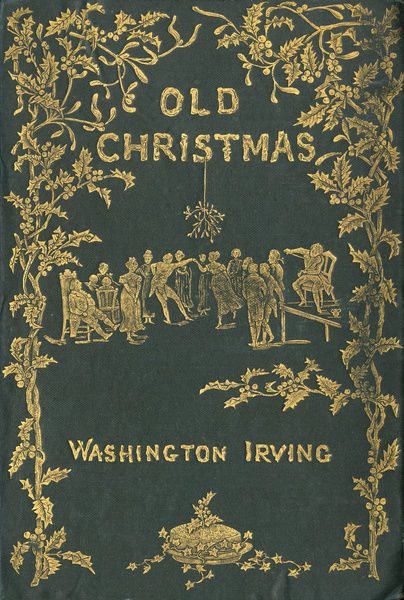
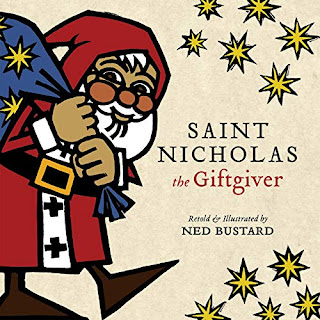
“Old Christmas” by Washington Irving & “Saint Nicholas the Giftgiver” by Ned Bustard


Christmas as it’s celebrated today – the trees, the feasting, the presents – was given a major push in the 19th century with the publication of A Christmas Carol by Charles Dickens in 1846. Two years later, Prince Albert brought Christmas trees into the Christmas celebration at Buckingham Palace, building on a practice brought from Germany by Queen Victoria’s mother.  

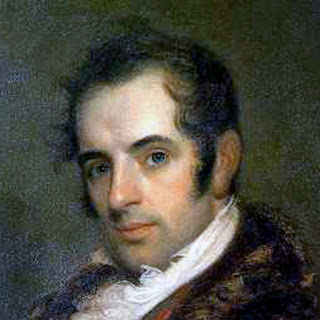
That’s been our understanding, and yet someone else was ahead of Dickens. American writer Washington Irving, perhaps most famous for “The Legend of Sleepy Hollow” and “Rip Van Winkle,” wrote a series of stories or sketches about the old English Christmas of days past – years before A Christmas Carol. And Irving had a great fondness for the story and the character of St. Nicholas. In 1835, he helped found the Saint Nicholas Society of the City of New York, and he promoted Christmas as a time for feasting and giving presents. In the United States, at least, Irving gets the nod as the individual who shaped the Christmas we know today.


Washington Irving

Irving’s 
Old Christmas is a collection of five stories, all relating to the celebration of Christmas in Old England. In fact, they’re a series of related stories, about a journey during the Christmas season to a destination in York.


The first story, “Christmas,” is an extended description of the way Christmas was celebrated at one time in Old England. It hearkens back to feudal times, when a landowner (titled and otherwise) would have the servants and townspeople come together with the landowner’s family to celebrate. And it’s this story in which Irving inadvertently explains why he’s writing these stories. “The world has become more worldly,” he writes. “There is more d dissipation, and less of enjoyment. “Pleasure has expanded into a broader, but a shallower stream, and has forsaken many of those deep and quiet channels where it flowed sweetly through the calm bosom of domestic life.” 


“The Stage-coach” describes the traveler’s journey to the north of England, with an ample description of the coachman and three schoolboys who are his traveling companions. He plans to stay at an inn in “Christmas Eve,” but meets up with an old traveling companion from years past who happens to be on his way to his family home nearby. “Christmas Day” is all about the great day itself, with “The Christmas Dinner” a separate story, filled with details about the food and drink of the great Christmas feast.


Old Christmas is a charming and sentimental look at how an “Old English” Christmas was celebrated.


And speaking of St. Nicholas, writer and illustrator Ned Bustard has published Saint Nicholas the Giftgiver, aimed at children between ages 4 and 8. The story explains who Nicholas was and how he came to be associated with gifts and presents. It’s a retelling of the story, as opposed to the myth, and it places the saint in his historical context (he was jailed for a time during the Diocletian persecution). He served and cared for the people of his town, and he was eventually appointed to be a bishop known for his gifts to the poor and needy. Bustard has a bit of fun with his story, mixing in a bit of “The Night Before Christmas.”


Bustard is an author, illustrator, graphic designer, and printmaker. He’s written, illustrated, or edited numerous books. He’s creative director for Square Halo Books, curator of the Square Halo Gallery, and a member of the board of the Association of Scholars of Christianity in the History of Art and The Row House Inc. He lives with his family in Lancaster, Pennsylvania.


Saint Nicholas the Giftgiver is a fun story to read or have young children read aloud, and the illustrations are delightful.


RelatedHow Washington Irving shaped Christmas in America.

Wednesday, December 8, 2021

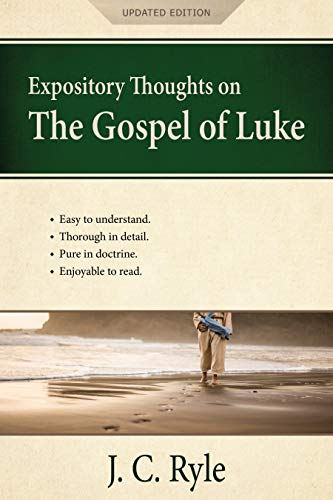
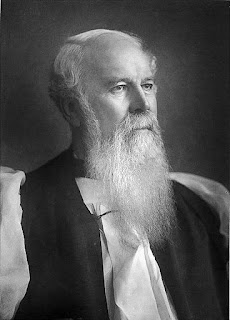
"The Gospel of Luke" by J.C. Ryle


John Charles Ryle (1816-1900) was a British theologian, pastor, preacher, and writer. He worked as a minister in rural England for 38 years, until he became the first Anglican bishop of Liverpool in 1880. He worked steadily until he retired in 1900, the same year he died at age 84. 

He was born into a wealthy family; he father was a banker. As the oldest son, he was expected to inherit his father’s state and pursue a career in Parliament. He attended Eton and Oxford. In 1837, he became a Christian. He continued to follow the path chosen for him by his family, including the study of law after graduation from Oxford. But in 1841, his father’s bank crashed, and the family was financially ruined. Needing a job, he turned to the Anglican Church; his Oxford degree qualified him for the clergy.


Ryle was a prolific writer. His works include studies of prophecy and end times, holiness, preaching, parenting, and Bible studies. Perhaps his best-known works, still published today, are his “expository thoughts” on the four gospels of the New Testament. 


J.C. Ryle

Expository Thoughts on the Gospel of Luke
 is one of those four. The Gospel of Luke is considered the “research version” of the life of Jesus, because Luke was not an eyewitness. He arrived on the scene during the ministry of Paul, and at some point he wrote an account of Jesus’s ministry with his gospel and followed it with an account of what happened after (Acts of the Apostles), describing the period of the very early church and Paul’s ministry.


Ryle’s expository thoughts are exactly that. He moves through the entire gospel, section by section, and provides insights into what is happening. The insights, written in highly accessible language, read like sermons, and it wouldn’t be surprising to learn that they first started out life as sermons and sermon notes.


His section on Luke 4:23-32 is an example, the “prophet is without honor in his own country” passage. Ryle cites three great lessons from the account. “We learn, for one thing, how apt men are to despise the highest privileges when they are familiar with them…We learn, for another thing, how bitterly human nature dislikes the sovereignty of God…We learn, lastly from this passage, how diligently we ought to persevere in well doing, notwithstanding discouragements.” The structure of his discussion is familiar, even today, as that of a classic sermon. 


Expository Thoughts on the Gospel of Luke was published more than a century ago, but its insights and wisdom are timeless, and they still have application to us today.

Wednesday, May 15, 2019

“Wild Heart on the Prairie” by Vikki Kestel


Brothers Jan and Karl Thoreson and their families have arrived in New York. Immigrants from Norway, they are headed to the Nebraska Territory and their intended claim of 160 acres each as part of the U.S. land-grant program. It is 1866; the American Civil War is over and the brothers, with no prospects in their home country to become farmers, are looking to create a new life. They are more fortunate than most immigrants: they come with solid middle-class resources and they have done their homework on what to expect, both when they land and when they travel and arrive in Nebraska.

But no amount of research can prepare them for the joy of owning their own land and for the hardship and heartbreak that will come from life in a new world – the storms, the locusts, the backbreaking work of busting sod, disease, and even death. They and their families will experience it all, their lives held together by their deep faith in God.

Wild Heart on the Prairie by Vikki Kestell tells the story of the Thoreson families as they carve out a new life on the former prairies of Nebraska. It also tells the story of what immigrants experienced as they arrived and traveled to their final destinations; how small-town life (and neighbors) helped sustain existence; how people built their farms, communities, and churches; and how they endured great personal tragedies. First published in 2014, it is a historical novel that falls in the “faith-filled, inspirational” genre. It is such a good read that I had difficulty putting it down, so I didn’t; I read it straight through in far less than a day. 

Vikki Kestell
Wild Heart on the Prairie is the second of eight books in “A Prairie Heritage” series. Before beginning her writing career, Kestell worked in government, academia, and corporate arenas, holding a Ph.D. degree in Organizational Learning and Instruction. She has also written four books in the “Nanostealth” series, three in “Girls from the Mountain” series, and several in the “Laynie Portland Spy” series, as well as a Bible study entitled “Growing Up in God.”

To learn in a fictional way about how immigrants settled the American Midwest, and how they survived all that life (and nature) threw at them, read Wild Heart on the Prairie. It is a moving book that often evokes tears while it tells a beautiful story. 

Related

Wednesday, May 8, 2019

"A Rose Blooms Twice" by Vikki Kestell


Rose Brownlee is 32, happily married, and the mother of three children. In an instant, everything is snatched from her – the family’s carriage overturns on an icy bridge, Rose is thrown clear to the rocks below, and the carriage is swept into the wintry river. She loses her husband and the children.

Weeks later, recovering from her own injuries, Rose decides to head west toward the new lands opening up on the vast American prairie. Her husband has left her extremely well off financially, and she decides to travel by train however long she decides to travel. She finally stops in the small farming town of Riverbend, a town settled by Americans and immigrants from Norway, Ireland, and other countries. 

She decides to stay, for however long she wants to stay. She buys a house, she makes friends, and she begins attending the town’s one church. And it’s in Riverbend that Rose will find the true meaning of faith, the embrace of community, and the beginning of a return from her personal tragedy. She’ll also find love.

Vikki Kestell
A Rose Blooms Twice by Vikki Kestell is the first of eight books in “A Prairie Heritage” series. First published in 2012, it is a historical novel that falls in the “faith-filled, inspirational” genre. It is also an addicting read.

Before beginning her writing career, Kestell worked in government, academia, and corporate arenas, holding a Ph.D. degree in Organizational Learning and Instruction. She has also written four books in the “Nanostealth” series, three in “Girls from the Mountain” series, and several in the “Laynie Portland Spy” series, as well as a Bible study entitled “Growing Up in God.”

A Rose Blooms Twice is not all an “everything turns out wonderful” story. Rose faces personal danger, snakes, locusts, and several blizzards, and manages to find the faith and inner strength to live through all. It’s a heartwarming, inspiring story.

Monday, February 25, 2019

"Dominion" by Peter Ackroyd


You might want to call this “everything you wanted to know about British parliamentary history in the 19thcentury, and then some.”

British author Peter Ackroyd is beginning to approach the end of his multi-volume history of England. Each of the first four volumes has a one-word title (followed by a long subtitle): FoundationTudorsRebellion, and Revolution. The single words of the titles serve as both descriptions of the content and summary themes. 

The fifth and most recent is Dominion: The History of England from the Battle of Waterloo to Victoria’s Diamond Jubilee. It covers most of 19thcentury British history. If there is a primary focus to the volume, it is the push and pull and British politics and parliamentary changes that occurred during the century. 

We follow, in detail, the rise and fall and occasional resurrection of all of the prime ministers and the governments. We see the considerable amount of political activism that occurred during the period, like the Chartist movement that sought, among other things, universal male suffrage. We read about the political protests, often fueled by the industrial and technological changes, that sometimes ended in bloodshed. Dominionalso includes succinct accounts of the significant wars Britain experienced during the Victorian period – the Crimean War, the rebellion in India, and the Boer War.

Ackroyd writes with a comprehensive view and a rather sparkling (and witty) style. A history like this one and its cohorts is not an easy thing to write; in a sense, the author has to hold together all of the information being covered even as he’s writing about a specific event or month or year. 

But Dominion is different from its predecessors. The difference is both significant and surprising, and it lies in what is not included. The previous volumes have covered literary and cultural history, in addition to political, technological, and military events. Dominion has a few scattered quotes from Charles Dickens, William Makepeace Thackery, George Eliot, and a few other literary figures, but that’s all that’s included. To get two-and-a-half pages on a music hall performer and essentially ignore what Victorian England produced in literature is not a minor omission. The previous volumes included literary history.

Peter Ackroyd
So what you will not find in Dominion, except for the occasional quotation, is Dickens, Thackeray, Tennyson, Thomas Hardy, George Eliot, the Brontes, and others. Dickens fares slightly better than the rest, but only slightly. Even popular culture is shorted, with a single reference to Gilbert and Sullivan and none at all to Arthur Conan Doyle and his Sherlock Holmes stories.

The author is one of Britain’s most prolific popular historians. In addition to his history of England series, he’s also written biographies of Charles Dickens and the artist J.M.W. Turner, among several others; a history of London (and a history of London beneath the streets); and many other works. 

Dominion stands as an in-depth and lively summary of 19thBritish political history. In that regard, it is comprehensive and well-written. But it is disappointing that Ackroyd didn’t turn his keen eye to the literature of the period as well.

Related:


Top illustration: Queen Victoria, who gave her name to the period.

Tuesday, July 18, 2017

The Poem as Modern Myth: “Evangeline” by Henry Wadsworth Longfellow


My paternal ancestors come from a very distinguished group in 18th century British society – the ones removed from debtors’ prisons and dumped off the coast of Georgia. This solved two problems at once – it relieved prison overcrowding and provided settlers for the new American colony.

My mother’s ancestors were a fusion of French colonists in Louisiana and German refugees from Alsace-Lorraine. (The German branch left Alsace after Germany defeated France in the Franco-Prussian War of 1870, which makes me wonder why Germans would leave after a German takeover.) The French side of her family descended from colonists from France and deportees from Acadia in Canada – the people who eventually became known as the Cajuns of south Louisiana.

Longfellow about the time he published "Evangeline."
The Acadians were deported from what is now Nova Scotia in 1755 and dispersed among numerous colonies and countries. The English in charge of the deportation claimed they had a decree from King George II, but no such decree has ever been found. It was more likely an illegal land grab. The Acadians had been in the area since 1604 and had developed prosperous villages and farms. The deportation split families and friends; at least one couple were separated from most of their children. A goodly portion ended up in the French colony of Louisiana, settling in the country to the west and northwest of New Orleans.

By the mid-19th century, the story of the deportation was largely forgotten. And then, in 1840, at a dinner in Boston that included both Nathaniel Hawthorne and Henry Wadsworth Longfellow, a guest told the story of a couple in Acadia separated on their wedding day.

To continue reading, please see my post today at Tweetspeak Poetry.


Top photograph: The Evangeline monument to Acadians at St. Martinville, La.