Showing posts with label Chris Yokel. Show all posts

Monday, April 1, 2019

"A Child's Year" by Chris Yokel


If there is such a poetry genre as “gentle voice,” Chris Yokel may be the master of it. His newest collection, A Child’s Year: Poems, only underscores that. Its 43 poems display a quiet, gentle beauty that force you to stop and consider the world around you.

The poems are organized by seasons. More importantly, they are written with the simplicity of a child’s heart. We experience Lent as a child, we wonder at tragedies like plane crashes as a child, we walk through woods and taste snow like a child. Elements of wonder and subtle amazement permeate the poems and their subjects. 

Consider the mountains, where God “walks the stones in a whirlwind.”

Another World

The mountains are always drawing
us toward worlds unknown—
realms shrouded in mist at the peak of heaven
where God walks the stones
in a whirlwind,
and we long to behold his
face in a cloudbreak
till our souls are shaken
and stripped of all dross,
and we descend with both
a little less, and
a little more than who we were.

Chris Yokel
Yokel has published several books of poetry, including A Year in the Weetamoo WoodsElementsSketches, and Sunrise. His poems have appeared in The Curator, Tweetspeak Poetry, The Molehill and other publications. He’s a regular contributor to The Rabbit Room. He has also recorded and released two CDs, “The Rain That Falls” and “The Color and The Light.” Currently teaching writing and literature to college students, he lives in Massachusetts.

Reading A Child’s Year is hearing the admonition to “suffer the little children unto me.” I’m finding licorice again on a shelf in the garage. I watch my father make snow ice cream for the first time. I’m playing hide-and-seek in the woods near my childhood home. And I’m reminded of what it means to have a simple heart.

Related:


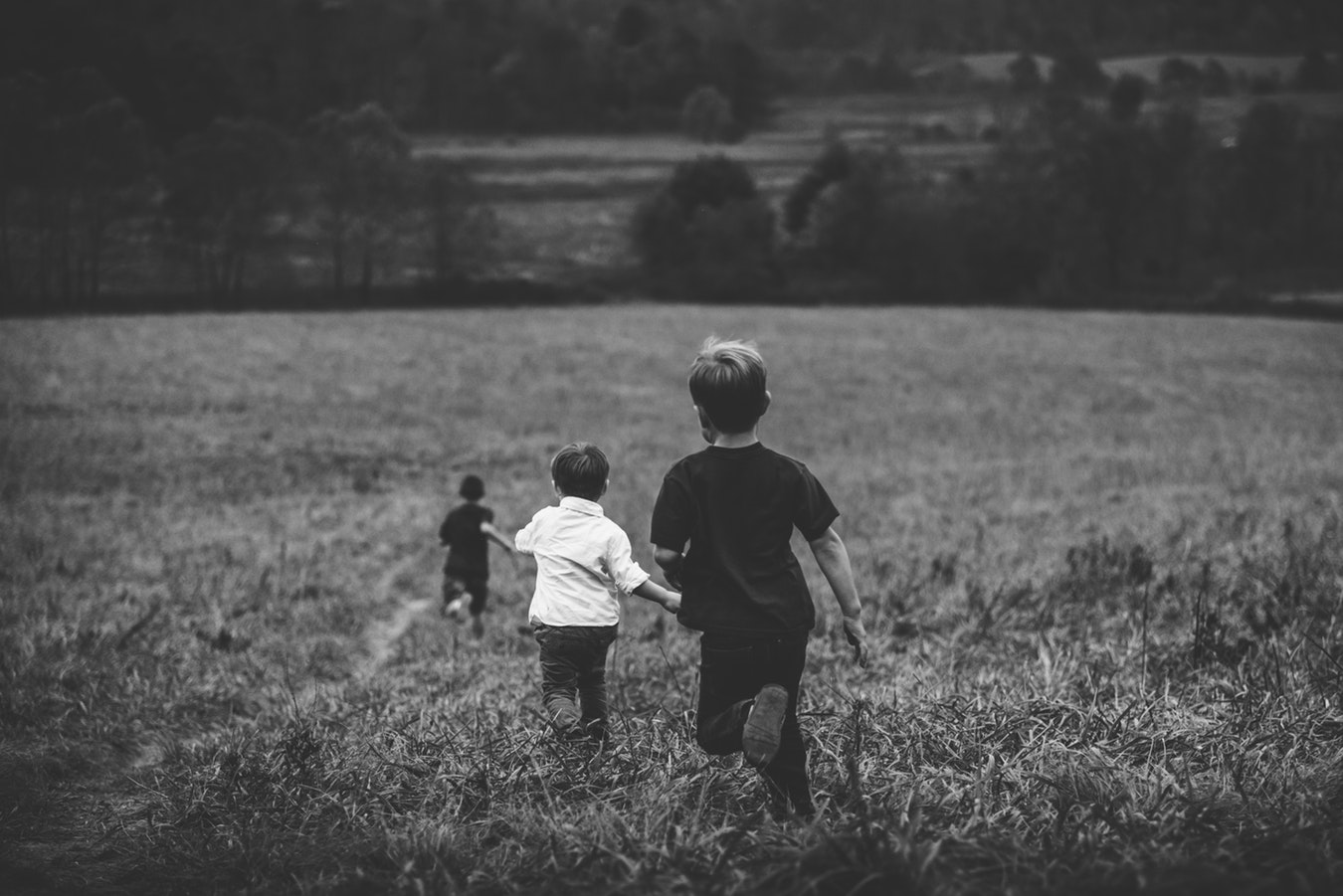
Top photograph by Jordan Whitt via Unsplash. Used with permission.

Friday, January 17, 2014

Chris Yokel’s “A Year in Weetamoo Woods”


Some 40 miles west of St. Louis is one of my favorite places – Shaw Nature Reserve, which all of us residents call by the name it was originally called – “The Arboretum.” It’s more than 2,400 acres of woods and trails, with some managed gardens but mostly woods. A favorite walk is the river trail, out and down to the Meramec River, one of the reserve’s boundaries.

When you’re mostly a dweller of city and suburb, woods become an escape and respite, but also a point of reference. They are a place to go to clarify and consider, a point of reference and a means of reflection. Thoreau did it at Walden, and Wendell Berry has done it in Kentucky, but you don’t have to be famous to seek out the calm and silence of nature.

Teacher, songwriter and poet Chris Yokel has done it, too, at a nature preserve in Rhode Island called Weetamoo Woods. From the fall of 2011 through the summer of 2012, Yokel traveled from his home in Massachusetts to find reflection, and he collected it as A Year in Weetamoo Woods: Poems.

The poems are divided by the four seasons. The woods change, of course, from the dying of fall and white of winter to the spring (when “bursting buds / betray the signs of / the gardener”) and on to the hot richness of summer. Here is “Fallen Ones,” from the winter section but offering a glimpse of the spring, and life, to come.

Stark against the sun
they silhouette the hill—
broken trees
like shafts of shivered spears,
a memorial to the
Battle of the Four Winds
whose rage twisted ancient ones
from earth.
I feel its gale-borne arrows
pierce my heart with memory,
Yet here amid the blasted trunks,
the supple birch springs up
both strong and straight.

The poems from the Weetamoo Woods become poems about life, birth, regeneration, beauty, art, imagination, and faith. They are about the woods, yes, and about the life of the poet in the woods. But in a very quiet way, the poems become our lives, too, our experiences, our reflections.

A Year in Weetamoo Woods does something else, too. It serves as a reminder that we all need time for thoughtful consideration of our lives, and there’s no better place to do that than the woods.

It’s time for me to make another visit to my own woods. And I’ll bring these poems with me.

(By the way, Chris is going to be leading a workshop for students on J.R.R. Tolkien at Tweetspeak Poetry, covering The Silmarillion, The Hobbit, and Tolkien Life. You can find the details at Tweetspeak.)


Photograph of Weetmoo Woods: Eventful

Saturday, March 30, 2013

Saturday Good Reads: Slowing Down


This week didn’t start out in Frantic Mode – we first had to dig out from a 12-inch snow that arrived Sunday. (A huge thank you to the young man who knocked on our door Monday and asked if we needed our driveway shoveled.)

Then on Tuesday, as if to prove exercise is bad for you, I was riding the stationary bike at 6 a.m. prior to my workout with the personal trainer when a partial bridge in my mouth decided to relocate. So – it was pray that the dentist had some space to squeeze me in (he did).

And at work, a situation that had started the previous week was continuing to build, and build some more, until the tsunami arrived on Thursday, and ebbed only slightly by Friday afternoon. I finally had to stop Thursday night (Friday morning?) about 12:15 a.m.; I decided the crisis would be waiting for me when I woke up. It was.

What helped was watching a few Netflix videos and finding a few oases of calm in the online world, like the Saturday Good Reads below.

First, four poems.

Two by Steven Marty Grant at Urbanality, whose poetry always seems to transport me to New York City: Winter in Midtown and God Looks Down.

One by Chris Yokel, whose music I like as much as his poetry: Green Arms (A Good Friday Poem).

And one by Brian Miller, whom I first met at One Stop Poetry when it was going gangbusters and who’s now one of the movers behind dVersePoets: I’ll have the usual.

Am I the only person who reads poetry when things get crazy?

Then over at Slow Church, John Pattison posted a reflection on the novel Silence by Shasaku Endo, in honor of Endo’s birthday. I had read the novel three years ago (and even blogged about it a few times). Pattison’s article is well worth reading.

David Mathis at Desiring God did something unexpected and truly beautiful. He visited and interviewed the 96-year-old theologian Robert Duncan Culver, and came away with The Old Man and His Big Book.

I was rather awed by Culver and his razor-sharp mind, and I was also awed by something slightly older – a graffiti found during a 19th century excavation of the Palantine Hill in Rome. Tim Challies at Informing the Reforming wrote about it in The History of Christianity in 25 Objects: the Alexamenos Graffito.

I learned something new on Friday. Lyla Lindquist, one of my colleagues over at Tweetspeak Poetry, has more than a slight interest in the Spanish language, and wrote about it in The Poetics of Learning (and Loving) Language.

And then John Blase at The Beautiful Due wrote one of the most original articles I’ve seen about Easter: What Do I Know?

Finally, Greg Sullivan at Sippican Cottage posted a short video the likes of which I’ve never seen. Well, I take that back. I’ve seen the actor Kenneth Branagh do it, but I’ve never seen the “We Happy Few” speech from Henry V by William Shakespeare performed like it is by this young actor.


Photograph by Jean Sander via Public Domain Pictures. Used with permission.