Showing posts with label journalism. Show all posts

Wednesday, July 15, 2026

The Scenes That Stick from a Chaotic Job


I worked as director of Communications for St. Louis Public Schools for eight months. It was the position I worked for the least amount of time in my entire career, the most chaotic job I ever held, and the one that likely remains the most vivid in my memory.  

Perhaps it was the political battles inside the district, the arrests at school board meetings, the ongoing protests, my boss getting doused with a pitcher of water by a member of the school board, the typical chaotic day of an urban school district. It might have been the constat media exposure, starting my first day (eight separate interviews on a teacher sick-out) and continuing until my last day. I did more media meetings and discussions in those eight months than the rest of my career combined.


A lot of scenes have stuck with me; a few even got worked into my five Dancing Priest novels. 


To continue reading, please see my post today at Dancing Priest.


Photograph of Headquarters by St. Louis Public Schools.


Some Wednesday Readings


Van Eyck: The Portraits – National Gallery, London.


Does Christian Fiction Exist? – Tessa Carman at Mere Orthodoxy.

Wednesday, July 8, 2026

Communicating Through the Chaos


If I had any doubts from the job interview, the first day on the job was confirmationThe next few months underscored it. If I could summarize it one word, my job as Director of Communications for St. Louis Public Schools was all about chaos.  

Every day was chaotic. Little if anything could be anticipated or planned for. I often looked at the office telephone (and my Blackberry; that was the phone we used) as the enemy. You answered a call, and your day instantly changed.


I learned that I wasn’t the only one dealing with chaos. The man brought in to take over the district’s finances (which were a train wreck; the district was not only technically but actually bankrupt) was a former corporate CFO.  He dealt with impossible tasks every day. His wife later told me that she worried most about public meetings – Board of Education meetings, town halls, outreach meetings – because anything could and often did happen. She would look for me making a statement on TV news, and then she knew her husband was okay.


The district had all the problems of an urban school system – money problems, crime, declining educational standards and test scores, dropping enrollments, school consolidations. An outside management firm had been brought in to try to transform the district; school closures, budget reductions (the communications budget was reduced from $1 million to $20,000, and that had been spent by the time I arrived).


To continue reading, please see my post today at Dancing Priest.


Photograph by Wayee Tan via Unsplash. Used with permission.


Some Wednesday Readings


Beyond the Modern Myths of Ancient Athens – Arlene Saxonhouse at Church Life Journal.


Winston Churchill, American Patriot – Michael Lucchese at Acton Institute.


“Malefactors of Great Wealth” – Burton Folsom at The Coolidge Review.


Writing My Novel on My Phone (and Through Grief) – Ros Hill at Writer’s Digest.


The Road Vanished Before We Reached Dinner – Riyanka Paul.


Wednesday, October 30, 2024

The Journalists' Prayer


St. Bride’s Church in London’s Fleet Steet is known as the “Journalists’ Church.” The church and the area around it have a long history with writers, publishing, printing, and newspapers. But it’s history – the newspapers that once occupied the buildings of Fleet Street are long gone, absorbed into other newspaper or moved to other locations. 

British journalism grew up here for a simple reason: the first printing press with moveable type was brought to the area in 1500, and the printing (and later the newspaper business) grew up around it. But a church had occupied the site since about 500 A.D.; the current St. Bride’s was completely rebuilt in the late 1950s to restore what had been destroyed during the German Blitz of December 1940.


To continue reading, please see my post today at Dancing Priest.


Some Wednesday Readings


The Governor is Calling – Brian Miller at A South Roane Agrarian. 


Why Christian Culture is Essential to Our Education – Ian Pace at The Critic Magazine.


Israel’s Iran Strike – and Washington’s Strategic Weakness – Niall Ferguson at The Free Press.


Wednesday, April 3, 2024

The Major Lesson of Five Decades of Writing


Looking back at five decades of writing, I can say with certainty the major lesson I’ve learned. I was reminded of it while I was reading Writing Better Fiction by Harvey Stanbrough. This is about as no-nonsense, straightforward, this-is-how-it-is discussion of writing that I’ve ever come across. And most of it applies to non-fiction as well as fiction. 

In other words, I recognize what he talks about. Fully recognize it.


The major lesson: Writers write, no matter what.


You may be sick. You may have 67 other priorities and pressing demands. You may stare dully at a blank page or screen without having a single thing to put down. You may hear the chorus of constant critics, including your own internal voices. You may watch others write something seemingly effortlessly and wonder why that never happens to you. Twice a day might be tempted to pack it all in and walk away, forever.


To continuing reading, please see my post today at Dancing Priest.


Photograph by Nik Shuliahin via Unsplash. Used with permission.


Some Wednesday Readings


Homeschooling, Luddite Style – Nadya Williams at Mere Orthodoxy.


“I Wouldn’t Take Nothing for It”: An Appreciation of Love for the Land – Robert Corban at Front Porch Republic.


Simple is Hard: Two short poems by A.E. Housman – Joseph Bottum at Pomes Ancient and Modern.


For the month of April, The Beautiful Madness of Martin Bonham by Robert Hudson is on sale for 99 cents. You can read my review here.

Monday, August 21, 2023

“Newspaperwoman of the Ozarks” by Susan Croce Kelly


For my two introductory reporting courses in journalism school, I had the teacher said to be the toughest of the faculty. And he was. His classes tended to weed out anyone who wasn’t fully committed (which the school administrators were less than pleased with). A typo, a grammatical error, a factual error – all earned an automatic F on the assignment. He often did calisthenics during timed in-class assignments and even sang opera on occasion – to teach us to avoid distractions and to focus.  

Yes, he was a piece of work. And yes, he taught us speed, accuracy, focus and a deeply reverential attitude toward what we were studying.


I think of him often when I read the newspaper today. He wouldn’t recognize what’s happened to journalism. Neither do I, when any given news story provides opinion with a thin veneer of news. That would have earned an automatic F.


The kind of journalism I do recognize is that of Lucile Morris Upton (1898-1992). She didn’t attend journalism school, although she wanted to. She started out as a teacher, and it was seemingly only by happenstance that she found herself writing for newspapers in New Mexico, Colorado, and Springfield, Mo. She wrote at a time when most reporters and editors didn’t have journalism degrees. She understood the place of a newspaper in the community. And little if anything would stand in the way of her from getting the story.


Susan Croce Kelly

Upton’s story is wonderfully told by writer Susan Croce Kelly in Newspaperwoman of the Ozarks: The Life and Times of Lucile Morris Upton. The biography a part of the Ozark Series published by the University of Arkansas Press. (Technically, the Ozark region includes a large chunk of southern Missouri – St. Louis is considered the foothills; northern Arkansas; a small part of southeastern Oklahoma; and even a sliver of Kansas.)


Upton is best-known for her work in Missouri, based in Springfield, but she cut her journalistic teeth in New Mexico and Colorado. She was even offered a foreign correspondent position in London, but she eventually turned it down. Her career wasn’t a straight-line trajectory. She taught school, she wrote for newspapers, she taught again and reported again, she retired after getting married but returned to do columns for writers on leave and during World War II. She covered some of the most significant stories in 20th century Missouri and even national history.


And she did more than report. She championed the Ozark region, helping to develop it as a tourism destination. She wrote an acclaimed book on the Baldknobbers, a group of vigilantes who operated after the Civil War and became a law unto themselves. She helped Greene County, Missouri, turn the Nathan Boone home into a landmark (he’s the son of Daniel). And she was instrumental in having Wilson’s Creek, the site of the second major battle of the Civil War, incorporated into the National Park Service.


She was close to her two brothers and their children. She married in her late 30s; her husband J.B. Upton died in 1947 following a heart attack; they’d been married only nine years. She pressed on and continued to work in the newspaper business for decades after.


Susan Croce Kelly, the author, is herself a former reporter for the Springfield News and Leader and the St. Louis Globe-Democrat. She previously published Route 66: The Highway and Its People and is the managing editor of Ozarks Watch at Missouri State University’s Ozarks Studies Institute


The woman was a presence, and Kelly is perhaps the ideal writer to tell her story. Not only does the author have her own extensive Ozarks and journalism background, she also is a relative of Upton’s. She interviewed numerous people throughout the region, and she provides a well-done context for the events of Upton’s life.


By the end of Newspaperwoman of the Ozarks, the reader has a finely drawn portrait of a woman dedicated to a newspaper career, a champion of her region, and a solid sense of the practice of journalism through much of the 20thcentury.


Some Monday Readings


Back to the New Jeffersonianism: A Review of Tyranny Inc. – Hamilton Craig at Front Porch Republic.


Corrosive Curation: Against the politicization of museums – Lara Brown at The Critic Magazine.


Inside the Model of St. Paul’s – Spitalfields Life. 


Who is Kaleo Manuel? Maui Water Official Faces Scrutiny Over Fire Response – Giulia Carbonaro at Newsweek

Wednesday, July 20, 2022

When You Find Yourself in Someone Else's Memoir


I started reading the memoir Ghost of the Hardy Boys because I loved the Hardy Boys mystery books as a kid and because I knew a little of the story of how they came to be. Leslie McFarlane (1902-1977) didn’t write all of the 60 books in the series published under the name of Franklin W. Dixon, but he wrote the first third of them. McFarlane was responsible for the 22 books between The Tower Treasure in 1927 and The Phantom Freighter in 1947.  

I read all 22, roughly between 1960 and 1963. I loved them. They even inspired me to write, or start to write, my own mystery. The handwritten manuscript, forever lost, was about 25 pages of a group of kids finding a secret passage from a grandfather down into a cave. I was 10 years old. Yeah, I could see the books had some old-fashioned words, like roadster and coupe for types of automobiles. But I didn’t care, even though I looked up the words in the dictionary. (If you’re interested, a coupe was a two-door car, the name borrowed from a type of horse-drawn carriage. A roadster is what we would call a convertible today.)


To continue reading, please see my post today at Dancing Priest.


Photograph: University of Iowa School of Journalism office in the 1920s

Wednesday, February 9, 2022

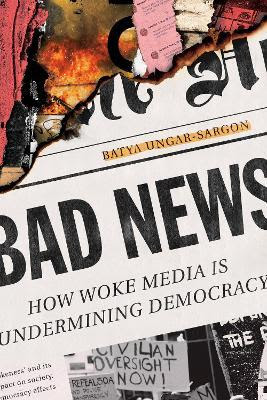
"Bad News" by Batya Ungar-Sargon


Batya Ungar-Sargon is the deputy opinion editor at Newsweek and co-hosts Newsweek’s podcast “The Debate.” Before joining Newsweek, she was the opinion editor of Forward, the largest Jewish media outlet in the United States. She’s written for The New York Times and Washington Post. She’s appeared on MSNBC, NPR, and NBC. She has a Ph.D. from the University of California, Berkeley. 

She is not the person you would expect to have written a book like Bad News: How Woke Media is Undermining Democracy. But she did. 


Bad News is not a book written from a conservative, right-wing, or alt-right perspective. It’s not a hastily compiled mishmash of everything that’s wrong with the news media. Instead, Ungar-Sargon has published a carefully researched, well-documented, and well-written story of where American news media has gone seriously wrong and how that is harming the United States.


To continue reading, please see my post today at Dancing Priest.

Thursday, January 20, 2022

When Journalism Began to Change


When I read Breaking News: The Remaking of Journalism and Why It Matters Now by former editor of The Guardian Alan Rusbridger, I was struck with how much his experience at the newspaper tracked with my own experience in corporate communications. The worldwide web and what followed was upending his world at the newspaper at the same time it had begun to change mine – and for the same reasons. We began to deal with it earlier, while The Guardianand other newspapers were affected more quickly, but we were grappling with many of the same issues and at roughly the same time (1995-2015). 

I left corporate communications for a time – almost four years. I felt worked to death, spun off, and finally laid off, and I was done. I set up my own consulting firm, and I was focused on two areas of communications – writing speeches and community relations. In late 2003, a friend dared me to apply for the top communications job at St. Louis Public Schools, which I did, thinking I’d never hear anything. I was wrong. They called, I interviewed along with nine others (we were all told to report at the same time and sat in the same room until we were interviewed). I got the job and started work the next morning.


To continue reading, please see my post today at Dancing Priest.


Photograph by Markus Spiske via Unsplash. Used with permission.

Wednesday, January 5, 2022

"Breaking News" by Alan Rusbridger


Alan Rusbridger was editor of The Guardian from 1995 until he retired in 2015. His career spanned the years of the advent of the worldwide web as a significant force, the rise of blogging, the explosion of social media, and the smart phone turning everyone into a journalist. Aside from technology (a big aside), the same period saw a fundamental change in how reporters and editors covered the news; objectivity and balance were out, and “contextualizing” and “perspective” were in.  

The author doesn’t describe it this way in his memoir Breaking News: The Remaking of Journalism and Why It Matters Now, but the press has returned to a kind of 19th century model of partisan reporting and quasi-sensationalism. The book was published in 2018, and it still reads like an up-to-date account of journalism in general and British journalism in particular. (His relatively brief discussion of Donald Trump and the charges of Russian collusion have now seriously outdated by the John Durham investigation.)


But Rusbridger and The Guardian realized something in the middle of all the technological change in communications – if The Guardian would survive, it had to look far beyond the shores of Britain and especially to the United States.


In a highly readable account, we learn how The Guardian grappled with the worldwide web, how Facebook and other social media were major gamechangers, and how audiences were increasingly global. He also notes what was most likely the most significant change of all – Craig’s List, which singlehandedly trashed the newspaper business model that had been in place for more than a century. When Craig’s List began appearing in different cities and offering classified ads for free, the major source of revenue for newspapers disappeared, and disappeared fast. 


Alan Rusbridger

He led the newspaper not only through technology change but also through some of the biggest stories of the last 25 years: 9/11, the Iraqi and Afghanistan wars, Edward Snowden’s leaks (for which The Guardian won a Pulitzer Prize), Wikileaks, parliamentary scandals, the journalism phone-hacking scandal in the UK, and more. These are fascinating stories of how a major newspaper worked behind the scenes to cover these major events. 


Rusbridger read English at Cambridge University and then became a journalist. He worked for several local papers, The Guardian, the Observer, and the Washington Bureau of the London Daily News, before returning to The Guardianas editor of the Weekend Magazine, deputy editor, and finally editor. He’s now editor of Prospect Magazine, a UK political monthly. He’s also the author of Play It Again, a memoir of journalism and music, and News and How to Use It. He’s received a considerable number of awards, recognitions, and honorary degrees. He lives with his family in London.


Breaking News is the story of a journalist who sat atop a major newspaper for two decades, how news decisions were made, and how the changes engulfing the industry were met (not everything was successful). It’s an account of how journalism was transitioning at frightening speed from the traditional news model to something else, which has yet to emerge and be defined.

Wednesday, November 24, 2021

The Media and Kyle Rittenhouse


I’m not going to offer any commentary on whether the jury verdict in the Kyle Rittenhouse case was right, wrong, or something in between.  But something struck me about the entire incident. 

Virtually no one, other than a tiny handful of people, saw what happened on the night of Aug. 25, 2020, in Kenosha, Wisconsin. Not one of the talking heads on the networks was there. Virtually no reporters were in the vicinity. Few police officers were in the area. The people who censor on Facebook, Twitter, and YouTube were (mostly) in California. Each of us who read, saw, or heard the story on Aug. 26 (and months afterward) were nowhere near Kenosha. 


To continue reading, please see my post today at Dancing Priest.


Photograph by William Topa via Unsplash. Used with permission.

Wednesday, November 10, 2021

Is the Lack of Local News Polarizing America?


When we moved to St. Louis in 1979, the city had two daily newspapers – the St. Louis Post-Dispatch and the St. Louis Globe-Democrat. The Post-Dispatch leaned left editorially, and the Globe-Democrat leaned right. Both papers did a good job of local news coverage; generally, opinion and editorializing were confined to the editorial and op-ed pages, or an opinion columnist featured on the first or second page. Another source of local news were the weekly suburban newspapers, like the West County Journal and South County Journal. Along with local TV news, St. Louis was well-served with local news coverage.  

Fast forward 40 years. The Globe-Democrat disappeared for good in 1987. The Post-Dispatch acquired the Suburban Journals, and they, too, disappeared. TV news usually covers what it’s always covered – shootings, car wrecks, and other highly visual news stories. The Pulitzer family sold the Post-Dispatch to Lee Enterprises. 


To continue reading, please see my post today at Dancing Priest

Wednesday, November 3, 2021

The Rise of News Deserts


In 1970, Congress passed legislation to create the Newspaper Preservation Act. The act exempted “joint operating agreements” (JOAs) from antitrust law, and in effect allowed two competing newspapers to share the same business operations – printing presses, buildings, advertising operations, distribution methods – as long as the news operations remained separate and competitive. It was touted as a way to preserve competition between newspapers, especially in cities with two (or more) newspapers. The legislation had been introduced after the Supreme Court found a joint operating agreement in Tucson, Arizona, to be a violation of the Sherman Antitrust Act.  

The intention was (seemingly) laudable – preserve newspaper competition. What followed was very different from the stated intention. Other forces were at work. The economic foundation of traditional journalism was changing rather profoundly, and this was in the days before the internet. Joint operating agreements proliferated across the United States; the St. Louis Post-Dispatch and the St. Louis Globe-Democrat operated under one. But St. Louis couldn’t support two newspapers, and eventually the Globe-Democrat, after being sold, shut down in 1986. 


To continue reading, please see my post today at Dancing Priest.


Top photograph by Cason Asher via Unsplash. Used with permission.

Wednesday, October 27, 2021

A Conversation about Journalism


We have to start talking about journalism in the United States, and specifically the decline of journalism. Newspapers, television programs, and online news sites have been talking for years about how to fix the problems of circulation, readership, viewership, and competition from social media platforms, but I don’t think they’re going deep enough. 

I’ve been working on a new fiction manuscript for some months now. The story is rooted in a community and the people who live there. An event happens that attracts the news media, both local and national. While the event and the role of the media are only a small part of the story, I’ve spent time researching news media, news, and how (and often why) certain event are covered.


This wasn’t a big stretch; my B.A. degree is in journalism, and I worked with journalists for most of my professional career in corporate communications. For three decades after I graduated from college, journalism remained recognizable. In 2003-2004, I was the director of communications for St. Louis Public Schools, amid a highly controversial reorganization. I dealt with journalists daily. I was interviewed daily, and usually by multiple reporters. (My first interview occurred 15 minutes into my first day on the job, when a TV reporter wanted a statement on a teacher sickout. I hadn’t even filled out my HR paperwork when I was standing before a camera.) 


To continue reading, please see my post today at Dancing Priest.


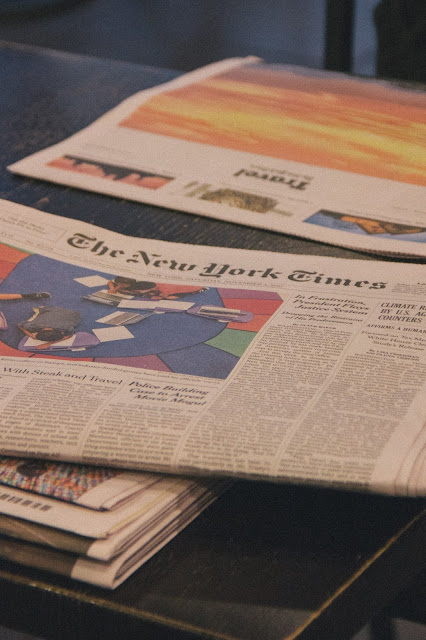
Photograph of The New York Times by Wan Chen via Unsplash. Used with permission.

Monday, April 12, 2021

"Ticking Clock" by Ira Rosen


The media training industry – the companies and consultants with train people to be interviewed – owes its creation to one man and one television program – Mike Wallace and 60 Minutes. Having been through media training many times, I learned what it was like to face the camera and a hostile interviewer. 

Except for a brief stint with ABC Primetime, Ira Rosen spent almost three decades working as a producer for CBS’s 60 Minutes. He worked on a host of famous stories. He worked closely with Mike Wallace, Harry Reasoner, Morley Safer, Lesley Stahl, Ed Bradley, Steve Kroft, Diane Sawyer, Chris Wallace, and other famous correspondents. He worked with many of their famous subjects – politicians, movie stars, gangsters, authors, dictators, He also experienced the stories that got away.


Ticking Clock: Behind the Scenes at 60 Minutes is Rosen’s memoir of those years with CBS and ABC. It makes for both surprising and not-so-surprising reading. Most of these news broadcasting legends are gone now, but they helped to shape the world we live in today. And Rosen’s story is as much as about the foibles and vanity of the big TV news names as it is about the stories they covered and won prizes for. 


Ira Rosen

We know everyone is flawed. We know ego can play a role in people’s lives and attitudes. But it’s still disappointing to read to what degree so many of these news people were motivated by ego and ambition, and how little “news” might play a role. And it has to do with money. For a long, long time, 60 Minutes was the major moneymaker for CBS. The correspondents often behaved like the celebrities they interviewed, and sometimes behaved like the more notorious. Rosen doesn’t seem at all surprised at the rise of the “me-too” charges that seemed to grow like topsy at top television networks – the conditions had been laid years before.


It’s Mike Wallace, the 60 Minutes star whom Rosen worked with the longest and the most closely, who comes in for particular focus. Wallace was not a pleasant man, either personally or professionally. He could behave brutally, even to his own children. As he aged, his behavior didn’t mellow; if anything, it became worse. He was finally pushed out the door after crossing the wrong boss and thinking he could get away with it.


The descriptions of the good, the bad, and the ugly are balanced by Rosen’s love of his work. And he received numerous Emmy Awards, DuPont Awards, Robert F. Kennedy Awards, and a Peabody for that work. Even before he was hired by 60 Minutes, he was writing award-winning stories about the nuclear accident at Three Mile Island for Rolling Stone. And he knew that to get the real story, he had to ignore the official press conferences and go hang out with the plant workers at the bar after shift-change. He co-authored The Warning: The Accident at Three Mile Island.


Ticking Clock is an important book for understanding American journalism from 1980 to 2015. It describes how major television news magazines functioned, and both the working and the dysfunction of the major people involved. It’s an important story, but a story tinged with sadness. And then you wonder if the stories themselves required these kinds of personalities to tell them.

Monday, March 8, 2021

"Slanted" by Sharyl Attkisson


I graduated with a degree in journalism in the 1970s. It was the era of Vietnam, Watergate, and Woodward & Bernstein, and it was a heady time to be in journalism. The prevailing philosophy in journalism education was that of Walter Lippmann’s modernism and objectivity. For someone like me, to pick up a daily newspaper today is an exercise in bafflement and mounting concern. It bears little if any relationship to what I understood and learned about journalism. 

It’s not good when I can read what’s presented as an Associated Press news story and easily identify the reporter’s opinion, bias, slant, and sometimes even factual errors.


Sharyl Attkisson was in journalism school some 15 or so years after I was. Her journalism credentials are rather stellar: CBS News, CNN, PBS, five Emmy awards, an Edward R. Murrow Award for investigative reporting, and covered presidential administrations from Clinton through Trump (and now Biden).  She’s as baffled and concerned about the practice of journalism as I am. 


Attkisson’s Slanted: How the News Media Taught Us to Love Censorship and Hate Journalism details that concern. The primary focus is “the narrative,” the story that national and other journalists believe about events and personalities, controversies, issues, and themselves. The narrative isn’t neutral; it has a definite philosophy, belief system, and principles of both inclusion and exclusion. It can be just as much as what is not covered as what is covered in journalism today. 


She writes an engaging story of what has happened, using example after example and anecdote after anecdote. Part of her story is her own, as in what happened to various stories she reported at CBS News. And part of it, the larger part, is about what has happened to such major media channels at The New York Times and CNN. Included in her analysis is how the narrative is played out through pundits and opinion polls; how every headline seems to have morphed into a “bombshell;” how the media correct other media when anyone goes off-narrative; and how many times the media got the story wrong – so often that the untruth becomes embedded in our consciousness as what happened. 


She makes a compelling case. Look no further than what she calls “the mother of all narratives” – the Trump / Russian collusion allegation. For years, it was reported as fact, when it was not. It was reported as fact long after the media could no longer sustain it, and it was the national news media which sustained it. It was because of Donald Trump that the media went completely off the rails, she says. You can read one of the appendices, which details 130 “major media mistakes in the era of Trump.”


One question that isn’t answered: when did it become okay for news reporters to blatantly insert opinion, and even snark, into news stories? Did it start in journalism schools or did they follow what was happening in the professional world?


Sharyl Attkisson

Attkisson paints a dark, and even darkening picture, but she sees hope. She includes a rather extensive list of organizations, publications, and individuals who are still getting journalism right. Many, but not all, are on the conservative side of politics. Some journalists have left their employers and now have their own space on Substack. One or two of her recommendations I might quibble over – I agree with her about the Wall Street Journal, but only with its business and editorial pages. The general news pages are sounding more and more like everyone else’s narrative.


Attkisson has more than three decades of experience working in news reporting. She is also the author of Stonewalled: My Fight for Truth Against the Forces of Obstruction, Intimidation, and Harassment in Obama’s Washington (2014) and The Smear: How Shady Political Operatives and Fake News Control What You See, What You Think, and How You Vote(2017). She and Don Vaughn are the co-authors of the forthcoming Writing Right for Broadcast and Internet News


We can “fix” our own immediate angst over the narrative by canceling a subscription or turning off network pundits. But journalism matters. We need a free press. We don’t need, and are ill-served, by a press that promotes a narrative. Perhaps we can begin by asking ourselves, how much of our own understanding comes from well-reported news, and how much if it comes from the promoted narrative. 


Slanted is an important book. The news media will most likely largely ignore it – which tells a story by itself. 


Top photograph by Markus Spiske via Unsplash. Used with permission.

Monday, August 26, 2019

Walter Duranty, The New York Times, and Fake News


Up-front: This is not a pro-Trump article. It’s not an anti-media article. In fact, it’s a pro-journalism article, from someone who was originally trained in journalism and worked with reporters for almost his entire professional career.

Fake news didn’t begin with the 2016 presidential election.

I suspect it goes back to the Garden of Eden, when the serpent told Eve that she surely wouldn’t die if she ate from the tree of the knowledge of good and evil. 

Fake news is as old as humanity.

One of the most famous examples of fake news in modern American history involved a reporter for The New York Times named Walter Duranty. He was stationed in Moscow during the early years of Stalin’s rule. So was Malcolm Muggeridge, then a reporter for the Manchester Guardian

Muggeridge, without permission from the Soviet authorities, traveled to the Ukraine. He had heard reports of famine in the Soviet Union’s breadbasket, following the forced collectivization of the farms in 1930 and 1931. He indeed found famine, with whole families starving to death on a massive scale, and he reported on it (without his byline and in stories smuggled out via diplomatic pouch). 

Malcolm Muggeridge in 1929
Duranty of The New York Times looked into it as well. He was also given unprecedented access to Stalin himself. Duranty found a few deaths from “malnutrition” but no famine. He explained the famine reports as a diplomatic duel between Great Britain and the Soviet Union. A few months later, he said that any reports of famine in Russia were “an exaggeration or malignant propaganda.” A few years later, he defended Stalin’s Show Trials of 1938.

Duranty’s reporting on the Ukraine won a Pulitzer Prize.

To be fair, Duranty was not alone in his apologetics work for the Soviet Union. Lots of reporters were right there as well. It was the Great Depression of the 1930s, and to many (including many reporters), it appeared that capitalism had failed and communism was the future.

Duranty’s report turned out to be fake news, or “propaganda masquerading as news.” There was horrible famine in the Ukraine, and Stalin’s policies had destroyed one of the most productive agricultural regions in the world. Millions of people died. Muggeridge’s reporting had been exactly right.

Sixty years later, The New York Times acknowledged the bad reporting. Despite calls to revoke Duranty’s Pulitzer Prize posthumously (he died in 1957), the Pulitzer board decided to let the award stand. 

Now as then, fake news knows no political or intellectual boundaries. It’s the report of a pizza parlor covering as a front for pedophiles, the “fine people” hoax of Charlottesville, and the Covington boys allegedly ridiculing an elderly native American. Uninformed people fell for the pizza parlor trick; smart, intelligent, and informed people fell for the Charlottesville hoax and the slanted video that featured the Covington boys. Unfortunately, a number of those people were reporters, editors, news anchors, and others holding significant national media positions.

I knew something had gone seriously wrong with the news media long before the 2016 election. But in December of 2016, the latest iteration began. The Washington Post published a story, quoting an anonymous (Obama) administration source, that the Russians had hacked the U.S. electric grid. This was collateral evidence that the Russians had supposedly hacked the election to make sure Donald Trump won. 

Walter Duranty
As it turned out, the Russians had not hacked the electric grid. A utility worker’s laptop not connected to the grid had possibly been compromised via a Russian porn site. The original story had made all the public rounds. No one noticed how the Post gradually edited the story and the headline, dialing back the original sensational account. No one wondered why the reporter hadn’t even bothered to check with the utility, and only began to make changes to the story when the utility issued a press release clarifying the news report. The original report had been republished, tweeted, and shared countless times. The edited version wasn’t. 

Consider the implications of a company’s press release being more truthful and accurate than an article in the Washington Post.

The essential truthfulness of Russian collusion was accepted by virtually all of the major national news media and most of the rest of the media as well. Special Prosecutor Robert Mueller was expected to uncover all of the evidence that would lead to President Trump’s impeachment and removal from office. 

Constantly buttressed by stories quoting anonymous sources, that was the media narrative we all read, watched, and heard for more than two years. That Trump constantly attacked the news media and “fake news” on Twitter and in press briefings added to the emotion powering the narrative. Trump had become an existential threat to freedom of the press.

Unfortunately, so had, and has, the behavior of the news media. Huge swaths of the American public do not trust the news that’s printed and broadcast. Cartoonist Scott Adams has gone so far as to say that national news media today are “just a manipulation tool for people with agendas.”

The narrative turned out to be wrong. Or, put another way, the narrative turned out to be wrongheaded. It’s now pointing in the opposite direction, although the media seem reluctant to go there. Instead, there’s been a media pivot from collusion to obstruction (“Trump would have been charged with obstruction were he not president, former prosecutors assert” – Washington Post, May 6, 2019).

In 2017, The New York Times and Washington Post shared a Pulitzer Prize for their efforts to uncover collusion between Russia and the Trump campaign. 

The ghost of Walter Duranty walks. The media can’t wait 60 years to acknowledge the mistake they’ve made.

Related: