Friday, January 7, 2022

From 3 to 3


After John 21:15-17
 

This man, this hothead,

first to jump into the sea,

first to volunteer, first

to pull a sword, first

to deny him openly, first

to feel the shame of denial,

denial times three.


Three denials turned

on their heads with

three questions, sounding

the same but slightly

different, three responses

to three answers 

to three questions.


Feed my lambs.

Tend my sheep.

Feed my sheep.


Photograph by Luke Pennystan via Unsplash. Used with permission.

Thursday, January 6, 2022

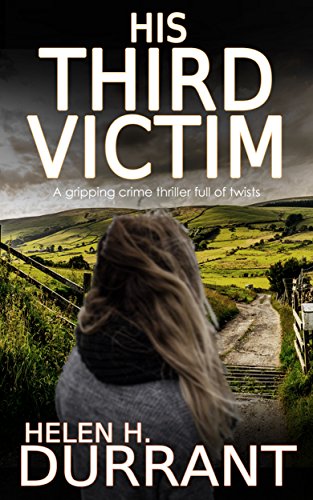
“His Third Victim” by Helen Durrant


Detective Inspector Matt Brindle of the Pennines Police has been home for six months. He’d turned in his resignation after he and his partner had been ambushed at a remote cottage they’d been led to by a police informant. A hand grenade tossed in a window had killed his partner and left Brindle’s leg shattered. He’s overcome the physical problems, but the psychological and emotional scars are deep. 

His superintendent never accepted Brindle’s resignation. And soon the detective finds himself drawn back to work, to a case involving the murder of a friend. And it appears that a serial killer is involved, whose crimes appear to be without rhyme or reason and only sharing a mysterious colored mark on the victims’ arms.


As Brindle and his new assigned partner investigate, they discover that the mistress of the dead man has no history; they can find nothing anywhere about her background or past. When her child is kidnapped, they know there’s something really strange going on. And they’re right.


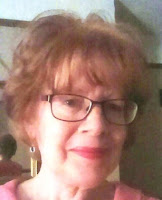
Helen Durrant

His Third Victim
 is the first in the Detective Matt Brindle mystery series by British author Helen Durrant. It has an intriguing premise and an engaging and sympathetic police hero. It’s well worth reading, but it’s a bit uneven in places and needed a good editing to polish and smooth the story.


Durrant has published some 24 mystery books in several series. The second in the Detective Matt Brindle series is The Other Victim. Durrant is a retired teacher and lives in the northwest of England.


My criticism is meant well; with little effort, this could be a first-class mystery series.

Wednesday, January 5, 2022

"Breaking News" by Alan Rusbridger


Alan Rusbridger was editor of The Guardian from 1995 until he retired in 2015. His career spanned the years of the advent of the worldwide web as a significant force, the rise of blogging, the explosion of social media, and the smart phone turning everyone into a journalist. Aside from technology (a big aside), the same period saw a fundamental change in how reporters and editors covered the news; objectivity and balance were out, and “contextualizing” and “perspective” were in.  

The author doesn’t describe it this way in his memoir Breaking News: The Remaking of Journalism and Why It Matters Now, but the press has returned to a kind of 19th century model of partisan reporting and quasi-sensationalism. The book was published in 2018, and it still reads like an up-to-date account of journalism in general and British journalism in particular. (His relatively brief discussion of Donald Trump and the charges of Russian collusion have now seriously outdated by the John Durham investigation.)


But Rusbridger and The Guardian realized something in the middle of all the technological change in communications – if The Guardian would survive, it had to look far beyond the shores of Britain and especially to the United States.


In a highly readable account, we learn how The Guardian grappled with the worldwide web, how Facebook and other social media were major gamechangers, and how audiences were increasingly global. He also notes what was most likely the most significant change of all – Craig’s List, which singlehandedly trashed the newspaper business model that had been in place for more than a century. When Craig’s List began appearing in different cities and offering classified ads for free, the major source of revenue for newspapers disappeared, and disappeared fast. 


Alan Rusbridger

He led the newspaper not only through technology change but also through some of the biggest stories of the last 25 years: 9/11, the Iraqi and Afghanistan wars, Edward Snowden’s leaks (for which The Guardian won a Pulitzer Prize), Wikileaks, parliamentary scandals, the journalism phone-hacking scandal in the UK, and more. These are fascinating stories of how a major newspaper worked behind the scenes to cover these major events. 


Rusbridger read English at Cambridge University and then became a journalist. He worked for several local papers, The Guardian, the Observer, and the Washington Bureau of the London Daily News, before returning to The Guardianas editor of the Weekend Magazine, deputy editor, and finally editor. He’s now editor of Prospect Magazine, a UK political monthly. He’s also the author of Play It Again, a memoir of journalism and music, and News and How to Use It. He’s received a considerable number of awards, recognitions, and honorary degrees. He lives with his family in London.


Breaking News is the story of a journalist who sat atop a major newspaper for two decades, how news decisions were made, and how the changes engulfing the industry were met (not everything was successful). It’s an account of how journalism was transitioning at frightening speed from the traditional news model to something else, which has yet to emerge and be defined.

Tuesday, January 4, 2022

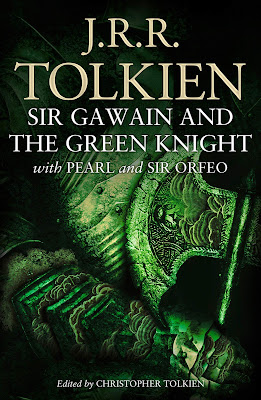
The Enduring Appeal of “Sir Gawain and the Green Knight”


Sir Gawain and the Green Knight 
– at one time a staple of college reading for English Lit majors – has a curious history. The author was roughly contemporary with Geoffrey Chaucer (1340s-1400). The poem ranks as one of the two great poems of the period, with Chaucer’s Troilus and Crisedye being the other.  

The author’s identity, however, remains unknown. He used an English dialect representative of the Midlands area of England (Chaucer’s English was London through and through). Some scholars have suggested it some of its scenes would situate the poem in Staffordshire in west-central England. It exists in a single manuscript, together with Pearl and two Bible stories entitled Purity and Patience. The poems are written in the same hand and the same English dialect. 


The manuscript was unknown until it surfaced in the library of Henry Savile (1569-1617), who lived in Bank in Yorkshire. The manuscript is now with the British Library in London.


To continue reading, please see my post today at Tweetspeak Poetry.

Monday, January 3, 2022

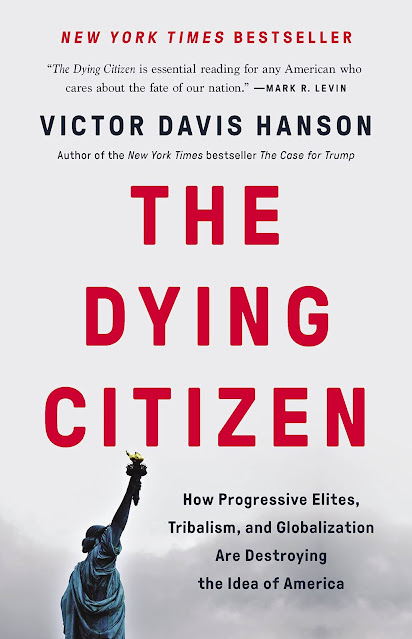
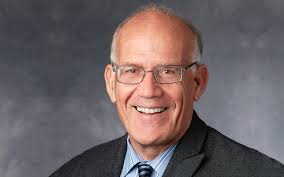
“The Dying Citizen” by Victor Davis Hanson


Victor Davis Hanson sees a war going on for America. In The Dying Citizen: How Progressive Elites, Tribalism, and Globalization Are Destroying the Idea of America, he makes his case, and a well-documented, well-written, and disheartening case it is. The ultimate result of this war could be the death of the idea of American citizenship, he says, and it may already be on life support. 

It is a paradox that the very people who have benefitted most from American culture and society are the ones waging this war – the elites of business, politics, academia, culture, and the media. 


The Martin and Illie Anderson Senior Fellow in Residence of Classics and Military History at the Hoover Institution, Stanford University, and a Distinguished Fellow in History at Hillsdale College, Hanson is a writer, speaker, teacher, Hanson has written or edited 24 books. He’s received numerous award and recognitions, including the National Humanities Medal, the Bradley Prize, the Edmund Burke Award, William F. Buckley Prize, Claremont Institute’s Statesmanship Award, a National Endowment for the Humanities fellowship, and many others. 


He’s an excellent lecturer, and I’m speaking from experience. I took his “Athens and Sparta” online course offered by Hillsdale College. He’s also taught on “The Second World Wars” and “American Citizenship and Its Decline.” The Dying Citizen is paired to this last course. 


Victor Davis Hanson

Hanson develops six key themes to make his case that the idea of citizenship is on life support: the squeezing of the middle class to create a rich-poor society; using undocumented and illegal immigration to diminish the value of citizenship; the push away from the melding of people into Americans and instead emphasizing tribes of origin; the growth of a federal bureaucracy immune from accountability; the ongoing attacks on the Constitution and the idea of a federal republic; and the embrace of globalism by America’s elites.


In an epilogue, Hanson discusses the elections of 2016 and 2020, the impact of Donald Trump, and the emergence of the COIVD-19 pandemic, and how all these events and people reflect and explain the war over the idea of America and citizenship.


Hanson is a conservative. He doesn’t dance around difficult or controversial topics. He states his hypothesis clearly and assembles considerable evidence to support it. And he clearly describes what’s at stake. 

Sunday, January 2, 2022

Three times


After John 21:15-17


The third time

they’d seen him

since the cross,

sharing fish

on the shore,

fish he cooks

on the shore:

three questions 

he asks, three

queries he

directs to

the man who

denied him

before death,

denied him

three times in

three questions,

asks three times

do you love

me, Simon?


Photograph by Vidar Nordli-Mathieson via Unsplash. Used with permission.

Saturday, January 1, 2022

Saturday Good Reads - Jan. 1, 2022


If you ask a person to name the consequential wars in American history, the likely response is one of the following: the American Revolution, the Civil War, World War I, and World War II. Bradley Birzer at The Imaginative Conservation suggests we’re underrating the War of 1812 and how it changed the Republic.  

Eric Zemmour is running for president of France. He makes no apology for his politics, which is conservative-right, and he makes no apology for his religion, which is Jewish. For Christmas, Mr. Zemmour issued a holiday statement that few politicians or elected representatives would make about Christmas and Christianity, even if they are Christians themselves. 


Before he was a novelist (The Radetsky March), Joseph Roth was a journalist. He started working in Berlin as a reporter in 1920 and flowered for a decade. Then came Hitler and the rise of the Nazis. Malcolm Forbes at The Critic Magazine has the story.


More Good Reads


British Stuff


The Medieval Church at Reculver – A London Inheritance.


The Ghosts of Old London – Spitalfields Life.


American Stuff


Policies are not principles: The American culture of freedom – R.R. Reno at New Criterion.


Daniel Boone: A Frontiersman in Full – Rich Lowry at National Review.


Life and Culture


America Needs a Rebirth of Science – Scott Atlas, Jay Bhattacharya & Martin Kulldorff at National Review.


Why We Need Christmas – The Critic Magazine.


How We Changed Our Minds in 2021 – Bari Weiss at Common Sense.


The fallacies of the common good – Kim Holmes at New Criterion.


Poetry


Of the Epiphany – John Beaumont at Kingdom Poets (D.S. Martin).


My Father, Dancing – Tony Barnstone at Literary Matters.


“Fields of Grass” and “Like Flowers” – Norma Pain at Society of Classical Poets.


Faith


The Crosses at the Cradle: The Stories Under the Ground – Samuel Heard at The Middle of Nowhere and Everywhere.


Ten Great Books to Read Together – Nathan Tarr at Desiring God.


Baby Singing ‘I’m Blessed’


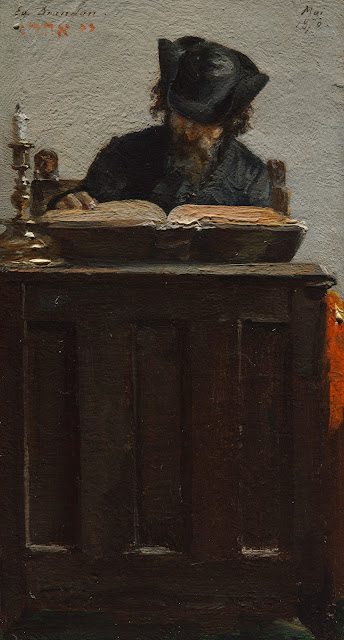
Painting: Jewish man reading, oil on canvas (1870) by Edouard Brandon (1831-1897)