Sunday, May 22, 2022

Better than Pharisees Part 1


After Matthew 5:17-26
 

We know the law exists

for a reason, or perhaps

two or three, like to provide

guardrails, or enshrine

proper behavior by setting

penalties for the improper,

or regulating behavior

by encouraging one thing

and discouraging another.

Law is how we function,

emphasis on “we.” So

it is a surprise to listen

in expectation of how

the law will be replaced,

and, instead, be told

the expected revolution 

won’t overthrow the law

but in fact fulfill it, that

not a single command

or provision of the law

will disappear until what

is ordained is accomplished.


You have to be better than

Pharisees! Even Pharisees

have to be better than Pharisees!

And you say, how does

that make any sense, and

what’s the point of trying

to obey something no one

can obey? The answer is,

exactly.


Photograph by Bill Oxford via Unsplash. Used with permission.

Saturday, May 21, 2022

Saturday Good Reads - May 21, 2022


We humans are storytellers, and we’ve likely been telling stories since we first walked with planet. At Church Life Journal, William Christian Hackett, author of a novel about an escapee from the German concentration camp in Drancy, France, asks the fundamental question: What makes a good story? And what does that tell us about ourselves.  

How do children, caught in terrible family circumstances, human trafficking, abuse, and all the other tragedies of life, break out of the cycle they find themselves in? Rod Dreher at American Conservative visited some friends in New Orleans, and found one answer: Kintsugi Alison.


If you want to know what happened to public education during the pandemic, some researchers at Harvard did an in-depth study. And what they found is that it was just about as bad as everyone suspected. 


More Good Reads


Life and Culture


A Talk with Paul Kingsnorth – Joy Clarkson at Plough Quarterly.


Professor Barry Mole: Scholarly Obsessive – D.J. Taylor at The Critic Magazine.


The Certainty Trap – Ilana Redstone at Tablet Magazine.


College: A Place for Training Exiles – Ben Phelps at Front Porch Republic.


Ukraine


The Spirit of Ukrainian Resistance: Five Poems – Marjana Savka at Literary Hub.


News Media


The Internet Is More Powerful Than the Printing Press – Chris Martin at Terms of Service.


Defeating the Idolatry of Outrage – Aaron Earls at The Wardrobe Door.


Are we post-platform? – Eileen Isagon Skyers at Dirt.


Faith


Loving Across the Ideological Fence – Blake Long at Theology & Life.


No Ordinary Life – Susan Lafferty.


Recovering an Erased Gospel: How the earliest Greek New Testament commentary manuscript has been restored by modern imaging techniques – H.A.G. Houghton at Text and Canon Institute.


Writing and Literature


A Map of Dante’s Purgatorio in Three Touchstones – James Matthew Wilson at Church Life Journal.


Cracks in Creation: An Essay from 'Wild Things and Castles in the Sky' – Ashley Artavia Novalis at The Rabbit Room.


Orwell’s Humor – Jonathan Clarke at CityJournal. 


Poetry


Poetry and Modern Culture – Joseph Pearce at The Imaginative Conservative. 


The Flood – Seth Lewis.


Culloden, April 16, 1746 – Jeff Eardley at Society of Classical Poets.


The Blessing (Symphonic Version) – Passion City Church


Painting: Man Reading a Newspaper, oil on canvas by Max Scholz (1855-1906).

Friday, May 20, 2022

Light


After Matthew 5:10-16
 

To be called a light
in the world is to be
called to a singular
purpose. A light is
intended to shine,
not hidden under
a bush. A light is
like a city on a hill,
because it’s visible
to miles to anyone
who looks up.
A light is a lamp
for the world and
a lamp for the house,
and it shines to all
and for all within.
The children sing
this little light of mine,
but the fact is we are
the light,
the lights. 

Photograph by Kevin Finnerman via Unsplash. Used with permission.

Wednesday, May 18, 2022

In praise of gentleness


It’s difficult to look at almost anything online these days and not be offended. It seems worse when the person doing the offending is someone you know, a Facebook friend you’ve actually met in person, say, and you know them to be kind, compassionate, and caring. And then on Instagram, POW, a bowlful of anger gets dumped on a specific target but splashes all of us. 

It was ugly. I was stunned. I knew the person leaned leftward politically, but I never expected what I saw. It’s not only the leftward leaning; the rightward crowd does it as well. And I’ve caught the tendency in myself, when you see something or read something that takes you from a calm-and-collected zero to a red-hot 90 in 4.3 seconds.


It’s not an attractive characteristic. It’s fueled by frustration and anger. It’s heightened on social media, which we seem to think gives us license to behave badly. 


We forget the call to be gentle, with others and ourselves.


Gentleness has been on my mind this week; it was part of a sermon by our pastor Sunday, when he preached on Galatians 6:1-10, in which the Apostle Paul exhorts us to be gentle in reproof, not to become weary in doing food, and do good to everyone, “especially those of the household of faith.”


The target of my friend’s ire was a well-known conservative commentator, who also happens to be a Christian. And I wondered what might be the outcome if my friend, instead of heaping outrage and condemnation, had instead prayed for this individual, not that they would come around to my friend’s thinking, but instead would experience God’s grace, God’s blessing, and God’s encouragement. And what if my friend prayed daily for this person for a week.


And what if my conservative friends selected someone they disagreed with – Rachel Maddow, Elizabeth Warren, Stephen Colbert – and prayed for that person for a week, that they would experience God’s grace, God’s blessing, and God’s encouragement. 


In either situation, nothing might happen. But I suspect that, if nothing else, the heart of the person praying might change. And that may be one of the unexpected benefits of prayer.


A gentle word


If I would choose

my word, it would not

be power or glory, 

it would not be pride

or control, it would not

be wealth or position or 

title. Instead, if I could,

I would choose gentle,

the word I’d want 

to describe my demeanor,

to describe my actions,

to describe my spirit.

Gentle is accepted

in all situations, 

sometimes used and

abused but accepted

nonetheless. Gentle

is a being word. Gentle

is an action word. Gentle

is a word, a life that’s

learned, a condition

that’s taught. And

it is so hard.


Photograph by Godwill Gira Mude via Unsplash. Used with permission.

Tuesday, May 17, 2022

Taras Shevchenko: The Poet of Ukraine


You read the newspaper and watch the television and social media reports, and you wonder how a tragedy like the Russian invasion of Ukraine could happen. You learn of atrocities and possible war crimes, and you say, “This is the 21stcentury?” Well, yes, it is. You might ask, “How does this happen?” In the case of Russia and Ukraine, the poet Taras Shevchenko might have an answer. 

Shevchencko (1814-1861) was born in a village near Kyiv in Ukraine. Given his later literary fame, it’s surprising he was born to a family of serfs. The region had been under the control of the kingdom of Poland, but various dismemberments of Poland had eventually led to control of Ukrainian territory by Russia and the Austrian-Hungarian Empire. Russia controlled the area where Shevchenko was born, but it was a relatively recent control.


To continue reading, please seems post today at Tweetspeak Poetry.

Monday, May 16, 2022

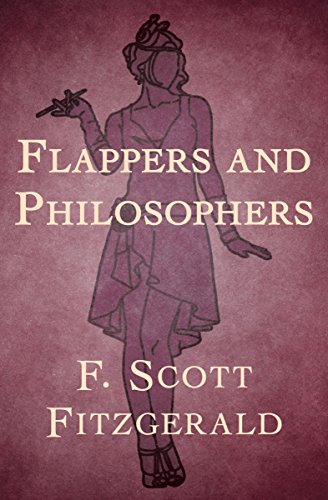
“Flappers and Philosophers” by F. Scott Fitzgerald


Published in 1920, Flappers and Philosophers was F. Scott Fitzgerald’s first collection of short stories. First appearing separately in such magazines at The Saturday Evening Post and Esquire, these eight stories were collected and published the same year has his first novel, This Side of Paradise. It was the novel that turned Fitzgerald into an overnight literary sensation – and at age 24. But it was the short stories that he continued to write for the rest of his life that supported him financially.  

The stories are generally about people in the upper middle and upper classes. They’re set in the first two decades of the 20th century and are something of period pieces – the slang, the music references, and social manners mark them with their time. Two of the stories, “The Offshore Pirate” and “The Ice Palace,” also contain references that today, 100 years after their publication, could only be called racist.


“The Offshore Pirate” is about a young woman who is bored with life and chooses only the worst men, whose uncle and guardian is at his wits end to marry her off (and make someone else responsible for her). She’s agreeably kidnapped on her uncle’s yacht by a young irate who, with his band of musicians, is making off with a stolen fortune. “The Ice Palace” is about a young woman from the South who’s determined to escape her town (and the young men it contains) and marry a Northerner. She almost gets her wish.


The young F. Scott Fitzgerald

“Head and Shoulders” concerns what seem to be a highly mismatched couple, a brainy man who exists only for the study of his books and a stage actress. They’ll end up changing positions. “The Cut-Glass Bowl” is the story of a woman of fading beauty mirrors the decline in the family wealth.


“Bernice Bobs Her Hair” is set right at the beginning of the flapper age. A young woman visiting her cousin undergoes something of a “Pygmalion” change at the hands of the cousin, whose verbal cruelty will eventually get its comeuppance. “Benediction” is something of an abrupt change of subject – a young woman visits the brother she hasn’t seen for 17 years – the brother who is studying to become a Jesuit priest. During the visit, she has an unexpected experience.


“Dalyrimple Goes Wrong” is about a war hero from the Great War who comes home to adulation which quickly fades. He takes something of a menial job, until he realizes that burglary might be more lucrative. And “The Four Fists” is the story of a young men who’s punched in the jaw on four separate occasions of his life – and each punch teaches him something important.


The collection is eight very different stories, showing Fitzgerald at the very beginning of his literary career. Each has something of a surprising twist. And each has characters who are recognizable, even at a distance of a century.


Sunday, May 15, 2022

Salt


After Matthew 5:10-16 

Salt poses a conundrum. 
Too much, and it ruins. 
Too little, and no one notices. 
Left too long, it turns stale, 
losing its flavor, its power, 
its purpose. In that case, 
it’s good for nothing, 
no longer good for anything 
except the ash heap, to be 
thrown out and trampled. 
So choose what kind of salt 
you will be, and learn how 
to be it. It’s a lifetime education. 

Photograph by Jason Tuinstra via Unsplash. Used with permission.