Showing posts with label Hebrides. Show all posts

Thursday, February 16, 2023

"Deep and Deadly" by Keith Moray


It looks like suicide, but it will turn out to be murder.  

The body of the owner of the salmon farm on West Uist in the Hebrides is found floating in a fish retention area, a netted seawater area used is fish farming operations. It appears to be suicide, although no one is quite sure why the deceased would have taken his own life.


The death isn’t the only case for Detective Inspector Torquil MacKinnon and his team. Someone has been sending poison pen letters to seemingly everyone in West Uist. Tourquil himself has received one, as had the newspaper editor, local gamekeeper, a restaurant owner, the dead man, and numerous others. What is unsettling is that the letters are becoming increasingly threatening. Plus dead birds are turning up, poisoned, the local environmentalists believe, by the salmon farm and the chemicals it uses.


When the forensic examination confirms that the man didn’t drown where he was found, MacKinnon knows that he now heads a murder investigation. And the bodies begin to pile up.


Keith Moray

Deep and Deadly
 is the seventh DI Torquil MacKinnon mystery by British writer Keith Moray. It’s a good story but perhaps not as strong as its predecessors; there is considerable plot advancement at the end that might have been a bit more spaced out. There is less of Lachlan MacKinnon, Torquil’s minister uncle who might be a novel all to himself. And while the DI’s wedding is looming, we get very little of his fiancĂ©e or his ongoing battle with his superintendent boss. Still, I enjoyed the story; it’s always a treat to read about life on West Uist.


In addition to seven Inspector MacKinnon novels, Moray has also published three historical novels, The Pardoner’s CrimeThe Fool’s Folly, and The Curse of the Body Snatchers; non-fiction books (under the pen name Keith Souter); and several westerns as Clay Moore. When he’s not writing, he practices medicine as a part-time doctor and medical journalist (he studied medicine at the University of Dundee). He lives in Yorkshire in England.

Thursday, January 27, 2022

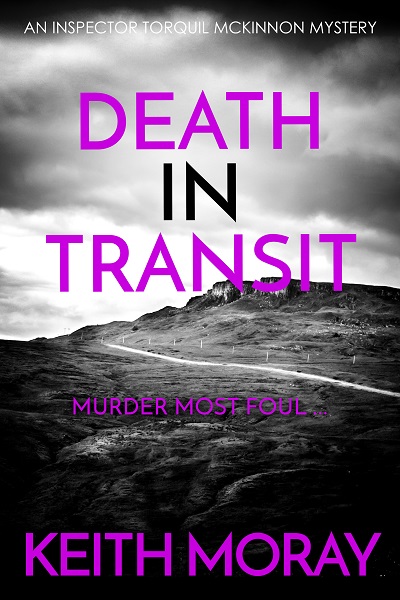
"Death in Transit" by Keith Moray


We’re back in the Hebrides with Inspector Torquil MacKinnon. Astronomers and astrologists from all over are arriving in West Uist, where MacKinnon and his police team are based. People are coming to experience what’s called the “transit,” when Mercury aligns with Venus and the other planets are in close alignment as well. 

More than the usual rivalry between the groups seems to be at play. The astrologists consider themselves more advanced and free-thinking; the astronomers are more than irritated at what they see as unscientific nonsense about how planets affect people’s behaviors. They all attend a lecture but one of the leading astrologists, a woman with a Ph.D. in astronomy who’s embraced the astrological side.


Words are said. And then more than words. The woman’s body is found floating in the harbor the next morning, and the autopsy shows she was bludgeoned from behind and then fell, or was dumped, into the water.


Keith Moray

MacKinnon and his team get to work. He’s dealing with the usual interference from his boss in Scotland, suspects who kept avoiding telling all of what they know, and a newspaper editor and reporter who think they can solve the mystery themselves. And then there’s a second murder.


Death in Transit by British author Keith Moray is the fifth of six Torquil MacKinnon mysteries. It’s a good story, highlighted by the astronomy-astrology rivalry, but it seems a bit choppy in places and a few surprise developments that come out of left field. But it reads well, and Moray leaves enough hints for the reader to begin to identify the killer.


In addition to the Inspector MacKinnon novels, Moray has also published three historical novels, The Pardoner’s CrimeThe Fool’s Folly, and The Curse of the Body Snatchers; non-fiction books (under the pen name Keith Souter); and several westerns as Clay Moore. When he’s not writing, he practices medicine as a part-time doctor and medical journalist (he studied medicine at the University of Dundee). He lives in Yorkshire in England.


Related


The Gathering Murders by Keith Moray.


Deathly Wind by Keith Moray.


Murder Solstice by Keith Moray.


Flotsam & Jetsam by Keith Moray.

Thursday, May 2, 2019

"Deathly Wind" by Keith Moray


West Uist in the Hebrides, off the coast of Scotland, looks like the idyllic island community. It has its pub (serving heather ale), it has its fishing boats, it gets its fair share of tourists who come for the scenery, it has a castle, and it has its resident characters. Nearby on the island is the area known as the Wee Kingdom, comprised of a half-dozen or so “crofts,” or small farms, which have existed for several hundred years as perpetual grants from the lord of the castle. This isn’t the kind of community where you’d expect to find violence. But it is exactly that.

Deathly Wind by Keith Moray opens with violence – a family of four have been targeted by someone known as the “assassin,” who ruthlessly and almost gleefully shoots each one as they resting and playing on a beach by the water. A police constable, Ewan McPhee, doing routine rounds on his boat finds the bodies – and he’s promptly knocked unconscious. His boat is later found floating, and he’s presumed dead.

And then the murders really begin, and they seem connected to plans by the new “laird” of the castle to evict the crofters and begin installing a large number of wind turbines for power generation. In fact, the murders come so fast and furious that the reader is left to wonder if there will be any characters left by the end of the story.

Keith Moray
Detective Inspector Torquil MacKinnon of West Uist has been on leave, and he returns to find his constable missing, people dead and dying, the community in an uproar over the wind turbines, and his obnoxious boss on the mainland making MacKinnon and the reader wish him to become the next victim. And MacKinnon finds himself not so much leading the investigation as finding himself sucked into its whirlwind and coming dangerously close to death himself.

Moray has published five Inspector MacKinnon novels, with a sixth scheduled for later this year (Deathly Wind is the second in the series). He’s also published three historical novels, The Pardoner’s CrimeThe Fool’s Folly, and The Curse of the Body Snatchers; non-fiction books (under the pen name Keith Souter); and several westerns as Clay Moore. When he’s not writing, he practices medicine as a part-time doctor and medical journalist (he studied medicine at the University of Dundee). He lives in Yorkshire in England.

Deathly Wind is one wild story of murder, mayhem, motives buried in the past, and few things being what they first appear. 

Thursday, March 7, 2019

"The Gathering Murders" by Keith Moray


It’s perhaps inevitable to compare the Inspector Torquil McKinnon mysteries by Keith Moray to the Jimmy Perez mysteries by Ann Cleeves. Both are set on islands off northern Scotland (the Hebrides and Shetland, respectively). The heroes of both have small police forces (a sergeant and a constable). Both have rather gruesome murders committed generally in isolated places; remote islands have a lot of isolated places. 

But there is a major difference. The Torquil MacKinnon stories, at least as demonstrated in The Gathering Murders, seem to have an element of humor running through them, including a hard-drinking, motorcycle-riding Catholic priest who is MacKinnon’s uncle and who raised him from childhood.

Serious crime doesn’t seem to happen in a small town like West Uist in the Hebrides, until the annual Gathering and Literary Festival happens. As the festival begins, a local poet with an eye for the women, unmarried or not, whose major claim to local fame is his unregulated whiskey still, is found dead, the apparent victim of an accident. Then Fiona Cullen, the young woman already called “the queen of Scottish crime writers” who returns to her home island for the festival is found dead, and there’s nothing apparently accidental about it. She also happens to be Torquil MacKinnon’s old girlfriend who was strongly indicating her interest in rekindling their romance.

Keith Moray
MacKinnon discovers that his dead girlfriend had a tendency to write roman a clef mystery stories – thinly disguised accounts of people she knew and didn’t particularly like. From that literary perspective, suspects abound, and the inspector discovers that his once and future girlfriend not only got literary revenge against people she believed had hurt her, she also slept with just about anyone who could still breathe.

Moray has published five Inspector MacKinnon novels, with a sixth scheduled for later this year. He’s also published three historical novels, The Pardoner’s CrimeThe Fool’s Folly, and The Curse of the Body Snatchers; non-fiction books (under the pen name Keith Souter); and several westerns as Clay Moore. When he’s not writing, he practices medicine as a part-time doctor and medical journalist (he studied medicine at the University of Dundee). He lives in Yorkshire in England.

The Gathering Murders has a bit of rapid plot development toward the end, but that doesn’t detract from the overall enjoyment of the story.

Top photo: the island of South Uist in the Outer Hebrides, courtesy Wikimedia Commons.

Monday, April 30, 2018

“The Letters of Ivor Punch” by Colin MacIntyre


I’m not sure I know how to begin to describe The Letters of Ivor Punch by Scottish writer Colin MacIntyre. It’s a novel, of sorts. You might think it’s a collection of short stories, and that makes sense, for a while. You know it has a strange narrative structure – without a doubt. It moves back in forth in time, from the 19th century to the 21st century.

If I said it’s about Pan Am Flight 106 that was blown up over Lockerbie, Scotland, and about Charles Darwin, and an older man who writes letters to President Obama, and children disclaimed, unclaimed, and reclaimed, and about a uncle who turns out to be your grandfather (a recurring theme), and a funeral parlor, I might be getting close.

So, it is a wee bit wacky. Ivor Punch is the man writing the letters, asking President Obama to stop the British government from releasing the man who planted the bomb on the Pan Am flight. It’s because his brother and sister-in-law were aboard that flight. Except it wasn’t really his brother. But he wanders all over as he writes, and he doesn’t even send the letters.

And there’s the woman back in the 1860s, who moved with her sister to this remote island in the Hebrides off the coast of Scotland (far, far off the coast) (really far). The sister is famous as a world traveler and explorer. The one who stays home and keeps the house falls in love with the mailman, who will be an ancestor of Ivor Punch.

Author MacIntyre will even find time to insert himself in the story – the interloper who steal the name of the local historical society (and he did something of the kind, in real life).

The Letters of Ivor Punch won the 2015 First Book Award given by the Edinburgh International Book Festival. MacIntyre is also publishing a picture book for children this coming summer, entitled The Humdrum Drum, and I can’t imagine what that will be like. And MacIntyre is also a songwriter – his band is called Mull Historical Society and yes, that’s the name he swiped from the Isle of Mull, where he was brought up.

Colin MacIntyre
It’s actually a serious novel. That is, until you reach a point not too far from the end. I won’t say what it is, but you should know that there is a scene that caused me to laugh until the tears came and my wife thought I was strangling. I finally calmed down, resumed reading, and promptly started laughing all over again.

It’s a crazy book. It makes you think about how the idea of place shapes people. It makes you realize how odd families can be and often are. It argues that the past is always with us, so you might as well call the past is the present, and maybe the future.

I loved this wacky book and the story it tells.

Top photograph: a view of the island of Skye, one of the Inner Hebrides islands, by Rudiger Shafer via Public Domain Pictures. Used with permission.


Wednesday, February 17, 2016

Peter May’s “The Chessmen”


Finlay Macleod, known as Fin, is a former detective on the Edinburgh police force. He’s left the force and returned to where he was born and raised – the Isle of Lewis in the Outer Hebrides, off the northwestern coast of Scotland. It’s a place of memories of youth, the aunt who raised him after his parents died, and the children he grew up with. It is with one of those children, now a bear of a man named John Macaskill whom Fin calls Whistler, that Fin experiences what feels like an earthquake but is known as a “bog burst” that drains a nearby loch, or lake.

And there, at the bottom of the lake, lies a small airplane. Find and Whistler know whose plane it is – the leader of a band they were part of 17 years before. The plane and its pilot had supposedly disappeared over the nearby Atlantic many years before. But there it is, in the bottom of the drained loch. And in it is a body of man who was clearly murdered, the side of his head bashed in.

This is the heart of the story of The Chessmen by British (I should probably say Scottish) writer Peter May. It’s a mystery with deep roots in the past. It is a mystery in a place where the past is always present and where the present is always old. It is a savagely beautiful place fought over by Vikings, tribesmen, Scots, and English, a place where enemies and friends settle their differences with their fists. It is a place of harsh Presbyterianism and unbridled passions.

Isle of Lewis
Fin knows that someone had to land the plane on the loch and then sink it. Someone swam away from a murder. He sees that Whistler knows more about the plane than he’s saying; Whistler, in fact, walks away and doesn’t look back. What happened with that murder is still affecting lives all those years later.

May takes us through the rise of the Gaelic band that the main characters were part of. Fin himself was a roadie for the band. The passions that played out among the band members helped to lead to the murder.

Peter May
The Chessmen is a standalone novel, but it is actually the third in May’s Lewis Trilogy. The first was The Black House and the second was The Lewis Man. May is a screenwriter, novelist, and crime writer who has 20 writing awards. Interesting enough, The Black House originally could not find a publisher in Britain, and was first published in France, where it commanded so much attention (and several awards) that it became a bestseller in Europe – before being published in the U.K. May has published some 23 crime and general novels and a travel book about the Hebrides, and produced five television screenplays and one for a forthcoming movie.

May’s novels are known for their solid research (see the video below for the topography researched for The Chessmen). We learn a considerable amount of the Isle of Lewis’s history, including a ship disaster in 1919. It is also the place where the famed Lewis Chessmen were discovered in 1831, and the chessmen play a small but ultimately pivotal role in the unfolding of the story.

The Chessmen is a fine mystery and a good novel, filled with how the past not only shaped the present but never really leaves.


Top photograph: Loch Moraig on the Isle of Lewis, via Wikimedia Commons. Used with permission.