Showing posts with label missions. Show all posts

Thursday, June 11, 2026

The Overseas Trip Where Language Didn't Matter


Our missions trip was scheduled for September 2001. We’d been preparing all summer. But 9-11 intervened, and the trip was postponed.  

We were an unusual missions team. The mission we’d be visiting had specifically asked for it – a small team devoted to communications to help the mission tell its story, produce a short film for a building fundraiser, and interview missionaries who could use videos and stories to send reports to financial supporters and home churches. We were a team of three: team lead/logistics guy/organizer/general factotum; the videographer, aka the guy with the camera; and me, the writer, the guy with the laptop who would be typing away in airports, planes, homes, offices, and in the car. 


We’d be in central Europe for a week, with a schedule so packed I thought we’d need slotted times for breathing. Four countries, five languages, cultural shocks, and no time to detox from jet lag.


I could probably write pages about that trip, story after story, detail after detail. But what sticks with me were a few examples of how communication didn’t depend upon language.


Photograph of Dresden by Lukas D via Unsplash. Used with permission. 


Some Thursday Readings


Poet Laure: Going Fishing with Dad – Donna Hilbert at Tweetspeak Poetry.


“Casey at the Bat,” poem by Ernest Thayer – Joseph Bottum at Poems Ancient and Modern.


“In School-Days,” poems by John Greenleaf Whittier – Anthony Esolen at Word & Song.


Monday, November 13, 2023

"Augustine of Canterbury" by Robin Mackintosh


In 2013, we visited Canterbury, primarily to see the cathedral and the shrine of Thomas Beckett, the archbishop murdered by henchman of Henry II. There had been a mention in the our travel book of a nearby site, the Abbey of St. Augustine, and we walked a few blocks to see it. I’m glad we did. 

The abbey is a ruin, destroyed during the dissolution of the churches by Henry VIII (Thomas Cromwell, he of Wolf Hallfame, directed the destruction). But walking around the ruins, listening to the audio tour, you get a good idea of what the site would have been like in its prime. A question we had was, who was St. Augustine? It clearly wasn’t the saint and theologian who died in Hippo in North Africa in 430 A.D. As it turns out, not a whole lot is known about the missionary sent by Pope Gregory the Great in 596 to the Anglo-Saxon kingdom led by King Aethelbehrt and Queen Bertha (she was a Christian; the king was not). 


The mission was highly successful; Augustine eventually became the first Archbishop of Canterbury.


Augustine of Canterbury
 by Robin Mackintosh aims to answer that question, at least as fully as it can be answered. The fact is that we don’t know much of the man’s early life, until he appears in the church records and accounts in Rome. Mackintosh also goes further. He discusses the context of Augustine’s mission, based on recent historical, archaeological, and sociological studies. He looks at Augustine’s leadership and what it might imply for the church in the 21st century. And he challenges the negative interpretation of the mission, which started with the Venerable Bede himself.


Mackintosh was in a good position to write this story. He’s the director of Licensed Ministries and Warden of Readers in the Diocese of Canterbury and an honorary cathedral canon. He’s also spent considerable time in research; the book is only 192 pages (including notes, bibliography, and index) but it is packed with historical context of Rome, southern and northern France, and England in the late sixth century. When he describes, for example, what Augustine and his companions would have seen in Aix-en-Provence on their journey, the reader feels he’s right there in the moment, seeing what Augustine saw.


We travel with the mission from Rome to southern France, with a return when more letters from the pope are needed; then he returns through France and finally southeastern England. With Augustine, we navigate the sets of royal politics through numerous kingdoms. If we don’t know much about Augustine’s personality, we can see some of it reflected in the people along the way he had to deal with.


Robin Mackintosh

Eventually we land in England, wait for the official welcome by the king and queen to be organized, and then begin the mission. The king becomes a Christian (the critical conversion), and soon the mission is working its way through the people. Christianity had been introduced to Britain during Roman times, but the Romans had left a hundred years before and the church, had found itself (along with native Britons) pushed to margins of Wales and northern England by the Anglo-Saxon invasions. 


Augustine of Canterbury was published in 2013; I’d read a similar approach to a subject with Annie Whitehead’s 2018 Mercia: The Rise and Fall of a Kingdom, in which a small kingdom in north central England left almost no historical record of its own. Researching the context can tell us much even when we have little direct evidence from the subject of the study. 


Top photograph: Ruins of the Abbey of St. Augustine, Canterbury, via Wikimedia Commons.


Some Monday Readings


Pundits: “Ignorance” Makes Americans Give “Wrong” Answers to Economic Confidence Poll – Matt Taibbi at Racket News.


I Once Thought British Jews Were Special. Not Anymore – Tanya Gold at The Free Press.


Fundamentally Religious and Catholic: A review of Tolkien’s Faith: A Spiritual Biography by Holly Ordway – Adam Schwartz at Kirk Center.


Many People at Once: The Role of Literary Translators – Joel Miller at Miller’s Book Review.


November Poem a Day 2023, Week 2 – Kelly Belmomte at Al Nine.

Wednesday, July 27, 2022

The Passing of a Friend


My mother, who died in 2014, graduated from John McDonough High School in New Orleans in 1940. At the time, it was an all-girls public high school. She remained close to many of the girls who graduated with her, and she never missed a high school reunion for the next 60+ years. And then the reunions stopped. The time came when the number of the 1940 graduates still living had dwindled to less than five. My mother said that they decided that reunions had become too depressing, too much of a reminder of what, and who, was gone. 

I thought of my mother when I read a Facebook post last week. It almost seemed nonsensical. A friend posted a short item of the passing of a mutual friend, Paul Stolwyck. It was a shock. I didn’t know he’d been ill. Over the next few hours, I learned what had happened. He died from a brain aneurysm. No warning, no sign, just a collapse. 


To continue reading, please see my post today at Dancing Priest.

Tuesday, October 27, 2020

Meet a Dancing Novels Reader


He won’t remember, but I first met Randy Mayfield in the gymnasium of Central Christian School in the early 1990s, located across the street from Central Presbyterian Church, where Randy was on staff. I was a part of a non-denominational program called the Salt & Light Fellowship, and Randy was one of the movers behind it. With his guitar, he led us in songs, including one called “Lord, Don’t Send Me to Africa.” And I thought, who knew Presbyterians could be funny? 

Ten years or so later, I was attending Central Presbyterian (still my church now), and Randy was still on staff, leading one of the church’s most successful outreaches – missions. The program involved a host of countries, an outreach to the St. Louis County Jail and a prison outside of St. Louis, schools and universities, a seminary, and more. 


Top photograph by Paola Chaaya via Unsplash. Used with permission.

Wednesday, August 19, 2020

"One Life" by Randy Mayfield


One life can make a huge difference. Ask Randy Mayfield.

Singer, songwriter, pastor, sports chaplain, concert organizer, and missions director, Mayfield has lived a lifetime of seeing how one life can make a difference. One Life: Your gift will make a way is part autobiography and part an account of how one life made a difference in Honduras, Kenya, Albania, China, the Philippines, India, the Ukraine, Russia, Hungary, Iraq, and St. Louis. 

And the “one life in each of these places” wasn’t Randy’s but instead those of other people called by God to serve, sometimes in foreign countries and sometimes in their own. Collectively, the accounts of Randy’s own life and those of a dozen others serves as a recent history of missions at a single church. Central Presbyterian in St. Louis, Mo. (I attend that church, and to see the stories collected together is nothing less than awe-inspiring.)

He knew from a young age that he would be a singing evangelist – his grandmother Minnie told him so, and that was how it was going to be. And sing he did, performing with some of the best-known gospel singers in America. Called to St. Louis in 1979, he took on a job that was serving as a church media director, helping with radio programs, and leading contemporary worship on Sunday mornings. But one thing led to another, and missions became his focus. He was still the singing evangelist, but he was now singing all over the world.

Mayfield in concert
His “one life” soon touched the lives of others, giving opportunities for more “one lives” to make a difference. Two examples (of many) from the book are Iraq and Honduras.

During the ISIS uprising in the Middle East, hundreds of thousands of refugees could be found in camps in northern Iraq. If there’s a need, Mayfield will eventually be involved, and Central Presbyterian works with Jamal, a former Muslim who became a Christian, to provide relief. That relief takes the form of food, clothes, shelter, and beds. Mayfield also performs in charity concerts to raise money for refugee needs. 

In Honduras, Michael Miller, a man who grew up in Central Presbyterian, developed a heart for missions in Central America. Shortly after he arrived in Honduras in 1998, Hurricane Mitch devastated the country. Miller called Mayfield seeking help, and soon the church sent funds for mattresses, diapers, and other needs. Longer term, homeless youth was a serious problem, and it was one Miller took on an effort to deal with it. With the support of Central and several other churches, what is known as the “Micah Project” resulted in a residence home that brings in boys from the streets. Hundreds of lives have been turned around.

These “one lives” have similar stories around the globe. In country after country, “one life” has made a huge difference.

Mayfield is an accomplished singer and songwriter who has performed in venues all over the United States, Europe, and the former Soviet Union. He has opened concerts for such performers as Stephen Curtis Chapman, Jaci Velasquez, the Imperials, and others and has performed with symphony orchestras on Russia, Hungary, England, and Iraq and staged concerts at numerous correctional centers, jails, and prisons. He currently serves as pastor of Missions & Outreach at Central Presbyterian Church in St. Louis. 

If you doubt that one life (or one vote or one person) can truly make a difference, read Mayfield’s One Life. You will be heartened and encouraged. 

Wednesday, October 3, 2018

Planting gardens for refugees: Meet some evangelicals


This past Sunday, our church hosted our annual Missions Weekend. Instead of the usual Sunday programs, we have a focus on missions – worldwide, national, regional, and local. Even our worship service had a focus on missions, but I’m not sure if it was a focus on missions we do or the missions outreach to us. 

The Rev. Michael Jones of Friendly Temple Missionary Baptist Church gave the sermon. Five singers from his church, the Friendly Temple Ensemble, sang both the welcoming hymn and the offertory. You can watch a tape of the 8:15 and the 11:15 service here; it’s available this week. I attended the 11:15 service.

I’ve never heard or sung an offertory quite like that one. Simply put, it rocked. And when the ensemble finished, the church roared in applause.

Yes, we are Presbyterians. But we rocked on Sunday.

Our Sunday School class has been studying the prophets, but we put that course aside to hear about the church’s Harvest mission. During the past decade, the Harvest mission has helped refugee families in St. Louis plant community and home vegetable gardens, hold programs for children, help refugees get acclimated to the United State and find resources. 

Many of these refugees arrive without speaking a single word of English. They come from central America, Afghanistan, Sudan, the Congo, Iraq, Nepal, Burma, Somalia, and other countries. Many of them arrive penniless. A vegetable garden may sound like a small thing, but it provides food, community connections, and introductions to people. It also plugs church members and their children into the lives of refugees. 

This is only one of our church’s outreach and mission programs. Last year, our church joined with Friendly Temple and sent a combined ministry team to Cuba. For years, our church has supported the Micah Project in Tegucigalpa, the capital city of Honduras, which provides housing, stability, and hope to the city’s abandoned boys. We support an orphanage in India. WE support scores of missionaries all over the world. We have numerous mission trips to such glamorous spots as Kurdistan in northern Iraq. We have an active ministry outreach to local jails and prisons. 

We often laugh about being stereotyped Presbyterians, but we are also something else. We are an evangelical church. We identify as evangelicals. If someone asked my religious affiliation as I left a polling place, I would say evangelical. 

Evangelicals. That’s the group routinely disparaged and often sneered at by many of my Facebook and Twitter friends, usually in the same breath as “81 percent of evangelicals voted for Donald Trump.” The people doing the sneering are often, and sometimes predominantly, other Christians, still angry about the outcome of the 2016 election. I can’t tell you how people at my church voted. I suspect a lot of them did vote for Trump. Some likely voted for Hillary Clinton. Some voted for third party candidates. How could they vote for a person such as Trump, someone who seems so antithetical to everything Christianity teaches?

I don’t know if I can answer that question, but I suspect at least some of the answer can be found in the church’s active pro-life ministry, which goes far beyond simply opposing abortion. Some of it can be found in people’s genuine concerns about the direction the country was headed. And some of it also can likely be found in a desire to see Washington, D.C. govern instead of rule. 

And some of it can be found in those vegetable gardens for refugees, teaching art to imprisoned women, providing a home and a life for homeless boys, leading Bible studies and Sunday School classes, and countless other things. These things speak to and from the evangelical soul.

Photograph by Morgan Clasper via Public Domain Pictures. Used with permission.

Wednesday, May 3, 2017

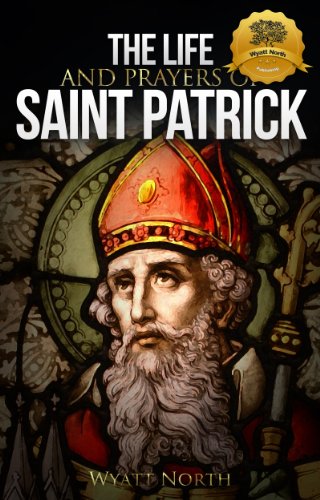
“St. Patrick: His Life and Prayers” by Wyatt North


The man we know today as St. Patrick was born in Britain in the late 300s, about the time that the Roman Empire was constricting and Britain was being abandoned. He was born into a landowning if not noble or upper class family living in northwestern Britain, not far from Hadrian’s Wall. We know he had a sister. And we know that when he was 16, raiders swooped in and carried him and others off, eventually selling him into slavery in what is now Ireland.

Only two of his writings have survived. One is the Epistle to Coroticus, written to a British chieftain and his subjects, seeking the release of Christians they had captured. The other is his Confessions, which explain, in his own words, how God favored him and used him to accomplish God’s work. We have a biography said to be written by one of Patrick’s converts, but created some 200 years after Patrick. Other than those documents, we have a wealth of myth and legend about the saint, some of which may be true and some not (Patrick himself makes no mention of driving the makes out of Ireland).

Wyatt North Publishing prints a whole series of short works on both Catholic and Protestant subjects, including Mother Teresa, St. Anthony, Pope Francis, C.S. Lewis, the life and times of Jesus, and other subjects. In a succinct publication, St. Patrick: His Life and Prayers separates what we know and what we don’t know about the saint. But it’s not necessarily “scientific” to dismiss the myths and legends; some of them are likely to founded in some fact or facts, while others are likely to have been derived from an oral storytelling tradition.

This volume by Wyatt North also includes three of St. Patrick’s prayers, “The Prayer for the Faithful,” “The Prayer for God’s Protection and Christ’s Presence,” and the “Lorica of St. Patrick,” a kind of adoration to begin each day.

St. Patrick is an easy-to-read, short summary introducing us to the saint, his life, and what he accomplished.


Top photograph: A stained glass panel of St. Patrick at Christ the Light Cathedral, Oakland, California.

Monday, July 14, 2014

Emily Wierenga’s “Atlas Girl”

A story of being a caregiver for a mother afflicted by brain cancer.

A story of the daily battle that is anorexia.

A story of falling in love, getting married – and bringing anorexia into the marriage.

A story of the deep desire to have children

A story of missions – of being involved in missions in places like the Mideast where the murder
of Christians is not unknown.

A story of being a PK – a pastor’s kid.

And a story of finding hope in the one place you didn’t expect to find it.

One could write a book, or a series of books, on any one of those things. Emily Wierenga chose to write a book on all of those things. Welcome to Atlas Girl: Finding Home in the Last Place I Thought to Look.

Atlas Girl is a memoir, yes; at least, that’s probably the genre you’d find it on Amazon or in the bookstore. But it is more than that, too. Brutally honest; occasionally shocking; sometimes so raw you can feel the roughness of it. But all of it real.

It’s the story of a life.

Wierenga has talked about her battles with anorexia in Chasing Siilhouettes. Atlas Girl puts those battles in the context of her life, her family, her husband, and her missions work.

She doesn’t tell her story in chronological order. We may live our lives chronologically or sequentially, one event or one day after another. But it takes an approach like she demonstrates here to knit those chronological events into a cohesive, integrated whole. And this is true for any of us – we don’t make sense of our lives by examining them chronologically.

And Wierenga travels (it’s not called Atlas Girl for no good reason). Across Canada. The United States. Korea. The Congo. Amsterdam. Lebanon. Jordan. Japan. China. Australia. Dominican Republic. Italy. Mexico. Part of her travel has to do with missions. And part of it has to do with a restless spirit that is looking for something.

Memoir, autobiography, meditation, personal journalism. Atlas Girl is all of these things.

And it’s the story of young woman who’s honest enough to tell it.

Related:


Image by Dawn Hudson via Public Domain Pictures. Used with permission.

Wednesday, March 28, 2012

When You're in a Hard Place


Katie Davis returns to the United States from her year of mission work in Uganda. She’s returned to attend college, as she promised her parents she would do. She is keeping her promise, and she is miserable, grumpy and feeling disconnected from what her life had become in Uganda.

She knows her 19 girls – her “family” she adopted in Uganda – will be okay.

She trusts God to provide needed funds -- $70,000 of needed funds – for the mission work. Over a period of months, it’s provided, “and then some.”

She finds a few people who really do understand the conflict she’s experiencing.

And she learns one of the hardest and most important lessons of her young life: God is in control, and He is as much involved in her college and family as He is in Uganda.

Katie knows that her heart is in Uganda; she also knows it is the place she’s supposed to be. But for a time, she is “back home,” honoring the commitment to her parents, even if it is making her feel grumpy and at loose ends.

But God is there, too, right at home.

This chapter in Kisses from Katie: A Story of Relentless Love and Redemption by Katie Davis and Beth Clark reminds me of a conversation I had a long time ago I had with a colleague at the place I was then working. We were both Christians; we were both in exactly the same boat – banished to a kind of wilderness where our skills, experience and talents were going largely unused.

“It’s hard,” I said. “Well, it’s more than hard. It’s often miserable. We sit here, doing things that are easy to do, watching others do things badly that we both know we could do far better. But for whatever reason, this is where we are; this is where God has us. David had to live in a cave, too, for a time.”

The words were easier to say than to live, but simply saying them helped. It was as if by saying them aloud, we both could accept what we were dealing with.

I suspect the same was going on with Katie.


Led by Jason Stasyszen and Sarah Salter, we’ve been discussing Kisses from Katie. To see more posts on this chapter, “A Promise to Keep,” please visit Jason at Connecting to Impact.

Wednesday, March 21, 2012

Keeping a Promise


My admiration for Katie Davis continues to deepen.

In Kisses from Katie: A Story of Relentless Love and Redemption, Katie has now reached the end of her year in Uganda. She had committed to her parents to go for one year as a missionary and then return to suburban Nashville to start college.

In that year, she has started a non-profit organization to provide schooling for children, rented a large house, planted herself firmly in Ugandan soil, and adopted 19 girls, providing a home, food and love for each of them.

Yet commitment to her parents hangs over her. She thinks that perhaps she can go to college for a semester, return to Uganda , and do the rest of her college degree by correspondence or online. But she knows she has to return to Tennessee.

And she does.

I can think of a dozen justifications she could try or arguments she could make to stay in Uganda, as well as 19 real reasons. But she has made a commitment, and she returns to keep it.

It’s almost too easy to find reasons to break a promise. Virtually all parts of our culture are littered with the bones of broken promises.

Consider politics. We’re heard “read my lips – no new taxes.” We’ve heard a president justify killing an American citizen without due process or judicial review – the same president who was so appalled (as a candidate) at jailing terrorists at Guantanamo without due process of law. I watch a presidential candidate try to convince us he’s an honorable man – while approving attack ads that bring politics to new lows (and that’s quite an accomplishment).

And then there’s Katie Davis, who is willing to walk away from what she’s created in a small Ugandan village to keep a promise to her parents – honoring both her parents and her God.

I think I know how this will turn out, but I’m still in awe.


We’ve been discussing Kisses from Katie, let by Jason Stasyzsen and Sarah Salter. To see more posts on this chapter, please visit Sarah’s site, Living Between the Lines.