Thursday, May 17, 2018

“Edinburgh Twilight” by Carole Lawrence


It’s 1881. Detective Inspector Ian Hamilton of the Edinburgh Police is young, ambitious, and a constant irritant to his boss. He’s haunted by the fire that killed his parents when he was a child and almost claimed his own life as well. He has a tendency to get himself into fights and scrapes, and he often comes off the worse for wear.

And Hamilton suspects that what appears to be a suicide jumper from Arthur’s Seat in Holyrood Park isn’t a suicide at all. His suspicions are confirmed when it’s discovered that the victim was strangled and then likely thrown from the height. As irritating as Hamilton is to his boss, the boss also knows the detective is usually right, which makes him even more irritating.

Other victims follow; they’re almost invariably men of who frequent unsavory pubs in the slum and tenement areas of Edinburgh. It becomes clear that what the police are dealing with is a serial killer. And the killer who’s watching what the police do – and watching Hamilton. Public hysteria begins to build as the newspapers catch wind of the killer’s activities. Mobs congregate by the police station, demanding action.

Edinburgh Twilight by Carole Lawrence is a story of a race to catch a killer before he strikes again. And it’s a story of a hero trying to come to grips with his past before his past overwhelms him. 

Carole Lawrence
Lawrence is the author of 11 novels and numerous novellas, short stories, articles, and poems. Her novels, published under three names, include the “Silent” series by C.E. Lawrence and featuring New York detective Lee Campbell; the “Who Killed” series by Carole Bugge featuring New York mystery editor Claire Rawlings; and the new Ian Hamilton series. She’s been nominated for the Pushcart Poetry Prize twice and won the Euphoria Poetry Prize, the Eve of St. Agnes Poetry Award, the Maxim Mazumdar playwriting prize, the Jerry Jazz Musician award for short fiction, and the Chronogram Literary Fiction Award. Her second Ian Hamilton novel, Edinburgh Dusk, is scheduled for publication in September.

Edinburgh Twilight is a solid, riveting, and often creepy mystery story. Lawrence takes the reader inside the mind of her detective and inside the mind of her killer. As uncomfortable as both places often turn out to be, the reader can’t walk away from this story without examining what’s inside his own mind.

Top photograph by Linnea Sandbakk via Unsplash. Used with permission.

Wednesday, May 16, 2018

My Interview with KSDK-TV on the Dancing Priest Novels


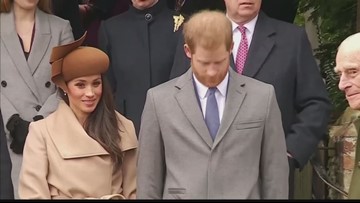
Last week, I was interviewed by KSDK-TV report Abby Llorico anout my Dancing Priest novels, writing in general, and the upcoming royal wedding of Prince Harry and Meaghan Markle. The interview and news report was published today, and Llorico did a great job of condensing an hour-long interview into about a 90-second news spot.

You can read and watch the report here.


The Story of the Second Chance


I was raised a Missouri Synod Lutheran, courtesy of my mother. I was raised with a strong Protestant work ethic, courtesy of my father (who was himself raised a Southern Baptist). Both of those influences fused me into something of an overachiever, although only for those things where I felt I had a chance to overachieve. Academics were one area. Sports were not. 

Until my senior year in college, my life followed that overachiever pattern. Set goals, achieve them, surpass them, and then set new goals. As a college freshman, I set several goals, and kept adding to them. 

By the middle of my senior year, I had achieved or overachieved everything. All the positions, honors, accolades, recognitions – I had captured them all, including being the managing editor of the student newspaper for my final semester – the position that ran everything in the paper except the editorial page. I had the power position on the paper, likely as powerful as any student office on the campus.

Nothing was left. Nothing. 

To continue reading, please see my post today at Christian Poets & Writers.

"Surrender" by Michael Summers Jr.


Early on in this short but impactful book titled Surrender: A Christian’s Guide to Dependence, Michael Summers Jr. asks a question that applies far beyond the Christian readers he’s addressing. It’s a commonplace today for people to tell you to “follow your heart” or “follow your passion.” 

Summers asks, why is that such bad advice? 

“Simple,” he says. “My heart is not safe. If I follow my heart there is something inside that will only lead me (1) away from God’s purposes, (2) away from God’s pleasures, and (3) away from God’s wisdom.” 

In other words, our hearts are from being faithful guides. In fact, our hearts will lead us astray. It resonates with the well-known observation by G.K. Chesterton: “When men choose not to believe in God, they do not thereafter believe in nothing, they then become capable of believing in anything.” 

Summers argues for dependence – another word at serious odds with our culture’s enshrinement of individual rights. But it’s a very specific kind of dependence – the dependence that comes from surrender to God. It’s a command that sounds throughout the Old Testament and one that Jesus spoke in startling simple words: “Follow me and I will make you fishers of men.” 

Michael Summers Jr.
He describes surrender as an art, but it is not our artwork. It is something that “God is at work in the heart of a believer to perfect over a lifetime,” a process of conviction, confession, grief, and repentance. (Even Christians who are quick to judge their fellow believers and their churches, and that’s all of us, forget that we are not perfected but instead are in process.) And it’s a process that is ongoing and never reaching its goal in this life. 

Summers received a degree in Pastoral Studies from Northland International University and leads student ministry at Countryside Church in Overland Park, Kansas. 

Surrender is an excellent introduction to what the process of the Christian life actually is. It’s never easy; it’s fraught with challenges, battles, and obstacles. But it is wonderfully fulfilling. 

Top photograph by Steve Halama via Unsplash. Used with permission.

Tuesday, May 15, 2018

Have You Ever Fallen in Love with One of Your Characters?


Something strange happened to me as I was writing my third novel, Dancing King. I fell in love with one of the characters.

Perhaps “fell in love” is too strong. “Became fascinated with” might be more apt. It was a character who came seemingly out of nowhere, a minor character, in fact, one whose presence wasn’t crucial to the story.

The character was born out of the need to plug a hole. The main characters were trying to fill a position and not having much success. Their problem was actually the author’s fault – it was the author who wasn’t having much success figuring out what to do. 

The problem didn’t solve itself; I had planned on this minor character, but it was going to be a tiny, short-lived role, unrelated to the unfilled position. And then, for his short scene, he wouldn’t leave the page.

To continue reading, please see my post today at the ACFW blog.

Photograph by Karl Frederickson viaUnsplash. Used with permission.

Poets and Poems: Mark Burrows and “The Chance for Home”


In 2013, my mother moved to a retirement home, leaving the house she had lived in for 58 years. It was a house like they used to be built – with window sills, plaster walls, and overhanging eaves. She cared for that home like you would care for a child, and it was in incredibly good shape when it was sold. 

This was the place all three of her sons thought of as “home.” It was more than a physical structure. It was family. It was comedy and drama. It was experiences. It remains memory. 

As I read The Chance for Home, the new collection of poetry by Mark Burrows, I was struck with wonder. Flat-out wonder. Burrows writes poetry with a sense of stillness and a sense of silence; it takes both, perhaps, to understand the things that are ultimately important in life and about a life.

And he writes about home, or at least the chance for home. And he has a different understanding of what “home” is.

To continue reading, please see my post today at Tweetspeak Poetry.

Monday, May 14, 2018

Dancing King Stories: The King’s Communications Man


This is the first in a series of profiles of some of the main characters in the novel Dancing King. Every character has a story, one that is much larger and more detailed than what can be included in the narrative.

In Dancing King, Jay Lanham becomes the communications director for Michael Kent-Hughes and the monarchy. He is all of 29, but he already has considerable communications experience behind him. He was graduated from the University of Northumberland, receiving a communications degree (with honours). He had had internships with The Guardianand The Telegraphand was hired by The Daily Mailright after graduation (from an editorial perspective, The Guardianwould be considered on the left side of the political spectrum, The Telegraphslightly more toward the center, and The Daily Mail on the right side of the spectrum). 

He worked for The Daily Mail for three years, and he then joined the communications staff of Britrail. He quickly gained a reputation for crisis communications following two train accidents, but what put him on the map in the communications industry was his adroit handling of a threatened strike by rail workers. Lanham didn’t know it at the time, but he effectively countered the plans of the would-be strikers whose unions had hired Geoffrey Venneman of the FBL public affairs firm. Two years younger than Venneman, Lanham had successfully anticipated almost every move by the unions.

To continue reading, please see my post today at Dancing Priest.

Photograph: An idea of what Jay Lanham might look like. Photo by Ali Morshedlou via Unsplash. Used with permission.