Friday, June 17, 2022

The panhandler at the intersection


After Matthew 5:38-42
 

You see him with his cardboard

sign, “Will work for food,” or

something like it, bearded,

unkempt, likely needs a bath,

and he walks slowly alongside

the cars at the red light, making

eye contact of he can, while

you sit , feeling trapped, locking

your car doors, refusing to make

eye contact, silently fuming

at the threat to safety (yours),

the potential for accidents,

someone getting hurt, 

wondering why laws don’t

forbid this or why judges

strike down laws that do.


Then you remember the man

on the hillside, speaking 

to his followers, with his

quiet, dangerous words,

reminding you to give

to the one who begs from 

you, and the one who

would borrow from you.


Photograph by Zach Lucero via Unsplash. Used with permission.

Thursday, June 16, 2022

"The Templeton Case" by Victor Whitechurch


Reginald Templeton is known as something of a world traveler and possibly even a millionaire. He arrives at Marsh Quay, a fishing village in South Downs on England’s Cheanel coast. The village is only two miles from the town of Frattenbury, where Templeton’s cousin is the canon at the cathedral. He does indeed visit his cousin, but he also has other appointments, “business” left undefined. Early one morning, Templeton is found stabbed to death on his yacht. 

Detective Sergeant Colson of the local police is assigned to investigate. At the inquest, the canon discloses he picked up something on the floor under his cousin’s body – a cigar band, which he promptly stuck in his pocket and forgot. And a walking stick in found in the small dinghy used by the murderer to gain access to the yacht.


Victor Whitechurch

Early on, it appears there are three good suspects. Colson goes through the gradual elimination of each, until he reaches a blind alley. None of his three prime suspects could have committed the murder.


The Templeton Case by Victor Whitechurch was first published in 1924 and has now been republished in e-book format. It’s a mystery that seems to have no solution, until things take a rather unexpected turn. It also contains anti-Semitic references which are jarring to read today, but they likely would have passed unnoticed in 1924.


Whitechurch was a Church of England clergyman as well as a crime novelist. He wrote seven mystery novels and one collection of mystery stories, most featuring a clergyman as a main character. He was well known enough to become one of the founding members of the Detection Club, along with Agatha Christie, Dorothy Sayers, and G.K. Chesterton. His best-known literary character is the amateur railway detective Thorpe Hazelle.

Wednesday, June 15, 2022

The Mystery Man in the Family Bible


It’s a two-line reference in the family Bible, first owned by my great-grandfather. The family records section in Bibles in the 19
th century was generally inserted between the Old and New Testaments, and that’s where our family recordings were. All of the entries were in the same hand, the early ones in the same ink, suggesting they were written down at the same time. A friend estimated the Bible to have been published in the 1870s. 

My great-grandfather Samuel Young was born in in 1845, 1846, or 1848 – the handwriting is not clear. Other records, like those found in online genealogy sites, have 1845 and 1846. The handwriting is clear for the birth date of his wife and my great-grandmother, Octavia Montgomery. That date is 1844. The same handwriting continues after her death in 1887, which tells me it was my great-grandfather making all the entries (and his death in 1920 is not recorded).


To continue reading, please see my post today at Dancing Priest.


Tuesday, June 14, 2022

Poets and Poems: Paul Mariani and "All That Will Be New"


The news has always been filled with what sells – bad news. But for more than two years, our steady news diet has been pandemic, riots, shootings, inflation, war and invasion, left-wing and right-wing extremism, hate crimes, immigration battles, and division. We sometimes feel we’re in the middle of a civil war in which few shots are being fired but the carnage is nonetheless terrible. 

In his ninth collection All That Will Be New, poet Paul Mariani expresses this sense of “it’s all coming apart,” this era he calls “Covid-killing time,” but he also finds reasons to hope. And he sometimes finds reasons to laugh, especially at himself.


To continue reading, please see my post today at Tweetspeak Poetry.

Monday, June 13, 2022

“Attack at Daylight and Whip Them” by Gregory Mertz


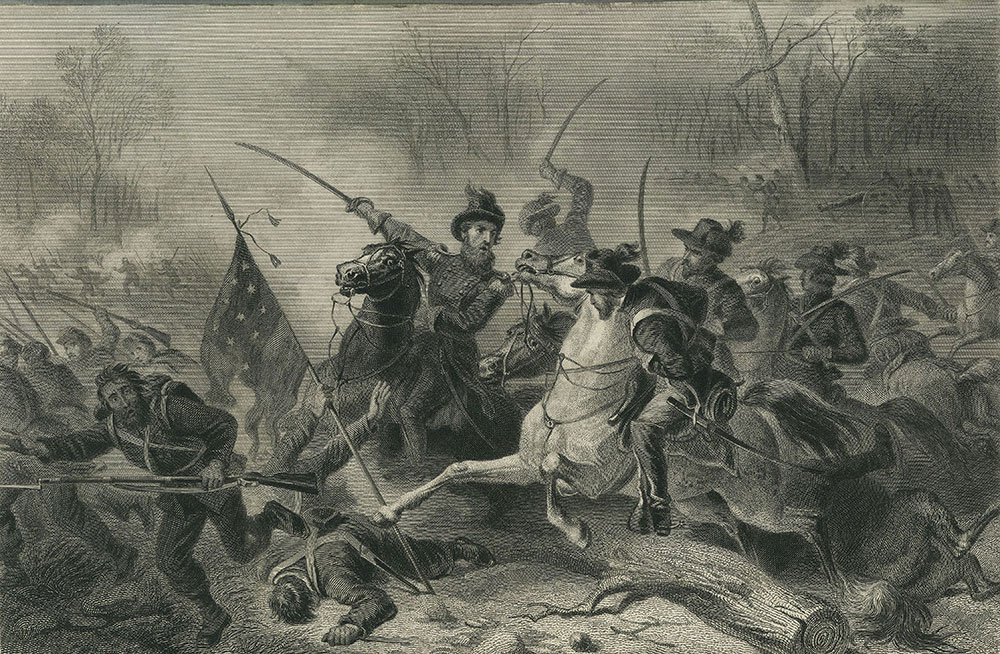
At the time, April of 1862, Shiloh was the most devastating battle in American history. The combined tally of casualties for both sides was an estimated 23,746 – some 3,500 dead, 16,000 wounded, and almost 4,000 captured or missing. The two-day battle, despite Confederate success on the first day, was ultimately decided as a Union victory.  

Despite the Union victory, people were so horrified by the carnage that, in the north, newspapers called for the dismissal of the commanding generals. That didn’t happen, but Shiloh was an indication of the terrible battles to come. (The battle is sometimes referred to as Pittsburg Landing, the nearby spot on the Tennessee River where the Union unloaded supplies. Shiloh was the name of the church or meeting house around which the battle was fought; its name means "peace.")


In Attack Them at Midnight and Whip Them, National Park Service historian Gregory Mertz does two things. He tells the story of the Battle of Shiloh, while he provides an in-depth guide for driving the battlegrounds. (The Park Service also offers a suggested guide for an automobile tour, but Mertz includes little-known details, history, and context.)


The title of the book, a quotation by Gen. Ulysses S. Grant, who was the commanding Union general at Shiloh, is also an almost identical quotation by General Albert Sidney Johnston, the Confederate commanding general who was killed at Shiloh (Mertz raises the possibility that it might have been by friendly fire). Grant was attempting to reach Corinth, Mississippi, an important Confederate rail hub; Johnston had rushed his army to the Shiloh area to stop him.


Gregory Mertz

Over the course of April 6 and 7, 1862, the battle seesawed over fields, streams, roads, and forests. Almost too late, Gen. Sherman understood the Confederate threat before he finally acted. Gen. Grant was alerted to the battle when he heard the cannon booms. Gen. Buell was hurrying his Union troops to the scene, arriving barely in time. The first day went tothe Confederates; the second day and overall victory to the Union. But it was a costly victory.


Mertz carefully guides the reader (and presumably automobile driver) through the site. It’s a complex tour, and a complex story, as battle lines ebbed and flowed. He does an excellent job of matching the contemporary scene to action during the battle.


For 40 years, Mertz has worked with National Park Service, most recently as Supervising Historian at Fredericksburg and Spotsylvania National Military Park. A native of the St. Louis area, he received a bachelor’s degree in Park Administration from the University of Missouri and a master’s degree in Public Administration from Shippensburg University. Growing up in what is now Wildwood, Missouri, a St. Louis suburb, Mertz paid numerous visits to Shiloh National Military Park for Boy Scout field trips.


After the Battle of Shiloh, Union soldiers buried their own dead in individual graves. The Confederate dead were buried in nine mass graves, three of which have never been found. The year after the war ended, Southern women went to Shiloh and placed flowers on the Confederate grave sites. When they noticed the absence of flowers on the Union graves, they distributed the flowers to include them as well. A group of Northern women heard the story and did something similar. It was an act that eventually led to a national Memorial Day.

Sunday, June 12, 2022

Revenge is not yours


After Matthew 5:38-42
 

Revenge is not yours 

to seek, to take, to wreak.

It’s a new path you walk,

and revenge is not part

of it. No more eye 

for an eye, tooth

for a tooth, because all

that accomplishes is

Hatfield vs. McCoy, 

and that is not the path

you walk now, is not 

who you are. Your path

is infinitely more radical:

slap to your right cheek,

then make your left

available. Your shirt is

stolen, then offer

your coat as well. Forced

to do something, then do

it twice as well. Yes, I

know; this turns 

the whole concept

of human relations

on its’ head.

So be it.


Photograph by Alison Courtney via Unsplash. Used with permission.

Saturday, June 11, 2022

Saturday Good Reads - June 11, 2022


This year, and this summer, marks the 50th anniversary of the beginning of the Watergate scandal, a “burglary” that ultimately led to Richard Nixon’s resignation from the presidency. Two Washington Post reporters, Bob Woodward and Carl Bernstein, were a major part of the news coverage that uncovered the trail of misdeeds to the Oval Office. But did you know there was a third member of the reporting team, one whose name is largely forgotten? Joshua Benton at Nieman Lab tells the story of Barry Sussman.  

Lenny Wells was a county extension agent, one of thousands of such agents who are an often unnoticed but vital part of American agriculture. Early in his career, he attended a national conference of extension agents in Cincinnati – and found himself riding with two other agents in the back seat of a car driven by a farmer across the Ohio in Kentucky – a farmer named Wendell Berry.


Twelve years ago, Bradley Birzer published an essay about G.K. Chesterton, J.R. R. Tolkien, and T.S. Eliot and their stirrring words for the times they faced and the task ahead. The Imaginative Conservative, where it was published, calls it a “timeless essay,” and republished it yesterday. And with good reason. Read “The Privilege of Little Words and Mighty Swords.”


Faith


A Case for the Longer Ending of Mark – James Snapp, Jr. at Text and Canon Institute.


Five Rays of Light – Rod Dreher at The American Conservative.


Life and Culture


In defense of Joshua Katz: A mother-in-law’s manifesto – Kari Jensen Gold at The Spectator.


Memory in the age of impunity – Peter Pomerantsev at Coda.


Open and Closed: From Russia to China to America, the Largest Societies are Pushing Their Limits – Robert Thornett at Front Porch Republic.


The Great Resignation as a Sign of the Times – Mara Cable at Church Life Journal.


Ukraine


How to end the war in Ukraine – Patrick Porter at The Critic Magazine.


Is Ukraine’s cultural heritage under coordinated attack? – The Art Newspaper.


Art


The Stone Hefter – Jack Baumgartner at The School for the Transfer of Energy.


A New Home for Munch’s Scream – Lee Cheshire at The Art Newspaper.


Writing and Literature


The Characters That Shape Us – Kathryn Butler at Story Warren.


On Reading My Memoir to My Father – Séamas O'Reilly at Literary Hub.


Eudora Welty's 'The Optimist’s Daughter' at fifty – Micah Mattix at The Spectator.


Renunciation and Re-enchantment – Corbin Barthold at Front Porch Republic.


Poetry


Summer Morning – Jane Dougherty at Jane Dougherty Writes.


A Tribute to Mrs. Malaprop – Brian Yapko at Society of Classical Poets.


A Sonnet for Trinity Sunday – Malcolm Guite.


News Media


The New Yorker profiles a pro-life ob-gyn student, and the Twitter mobs descend – Julia Duin at Get Religion.


Gannett is scuttling daily editorial pages at its regional papers – Rick Edmonds at Poynter.


Opinion Pieces (Including This One) Are Ruining the Internet – Jakob Moll at Nieman Reports.


This is the Day – CityAlight


Painting: Lady with a Book in the Garden, oil on canvas (1892) 
by Brunner FrantiÅ¡ek Dvořák (1862-1927).