Showing posts with label family. Show all posts

Thursday, April 23, 2026

I Grew Up in "One Hundred Years of Solitude"


I was sitting in a graduate seminar called “The Nature of Story.” About 20 of us, all in a Master of Liberal Arts program, sat at tables gathered in a U-configuration. We were discussing the first reading assignment, One Hundred Years of Solitude by Gabriel Garcia Marquez.  

This was not your typical graduate seminar. The program was designed for people who’d been out of college for a while, and we ranged in age from 30s to 70s. I was 35 at the time – and the youngest in the class. Professors tended to love these classes, and the university had a waiting list of teachers wanting to have a course in the program. We were not the kind of students they were used to; we’d all had life experiences, work experiences, and we tended to challenge the professor (and each other) more than not. 


To continue reading, please see my post today at Tweetspeak Poetry.


Some Thursday Readings


“Prophecy,” poem by Elinor Wylie – Sally Thomas at Poems Ancient and Modern.


Lost Federico Garcia Lorca verse discovered 93 years after it was written – Sam Jones at The Guardian.


Ten Years Later – poem by David Whyte.


“George, Who Played with a Dangerous Toy, and Suffered a Catastrophe of Considerable Dimensions,” poem by Hillaire Belloc – Sally Thomas at Poems Ancient and Modern.

Monday, December 16, 2024

The Inspirations That Led to "Brookhaven"


Brookhaven
 has made its historical novel debut. Publication happened faster than I anticipated; I thought maybe by sometime in late January. It was a surprise to receive a message from the publisher last Thursday with the link to Amazon Kindle, followed by the paperback on Friday. 

Like all stories, Brookhaven has its seeds, some going back more than 60 years. Some of those seeds are movies.


The children in our family are spread widely apart; my older brother is eight years older, and my younger brother is 10 years younger. For a decade, I was the little kid in the family. And because my father wasn’t a fan of movies, and my mother was a Hollywood director’s dream of a fan, I became my mother’s movie partner. We saw the Disney movies, of course, but we also saw a lot of others, including some that weren’t exactly the best viewing for a child.


To continue reading, please see my post today at Dancing Priest.


Some Monday Readings


Saints Alive in Books and Memory – A.C.S. Bird at Story Warren.


Italo Calvino and Magic Books – Barb Drummond, Curious Historian. 


What happened to relics of Syria’s Jewish history? Assad’s collapse suprs efforts to assess damage – Shira Li Bartov/JTA at The Jerusalem Post


What I See: Go on Shepherd & Lamb – Sam Kee at The Color of Dust.


Pause – poem by Kelly Belmonte at Kelly’s Scribbles.

Tuesday, February 21, 2023

Poets and Poems: Dana Gioia and "Meet Me at the Lighthouse"


Flashback to 20 years ago: I had a cousin who’s about 15 years older than I am. Out of the blue, she began calling. I had become the keeper of the family Bible, and she needed information from the family records section. Several phone calls ensued. I was slightly tickled at how ardent she was about pursuing family history. Years later, I understood. I was doing the same thing, chasing down certain death notices, military listings, and cryptic notices left by others on Family Search and Ancestry.com. (And when did I join those web sites?) 

You reach a certain age, and certain things become more important than they once were. This is not unusual; in fact, it’s a common development once you reach you 60s. Art becomes more important. So does great literature (the stuff that’s lasted). And genealogy, as if we need to know where we came from before we become just another record in the family Bible.


Ask Dana Gioia (1950-). Better still, read his new poetry collection, Take Me to the Lighthouse: Poems. It’s not a nostalgic collection; Gioia is too clear-eyed a poet to start looking backward and remembering only the good parts. But it is a collection about family, about memory, about growing up, and about what once was but is no longer.


To continue reading, please see my post today at Tweetspeak Poetry.

Wednesday, August 24, 2022

How Research Fills the Gaps in a Family Story


The idea has been in my head for years – a story about my great-grandfather. But I knew only a few facts about him, passed down by my father. Research has filled it in – a little bit. 

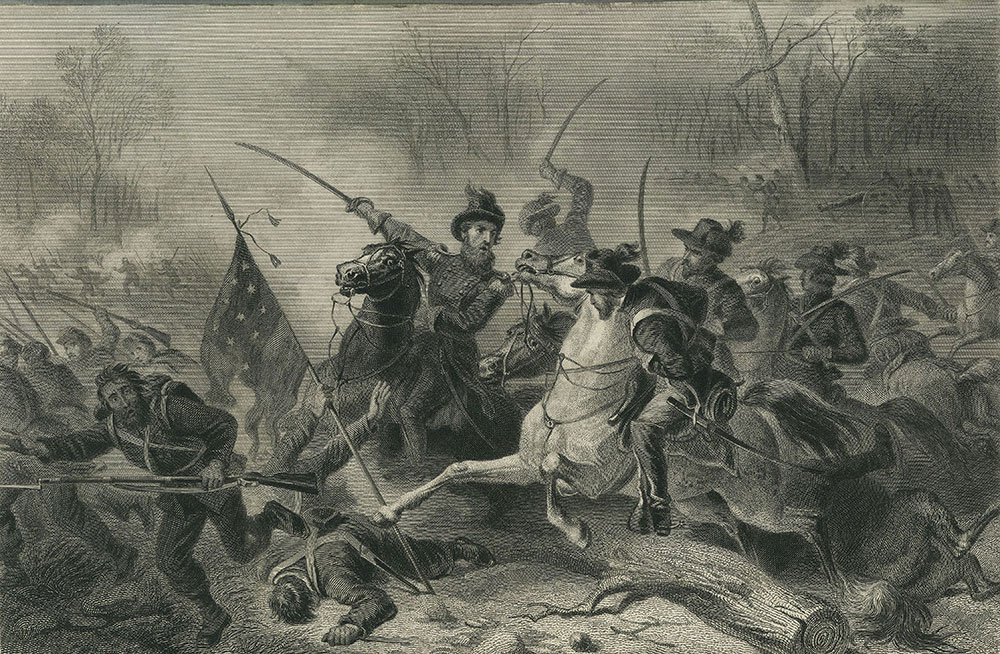
Too young to enlist as a regular soldier, he’d been a messenger boy in the Civil War. He’d lost two brothers and a brother-in-law in the war, leaving him the youngest and surviving son. When the war ended in 1865, he had been “someplace east,” likely North Carolina rather than Appomattox. He had to walk home to southern Mississippi. When he arrived, he discovered his family was gone, having fled to Texas.


That was as much as I knew. When I finally decided to consider a story about him, I turned first to the family Bible, with its records of births, deaths, and marriages.  The records, written over a period of 50 years, were in the same hand – my great-grandfather’s. They proved more revealing that I’d realized.


To continue reading, please see my post today at the ACFW blog


Photograph hy by Anne Nygard via Unsplash. Used with permission.


Wednesday, August 10, 2022

When a Book Won't Let Go


Two weeks after finishing it, and I’m still thinking about Hearts Torn Asunder: Trauma in the Civil War’s Final Campaign in North Carolina by Ernest Dollar Jr. (See my review last week.)  

When I read it, I expected to read about the final convulsive moments of the surrender of the Confederate armies and the immediate aftermath. And that’s the thumbnail description. But it’s about a lot more.


It’s the story of the civilians in north central North Carolina, roughly Raleigh to Greensboro, who found themselves in the path of two defeated armies and one victorious one.


It’s the story of the soldiers in those armies, who had to live with what we know today as Post-Traumatic Stress Disorder. One thing you don’t read in the general histories of the Civil War period in the rather startling increase in soldier suicides and commitments to insane asylums in the years and decades after the war.


To continue reading, please see my post today at Dancing Priest.


Photograph: My great-grandfather, Samuel Franklin Young, and my great-grandmother, Octavia Montgomery Young. 

Wednesday, June 15, 2022

The Mystery Man in the Family Bible


It’s a two-line reference in the family Bible, first owned by my great-grandfather. The family records section in Bibles in the 19
th century was generally inserted between the Old and New Testaments, and that’s where our family recordings were. All of the entries were in the same hand, the early ones in the same ink, suggesting they were written down at the same time. A friend estimated the Bible to have been published in the 1870s. 

My great-grandfather Samuel Young was born in in 1845, 1846, or 1848 – the handwriting is not clear. Other records, like those found in online genealogy sites, have 1845 and 1846. The handwriting is clear for the birth date of his wife and my great-grandmother, Octavia Montgomery. That date is 1844. The same handwriting continues after her death in 1887, which tells me it was my great-grandfather making all the entries (and his death in 1920 is not recorded).


To continue reading, please see my post today at Dancing Priest.


Wednesday, May 25, 2022

Family History as a Source for Stories


A single comment by my father nearly six decades ago led to a story idea.  

“Your great-grandfather was too young to enlist in the Civil War,” he said. “So, he signed up as a messenger boy when he looked old enough to get away with it. And then he had to walk home when the war was over.” My father must have heard that from his father; he was four when his grandfather died, with no memories of him at all.


A year ago, when I decided I wanted to know more, any family member who might have known something was long buried. 


The records in the family Bible provided few clues. One of millions published by the American Bible Society in the 1870s, it included family records inserted between the Old and New Testaments. The earliest recorded date was 1803, the year of the Louisiana Purchase; it noted the birth of my great-great-grandfather. But almost all the entries, stretching from 1803 to the 1890s, were in the same hand, if different inks – my great-grandfather’s handwriting (my great-grandmother had died in the 1880s).


To continue reading, please see my post toward at American Christian Fiction Writers.


Photograph: First Presbyterian Church, Kirkwood, Mo., March 2021.

Wednesday, October 13, 2021

No pretense


After Romans 12:9-13
 

Some instructions for the journey,

starting with love, the greatest

of all instructions. No pretense,

people; love genuinely,

from your heart. Hate evil

and hold on to the good

for dear life, your dear life.

Love each other; let your affection

overflow with each other. Honor

each other, because each of you

is made in the same image. Honor

and cherish it, and each other. Hope

is always there, so rejoice and

celebrate it. When trial comes,

endure them, and endure them

with each other. And pray, people,

like all the time. Help each other.

Open your homes, open your doors.

We are family.


Photograph by Gabriella Clare Marino via Unsplash. Used with permission.

Monday, December 2, 2019

"Akin" by Emma Donoghue


Noah Selvaggio is approaching the milestone of his 80th birthday. A retired chemistry professor living in New York City’s Upper West Side, he’s been a widower for several years. He and his wife were childless. His younger sister and her husband are both dead; their son, his nephew, the one Noah can’t think of without adding the adjective ‘beautiful,” is also dead of an apparent drug overdose in a seedy motel room. 

To mark his 80th, Noah is going to his birthplace of Nice. His story is a World War II story. His father had left Nice for America; his mother, pregnant at the time, made a conscious decision to remain in Nice to care for her father, a famous photographer in declining health. When he was old enough, his mother was able to book passage for him on a ship with hundreds of other children, bound for America. She remained until her father died in 1944, and then she, too, had left for America to join her family.

Noah’s sister has left him with a box of family photographs, including some that must have been taken by his mother when she was in Nice. The photographs hint at something disturbing. His mother might have been a Nazi collaborator.

A few days before he is to leave, Noah receives a call from Children’s Services, asking him to take charge of his 11-year-old great-nephew Michael, whom Noah has never met. The boy’s mother is serving a prison sentence, somehow connected to the death of Noah’s nephew. Her mother can no longer care for the boy. It’s either Noah or foster care. 

Emma Donoghue
Not only does Noah finally agree to take the boy, who is both streetwise and foul-mouthed, he decides he will take him to Nice. Through a flurry of last-minute red tape and paperwork, the boy gets a passport. And Noah and Michael embark upon a journey that will forever change both of their lives. Street smarts and tech smarts meet aged wisdom, begging the question of whether a family can mend and survive,

Akin by Emma Donoghue is the story of Noah and Michael. It’s told with poignancy and deep emotion. Running through it are two mysteries that may or may not be solved: was Noah’s mother a collaborator, and did Michael’s father actually die of a drug overdose? The answers will help determine family understanding and identity.

Donoghue, a native of Ireland, received a Ph.D. degree in 18th century literature from Cambridge University. She has published fiction, literary history, biography, stage and radio plays, fairy tales, and short stories. Her 2010 novel Roomwas a New York Times and international bestseller and a finalist for several prizes, including the Man Booker. She lives with her family in London, Ontario. 

Akin is a wonderful story, asking and answering the questions of can a family connect generations, and how. It describes how the past can exert a strong hold on the present. And it looks at the courage it takes to face and accept what may be terrible and awful in one’s parents and grandparents. 

Tuesday, October 1, 2019

Poets and Poems: Rhina Espaillat and “And After All”


Rafael Trujillo is a name long forgotten today, but he ruled the Dominican Republic as dictator for more than three decades, from 1930 to 1961. His was a bloody, vicious regime, and he exported violence to Haiti, Venezuela, Mexico, and even the United States via assassinations of his political enemies. Two years into his rule, Rhina Espaillat was born (1932), A few short years later, her great-uncle opposed the regime, and the entire family was exiled. They settled in New York City.

Espaillat began writing poetry as a young girl, and she wrote in both Spanish and English. She’s still writing today poetry today, and her most recent collection is And After All: Poems. Nothing in the work indicates a connection to Trujillo, but one can’t help but think that the experiences of life under a dictator followed by exile can’t help but affect what a poet writes, including a focus on what’s inside as opposed to what’s visible for all to see.

To continue reading, please see my post today at Tweetspeak Poetry.

Tuesday, September 24, 2019

Poets and Poems: John Dorsey and “Your Daughter’s Country”


I’m reading Your Daughter’s Country, the recent poetry collection by the Missouri-based poet John Dorsey, and I’m thinking to myself that I wouldn’t want to be the subject of one of his poems. He casts an affectionate eye on his friends, acquaintances, and relatives, but it is a ruthlessly honest eye, one that sees them as they are – the good in them, the bad, the indifferent. You don’t read a poem with the title of “Coco Malone is a Bad Bitch” and expect both scalpel-like description and affection, but that’s what you get.

I’m put in mind of my Uncle Revis. He was my father’s brother-in-law, the husband of a beloved aunt who made the best biscuits in north Louisiana. If the word “garrulous” hadn’t already existed, it would have been invented just for him. For years, I spent a summer week or two with my grandmother who lived across the street from my aunt and uncle, and we ate together, picked vegetables together (my job was digging for potatoes), and watched television together. Saturday nights meant The Lawrence Welk Show, and my Uncle Revis would sit quietly until the Lennon Sisters performed, when he would start shouting “They’re ignorant!” at the television. It was something you got used to.

To continue reading, please see my post today at Tweetspeak Poetry.

Tuesday, November 6, 2018

From Breathing Britain to Immersion in the Civil War


Researching a historical novel is more than a challenge; it feels like a career.

 I’ve written four novels in a series, with the main characters staying intact throughout. Buzzing around my head is the fifth, but I’m departing from the series to do something completely different.

The new project is still a novel, but it’s not even remotely like what I’ve been doing for the past seven years. Since 2011, I’ve been writing, breathing, talking, reading, researching, marketing, and visiting (five times) all things Britain. Now I find myself in small-town Mississippi.

The idea is based on a piece of my family’s history, and it’s been sitting there, simmering for a very long time. It concerns the American Civil War, and specifically the months immediately after the end of the war. It’s based on an off-hand comment my father made more than 40 years ago: “Your great-grandfather was too young to enlist as a soldier in the army, so he did something else.” It’s the something else that intrigued me, and it was also what he found when he returned home in late 1865 – his family was gone.

To continue reading, please see my post today at the American Christian Fiction Writers blog.

Illustration: Images of the burning of Atlanta, November, 1864, via Library of Congress.

Monday, June 25, 2018

“The Red House” by Mark Haddon


On the surface, it appears to be two families coming together for a week’s vacation. Richard, a doctor, brings his wife Louisa and her teenaged daughter Melissa. Richard’s sister, Angela, brings her husband Dominic and their three children, Alex, Daisy, and Benjy. They’re coming together not long after the death of Richard and Angela’s mother. The two families don’t know each other very well, and that’s the primary reason for the joint vacation.

The baggage they bring with them is more than just suitcases.

Richard is facing a possible malpractice charge. Melissa and her school friends did some nasty bullying. Angela has never gotten over a miscarriage, and the daughter she lost would be turning 18 this week. Dominc, who seems to be more unemployed than employed, is having an affair. Alex seems the normal older teenaged boy with one thought on his mind, at least most of the time. Daisy has found religious faith, which makes her the odd duck out in both families. And even 8-year-old Benjy has fears of being orphaned.

All of this baggage begins to swirl together as the two families go about doing the things you do on vacation – taking hikes, visiting local sites of interest, and just relaxing. They are renting (Richard’s paying, of course) for a house in the country near the English-Welsh border. The house never becomes more than it is, but it is important as the place the families keep coming back to and the place that anchors The Red House by Mark Haddon, published in 2012.

Best known for his novel The Curious Incident of the Dog in the Night-Time, Haddon is the author of several novels, young adult novels, and story collections, including A Spot of Bother (2007) and The Pier Falls. He is also an artist. He blogs under his own name.

Mark Haddon
Haddon is a master at characterization. Each of the characters gradually becomes real and recognizable. Each has a back story that will gradually be revealed, to themselves, the other characters, and the reader. Real and recognizable doesn’t automatically translate to sympathetic; but they do translate to understandable. It’s difficult, for example, to be sympathetic to a character determined to be nasty to everyone around her, even as she stumbles toward the discovery of kindness. But Haddon holds that character in tension; the reader feels it and wonders how the tension will be resolved.

The author remains true to his story; there is no great revelation or singular crisis moment that brings everything to resolution. But that’s how most families are, moving toward individual resolutions or individuals putting off what doesn’t have to be done today. Things becoming known and understood doesn’t mean things becoming resolved. 

Related:


Top photograph by Filip Gielda via Unsplash. Used with permission.

Tuesday, April 10, 2018

Poets and Poems: Karen Paul Holmes and "No Such Thing as Distance"


Imagine a man whose country is taken over – and he’s forced to change his name so that it sounds like one belonging to the new political power. Imagine that same man emigrating to America, and one again having his name changed to sound less “foreign” and more pronounceable, at least for the immigration official. Imagine that man accepting the last change in his name and getting on with his life in his new country.

This is part of the story Karen Paul Holmes tells in her new poetry collection No Such Thing as Distance. And the man with the three names is her father.

This sense of change of family pervades the 46 poems of the collection. She writes of other things, but it is her family poems – about relatives, her father, herself, her children – that provide the structure of the poems.


To continue reading, please see my post today at Tweetspeak Poetry.

Monday, January 29, 2018

“Mosquitoes” by Lucy Kirkwood


When we were in London last fall, we tried and failed to get tickets for the play Mosquitoes, produced by the National Theatre. It was the final weeks for the production, and the shows were sold out. It starred Olivia Colman, best known in America as D.S. Ellie Miller in the crime drama Broadchurch and soon to take on the role of Queen Elizabeth in The Crown.

So, I did the next best thing. I bought the book form of the play.

Mosquitoes by Lucy Kirkwood is the story of two sisters, Alice and Jenny. Alice is a physicist working at the CERN Hadron Collider in Geneva, seeking to find the theoretical Higgs boson particle, and her team is on the verge of a breakthrough. The most definitive thing you can say Jenny is that she spends a lot of time on the internet, and especially Google, and she is susceptible to every fad imaginable. One of those fads (or widely believed bit of “fake news”) is that vaccinations cause autism. Jenny believes it, like she believes almost every bit of non-science, and that belief leads to a tragedy.

The sisters couldn’t be more unlike. While they represent two philosophical perspectives of science, they also represent two sisters who love each other but can’t stand each other, or stand each other for very long. Alice’s teenage son Luke and their mother Karen also play significant roles, but this is almost a stereotyped dysfunctional family on several generational levels. And it’s headed for a major conflict.

Lucy Kirkwood
Kirkwood is an actress, television screen writer, and playwright. Her television shows include Skins (2013), The Smoke (2014), and The Briny (2015). Her plays include Tinderbox or, love amid the liver (2008), NSFW (2013), Chimerica (2014), Hedda (2014), and The Children (2017). She received a degree in English literature from the University of Edinburgh, where she also performed for an improve comedy troupe and wrote for the Edinburgh University Theatre Company. She is writer in residence at the Clean Break Theatre Company.

Mosquitoes is full of references to physics, the work of the CERN collider, and the raft of pseudo-science that exists on the internet. But science is only the filter through which we watch a family in self-destruction, engaged in unthinking actions with serious consequences.


Top photograph: Joseph Quinn as Luke and Olivia Colman as Jenny in Mosquitoes at the National Theatre, London.