Showing posts with label Thomas Merton. Show all posts

Tuesday, February 1, 2022

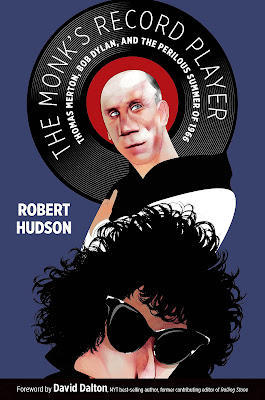
Robert Hudson: What Thomas Merton Had on His Record Player


Robert Hudson tells a story of two men who never met, except on the turntable of a record player, but who together captured a moment in American culture. 

In the summer of 1966, Thomas Merton was confessing to his abbot at Gethsemani Monastery in Kentucky that he’d been having a love affair with a nurse young enough to be his daughter. It was a crisis of both vocation and faith. And folk singer Bob Dylan, who would experience a motorcycle accident in July, the details of which are still debated, was making a major shift in his music with the release of the album Blond on Blonde, the third entry of a trilogy that included Bringing It All Back Home and Highway 61 Revisited. Dylan would not be heard from for a year.


To continue reading, please see my post today at Tweetspeak Poetry.

Wednesday, April 19, 2017

“Thomas Merton: An Inspired Life” by Wyatt North


Thomas Merton (1915-1968) is likely the most famous American monk. His autobiography, The Seven-Storey Mountain, is still in print 70 years after it was published. He was a prolific writer, poet, essayist, speaker, and even a Vietnam War protestor. He was a member of the Trappist Monks at the Abbey of Gethsemani in Kentucky – and was likely the man who put the American Trappists on the awareness map.

But he also had a family, and a history. He had a path to faith that was uneven, broken, and confusing (this may be truth of faith in general). While it’s not an exhaustive biography, Thomas Merton: A Life Inspired, published by Wyatt North, is a succinct summary of the facts of Merton’s life and journey to faith.

Merton was born in 1915 in Prades, France, to an American mother and a New Zealand father.
Because of the war, they went to the United States, and after the armistice in 1918 returned to Europe, Living in France and then England. His mother died of stomach cancer when he was still a young child; years later his artist father would succumb to brain cancer.

He studied first at Cambridge (which he hated) and then transferred to Columbia University in New York City. He studied poetry and philosophy, but found himself drawn again and again to faith, and especially the Catholic Faith. He converted to Catholicism, and explored various religious traditions and groups until finally settling on the Trappists.

The Wyatt North biography also covers the life he led before Catholicism (somewhat dissolute but likely not out of the ordinary for a college student) and even the relationship he had with a nurse in Kentucky. What emerges from the account is not a stereotyped saint but a man of faith who struggled and strove. In other words, a real person. He died in 1968 during a trip to Thailand.

Wyatt North Publishing publishes a series of short works on both Catholic and Protestant subjects, including Mother Teresa, St. Anthony, Pope Francis, St. Patrick, C.S. Lewis, the life and times of Jesus, and other subjects.

Thomas Merton is a good summary of the facts of Merton’s life, how he came to faith, and how he both was inspired and proved inspirational to others.

Related:


Friday, June 13, 2014

Talking with Thomas Merton


I was talking with Thomas Merton,
well, actually, I was talking and he
was listening, that period of silence
each day those Trappists do,
you know. Silence forces you
to listen. So we talked, or rather
I talked, he never said a word
but he spoke
of everything,
like a child,
he was a child, you know,
once.

Related: My post this week at Tweetspeak Poetry on Thomas Merton's In the Dark Before Dawn.


Photo of Thomas Merton via the Thomas Merton Society of Canada.

Tuesday, June 10, 2014

Poets and Poems: Thomas Merton and “In the Dark Before Dawn”


He died almost half a century ago, but Thomas Merton (1915-1968) continues to exert a significant pull on the imagination, the intellect, and the conscience.

Perhaps it is partially his resume: child of a New Zealand father and American mother; raised partially in France; parents dying of cancer; something of a dissolute youth related to his short stint at Cambridge; literary influences of Columbia University; conversion to Catholicism; joining the Trappist monks with their vows of silence at the Abbey of Gethsemani outside of Louisville, Kentucky.

Perhaps, too, it is his writings; he was a ferociously prolific writer. Coming to national attention with The Seven Storey Mountain in 1948, Merton wrote poetry, essays, criticism, and religious philosophy. (He was so prolific that many of his writings and poems were published for the first time after his death.) He became an opponent of the atomic bomb and went on to become an antiwar activist in the 1960s. His faith became the basis for social action and social activism.

To continue reading, please see my post today at Tweetspeak Poetry.


Photograph by Vera Kratochvil via Public Domain Pictures. Used with permission.

Saturday, February 1, 2014

Saturday Good Reads: “A Silent Action”


In my post Thursday on “The Un-Magic of Words,” I cited a quote from A Silent Action: Engagements with Thomas Merton by Rowan Williams, the former archbishop of Canterbury. I had planned that post to be followed today by this one on the book itself.  What I didn’t realize was that yesterday would have been Merton’s 99th birthday. It must have been something in the air.

Merton, writer, poet and Trappist monk, was born in France in 1915.  His father was English and his mother American; they had met at art school in Paris. Merton converted to Roman Catholicism while attending Columbia University, and entered the Abbey of Gethsemani, a monastery in Kentucky belonging to the Order of Cistercians of the Strict Observance, commonly known as Trappist.

Merton wrote books – a lot of books, some 61 in all, not to mention hundreds of articles and poems. One of his best-known works is The Seven Storey Mountain (1958). He became well known in for his opposition to the nuclear arms race and his support of the peace movement in the 1960s.

You can learn more about Merton and his writing at The Thomas Merton Center at Bellarmine University, which also has information on the International Thomas Merton Society. Beth Cioffoletti’s blog Louis, Louie is largely a tribute to Thomas Merton, and she includes articles, poems, photographs, and links to other Merton sites.

A Silent Action by Williams is a relatively short book of five previously published essays and a poem by Merton. Although they never met, Williams has spent 40 years reading, studying and writing about Merton. The five essays are:

·       ‘A person that nobody knows’: A Paradoxical Tribute to Thomas Merton
·       ‘Bread in the Wilderness’: The Monastic Ideal in Thomas Merton and Paul Evdokimov (who wrote about the rise of monasticism in the Christian church)
·       ‘New Words for God’: Contemplation and Religious Writing (and the one I cited in my post on Thursday)
·       ‘The Only Real City’: Monasticism and the Social Vision
·       ‘Not Being Serious’: Thomas Merton and Karl Barth

The poem included in the volume is “Summer 1966,” and a fine poem it is.

Bright post-examination weather; in the redundant
classroom, the only point seems here, the belly
of Kentucky heat, the shaven sweating mariners
singing Gregorian shanties in a slow
light evening.  What do I want?  What sixteen-year-olds want,
no doubt; but also: to learn how to sail that sweaty ship,
words falling moistly from the timber, shining,
Latin, American, French.  And the horizon that you think
(so slow the light, so slow the gestures and the voices)
night never quite closes on.

                      The same month
you made a landfall, emptied on to the shore,
gasping and heaving against a new hard element,
against the solid sand.  And now I read you, years on,
leap and flail, mouth wide, reaching - you once-fluent fellow --
for the words to fix it, finding in the unfixable
a bizarre homeliness.  You spent my sixteenth birthday
making a clean(ish) breast of things to the steel smile
of Abbot James.  You staged show after show
for friends, then cancelled.  Not to make sense is
what most matters.

                      What was I seeing,
then, that summer?  light from a dead star?
Not quite.  But who could tell the night, closing its mouth,
the hard sand, were, after all, where the hot songs
would lead?  Practise the Gothic scales for long enough
and they will conjure, surprisingly, this place, flat concrete
     blocks,
convenience foods, an empty page to look into,
finding the anger; painting, then blotting faces you might
     wear,
hers, yours, that only in fiction would stand still.
Not to make sense, inside the keel of sweating ribs,
not to make sense but room.

Finally, I would be remiss not to mention that I was recommended the book by my friend J of India. He also put me on to Cioffoletti’s web site. J blogs at Neither Use Nor Ornament.


Photograph: The Thomas Merton Center at Bellarmine University.

Thursday, January 30, 2014

The Un-Magic of Words


Most of my career has been in corporate communications, for several companies and as an independent consultant. It’s been an uneasy relationship, not the least for what may seem an odd and small thing.

Words.

It’s always been something of a mystery for me, and for 40+ years, why so many of the people I’ve worked with appear to have a fixation (bordering on mania) on words – finding exactly the right word, or saying something exactly the right way, as if the words by themselves contained a power that would explain and persuade.

If you saw what effort, what tortured effort, goes into creating the simplest news release, you would understand. If you’ve participated in the most basic of organizational activities, you know what happens.

It took Trappist monk, writer, and poet Thomas Merton, by way of the former archbishop of Canterbury Rowan Williams, to explain it.

I’ve been reading Williams’ A Silent Action: Engagements with Thomas Merton. It’s a collection of previously published essays by Williams, and the five essays (and a poem by Merton) fit together well. In the chapter entitled “New Words for God: Contemplation and Religious Writing,” he quotes Merton:

“It is the businessman, the propagandist, the politician, not the poet, who devoutly believes in the magic of words. For the poet, there is precisely no magic, there is only life in all its unpredictability and all its freedom. All magic is a ruthless venture in manipulation, a vicious circle, a self-fulfilling prophecy.”

There it was, in all its simplicity. The uneasiness of my corporate relationships has, in part, been about how my employers and I have understood words. And we have seen them differently. I see them as Merton describes the poet seeing them; my employers have seen words as magic. When the words don’t work, when they don’t achieve the desired result, the reason must be we haven’t found the right words.

Rarely has the thought been expressed that we may be trying to get words to do something they can’t do.

It’s as if so many people in the workplace embrace “in the beginning was the word,” and stop there. Words and language aren’t magic so much as they are a means to understanding something greater.

Words are typically assigned a burden they cannot carry – to substitute for action or deeds. One CEO I worked for, and wrote quite a few speeches for, understood this. “Policy is not what you say,” he often pointed out. “Policy is what you do.”

Words don’t contain some inherent magic or power. If they did, we’d all be walking around casting spells. We can’t assemble the magic words like some shaman or witch doctor and make things happen.

Words work best when they represent something we believe, something we believe in, something we have done, something greater greater than ourselves.
Photograph by Piotr Siedlecki via Public Domain Pictures. Used with permission.