Showing posts with label Robert Hudson. Show all posts

Thursday, May 28, 2026

Writing Poetry: "The Art of the Almost Said" by Robert Hudson


It’s one of the most intriguing definitions of Poetry that I’ve read. “Poetry,” writes Robert Hudson, “is for people who have something genuine, heartfelt, interesting, or quirky to say.” He goes on to say who the intended audience poetry is: “It should be written for people who ride the bus, work the late shift, bag the leaves, or play vide games … people who send birthday cards, struggle with their weight, forget to take their meds, tuck in the kids, check Facebook, and drive the dog to the vet.” 

And then he throws done the gauntlet: “…unless poetry makes sense to us ordinary folks, it’s not poetry. It’s just highbrow puzzle constructing.”


Hudson’s The Art of the Almost Said: The Christian Writer’s Guide to Writing Poetry may be aimed at Christians, but’s a poetry how-to guide for all of us. 

To continue reading, please see my post today at Tweetspeak Poetry.

Some Thursday Readings


Something understood: How to read poetry – Henry Oliver at The Common Reader.


“Radio,” poem by Harriet Monroe – Joseph Bottum at Poems Ancient and Modern.


“On Shakespeare,” poem by John Milton – Anthony Esolen at Word & Song.

Monday, October 16, 2023

“The Beautiful Madness of Martin Bonham” by Robert Hudson


A friend who had worked in academia before joining the corporate world once told me what a relief corporate politics was after university life.  

“A relief?” I said, somewhat shocked. Our workplace politics was not known for being benign.


He nodded. “It’s worse in academia. The smaller the pie, the more vicious the politics.”


That exchange happened more than 40 years ago, but I was reminded of it while reading the new novel by Robert Hudson. Novels about academic life aren’t my favorite genre of fiction, but if more of them were written like this one, I could easily change my mind.


Hudson’s The Beautiful Madness of Martin Bonham is simultaneously one of the funniest and thought-provoking novels I’ve read this year. It’s also disquieting, especially when you begin to see some of yourself in a few of the characters – and they’re not necessarily the characters you want to identify with.


Martin Bonham is chair of the English Department at Cupperton University, a small religious / liberal arts college in an unnamed region of the United States, possibly the Midwest. Cupperton also has an associated seminary and theology school, chaired by the Rev. Dr. Cornelius C. Dunwoody, who considers the seminary the final word on all things theological. 


The “trouble,” if one can call it that, is when a seminary student named Katie Westcott brings her troubled soul to Dr. Bonham. She doesn’t feel God in her life, she says. She doesn’t love him. She’s not angry at him. She’s simply not experiencing him in any way in her life. And this is not a concern she can bring to her seminary professors.


Robert Hudson

Katie’s question leads to a brainstorm. Theology is all about the knowledge of God. What if, Bonham wonders, they could create an interdisciplinary department that would be all about the love of God? They could call it the Department of Theophily, a complimentary enterprise to the School of Theology. The lecturers could be drawn from the staff of the liberal arts and sciences in the university. 


Bonham and Katie map the plan, submit it, guide it through the university’s approval system, and with a few strokes of good fortune, get their new department approved. That approval, however, has not been without the staunch opposition of one Dr. Dunwoody, who doesn’t see the new venture as complementary but as competitive. Not content to lick his wounds in academic defeat, Dr. Dunwoody goes to war. And Dr. Bonham, for his part, rises to the challenge.


What ensues is a series of one-upsmanships, prank following prank following counter-prank. Neither Bonham nor Dunwoody are prepared to call a truce, and the reader (or this reader) rather hoped the war would go on forever. It is that funny and entertaining. But, of course and unfortunately, it can’t. Something or someone will have to give, or yield.


What Hudson is depicting in fictional form is an age-old battle within the church told within an academic setting. Both men (and viewpoints) are right. And both are wrong.


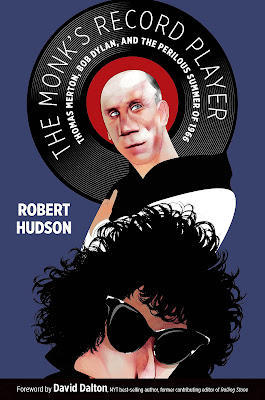
Hudson has published 12 previous books, including Seeing Jesus: Visionary Encounters from the First Century to the PresentThe Poet and the Fly: Art, Nature, God, Mortality, and Other Elusive MysteriesKiss the Earth When You Pray: The Father Zosima PoemsThe Monk’s Record Player: Thomas Merton, Bob Dylan, and the Perilous Summer of 1966The Art of the Almost Said: A Christian Writer’s Guide to Writing PoetryBeyond Belief: What Martyrs Said to God; and Thomas Dekker’s Four Birds of Noah’s Ark: A Prayer Book from the Time of ShakespeareHis articles and poetry have been published by Christianity TodayThe Other Side, The MennoniteThe Seneca ReviewMars Hill Review, and other magazines and literary journals. He lives in Michigan.


The Beautiful Madness of Martin Bonham will have you smiling, laughing, and occasionally frowning in recognition (“Hey, wait a minute, that’s a little too close for comfort”). It’s something of an achievement by an author when a reader recognizes something of himself in both the protagonist and the villain, but Hudson adroitly pulls it off. 


Note: The Beautiful Madness of Martin Bonham will be published Nov. 14. It can be pre-ordered at Amazon.


Related


Robert Hudson Explains the House Fly – and Poetry


Seeing Jesus by Robert Hudson.


Robert Hudson: What Thomas Merton Had on His Record Player.


Some Monday Readings


Louise Gluck, Nobel-winning poet of terse and candid lyricism, has died at 80 -- Associated Press.


Saving St. Louis One Block at a Time – Rachel Ferguson at Acton Institute.


It can happen at Harvard: Hamas is inside the gates of American campuses – William Jacobson at The Spectator.


Ed Gray’s Innocence & Experience – Spitalfields Life.


In defense of the Dark Ages – Samuel Rubinstein at The Critic Magazine.


Poetry Prompt: Beginning "Ab Obo" or "From the Egg" -- Tweetspeak Poetry.

Tuesday, February 1, 2022

Robert Hudson: What Thomas Merton Had on His Record Player


Robert Hudson tells a story of two men who never met, except on the turntable of a record player, but who together captured a moment in American culture. 

In the summer of 1966, Thomas Merton was confessing to his abbot at Gethsemani Monastery in Kentucky that he’d been having a love affair with a nurse young enough to be his daughter. It was a crisis of both vocation and faith. And folk singer Bob Dylan, who would experience a motorcycle accident in July, the details of which are still debated, was making a major shift in his music with the release of the album Blond on Blonde, the third entry of a trilogy that included Bringing It All Back Home and Highway 61 Revisited. Dylan would not be heard from for a year.


To continue reading, please see my post today at Tweetspeak Poetry.

Monday, November 8, 2021

"Seeing Jesus" by Robert Hudson


My Baptist grandmother kept a reproduction of a painting on her bedroom wall. It was entitled “Head of Christ,” painted by Walter Sallman in 1941. If you saw it, you would know it; it was a seemingly ubiquitous painting in homes and churches for decades. It’s a Europeanized portrayal of Christ, and we can say with some certainly that it looked nothing like what the real Jesus must have looked like. But as a child, when I thought of Jesus, or when I “saw” Jesus, this was the image that came to mind. 

Few of us will claim that we’ve “seen Jesus.” We might say we’ve experienced Jesus,” but a claim to have seen him is something else again. But a number of people through history said that they had seen the real Jesus. It started with the disciples, as recorded in the gospels, who saw him before and after his death. Stephen saw him moments before he was dragged to his death by stoning. Paul was blinded by the light of Jesus on the road to Damascus. The Apostle John saw Jesus on the Isle of Patmos, in a vision that became the Book of Revelation.


And the visions continued beyond the apostolic age, right up to our own time. In Seeing Jesus: Visionary Encounters from the First Century to the PresentRobert Hudson tells the stories of people who said they saw Jesus, transforming their own lives and the world around them. 


Martin of Tours stopped an invasion of France by Islamic forces. St. Jerome translated the Bible into Latin, creating the version the church knew for a thousand years. Francis of Assisi founded a monastic order. George Fox founded the Quakers. The teenaged William Blake saw Jesus in Westminster Abbey. And add to this list Sojourner Truth, Mother Teresa, Charles Finney, Oral Roberts, Julian of Norwich, St. Anthony of Egypt. And many, many others.


Robert Hudson

Hudson isn’t trying to argue whether these people did or didn’t really see the face of Jesus. That’s not his point. As he says, the skeptic in him doubts, while the mystic in him says “How do you know it wasn’t?” Instead, Hudson tells their stories. 


And what great stories he tells. He has an insightful look at John and the Book of Revelation, suggesting it should be read as poetry. He explains how the emperor Constantine sought the blessing of the desert father St. Anthony. Simeon Antonov was a lusty, world-loving carpenter living on the steppes of Russia who became a monk on Mount Athos in Greece. Joseph Smith founded the Mormons. Sojourner Truth became a symbol of abolition. What’s clear is that something happened in these people’s lives, and the lives of others, that was both profound and transformational. 


Hudson has published 11 previous books, including The Poet and the Fly: Art, Nature, God, Mortality, and Other Elusive MysteriesKiss the Earth When You Pray: The Father Zosima PoemsThe Monk’s Record Player: Thomas Merton, Bob Dylan, and the Perilous Summer of 1966The Art of the Almost Said: A Christian Writer’s Guide to Writing PoetryBeyond Belief: What Martyrs Said to God; and Thomas Dekker’s Four Birds of Noah’s Ark: A Prayer Book from the Time of ShakespeareHis articles and poetry have been published by Christianity TodayThe Other Side, The MennoniteThe Seneca ReviewMars Hill Review, and other magazines and literary journals. He lives in Michigan.


Seeing Jesus is a gem of a book, filled with fascinating stories and equally fascinating insights. These are people who saw Jesus, or believed they saw Jesus. The vision and the belief were sufficient to help change the world.


Related:


Robert Hudson Explains the House Fly – and Poetry.

Tuesday, October 27, 2020

Robert Hudson Explains the House Fly - and Poetry


Flies can teach you a lot about poetry. Ask Robert Hudson. 

Hudson has been a teacher, a clerk, an editor, a translator, a book designer, a proofreader, a publisher, a writer, a bookbinder, and a printer (with a certificate in printing by hand). With a master’s degree in comparative literature, he worked for 34 years as an editor for a major publisher. He loves poetry; he’s a member of the International Dante Societyand the Thomas Traherne Association. And he’s a member of the West Michigan Thomas Merton Society.


He also knows a lot about flies. And in The Poet and the Fly, he considers how the fly has served as an object for numerous poets over the centuries. 


Yes, the fly. The common housefly. The pest who loves to discover our food when we eat outside. The one who, once inside, seems almost impossible to corral and eliminate. That fly.


To continue reading, please see my post today at Tweetspeak Poetry