Saturday, December 18, 2021

Saturday Good Reads - Dec. 18, 2021


It’s been a charge repeated over and over that Facebook’s fact-checking of posts are biased against conservatives. Now Facebook itself has added fuel to the fire. In a lawsuit filing, the company quietly acknowledged that its “fact-checking” program is really all about “opinion.” Jordan Boyd at The Federalist has the story. 

It’s not the kind of article you expect to see at Literary Hub. Writer Chelsea Leah, an acknowledged non-Christian, makes a case for eliminating the genre of “Christian fiction,” because, she says,those books shuld be considered part of general fiction. She even acknowledges how much she enjoys reading the “powerful stories” of Christian fiction.


A good case can be made that the artist who likely had his best year ever, and better than just about any other artist living or dead, is Vincent Van Gogh. Exhibitions, sales of his works, and the “immersive experiences” are recounted by Van Gogh expert and author Martin Bailey at The Art Newspaper.


More Good Reads


Life and Culture


The Turn – Liel Leibovitz at Tablet Magazine.


Amazon’s Triangle Shirtwaist Fire – Rod Dreher at The American Conservative.


The Second Great Age of Political Correctness – Greg Lukianoff at Reason.


What I told the students of Princeton: Show some self-respect and reclaim your freedom – Abigail Shrier at The Tooth Fairy.


The Secret to Happiness at Work – Arthur Brooks at The Atlantic.


Poetry


Advent Twist – James Tweedie at Society of Classical Poets.


The future challenge – Sonja Benskin Mesher.


The Day of Small Things – Seth Lewis.


Frankincense – Joe Spring at Joe Spring Writes.


Sonnets in Advent with Dunstan Thompson – Cassie Dodd at Front Porch Republic.


Faith


Membership in Grace: Reflecting on Dobbs and Gifts – Sarah Soltis at Front Porch Republic.


The King and His Kingdom Are Coming – Dr. Tom Pratt at the Institute for Faith, Work, & Economics.


In Search of Christian America: Founding Myths and the Second Great Awakening – Thomas Kidd at Desiring God.


News Media


Why the press loves Santa Claus and the case for more news about St. Nicholas of Myra – Clemente Lisi at Get Religion.


Writing and Literature


Finding Stories in Legends: The Anglo-Saxon World – Annie Whitehead at Casting Light upon the Shadow.


The Russian Novel that Foresaw - But Underestimated -Totalitarianism – Martha Gessen at The New Yorker.


Come Let Us Adore Him – The John 10:10 Project


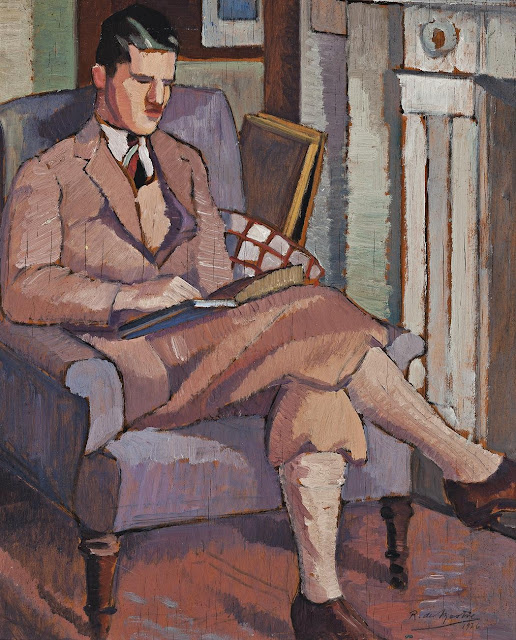
Painting: Man Reading (Portrait of G. Davis), oil on canvas (1926) by Roy de Maistre (1894-1968). 

Friday, December 17, 2021

What does the healer say


After Mark 2:1-12
 

Confronted by the faith

of the men helping a friend,

men so determined they

punch a hole in the roof,

what does the healer say?


He sees the man known

as a paralytic descend

into the room, dangling

in the ropes, and what

he sees first, amidst all

the talk and mutterings

of the crowd inside

is the faith of the men

maneuvering the ropes.

What does the healer say?

What does the healer do?


Is it “You’re healed”? 

Does he touch or extend

a hand. Lifting the paralytic

up? Instead, and first, 

the healer speaks.

The healer says

the man’s sins 

are forgiven.

Because it was,

because it is

the most important.


Photograph by Aaron Blanco Tejedor via Unsplash. Used with permission.

Thursday, December 16, 2021

"To Be Read at Dusk" by Charles Dickens


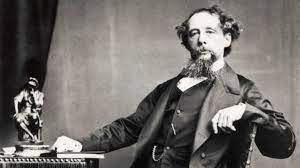
Charles Dickens loved a good ghost story. A Christmas Carol. for example, is many things – a tale of Christmas that changed the holiday forever, a moral injunction to care for those less well off, and a reminder not to let the past strangle the present and the future. But it is, at its most basic, a ghost story. 

For some years, three ghost stories by Dickens have been bundled together and published in a short volume under the title of the first story, To Be Read at Dusk. They were originally published as short stories in various magazines between 1852 and 1866. 


The telling of the title story, “To Be Read at Dusk,” is set in Switzerland, while the story itself is set in Italy. A traveler is staying at a Swiss inn, along with five couriers of various nationalities. He’s quietly listening to their conversation, and soon enough it turns to a ghost story. A newlywed couple from England rent a villa in Italy, and all seems to be going well. But the young bride is terrified of a particular face, and it’s a face of someone she doesn’t know. Almost inevitably, she will meet the bearer of that face. 


Charles Dickens

“In “The Signalman,” a traveler at a train station calls out to the signalman and terrifies the man. The traveler is taken aback; he doesn’t know why the signalman should react the way he does. The signalman tells him a story, and the traveler is left wondering if he himself might be a ghost or something supernatural. 


The third story is “The Trial for Murder.” A youngish man living in the Piccadilly section of London is startled at home one night to see what looks like a dead man beckoning him at the door. No one’s there, and the man might have thought nothing of it. Except he’s called to be on a jury, and is, in fact, elected jury foreman. And the trial involves the man whose apparition was seen at the door.


More than 150 years have passed t=since the stories were first published, but the three tales in “To Be Read at Dusk” remain entertaining, and slightly chilling, ghost stories.

Wednesday, December 15, 2021

How Email Started a Revolution


I’ve been reading Breaking the News: The Remaking of Journalism and Why It Matters Now, the memoir published in 2018 by Alan Rusbridger. From 1995 to 2015, Rusbridger was editor of The Guardian, if not Britain’s largest newspaper, then perhaps its most influential. Part memoir, part newspaper history, the book is largely about how The Guardian recognized and then started coming to grips with the digital world. 

Part of what fascinated me about the book is that it covers approximately my own experience with the digital world and how I helped (or tried to help) a corporation’s communications department come to grips with it. My journey started slightly earlier that Rusbridger’s – in 1993. But it ended the same year his did, in 2015, and for the same reason, retirement. What he was doing with The Guardian and digital communications is almost a mirror image of what we were doing in corporation communications. 


To continue reading, please see my post today at Dancing Priest.


Top photograph by Online Printers via Unsplash. Used with permission.

Tuesday, December 14, 2021

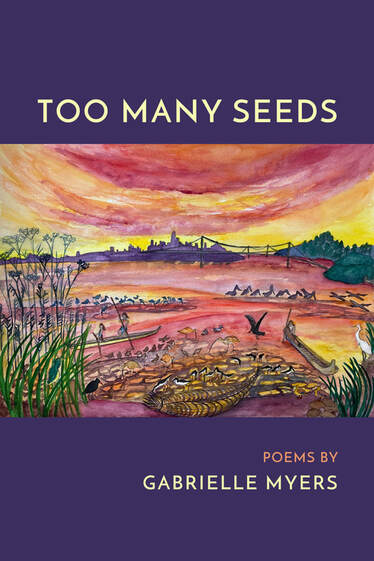
Poets and Poems: Gabrielle Myers and "Too Many Seeds"


It’s no surprise to find food, nature, and food in nature in the poetry of Gabrielle Myers. She’s an English teacher now, but she worked for years at as a chef. Food is important. The quality of food is important. Her poems are filled, like seeds, with food metaphors. Her recently published first collection, Too Many Seeds, is a veritable feast of images, ideas, questions, and answers about food, nature, and what we do in the short time we have on this planet. 

The 45 poems in the collection take us to picking heirloom tomatoes, searching for fennel pollen, picking figs, examining quality control and the processing line at a dried fruit factory, asking questions about an injured bee, what you see from your window at lunchtime, and watching a hummingbird in an orange tree. She expertly uses the language of food and nature, and food from nature, to weave a consideration of life and what it means.


To continue reading, please see my post today at Tweetspeak Poetry.

Monday, December 13, 2021

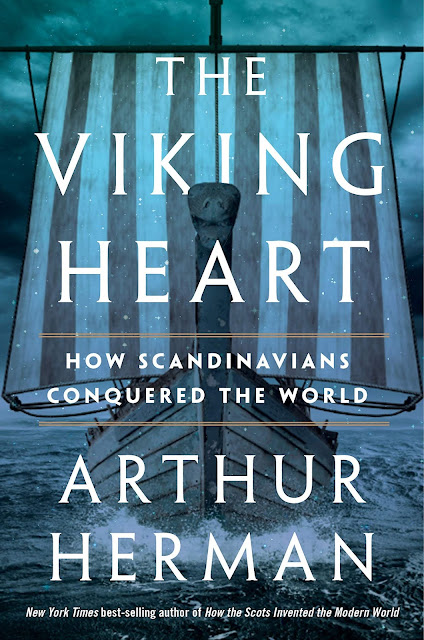
"The Viking Heart" by Arthur Herman


They pillaged and plundered Britain. They threatened Constantinople. They father the Germanic tribes that threatened and eventually sacked Rome. They showed up on the steppes of Russia. They became the Normans who landed in England in 1066. They founded Iceland and established settlements in Greenland. And they landed in North America 400 years before Columbus. 

“They” are the people who came to be known as the Vikings, the people who lived in what is now Denmark, Sweden, and Norway. And they transformed the world.


In his highly readable The Viking Heart: How Scandinavians Conquered the World, historian Arthur Herman tells their story. And what an enthralling, thrilling story it is.


It’s an eye-opening account. We’re familiar with the story of the Viking attacks on Britain and Ireland, and how they founded settlements there. Less well known their connection to the Germanic tribes that confronted (and often defeated) Roman armies. The Vikings were called the Rus and gave that name to Russia. They sacked the suburbs of Constantinople. 


Arthur Herman

And their influence didn’t stop with the end of their marauding ways. Herman describes the role of the Swedes in the European land wars of the 1600s, and the peaceful “invasion” of the United States via immigration in the 19th and early 20th centuries.


And throughout his well-written account, he asks and answers the question: what was it that propelled these people to wander, fight, sack, plunder, dominate, control, and influence so many countries, empires, and regions? And he gives a solid account of how they often fought each other.


Herman is a popular historian who’s published Freedom’s ForgeHow the Scots Invented the Modern WorldThe Idea of Decline in Western HistoryTo Rule the Waves, and Gandhi & Churchill. He/s taught at the Western Heritage Program at the Smithsonian’s Campus on the Mall, and he’s been a professor of history at Georgetown University, The Catholic University of America, George Mason University, and The University of the South at Sewanee. Gandhi & Churchill was a finalist for the Pulitzer Prize.


The Viking Heart is a fascinating account of a people who have played a major role in European, Asian, and North American history.

Sunday, December 12, 2021

The word is out


After Mark 2:1-12
 

The word is out:

the man can heal,

a touch, a look,

a word can dispel

a demon, a disease,

even the most feared

of all, a disease like 

leprosy. And he’s here,

right now, in a home,

right down the street.


The crush is on,

the house is so packed

no one can move

or barely breathe.

Four friends bring

their paralyzed fifth,

unable to move

through the dense crowd,

without a word, they

climb to the roof,

carrying their burden.

Smashing a hole (debris

falling on the crowd 

below), they lower 

the fifth with ropes,

because they believe.


Photograph by Jake Weirick via Unsplash. Used with permission