Saturday, May 7, 2022

Saturday Good Reads – May 7, 2022


I’ve enjoyed the novels of Paul Kingsnorth. I subscribe to his Substack column, The Abbey of Misrule. This past week, I read “In the Desert of Real,” and I came away more unsettled than I’ve been for a long time. And better informed. It’s a longish post, but it is well worth the time to read it. We have reached a point, Kingsnorth writes, “at which our underlying cultural and spiritual brokenness is manifesting on the surface as politics – with explosive results.” 

Monday, May 9, is the 360th birthday of the puppet Mr. Punch (as in Punch and Judy). The first recorded note of the puppet show was by Samuel Pepys on May 9, 1662. There’s a big celebration tomorrow at St. Paul’s Church, Covent Garden, in London. You can find the story at Spitalfields Life.


I’ve been reading Brisbane, the new novel by Eugene Vodolazkin, author of Laurus and The Aviator, among several others. It was first published in Russian in 2018, and it’s a strange book to read right now, given the war in Ukraine. Vodolazkin was born in 1964 in Kiev, or Kyiv, making him a Ukrainian. He lives in St. Petersburg in Russia, and he met his wife there, when both were attending graduate school at Pushkin House. Brisbane displays a high degree of consciousness of the two languages, Ukrainian and Russian; at Literary Hub, Marion Schwartz, the translator, describes how the two languages intersect in the novel.


More Good Reads


Writing and Literature


Michel Houellebecq is no fan of Europe – David Sexton at The Spectator.


Phoebe Atwood Taylor: Prolific Mystery Novelist and Creator of “The Codfish Sherlock” – Otto Penzler at CrimeReads. 


A Map of Dante’s Inferno in Three Touchstones – James Matthew Wilson at Church Life Journal.


Life and Culture


The Virtue of Argument – Lindsay Ralls at The Circe Institute.


CDC Tracked Millions of Phones to See if Americans Followed COVID Lockdown Orders – Joseph Cox at Vice.


Living the Satyricon – Victor Davis Hanson at New Criterion.


Ukraine


Nightmare Journal: From the first days of war – Nikita Petrov at Psychopolitica.


Ukraine’s Patriotic Master: Painter Ilya Repin – Michael Prodger at The Critic Magazine.


Russian Tycoon Criticized Putin’s War. Retribution was Swift – Anton Troianovski and Ivan Nechepurenko at The New York Times.


Searching for a Lost History in Modern-Day Russia – Marcia DeSanctis at Literary Hub.


Poetry


Words “in Praise of General Berry”: Hiram Berry Memorial Poems – Chris Mackowski at Emerging Civil War.


‘Crank Out a Few, Please’: Observations on Poetic Composition – Joseph Salemi at Society of Classical Poets.


Triumph of the New – Morri Creech at New Criterion.


Faith


How do We Respond if We Are the Incompetent Colleague? – Russell Gehrlein at the Institute for Faith, Work, & Economics.


Imperial Migrations – Vika Pechersky at Mere Orthodoxy.


When Belief is Agony – Susannah Black at Mere Orthodoxy.


A Molech Primer – Jesse Johnson at The Cripplegate.


Highland Cathedral -- André Rieu


Painting: Reading the newspaper on the subway 1914, oil on canvas by F. Luis Mora (1874-1940).

Friday, May 6, 2022

The reading of the will


After Matthew 5:1-10
 

It’s like the reading 

of the will and testament, 

the will for the family.


The poor in spirit, who

know they are in need,

receive the kingdom.

The mourners, for

whatever reason, receive

comfort and embrace.

The meek, the gentle ones,

inherit the earth.

The hungry, the ones who

know righteousness does

not come from within,

will be filled.

The merciful, who show

mercy and compassion,

are granted mercy.

The pure in heart, who

seek to purify their lives

fully and completely, 

will see God.

The peacemakers, who

seek God’s peace, not

man’s, are named sons

of heaven.

The persecuted, the ones

treated unjustly for what

they believe in faith, who

remain steadfast to the end,

inherit the kingdom.


Photograph by Melinda Gimpel via Unsplash. Used with permission.

Thursday, May 5, 2022

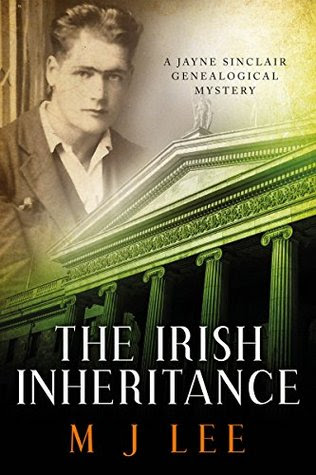
"The Irish Inheritance" by M.J. Lee


Jayne Sinclair is a former police detective, now turned private genealogical researcher. An elderly American dying of cancer gives her what looks to be an almost impossible task: identify his birth parents. All he knows is that, when he was 4, he was adopted from a British orphanage by an American family. He has a photo of his and his adopted father at that time and a book. The child is desperately clutching the book in the photograph: The Lives of the United Irishmen. His birth certificate lists the names of his birth parents. The only problem is that his father died in World War I, six years before the elderly man was born. 

Jayne sets to work. Her husband Paul is not impressed; their marriage is foundering, and Jayne always seems more interested in work than in trying to salvage their relationship. And he’s right; she believes their marriage is dead.


The research task looks almost impossible, and Jayne has only eight days to complete it. Her client is dying from leukemia, and he must return to the United States. Slowly, she makes progress. And she will eventually discover something the reader knows long before she does: someone doesn’t want her to complete the research and has gone so far as to hire a hit man to take care of the problem if necessary. And then elements of the IRA get involved.


M.J. Lee

The Irish Inheritance
 is the first of seven Jayne Sinclair genealogical mysteries by British author M.J. Lee, and it’s a fast-paced, action-packed story that not only entertains but also teaches some 20th century Irish history. Lee alternates the story between Sinclair’s investigation in 2015 with what happened during the Irish Easter Rebellion in 1916 and the uprising against British rule in the early 1920s.


In addition to the Jayne Sinclair mysteries, Lee has also published two other crime-related series, the Ridpath series and the Danilov series. He’s also the author of Samuel Pepys and the Stolen Diary. Writing as Martin Lee, he’s published The Fall, a historical novel about the fall of Singapore during World War II. He lives in the United Kingdom. 


If you like genealogy tied to a current-day mystery, The Irish Inheritance is written for you. And if you only like a good mystery story, it’s written for you as well. 

Wednesday, May 4, 2022

"Idle Hands" by Glenn McGoldrick


Mark, to use the common expression, is between jobs. He sleeps in after his wife Liz goes to work and drops off their son at school. He gets up, eat, and reads for an hour, and then rides his bike into town of Teesdale, right up to Newport Bridge. Then he turns around and heads home, arriving in time to eat lunch before picking his son up at school. 

That’s his life, until the day he notices a red hoodie hanging on the fence by the bridge. And there’s a note inside, but not addressed to him. 


Mark’s life is about to change. And not necessarily for the better.


Glenn McGoldrick

Idle Hands
 
is the new Dark Teesside short story by British author Glenn McGoldrick. Writing since 2013, McGoldrick specializes in short stories with a twist – and often a deadly twist. 

He’s worked for both land-based casinos and cruise ships for a time, basing many of his stories on those experiences. His stories are dark, gritty, often involve a twist, and inevitably open insights into the human psyche. And his characters run the gamut of good, bad, and something in between, and often find themselves moving far beyond the boundaries of acceptable behavior. He lives in northeastern England. 


If you like dark, gritty stories with unexpected endings, then Idle Hands is a good one to try.


Related:


“The Moor Road” by Glenn McGoldrick.


“Yellow Feet” by Glenn McGoldrick.


Three New Dark Stories by Glenn McGoldrick.


“Six Down,” “Somewhere in England,” and “Dark Progresion” by Glenn McGoldrick.


 4 Stories by Glenn McGoldrick.


3+ Stories by Glenn McGoldrick.


Five Mysteries: 2 Short Stories, 2 Novellas, and a Long Story.


The Dark Stories of Glenn McGoldrick.


Watching Crows by Glenn McGoldrick.


Some Light and Dark Holiday Reading.

Tuesday, May 3, 2022

Poets and Poems: Jesse LoVasco and "Native"


It wasn’t planned. I was reading a book about the Constitution and the American Founders. It included two chapters on Andrew Jackson and how popular, democratic sentiment ran counter to the principles underlying the Constitution. The example cited was Jackson’s determination to remover the five native American tribes collectively known as the Cherokees from their ancestral lands, primarily in Georgia, Alabama, and Tennessee. The removal, which began in the early 1830s, was ultimately carried out by Jackson’s successor, Martin Van Buren, in 1838. Thousands of people died on the “Trail of Tears” to forcible resettlement in Oklahoma. 

From that book, I turned to Native: Poems by Jesse LoVasco. It wasn’t intentional on my part; it was the simply the next book to read. Without a single reference to the Cherokee tribes or the Trail of Tears, many of the poems included in the collection told that story. I read the first few poems and began to hear the theme music from “The Twilight Zone” playing in my head.


To continue reading, please see my post today at Tweetspeak Poetry.

Monday, May 2, 2022

"A Lost Lady" by Willa Cather


It’s approximately the late 1870s-early 1880s. Marian Forrester is married to Captain Daniel Forrester, one of the pioneers of the Western Territories and a man known for his work in building railroads. They live in the small town of Sweet Water, in a state like Nebraska. Their large house is situated outside of town, topping a large hill and including a considerable amount of surrounding acreage, with orchards, streams, marshland, and pastureland.  

Every boy in town is in love with Marian, including the narrator of A Lost Lady by Willa Cather (1873-1947). Neil Herbert is 11 when the story begins and part of a group of boys seeking permission to picnic near the marsh. What he sees in Marian in a woman 25 years younger than her husband, full of life and kindness, a woman who inspires admiration and envy. But she’s also a woman of her time, epitomizing her time but also somewhat rebelling against it. And her time is passing.


Willa Cather

We see Marian always through Neil’s eyes, and eventually she’ll come to disappoint him. But he never stops loving her, even as her fortunes (and her husband’s) wane and decline and even as she comes under the influence of Ivy Price, a young man who might have inspired William Faulkner’s Flem Snopes. Price will feast on the bones of the older generation, caring nothing, always on the make.


Very much of its time (published in 1923), A Lost Lady is also a timeless story of passing generations, the West and how it changed, a boy and young man’s deep feelings for a much older woman, and the woman herself, embodying the spirit of the age and the rebellion within that spirit. 


In addition to poetry and short stories, Cather’s works include O Pioneers! (1912), My Antonia (1918), The Professor’s House (1925), Death Comes for the Archbishop (1927), Shadows on the Rock (1931), Lucy Gayheart (1935), and Sapphira and the Slave Girl (1940). She received the Pulitzer Prize for Literature for One of Ours (1922). A native of Virginia, she moved with her family to Nebraska in 1882, and many of her stories and novels are set there. She graduated from the University of Nebraska in 1895, worked as a journalist and teacher in Pittsburgh and New York City, and began publishing in 1903. By 1912, she’d become a full-time writer. Originally marginalized as a regional writer, she’s now considered one of the greatest American novelists of the 20th century. 

Sunday, May 1, 2022

Disciple talk


After Matthew 5:1-10
 

Great crowds, great crowds,

hordes and flocks of people

follow him wherever he

goes, and he heals the sick,

the diseased, the possessed,

the paralyzed, the afflicted,

and the crowds grow, coming

from all over. He sees them

and withdraws; there’s a time 

to heal and a time to teach. He

withdraws up the mountain,

his followers gathered

around. It is the time to teach

them, away from the crowds

and the press of the afflicted,

the incessant demands to heal.

His followers sit with him.

He speaks and begins to teach,

knowing the difference between

a follower and a crowd member.

It is the time to teach, to listen,

to learn, against the backdrop

of the great crowds below,

the great crowd of needs,

down below.


Photograph by Mason Field via Unsplash. Used with permission