Showing posts with label memoir. Show all posts

Tuesday, February 17, 2026

Poets and Poems: Erin Murphy and “Mother as Conjunction”


When we were children, my brothers and I would sometimes be handed a snack that I thought had been invented by my mother. “Bread, butter, and sugar” was possibly our favorite treat. My mother was tickled that we saw it as a special dessert. It was only years later, when I visited her in a rehab center while she recovered from a broken hip bone, that she told me where it had come from. 

She grew up in the Great Depression. Money was so tight that my aunt quit high school because she couldn’t pay the 25 cents for gym clothes. My mother, the fourth of six children, knew hunger. She said there were times when there was nothing to eat, so they’d go to bed hungry. The next day, my grandmother would prepare sandwiches for school, using the only ingredients she had – butter and sugar sandwiches. It was a poor child’s lunch in the 1930s, and her own children thought of it as a terrific treat.


Reading poet Erin Murphy’s new work, Mother as Conjunction, imagine my surprise to discover someone else who had the same experience as my mother, except it happened decades later. 

To continue reading, please see my post today at Tweetspeak Poetry.

Some Tuesday Readings


Nature – poem by Sonja Benskin Mesher.


Memento Mori: On Philip Larkin’s “Aubade” and its Discontents – Alexander Fayne.


The Sea in You – poem by David Whyte.


“My Heart Leaps Up,” poem by William Wordsworth – Joseph Bottum at Poems Ancient and Modern.


Whatever Is – poem by Sarah Chestnut at Rabbit Room Poetry.

Wednesday, November 12, 2025

Single Dads in Non-Fiction and Fiction


It was only coincidental. I read Joseph Luzzi’s In a Dark Wood: A Memoir (2015) and the next in my reading pile was Unconditional: A Novel by Stephen Kogon. Both books, one non-fiction and the other fiction, told the stories of young men suddenly finding themselves single fathers. 

Luzzi is a professor of Italian and teaches at Bard College in New York. In 2007, just as his lecture class was about to begin, he noticed a security guard come into the room. 

To continue reading, please see my post today at Dancing Priest.

Monday, May 5, 2025

"Reviving the Heart of Leadership" by James Decker


If there is one experience virtually all Americans share, it’s the experience of the health care industry. We know it primarily from the receiving end of the industry’s services – doctors, nurses, lab technicians, EMT professionals, and perhaps the payments and billing departments, medical insurance companies, and urgent care offices. What we don’t have much direct experience with is how this industry gets managed and administered at the company and hospital levels – the people who run the medical care systems. 

Dr. James Decker just might change that. Decker retired in 2023 and chief executive officer of MEDIC Regional Blood Center in Knoxville, Tennessee. His career includes executive positions at the Fort Sanders Regional Medical Center, Sumner Regional Health Center, and Gateway Health System, all in Tennessee, and the Baptist Health System of East Tennessee. And he’s written a memoir of his almost 50 years in medical administration, Reviving the Heart of Leadership: Empowering Healthcare Executives to Lead with Compassion.


He tells a great story. And he knows something is wrong with America’s healthcare system, looking from and at the inside. Few people are better placed than Decker has been to see what’s been happening. Medical system executives have had to face difficult if not impossible decisions in managing cost, insurance provider, and government demands, not to mention patients and their families who must navigate what looks like an impenetrable bureaucracy of medical care and medical insurance.


Decker describes how he became interested in hospital administration in graduate school. He had B.S. and M.S. degrees in microbiology from Louisiana State University in Baton Rouge, and an M.S. degree in Hospital and Health Administration from the University of Alabama in Birmingham. He later added an MBA degree from the University of Tennessee and a Doctor of Health Administration from the Medical University of South Carolina. (Five degrees, and, somehow, he and his wife still managed to rear a family.)


James L. Decker

He describes an industry in almost constant upheaval and re-invention over the course of his own career. Pressures to expand services and add new technologies have faced their own pressures of cost containment. Caught in the middle has been the people who comprise the industry. Decker not only writes with compassion, but also advocates for compassion, from administrators, hospital board members, and all the people who makes the healthcare industry work. He owns up to his own failures and describes how he worked to do better. Especially effective is his use of both professional and personal stories, including how his last position, as CEO of a regional blood supply center, during which he had to lead through the COVID-19 pandemic.


Decker’s received many recognitions and awards during his career. He was named Alumnus of the Year by the University of Alabama-Birmingham, a Healthcare Hero by the Knoxville Business Journal, and Distinguished Alumnus of the Year by the Medical University of South Carolina. He also received the Meritorious Service Award from the Tennessee Hospital Association. He’s a Life Fellow of the American College of Healthcare Executives (ACHE) and past ACHE Regent for Tennessee. Decker also holds faculty appointments at the University of Tennessee and South College. He lives with his family in Tennessee.


Reviving the Heart of Leadership is likely aimed at health care industry executives, but it’s also a valuable resource for people who work in hospitals, doctors, and even patients and consumers. To see how the industry has changed over the past half-century helps in understanding where it is today. And, Decker might add, where it can be better.


Some Monday Readings


Why the Odyssey Matters – Andy Owen at The Critic Magazine.


The Devious Deceiver: Chaplain Fr. Joseph Bixio, S.J. – Rev. Robert Miller at Emerging Civil War.


We are letting schools poison our children – Hadley Freeman at The Times of London.


The second birth of JMW Turner – Michael Prodger at The New Statesman.


“Take Me Home, Country Roads” by John Denver – Anthony Esolen at Word & Song.


Tuesday, January 30, 2024

“Thunderclap” by Laura Cumming: A Memoir of Art and Life


Delft, The Dutch Republic, Oct. 12, 1654. 

Imagine a quiet fall morning. It’s sunny; people are going about their usual activities. A painter, caught somewhere between down-at-heels and famous, is talking with his subject as he paints the portrait. A few blocks away, a clerk goes to the basement to check inventory, using a candle for light. The inventory is 90,000 pounds of gunpowder.


The explosion of what comes to be known as the “Thunderclap” levels whole city blocks. The sound is heard 70 miles away. Almost every building in Delft is damaged. Hundreds are dead; some bodies will never be found. Among the fatalities is the painter, Carel Fabritius, the only survivor of the people in his home but who dies a short time later. While he must have painted numerous pictures, what has survived is barely a dozen, including a few self-portraits. Some were likely destroyed in the explosion. One or two were misattributed to Rembrandt, in whose studio Fabritius had studied. But the fate of the rest is unknown.


To co tin reading, please see my post today at Tweetspeak Poetry.


Some Tuesday Readings


The Blue Absorbent Towel – poem by Charles Southerland at Society of Classical Poets.


Things Worth Remembering: The Woman Who Captured Russia’s Pain – Douglas Murray at The Free Press.


The Hidden Depths in Robert Frost – Ernest Suarez at The Imaginative Conservative.


“Learning to Laugh: and “An American Pastoral” – poems by William Harder at Society of Classical Poets.


The Layers – poem by Stanley Kunitz at Everyday Poems. 

Monday, December 11, 2023

Books I’m Not Recommending for Christmas


Once again, I’m not recommending books for Christmas. This goes back a long, long time, when I learned that, if people know you’re a reader, they will shower you with books as gifts for birthdays and Christmas. Unfortunately, it was usually books the giver liked, without thinking too much about the recipient.  

That’s not to say I don’t really like books. Or that certain books have made me wildly enthusiastic. I discovered that this blog (and my page at Dancing Priest) is a good way to describe books I like. If I read a book and don’t like it, I don’t review it.


What follows is a list of the books I truly enjoyed this year.


Classics


I surprised myself when I tallied up the classic books I read this year. Some of them surprised me; they weren’t what I remembered them to be. But it’s hard to go wrong with The Strange Case of Dr. Jekyll and Mr. Hyde by Robert Louis Stevenson; Hospital Sketches by Louisa May Alcott; The Sun Also Rises by Ernest Hemingway; The Picture of Dorian Gray by Oscar Wilde; Winesburg, Ohio by Sherwood Anderson; John Brown’s Body by Stephen Vincent Benet; Andy Catlett: Early Travels by Wendell Berry; and The Wonderful Visit by H.G. Wells.


Fiction


Just when you think contemporary literary fiction is going down the drain, you read books like Small Things Like Theseby Claire Keegan and Eugene Vodolazkin’s Solovyuv and Larionov and A History of the Island. And Robert Hudson’s The Beautiful Madness of Martin Bonham is simply stunning.


History


I’m still reading a lot (A LOT) about the Civil War. If We Are Striking for Pennsylvania, Volume 1 and Volume 2 focus on the runup to the Battle of Gettysburg. Man of Fire by Derek Maxfield succinctly explains the personality of William Tecumseh Sherman. And Of Age: Boy Soldiers and Military Power in the Civil War Era by Frances Clark and Rebecca Jo Plant tell a fascinating story: how 10 percent of both the Union and Confederate armies were comprised of boys under the age of 15.


For non-Civil War history, my favorite was England in the Age of Dickens 1812-1870 by Jeremy Black. 


Poetry


I read some really fine poetry this year. When you start a year with The Family Book of Martyrs by Benjamin Myers and finish it with Under the Pearl Moon by Rick Maxson, you know it was a good year. In between were Meet Me at the Lighthouse by Dana Gioia; Stairwell by James Sale; Skyscrape by John Sibley Williams; and Mining the Bright Birds by Jody Collins.


Mysteries


When people wonder why I read mysteries (a lot of mysteries), I tell them that T.S. Eliot was a famous mystery reader, too. My favorites this year tended to cluster around authors: the Hillary Green series by Faith Martin; the Arnold Landon series by Roy Lewis; the Inishowen mysteries by Andrea Carter; the York mysteries of H.L. Marsay; the Louise Blackwell mysteries by Matt Brolly; the Munro & West mysteries by Pete Brassett; and the Lord Edgington mysteries by Benedict Brown.


Literary Criticism


Two titles were special standouts for me this year: Mythic Realms by Bradley Birzer and Belligerent Muse: Five Northern Writers and How They Shaped Our Understanding of the Civil War by Stephen Cushman. 


News Media


Newspaperwoman of the Ozarks: The Life and Times of Lucile Morris Upton by Susan Croce Kelly describes a journalism I recognize, even if it was the first half of the 20th century (back when reporters used to report news). 


Faith


Luke Davis had two books aimed at younger (teen) readers – Reform: The Church at the Birth of Protestantism and Renewal: The Church That Expands Outward. Ben Palpant’s Letters from the Mountain, Letters to Doctors by Earle Carpenter, and Monastery Mornings by Michael Patrick O’Brien. Of special note is The Goodness of the Lord in the Land of the Living by Leslie Busatrd.


Memoir


High marks to Brian Miller for his Kayaking with Lambs. It's about farming, and a lot more.


Top photograph by Valentin Antonini via Unsplash. Used with permission.


Some Monday Readings


A Great Historian’s Inner History – Jeff Reimer at The Bulwark on Journeys of the Mind by Peter Brown.


Remembering with Christmas Cards – Brian Miller at A South Roane Agrarian.


The Legacy of Aleksandr Solzhenitsyn – Joseph Pearce at The Imaginative Conservative. 


Every Day Poems: Community Mandalas + New Poetry Club Invitation -- Tweetspeak Poetry.

Wednesday, November 29, 2023

"John Ransom's Andersonville Diary"


Much like the Civil War itself, accounts of prison camps can seem at opposite ends of the spectrum. Some, like Camp Douglas in Chicago, are as obscure as the physical sites themselves, buried under city development. Andersonville, the camp for Union POWs in Sumter County, Georgia, has had the most notorious reputation of any camp during the conflict. And yet some Union prisoners, like James Madison Page, reported a very different experience.  

The facts are stark. Over the 13 months of its existence, some 45,000 Union soldiers were imprisoned there, and 13,000 died.  

John Ransom, an acting quartermaster sergeant for the 9th Michigan Cavalry, was captured on Nov. 6, 1863, in east Tennessee. He was first sent to Belle Island, an island in the James River adjacent to Richmond, then to a tobacco warehouse building in Richmond itself, and finally by train to Andersonville. He survived the experience, but only barely. In 1881, he published Andersonville Diary, a memoir of his experiences, using the almost daily journal he kept as the basis.


To continue reading, please see my post today at Dancing Priest.


Some Wednesday Readings


Jewish Soldiers in the Civil War: The Union Army by Adam Mendelsohn – book review by Mike Smith at The Detroit Jewish News. 


Check out Paul Lynch’s reaction to winning the Booker Prize – Dan Sheehan at Literary Hub.


‘Mathematization yet!’ Why Exec Comms Pros Don’t Like to Measure (and Why I Don’t Blame Them a Bit – David Murray at Writing Boots.


The Nights of Old London – Spitalfields Life.


Poems to Listen To: Earth Song - 2: A Meeting -- Laurie Klein at Tweetspeak Poetry (for Patreon subscribers). 


Horseshoe Bend, a Dark Teesside short story by Glenn McGoldrick, is free on Amazon Kindle today and tomorrow.

Tuesday, October 3, 2023

Poetic Voices: Jessica Gigot and the Land


According to the U.S. Census Bureau, one half of the adult population worked on a farm in 1870. By 1900, it was a third, and then a fifth by 1950. In 2020, less than two percent of adults worked on a farm. As we moved from farms and small towns to cities and suburbs, we’ve experienced phenomenal gains in productivity and creativity. We’ve also severed ourselves from understanding and knowing the land. 

Poet Jessica Gigot originally trained as a biologist. When she was in her 20s, she experienced a kind of call for understanding the land. Inspired by the local food movement, she spent several years as a farm intern in the Pacific Northwest. She eventually earned an advanced degree in horticulture. As her 2021 memoir A Little Bit of Land makes clear, Gigot wanted to understand farming, but she also wanted to know why people farmed. What was it that kept so many generations of farmers on the land and attracted so many newcomers?


To continue reading, please see my post today at Tweetspeak Poetry.


Some Tuesday Readings


How the Cultural Revolution Played Society Against Itself – Tania Branigan at Literary Hub. 


Autumn Summons – poem by Talbot Hook at Society of Classical Poets.


Ocean of Coins – Paul Kingsnorth at The Abbey of Misrule.


Tolkien’s Literary Output: Fundamentally Religious and Catholic? – Holly Ordway at The Imaginative Conservative.

Wednesday, July 19, 2023

Belle Boyd: Cleopatra of the Secession

Belle Boyd (1844-1900) was 16 when the Civil War began. A member of a prominent family in Martinsburg, Virginia (it became part of WestVirginia), she’d been in boarding school in Baltimore when the Southern states began to secede. She made he way back home, and when the war began, she promptly decided to do whatever she could to help the South win. 

She became a spy.


Her hometown afforded more than ample opportunity; like doe so many other towns in contested areas, control of the town changed hands several times. She made no secret of her sympathies; she did make secret her listening in on Union plans and army movements. In one particularly amazing incident, she braved gun and cannon fire in rushing across a large field to bring news of Union army reserves to Gen. Stonewall Jackson.


To continue reading, please see my post today at Dancing Priest.


Some Wednesday Readings


“The Little Church Around the Corner,” the Civil War, and the Draft Riots – Patrick Young at The Reconstruction Era.


“Brother Cally, They Have Killed Me”: Morgan’s Raiders in Lebanon, Kentucky – Carline Davis at Emerging Civil War.

Monday, June 5, 2023

"Monastery Mornings" by Michael Patrick O'Brien


Michael Patrick O’Brien, as his name might imply, came from strong Irish Catholic roots on both sides of his family. Those roots didn’t prevent the divorce of his parents, accompanied by the upheaval, physical moves, borderline poverty, and scraping to make ends meet. His mother found solace in the church, and specifically the church pastored by the Trappist monks at the Abbey of Our Lady of the Holy Trinity in Huntsville, Utah. 

For 70 years, from 1947 to 2017, the Trappists lived and worked at the abbey. Founded by a group from Gethsemani Abbey in Kentucky, the abbey’s monks raised livestock, grew crops, and kept honey bees. It managed to flourish in the midst of Mormon Utah. It also became a beacon for O’Brien and his family, and the monks became something like surrogate fathers for the boy.


It wasn’t the abbey’s architecture that drew the family. The monks were able to use army surplus Quonset huts, including for the church. There were no soaring stone towers and neo-Gothic architecture. Instead, this was religion and faith close to the ground.


O’Brien tells his and the abbey’s story in his memoir Monastery Mornings: My Unusual Boyhood Among the Saints and Monks. This story doesn’t go quite as you might expect. Born in 1961, O’Brien came of age in the period when the Catholic Church was being silently afflicted by abuse by priests. That is not the story here. Instead, the author describes how the Trappist monks became a steady rock for a family that felt regularly adrift, and for a boy who was growing up without his own father.


Michael Patrick O'Brien

The memoir is filled with both humorous and heartrending stories. O’Brien cites the brothers by name, explaining not only what they did but the role they played in his own life. He describes how the abbey operated, the work it did, and the visits of notable people (Mother Teresa, a friend of one of the monks, visited in 1972 before she became world-famous; O’Brien says she was already a rock star in Catholic circles before the news media discovered her). He explains how the abbey managed in an area where Catholics were a distinct minority, overcoming initial distrust and becoming a highly regarded member of the community.


One of the most moving parts of the book (and there are many) comes when O’Brien explains how the monks were there for him during a particularly horrible childhood trauma. Perhaps like most traumas, it happened suddenly and unexpectedly, and the monks came through with compassion, understanding, and wise counsel.


O’Brien is a Catholic writer and lawyer living and working in Salt Lake City. He’s written for newspapers, and his legal work has often involved news media issues. He blogs at The Boy Monk. He began writing about the abbey in 2015, which eventually led to Monastery Mornings. He received a degree in government and theology from the University of Notre Dame and his law degree from the University of Utah. He and his wife have three grown children and one grandchild.


Monastery Mornings is a love letter to the monks of the abbey. The men who quietly went about the work and faith were role models, counselors, friends, and often refuges. They provided a family structure, stability, and the fatherly love O’Brien missed with his own father. And he tells a wonderful story of how that shaped his life.

Wednesday, March 22, 2023

“Four Years with Morgan and Forrest” by Col. Thomas F. Berry


John Hunt Morgan (1825-1864) was a Confederate general whose operations seemed more guerilla-like than military. He’s known for attacking the supply lies of Union General William Rosecrans and famous for a raid into Indiana and Ohio that took hundreds of prisoners, before ending in Morgan’s capture and imprisonment (he did manage to escape prison and return to the war).  

Nathan Bedford Forrest (1821-1877) was a Confederate general who was the most feared cavalry commander on either side during the Civil War. He disrupted Ulysses Grant’s operations at Vicksburg, he broke out of Union encirclements, and he participated in the Battle of Chickamauga. He was also involved in what came to be known as the Massacre at Fort Pillow, where Black soldiers in Union uniforms were systematically killed.


Colonel Thomas F. Berry (1832-1917) rode with both Morgan and Forrest. In 1914, he published his memoir of the Civil War and shortly after, Four Years with Morgan and Forrest. Given the reputations of both Confederate commanders, it’s easy to see why he waited nearly 50 years after the end of the war. He kept a diary throughout the war, and the diary became the basis for the memoir.


To continue reading, please see my post today at Dancing Priest.

Tuesday, September 27, 2022

"Making Peace with Paradise" by Tania Runyan


I’ve lived in Missouri for 43 years, longer than I’ve lived anywhere else. But it’s Louisiana that I still think of as home, or my home state, the one I physically left when I was 21.  

I follow the news about hurricanes in the Gulf of Mexico. I read stories about the crime rate in New Orleans. I pay attention when I hear about new French Quarter restaurants, or old ones closing. I drink Community Coffee (Signature Blend), whose company is headquartered in Baton Rouge. When I eat a shrimp po-boy sandwich, I always compare it to the Shrimp Po-Boy served at the Come Back Inn in Metairie, the suburb of New Orleans where I grew up. The only football team I follow is LSU.


Tania Runyan left California more than 20 years ago, and she’s still coming to grips with her home state. She tells her story in Making Peace with Paradise.


Of course, as in my own case, coming to grips with your home state means coming to grips with your childhood and your family. And that’s what underlies the story Runyan tells.


To continue reading, please see me post today at Tweetspeak Poetry.

Wednesday, July 20, 2022

When You Find Yourself in Someone Else's Memoir


I started reading the memoir Ghost of the Hardy Boys because I loved the Hardy Boys mystery books as a kid and because I knew a little of the story of how they came to be. Leslie McFarlane (1902-1977) didn’t write all of the 60 books in the series published under the name of Franklin W. Dixon, but he wrote the first third of them. McFarlane was responsible for the 22 books between The Tower Treasure in 1927 and The Phantom Freighter in 1947.  

I read all 22, roughly between 1960 and 1963. I loved them. They even inspired me to write, or start to write, my own mystery. The handwritten manuscript, forever lost, was about 25 pages of a group of kids finding a secret passage from a grandfather down into a cave. I was 10 years old. Yeah, I could see the books had some old-fashioned words, like roadster and coupe for types of automobiles. But I didn’t care, even though I looked up the words in the dictionary. (If you’re interested, a coupe was a two-door car, the name borrowed from a type of horse-drawn carriage. A roadster is what we would call a convertible today.)


To continue reading, please see my post today at Dancing Priest.


Photograph: University of Iowa School of Journalism office in the 1920s. 

Monday, July 18, 2022

"Ghost of the Hardy Boys" by Leslie McFarlane


Leslie McFarlane was a young newspaperman, working on the Springfield Republican in Massachusetts. A Canadian by birth, he’d grown up in the mining country of northern Ontario. One day, he saw an ad from an outfit called the Stratemeyer Syndicate that was seeking writers. His salary was something of a pittance, so he sent a letter of application. 

He received a package of two books and an explanation of how the syndicate worked. For each of the books published in a series, he would be paid $100. He would be provided a full outline. The books would not be published under his name but instead use a pseudonym. He could also never disclose he was the real author.


Given what his salary was, he accepted. A trial run was undertaken with the Dave Fearless series, several books of which had already been published. He passed the test of writing two chapters. He was hired as a freelancer, and he continued his newspaper job. After turning in several manuscripts, and being paid $100 for each, he was given a new project, one involving two brothers living in the fictional town of Bayport and who were amateur detectives. Frank and Joe Hardy were being born.


The Stratemeyer Syndicate was the genius of Edward Stratemeyer, who had picked up the legacy of the Horatio Alger stories. Stratemeyer has a number of popular series in publication, with The Bobbsey Twins being the most popular and Nancy Drew and The Hardy Boys almost as popular. These books, often sneered at by literary types, were likely the most popular children’s books of the 20th century, until the arrival of the Harry Potter stories. And they still sell.


Leslie McFarlane

McFarlane published his memoir of how he came to be “Franklin W. Dixon, author of The Hardy Boys,” in 1975 as Ghost of the Hardy Boys. The publisher Godine has reissued the book, smartly designing it to look like one of the famous Hardy Boys book covers. 


And while it describes just about everything you want to know about the books and the author, it’s also McFarlane’s story. It describes his upbringing in northern Ontario, how he became a newspaperman, the people (and characters) he worked with in various newsrooms, and how he came to write the famous series, and how he ended it. 


McFarlane is a born storyteller, including how his son discovered he was the author of what the boy knew, if his father didn’t, as the most famous boys’ book anywhere. He’s also funny, ironic, tongue-in-cheek, and high entertaining. Reading Ghost of the Hardy Boys is almost like reading one of the Hardy Boys mysteries; it uses that same light fast-paced, and cliffhanging style.


It’s a real treat to read how my favorite mystery series from childhood came to be. 

Monday, March 14, 2022

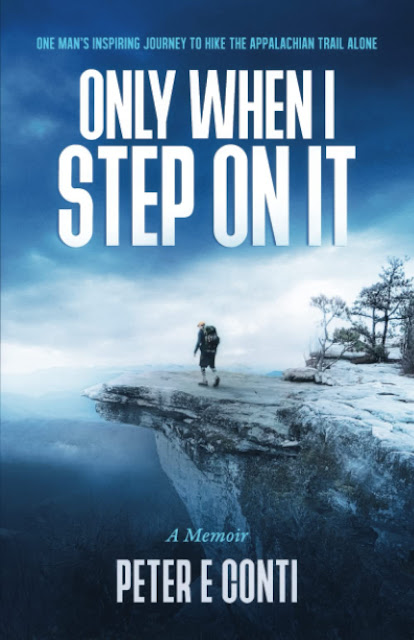
“Only When I Step on It” by Peter Conti


Peter Conti led what by any definition would be an active lifetstyle – running, biking, marathons, camping, motorbikes, marathons. His wife finally prevailed, and he sold his motorbikes, only to take up dirt bikes. He promised no racing. 

Until he raced. And crashed. And broke his pelvis into 23 pieces. His femur was separated from his pelvis, and when the doctors reattached it, they inadvertently crushed a main nerve. The result: excruciating pain.


After three physical therapies, three different doctors with three different pain med regimens, and no improvement, Conti gave up pain meds. Cold turkey. And he decided he would control and perhaps conquer pain by hiking the Appalachian Trail. The trail from Georgia to Maine is longer, in miles, than the distance from Washington, D.C. to Los Angeles. And he would do it, he decided, with almost no physical preparation except for what to carry in his backpack.


Conti tells his story in Only When I Step on It: One Man’s Inspiring Journey to Hike the Appalachian Trail Alone. And what a story it is, and what a journey he takes himself and the reader on.


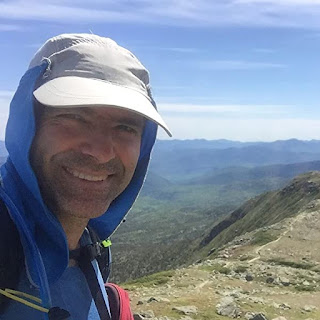
Peter Conti

We learn the lingo of the trail, like NOBOs (northward-bund hikers, like Conti) and SOBOs (southward-bound hikers). We discover the kindness and helpfulness of people, and we also find a few jerks. We learn about wildlife and majestic views. We find out that “trail” often means rocks and rocky inclines. And we discover what it’s like to hike when every step of the hike is painful. 


Conti was determined to hike through the pain and to hike the trail within a year, a status known as “thru-hiker.” What he learns is that his physical impairment required him to rethink. He made it 400 miles, and through the Smoky Mountain National Park, before hitting a wall in Erwin, Tennessee. And he quit, almost permanently. After months of rest, he began to take short hikes on the trail near where he lived in Maryland. And slowly he discovered a way that might enable him to complete the trek – using his car to allow for shuttling back. Purists might sneer, but for Conti, this was his journey to conquer his pain. 


He tells an engaging story. Given Conti’s physical shape, Only When I Step on It also tells an amazing story of determination and resilience.


Related:


The video made by Peter Conti’s children when he completed the trail.

Wednesday, January 19, 2022

"Discipl-ish" by Mike Duran


Mike Duran took an unconventional path to Christian faith and ministry, but it was “unconventional” only in the sense that it wasn’t the usual coming-to-faith “cartoon” that’s presented as common to all believing Christians, as in, “I was a sinner, and I was saved one night.” 

What Duran’s memoir, Discipl-ish: My Unconventional Pilgrimage thru Faith, Art, & Evangelical Culture, conveys more than anything else is how coming to faith lasts a lifetime. It includes breakthroughs, setbacks, problems, upheavals, victories, discouragement, and growth. Faith is life, and it’s messy and hard and sometimes painful, but it is also unbelievably rewarding.


Duran was raised in the Catholic Church, including attendance in Catholic schools and serving as an altar boy. But he always had a rebellious steak, a streak that took him at a relatively young age into drugs, the occult, and delinquency. What he didn’t know then was that he was on a pilgrimage to Christian faith.


He describes how he first experienced the call to faith; how he discovered gifts he didn’t know he had, like teaching and preaching; the churches he attended, including a heavy metal church; how he became and served as a pastor and how he left the pastoral ministry; and how he rediscovered ministry through working at a painting company, construction work; and becoming a maintenance painter at the local public school district.


Mike Duran

He casts an honest eye on himself and the people who influenced his pilgrimage, for good and for bad. And he comes to recognize that “for good and for bad” is a misleading description of what happens to him and his faith over a lifetime.


Duran is a novelist, writer, former pastor, and speaker. His novels and stories occupy an unusual spot in Christian fiction – that of Christian horror and speculative fiction. He’s known for his penetrating insights into Christianity and its critics, both inside and outside the church, and he blogs regularly about issues and events (I’ve included his blog posts more than 50 times over the years on Saturday Good Reads). He’s also an artist, known for his wall crosses and other works. He lives with his family in Southern California. 


Discipl-ish is honest, and often painfully honest. In telling his story, Duran doesn’t spare himself and his own actions. And this is what makes this story real and familiar: we ultimately see the reflection of ourselves and our own faith pilgrimages.


Related:


My review of Mike Duran’s Subterranea. 


My review of Mike Duran’s Christian Horror: on the Compatibility of a Biblical Worldview and the Horror Genre.


My review of Mike Duran’s The Resurrection.

Thursday, October 7, 2021

"With or Without Me" by Esther Maria Magnis


When she was 15, Esther Maria Magnis learned that her father had terminal cancer. He was given anywhere from three weeks to three months to live. 

Magnis was the middle child of the family, with an older sister, Steffi, and a younger brother, Johannes. The three of them spent the next two years (their father lived longer than the doctors’ prognosis) trying to be supportive, dealing with their own pain, supporting their mother, and often taking care of themselves as their parents tried everything to find a cure, including traveling to doctors and clinics both in Europe (the family lived in Germany) and the United States. 


But With or Without Me: A Memoir of Losing and Finding, translated by Alta Price, is not so much a cancer journey as it is a story of a faith journey. Magnis had had faith as a child, lost it as a young tee, and then struggled, and struggled mightily, once the family knew her father’s diagnosis. 


This is a journey that is often raw, angry, hopeful, searing, sacred, and profane – and often all at the same time. Magnis would come to cling to God even as she screamed at him, doubted his existence, and raved and ranted at him. It’s not an easy story to read, but then it was almost an impossible story to live. 


Esther Maria Magnis

Several years after her father’s death, her beloved brother Johannes was diagnosed with melanoma. Things looked promising after a surgery on his face; they doctors had gotten it all. But there was more to come, and she would eventually lose him as well.


Most of us can’t even imagine a journey like this, the pain of losing both a father and a brother to a harsh disease that seems to offer no pity or respite. She experiences when it didn’t even seem like she was enduring. “If God is love,” she writes, “it’s a kind of love I do not understand.”


Magnis, born in 1980, studied comparative religion in Germany and Italy and has worked as a journalist. She now lives and works in Germany. 


With or Without Me is intensely personal. It will tear at your heart, mind, and soul. It will bring you to tears. And it will astonish you with its honesty and depth.